


Moto 360 Sport review
The original Moto 360 was the first truly compelling Android Wear device to come to market, and it remained one of the go-to options for folks testing the smartwatch waters back in 2014. Then in 2015 when a sea of other wearable devices came to market, the 2nd Generation Moto 360 arrived on scene, proving that Motorola could still make a compelling watch.
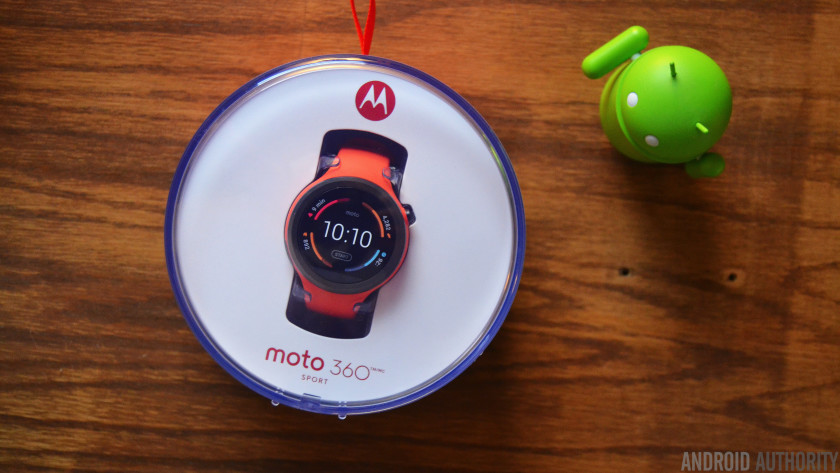
Alongside the Moto 360 (2nd Gen.), the company unveiled the Moto 360 Sport. It’s basically a fitness-friendly version of the original that has mostly the same internals, but with a different design, display and some added software features. So where does this sporty device fit in? Is it good enough to be both a smartwatch and a fitness tracker, or is there room for improvement? We aim to find that out, and more, in our full Moto 360 Sport review!
Buy now on Amazon
Review notes: I’ve been using the Moto 360 Sport as my main fitness tracker and smartwatch for around 3 weeks. The Nexus 6P has been my smartphone companion of choice.
| Display | 1.37-inch AnyLight Hybrid Display 360 x 325 resolution, 263ppi Corning Gorilla Glass 3 |
| Processor | Quad-core 1.2GHz Qualcomm Snapdragon 400 processor |
| RAM | 512MB |
| Storage | 4GB |
| Connectivity | Bluetooth 4.0 Low Energy Wi-Fi 802.11 b/g |
| Sensors | Barometric Altimeter, Accelerometer, Ambient Light Sensor, Gyroscope, Vibration/Haptics engine |
| Heart rate sensor | Optical heart rate monitor (PPG) |
| Battery | 300mAh |
| Water resistance | IP67 dust and water resistant |
| Bands | Silicone |
| Colors | Black, White, Flame Orange |
| Dimensions | 45mm diameter by 11.5mm high |
| Weight | 54 grams |
Design
Ever since the first Android Wear devices came to market, manufacturers would include ‘fitness tracking’ as a selling point. This didn’t really make much sense, as most folks who purchase a Huawei Watch or Moto 360 with a nice leather band and metal chassis probably aren’t going running with their $300 smartwatches anytime soon. And that’s where the Sport comes in. It’s clear that this device isn’t meant to be paired with a suit jacket or even a shirt and tie — that’s what the standard Moto 360 is for. Instead, the Sport aims to bridge the gap between smartwatches and fitness trackers, and look good while doing it.
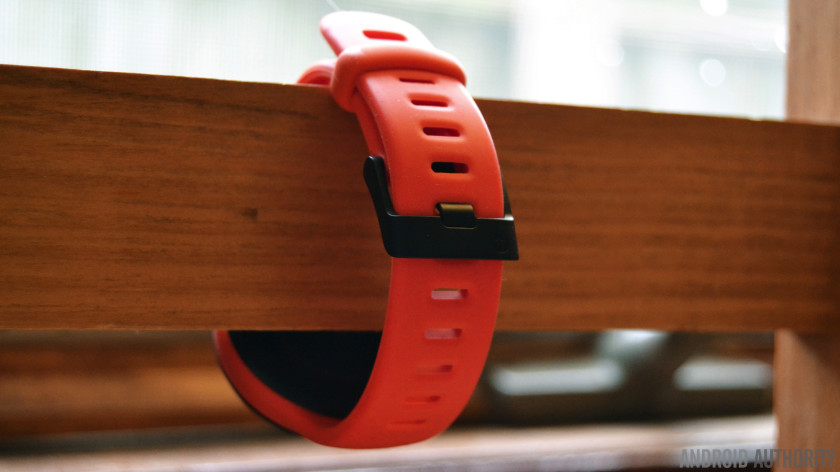
And for the most part, it does. It’s not too big, and doesn’t look overly bulky like some other smartwatches. It comes with a premium silicone rubber strap that feels comfortable both during a workout and when wearing it around the house. It’s light too — weighing just 54 grams. A lot of the time I forget I’m wearing it, and that’s definitely a good thing. The bulkier and heavier the smartwatch, the less people are going to want to wear it all day.
Moto Maker customization unfortunately isn’t offered here
It comes in three color options — Black, White and Flame Orange. You can purchase the device through the Moto Maker platform, though you won’t actually be able to customize it in any way. The straps aren’t removable, so you’ll need to stick with the color you purchase. The Sony SmartWatch 3 from 2014 sports a similar design but comes with the ability to remove the strap, which is something we definitely would have liked to see here.
 See also: Sony Smartwatch 3 Review24
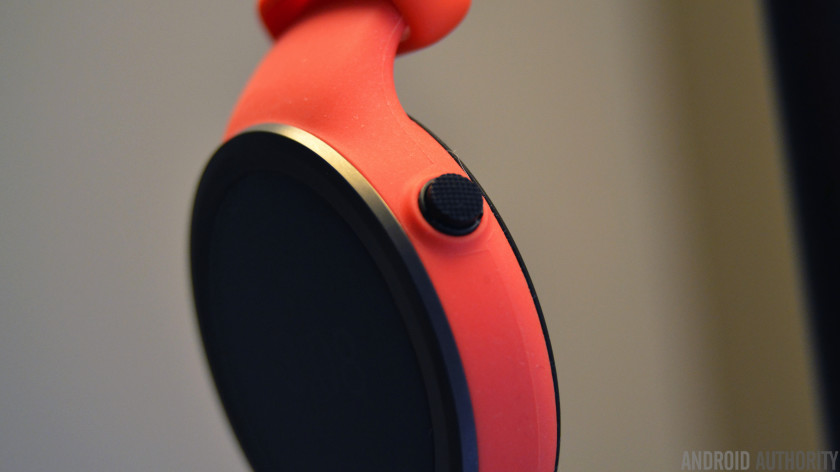
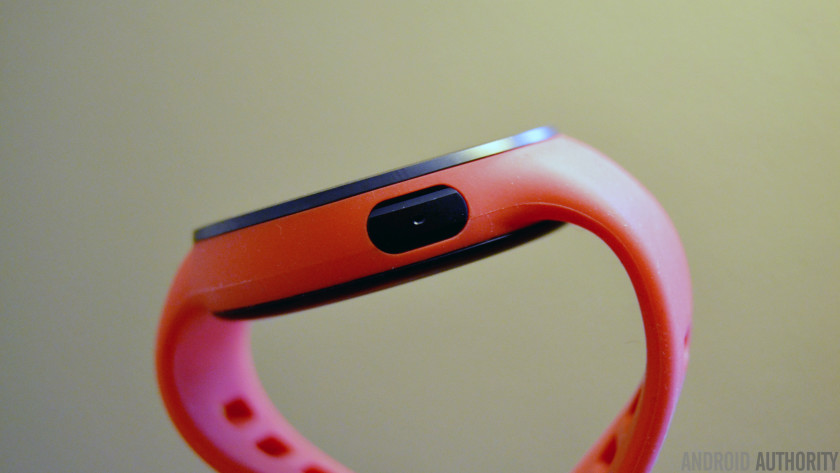
All in all, this is a pretty attractive device. The silicone strap wraps all the way around for the most part, save for the power button on the right and a microphone on the left. The bottom of the watch (the part that touches your wrist) is made of plastic, so your skin will barely come in contact with the silicone when wearing it throughout the day. This prevents your wrist from getting too sweaty, which definitely wins points in the comfortability department.
Although comfortable, the strap attracts a good amount of dust and hair
As comfortable as it may be, it should be noted that the strap is a dust/hair magnet. I live with two dogs and both of them don’t shed all that much. Still, I find myself picking out little hairs from the strap every now and then, much more so than any other silicone-clad fitness tracker I’ve tried thus far.
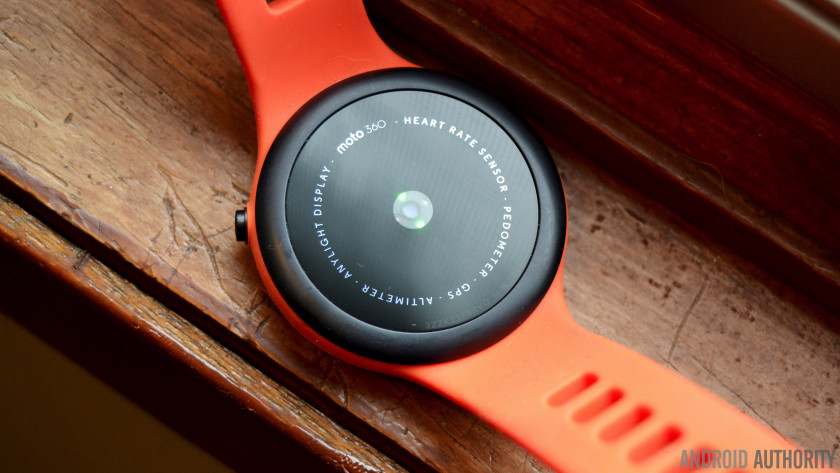
Just because this seems to be a more rugged version of the standard Moto 360, it doesn’t mean you’ll be able to wear it in the shower or take it for a swim. Nope, the Moto 360 Sport only has an IP67 rating for dust and water resistance, just like Motorola’s other smartwatch. This means you can wear it during a run and get it sweaty, but don’t expect it to survive a shower or quick dip in the pool. I think I speak for everyone when I say this is a bad move on Motorola’s part. A fitness tracker without a waterproof rating just means users will need to take off the watch more than they should have to. Manufacturers like Garmin understand this, which is why their trackers are so popular amongst users who are serious about activity tracking.
Display
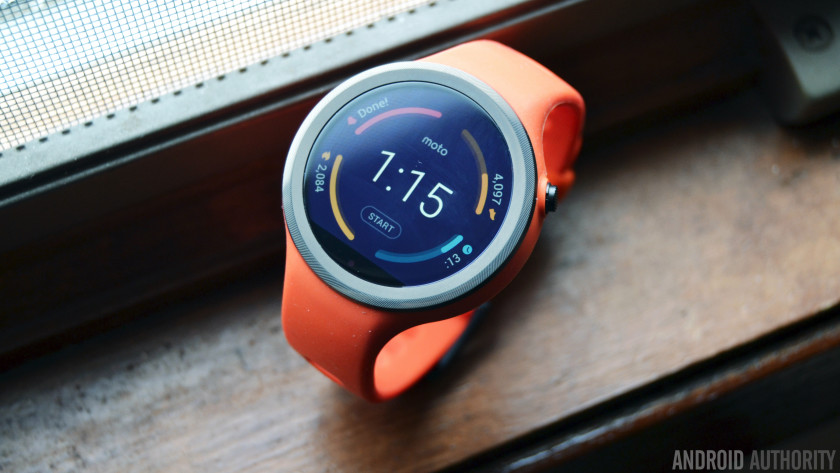
One of the biggest differences between Motorola’s two latest smartwatches are the displays. While the Moto 360 (2nd Gen.) sports a standard IPS LCD display, Motorola chose to go a different route with the Sport and use what’s called an AnyLight hybrid display. This special screen is made to automatically adapt to the level of natural light that’s currently shining on the watch. When you’re inside, the display is just like any old LCD screen. But go outdoors, and the “hybrid” part of the display kicks in and will reflect natural light to keep the screen readable.
 Don’t miss: Moto 360 (2nd Gen.) review18
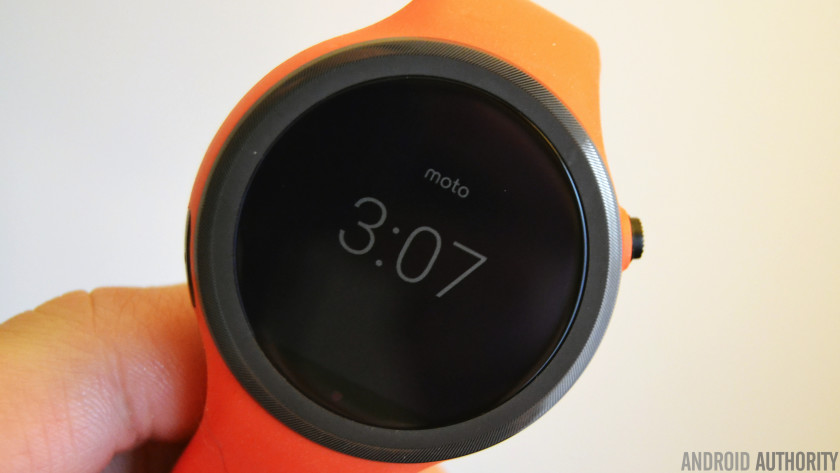
The AnyLight display is by far the best part of this watch
The AnyLight display is the best part of this watch, by far. It’s easy to see both indoors and out, which is something not many other Android Wear devices have been able to do yet.
But as is the case with most other aspects of this watch, there’s still room for improvement. AnyLight display tech or no, I just don’t understand why manufacturers choose to put LCD displays on smartwatches. They’re small devices with small batteries, so why not include an AMOLED display instead? They might be more expensive, sure, but they’ll certainly make the small 300mAh battery last a heck of a lot longer.
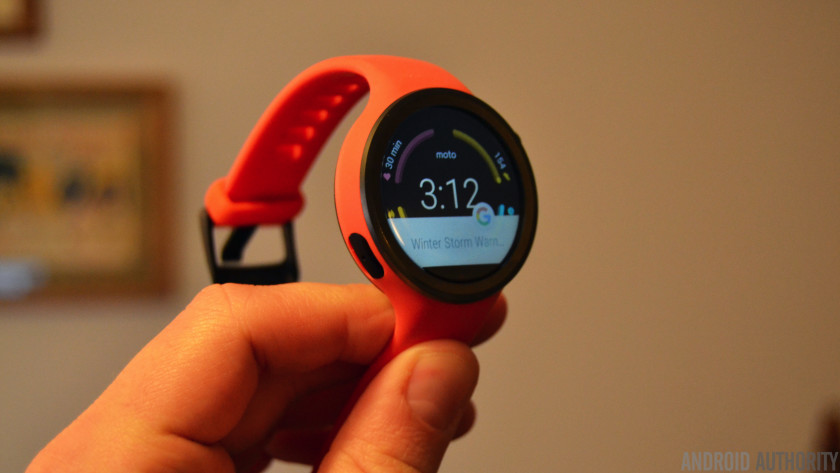
As for the size, the AnyLight display measures 1.37-inches and sports a resolution of 360 x 325. It’s plenty clear, and I haven’t had many problems with it at all. Text is sharp and colors are vibrant, but, as you can see from the images in this review, the “flat tire” has returned. For those unaware, Motorola includes an ambient light sensor on their watches so the display can automatically adjust to the amount of light that’s hitting it. Since this is such a small device, the company only has two places to put it — around the watch’s bezel (in turn making the bezel much thicker), or at the bottom of the display, which is where the flat tire comes in. I’ve gotten used to it overtime, and I don’t even notice it anymore.
Software
For the most part, the software on the Moto 360 Sport is the same as what’s found on the second-gen Moto 360. It runs the latest version of Android Wear (v1.4). All in all the experience isn’t too different from the standard 360, so we won’t go into too much detail here. If you’re new to the platform and would like to take a closer look at what Android Wear has to offer, be sure to check out our full Moto 360 (2nd Gen.) review.
 See also: 15 best Android fitness apps and workout apps37
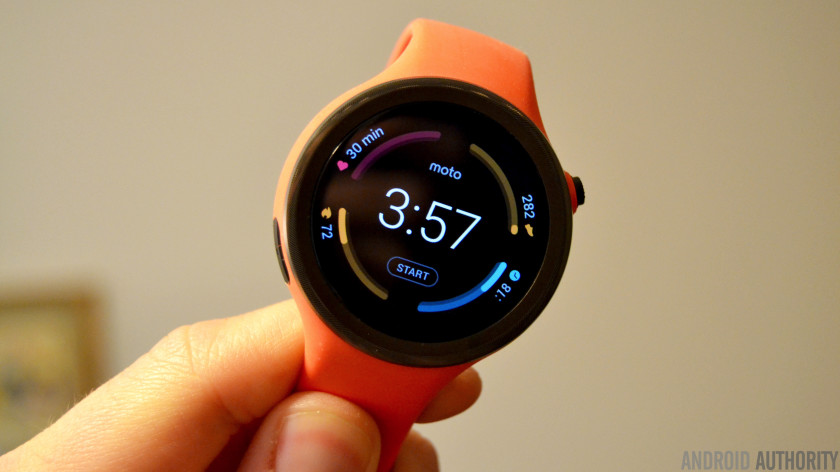
The 360 Sport comes with all the great watch faces that are present on the standard watch. The default watch face is the one you’ll want to use though — it’s a digital face that gives you quick access to your steps, heart activity, calories burned and a stopwatch. There’s even a button for quickly starting a run. Pressing this button will give you the option to choose between an indoor or outdoor run. You can then select either a time, distance or calorie goal, and you’re good to go. You don’t have to select a goal, but it’s definitely recommended. You can choose the Quick Start mode if you don’t want to fuss around with it, but the GPS struggled to find a connection when in this mode, at least on our unit. Whatever mode you end up choosing, just make sure the GPS is locked in otherwise your stats will be skewed.
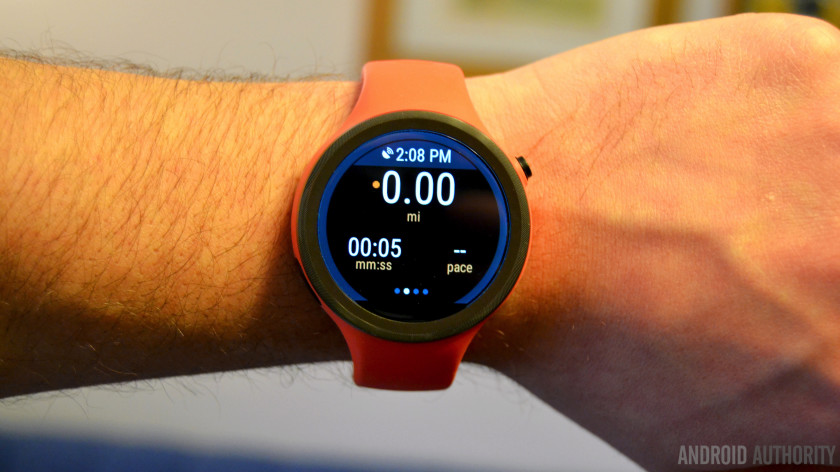
The running interface is detailed without being too cluttered
When you’re running, you’ll be shown your distance, running time and pace on the main screen. You can also swipe over to get your current heart rate. A quick double tap on the screen will pause your run. The running interface is detailed without being too cluttered, which is something many other fitness trackers might want to take notice of. After you stop your run you’ll be shown a detailed overview screen of your workout, which is exactly what you want to be shown after a long run. For more detailed running info, you’ll want to jump into the Moto Body app on your phone.
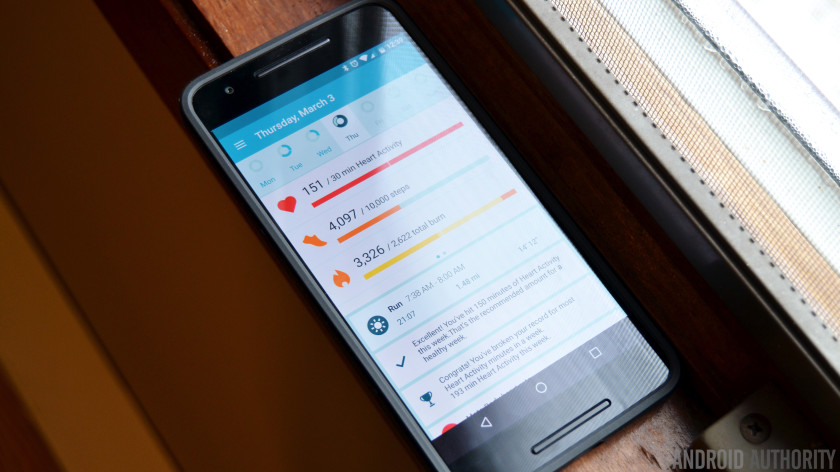
The Moto Body app syncs with your watch to give you more detailed information on your run and past workouts. It’s a simple application that doesn’t require any type of learning curve. You’ll be shown a week view at the top, and for each day you’ll see your heart activity, steps and calories burned. Below that sits information on whatever runs you may have taken that day.
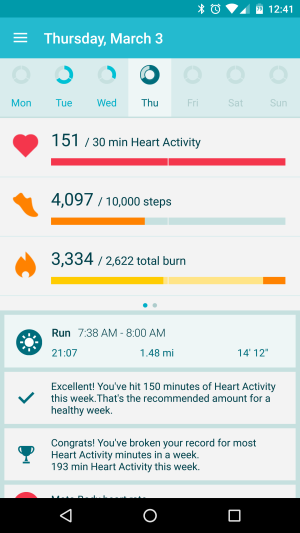
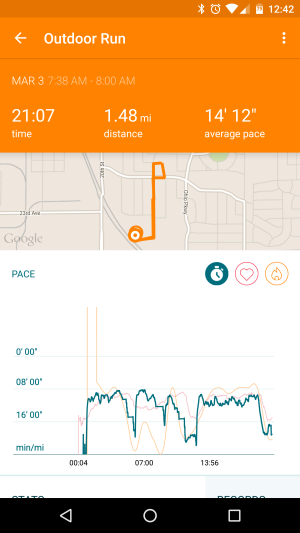
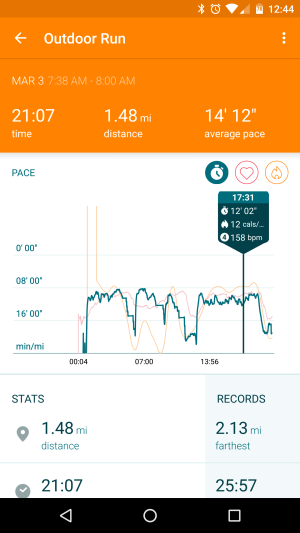
At the time of writing this review, the Moto 360 Sport only supports running. Motorola claims it will add more activities like cycling in the future, but we still have yet to see those come to the app.
I’m a big fan of Moto Body. If you aren’t though, luckily the app can connect with a handful of other fitness tracking apps like Fitbit, Strava, MapMyRun, Under Armour Record and of course Google Fit. Keep in mind that while these other apps track things like cycling, yoga and other gym exercises, the 360 Sport will still only be able to track running.
Hardware and performance
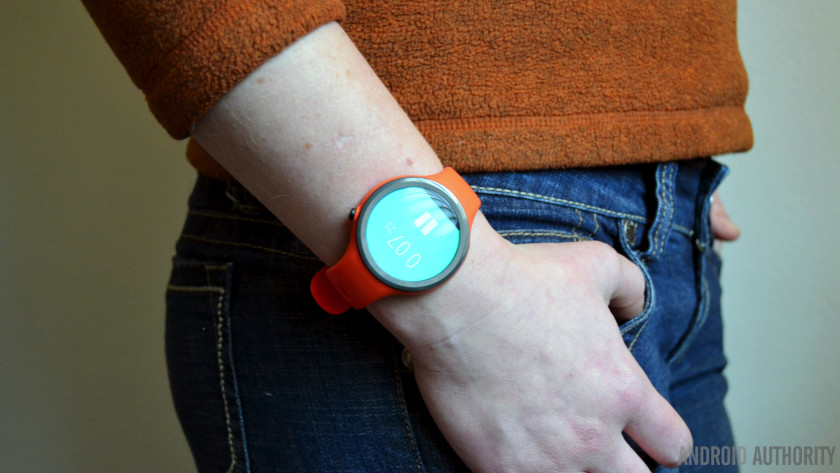
Under the hood the Moto 360 Sport comes with a quad-core Qualcomm Snapdragon 400 processor clocked at 1.2GHz, backed by 512MB of RAM. This is the same processing package that’s found in just about all new Android Wear devices, so as you may expect performance is quite good. Navigating around the UI is snappy, apps load up quickly, and interacting with notification cards is a breeze. Unlike the second-generation Moto 360, we did not see the same problems with “Okay, Google” voice recognition, or really any other problems with the software.
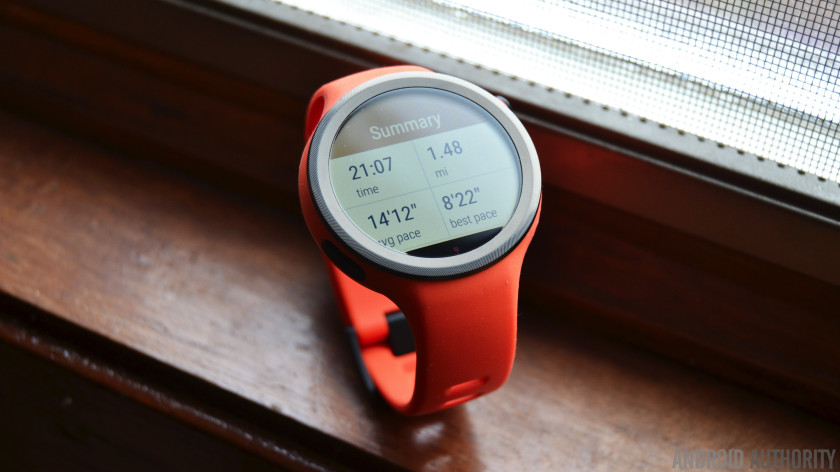
The Sport comes with a GPS on board, which we’re happy to report has been quite accurate during our review period. As long as you wait for the GPS to connect before your run, it will track your route with no problems at all.
And when it comes to step tracking, the Sport is actually very accurate. It was pretty much impossible to get an accurate step count with the first-gen Moto 360, but the Sport fixes pretty much all of those problems. I tested it against my Fitbit Charge HR and Jawbone UP3 on a 2-mile run, and the 360 Sport was only about 15 steps off from the other trackers. Not bad!
 See also: Fitbit Charge HR review3
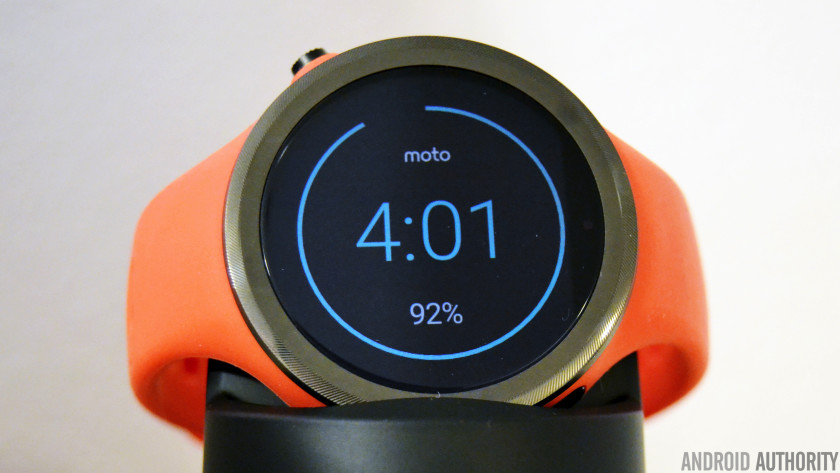
At no surprise to us, Motorola has brought back their wireless charging dock this time around. The dock itself is small and plugs in with a Micro USB cable. Just plop the Sport right in the dock, and it will activate a charging mode that shows you the time and battery percentage — perfect for a bedside table or desk.
Unlike the second-gen Moto 360 that has a 400mAh battery, the Sport only comes with a 300mAh cell. With it you’ll get about a full day of use, but definitely no more than that. The recent update to Android 6.0 Marshmallow has done its part at making sure the watch stays charged during standby time, but that doesn’t really affect battery life when you’re wearing it.
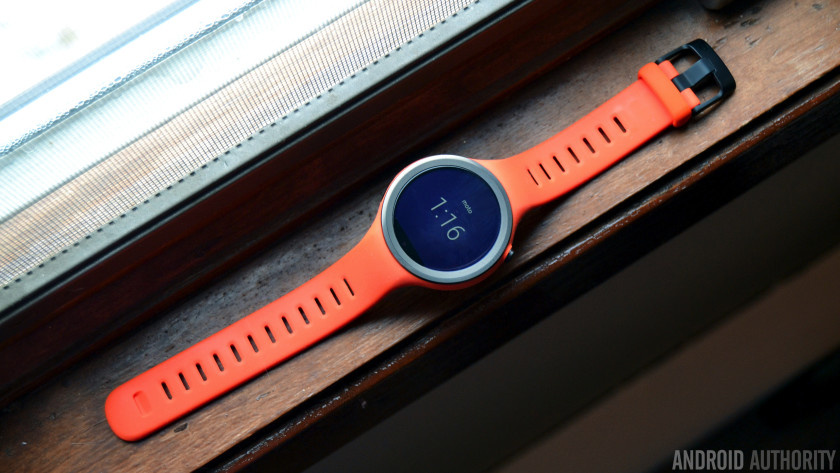
If you want the watch to last a full day, turn the GPS off
Most days I take the watch off right before I go to bed and still have about 20-30% of charge left. Not horrible, but it could be better. Also, that’s with the GPS turned off. Turn it on, and you’ll struggle to get through a full day on a single charge with moderate use. I have been able to wear it around for a few hours in the morning, go for a run (with the GPS on), and continue using it until bedtime on a single charge, but that was with GPS turned off most of the day while I wasn’t running.
I can’t say I’m surprised. Battery life has always been a pain point with Android Wear, and the Sport is no different. Let’s just say I’m really hoping Motorola improves battery life with the Moto 360 Sport (2nd Gen).
Gallery

Conclusion
Buy now on Amazon
If you’re looking for an Android Wear-powered smartwatch with run tracking capabilities, look no further. The Moto 360 Sport is what you should get if you want the best of the best. The Sony SmartWatch 3 is still on the market and costs just around $100, but you won’t get to take advantage of the heart rate monitor or the wonderful AnyLight display.
The Sport is available through Amazon and Motorola for $299.99 in Black, White and Flame Orange color options. You might be thinking that this is a little pricey for a fitness tracker that only tracks runs, but you’ll probably pay just that much (if not more) for something comparable from another manufacturer. Also, this device has the advantage of running Android Wear.
All in all, this is my favorite Android Wear device I’ve ever used. It’s fast, light and full of great features. It’s also a great activity tracker as long as you’re okay with it only keeping tabs on running. If you’re willing to make that compromise, you can’t go wrong with the Moto 360 Sport. Those serious about tracking other exercises will want to look elsewhere, or wait for Motorola to add more features in the future.
-

Moto 360 (2nd Gen) Review -
Huawei Watch Review! -
Huawei Watch Unboxing and In… -
Moto 360 (2nd gen) unboxing …
Android Central 277: Ham-on
With Mobile World Congress firmly behind us, we turn to a couple guys who looked at things from an outside perspective — Jerry and Russell — to see what they thought of the show, the Galaxy S7, LG G5 and more, from back home.
Note: This is an audio-only show this week.
Thanks to this week’s sponsors!
- Mailroute: Get 10 percent off spam-free email from a company that keeps its focus on what matters — stopping the spam!
- Harry’s: Start shaving better today and save $5 off your first purchase with coupon code AC.
Podcast MP3 URL: http://traffic.libsyn.com/androidcentral/acpc277.mp3
Google grants presidential hopefuls a digital podium
Google is giving this year’s crop of US presidential candidates a pretty big stump to stand on: Search results. Mountain View is opening up a new platform, dubbed “Google Posts,” that hopefuls for the highest office in the land can use to publish everything from text to photos and videos. These brief bits will appear in search results whenever you look for one of them by name, just above official tweets. From there, the posts can be shared via your social media platform of choice.
It’s in a sort of pilot phase for now, but the internet juggernaut says that it’s planning to open the feature up to other prominent figures and organizations in the future.
As of this writing, the only candidates to make use of the new tool are Republican governor of Ohio, John Kasich and Democratic Vermont senator Bernie Sanders. Priapic Republican front-runner Donald Trump still hasn’t used the platform as another way to talk about the size of his penis just yet. Nor has Republican Marco Rubio taken advantage of the new feature.
Libertarian John McAfee? Also absent. Former Secretary of State, Democrat Hillary Clinton, hasn’t posted any of her trademark GIFs, either. But hey,we still have plenty of time for all of this to change prior to November.
Via: The Next Web
Source: Google
Study shows evidence of Zika virus’ risk to pregnant women
Scientists have yet to prove without a doubt that the mosquito-borne Zika virus causes microcephaly. A big study involving 5,000 women being conducted right now will help determine that, but the results won’t be out until mid-year. This much smaller study by UCLA researchers, however, strengthens the link between the virus and various birth defects — not just microcephaly — as well as fetal death. In addition, the researchers found that Zika can affect pregnancy at any stage and trimester. The study’s senior author, Dr. Karin Nielsen, said they saw problems with pregnant women eight weeks, 22 weeks, 25 weeks and even 35 weeks along.
The team studied 88 pregnant women who went to a clinic at the Oswaldo Cruz Foundation in Rio de Janeiro with the intention of being tested for the virus. Out of the 88 individuals, 72 tested positive for Zika; 42 of them, as well as the 16 who tested negative, agreed to undergo further tests and ultrasounds. A total of 12 subjects among the 42 infected women had problematic ultrasound results, and two of them ended up losing their babies in their third trimester.
Of the six live births overall, two babies were too small, while one was born with severe microcephaly. One of the small babies and the infant with microcephaly had lesions in their eyes indicating blindness. Another had to be delivered via C-section, because the mother’s uterus had no amniotic fluid. Two of the mothers who had normal ultrasound results delivered healthy babies.
Nielsen says their study and others like it could help eliminate theories that the pesticides used against mosquitoes (and not the virus itself) are the culprit. Those theories led people to protest against their use, which Nielsen believes is a “really bad idea,” explaining that “you want to enhance vector control to prevent infection and not abandon that approach during an epidemic.” Besides UCLA’s research, another one conducted by Johns Hopkins, Florida State and Emory universities have shown through lab testing that the virus kills tissues that form the brain and the nervous system.
Via: ABC News, The New York Times
Source: UCLA
BMW wants to build ‘the most intelligent car’
BMW is looking to the future. For the German automaker, that means a research and development team that’s as well versed in artificial intelligence as it is wind-tunnel testing. It’s a future where the competition isn’t Cadillac or Audi, but Uber and car-price comparison site TrueCar, according to Reuters. “Our task is to preserve or business model without surrendering it to an internet player,” BMW’s Klaus Froehlich says. “Otherwise we will end up as the Foxconn for a company like Apple, delivering only the metal bodies for them.” Meaning, a background player for a bigger organization that gets the glory.
“For me it is a core competence to have the most intelligent car,” he says.
And that means hiring. BMW wants to get its software engineer count up to a 50:50 spread compared to its other employees and because schools in Deutschland aren’t producing enough viable candidates, the company has to look at outward partnerships to fill the gaps. Those include working with cloud computing and storage outfits to help drive its autonomous vehicle initiative.
But partnerships go both ways. Froehlich says that his firm will license out its electric drivetrains to manufacturers that otherwise couldn’t develop their own — a move that would surely help it recoup those heavy R & D costs. Pretty forward thinking for a 100 year-old, eh? If this doesn’t work out, there’s always its connected motorcycle helmet business.
Via: Autoblog
Can the Gear VR sell phones for Samsung?

Ecosystem lock-in might finally pay off for Samsung with the Gear VR.
Samsung is about to give away an unprecedented number of Gear VR headsets to folks who jump on the Galaxy S7 and S7 edge train early. It’s the first serious push the company has made with this hardware, after years of courting developers and offering small demo stations in Best Buy stores. For many this is going to be the first VR experience they’ve ever had, and that first impression is not likely to be a bad one. That experience is going to be shared with a whole lot of friends and family, who will shortly discover that the Gear VR is something you can only experience through Samsung’s latest and greatest.
The big question is what happens next, and whether that experience is enough to push someone on the fence to consider a Samsung phone in order to share this VR experience.

The whole ecosystem play happening here is significant, and the timing is important. Giving everyone a free Gear VR with the Galaxy S6 wouldn’t have been nearly as impactful as Samsung’s offering with the Galaxy S7. Announced alongside the Galaxy S7 was the 200 app milestone in the Oculus Store, which means there’s no shortage of things to do in this VR world now.
The content available now is exceptional, especially compared to what was available a year ago on this platform. Samsung and Oculus have worked hard to fill this playground, and the end result is a full entertainment system you can wear on your face. It’s a game console, a movie screen, and a budding social network all at the same time, and nearly all of it is exclusive to this platform.
The urge to play multiplayer games alone will be enough to encourage early adopters to nudge their friends to this experience.
Everyone who shares their free Gear VR with someone else is essentially a salesperson for Samsung. The Gear VR is an unparalleled VR experience in the mobile space, but it’s exclusive to Samsung and that bit of information is going to be secondary in any casual demonstration. Sticking someone in a cool video sphere, handing over a controller to play any of the incredible games, or even just showing Netflix and Oculus Social will all be unique and memorable experiences. It’s the kind of thing that, outside of a typical sales environment, plants the seeds for suddenly needing to upgrade your phone so you can share this experience. The urge to play multiplayer games alone will be enough to encourage early adopters to nudge their friends to this experience.
But is the experience enough to sell a phone? Of course it is. The Samsung Galaxy S7 is already going to be on a list of phones to check out for a lot of people out there. It’s that phone they saw on TV that wants you to get rid of your iPhone, which by the way has no experience that comes even close to this. When this phone is already on the short list and the Gear VR is introduced in a social situation, the decision becomes a lot easier for those who enjoyed the demonstration.

It’s also not a huge investment, and it’s not hard to see that. A frequently used argument when discussing the cost of the Gear VR is the need to have a Samsung phone, but that conversation gets weirdly distorted in most situations. The Gear VR is normally $100, but making it so you have to use a $700 Samsung phone does not then make the Gear VR $800, especially when the act of purchasing a phone was already going to happen. Even if other phones were made to work with the Gear VR at some point, Samsung’s unparalleled display tech offers the best overall experience in this platform. It’s icing on an already incredibly appealing cake.
Samsung hopes the end result here is more Galaxy S7 sales through this shared experience, which also means more Gear VR sales and more platform lock-in. It’s not a particularly new approach, but Samsung is uniquely positioned to make it happen. We’re a long way from this experience becoming common in the household, but this early rush is likely to be a massive push in that direction.
Samsung Galaxy S7
- Galaxy S7 and S7 edge hands-on
- Galaxy S7 and S7 edge specs
- Here are all four Galaxy S7 colors
- Details on the Galaxy S7’s camera
- The SD card is back on the GS7
- Join our Galaxy S7 forums
AT&T Sprint T-Mobile Verizon
Samsung Gear VR

- Gear VR review
- Five Gear VR games that shouldn’t be missed
- Inside Samsung’s Gear VR web browser
- Gear VR vs. Google Cardboard
- Where to buy Gear VR
Amazon AT&T Best Buy Samsung

Samsung rumored to be shutting down Milk Music service

Samsung could be closed to closing down its Milk Music streaming service. A new, but unconfirmed, report claims that Samsung could replace Milk Music via a partnership or acquisition of another streaming service.
According to Variety’s sources, Milk Music has not met with the returns that Samsung expected since it launched in May 2014. While many users have signed up for Milk Music’s free version, few have paid the money for its premium tier:
Insiders and sources close to the company also told Variety that the Milk Music team has seen significant staff reductions over the past couple of months. “A lot of people in the organization have left or are shifting positions,” said one source. A post to the job review website Glassdoor indicates that Samsung Research America, the organization that includes the Milk Music team, was hit with layoffs over the past few weeks, something that a source close to the company corroborated. “There are lots of empty desks and cubes there,” that source said about the Milk Music team.
There are rumors Samsung has had talks about acquiring Jay Z’s Tidal service, but Variety’s sources claim such a deal is not set in stone yet.
Source: Variety

T-Mobile’s HTC One M8 scheduled to get Marshmallow update on March 7

HTC continues its wave of over-the-air update announcements. The company has revealed the T-Mobile version of the HTC One M8 will receive the update rollout to Android 6.0 Marshmallow starting on March 7. That’s the same date that Verizon owners of the same phone will get their own Marshmallow update.
HTC’s Mo Versi broke the news on T-Mobile’s HTC One M8 Marshmallow update release on Twitter:
Great news on T-Mobile HTC One (M8) owners! We have received technical approval on Marshmallow! OTA to start on 3/7. Thank you @mvenugopal
— Mo Versi (@moversi) March 4, 2016
Source: Mo Versi (Twitter)

The Public Access Weekly: Feelin’ good
YOU.
GUYS.
Fiber internet is coming to my neighborhood. Fiber. Internet. This is a pretty serious game changer — Not only is Google looking to roll out fiber to all of San Francisco, but a smaller, local company has already started outfitting houses on the west side of the city with a tasty fiber connection — and they plan to be done with those two neighborhoods by the end of the year. Since my current internet connection is so pathetic that I can’t even successfully stream a movie rental through Xbox Live, I’m now going to take a moment to do a little happy dance.
This week starts off a whole new month of geek holidays! Today, celebrate Game Master’s Appreciation day by showing your RPG GM some gratitude for all their efforts; next week celebrate the International Day of Awesomeness by… being awesome? If you’re celebrating any of these geek holidays, we really want to know. Take pictures, write it up and share a Public Access post on it!
And now: Housekeeping. Some of you have noticed that some published posts have been showing up with old dates — for example, you start a post on Monday, save it and close out and then come back and publish it live on Thursday… But when the post shows up on the Public Access page it has the Monday date, making it easy to skip over in the feed. This is a glitch that happened when we added the “Preview” feature, however, it is currently getting worked on and should be fixed by next week. If you notice a date issue with a post in the meantime, feel free to email us and we’ll correct it manually.
Next, we need to talk about links. There have been a lot of stories going up on Public Access lately with some pretty iffy links in them so let me just reiterate here again: Public Access is not a place for marketing articles or SEO promotion. That means it is not okay to include SEO type links in your Public Access posts.
What counts as an “SEO link”? Any link that highlights key words in order to direct a link to a company or business is not okay (think “luxury watches” going to a site that sells watches). It should be unequivocally clear where all links go to — for example, linking the words “a survey on CNET” should take you to a survey on CNET, not a third-party blog that discusses the survey, or a site that sells survey services. Linking in this manner is not cool, and I will remove them from your post without warning.
Lastly, I’m working on creating a guide to contributing to Public Access to provide you all with a complete tome on all the in’s and out’s of writing and publishing posts. So, if you have any questions, run into any difficulties, or need a better explanation on something please let me know! Feedback and questions about Public Access can be sent to us here.
Looking for something to read? Check out:
Public Access member Richard Heby discusses why he won’t be forking over cold hard cash for the new Samsung offerings in this popular piece, which has some folks eager to pitch in with comments. And, as he is a stand-up contributor, Heby is talking to time to respond. Read up and weigh in.
This story on what is, reportedly, the first incident of a Google self-driving car getting into a fender-bender, is provoking a discussion in the comments about the rules of the road, who was at fault and the assumptions that Google’s technology makes about human driving decisions.
Too good to be true? We were excited when we first reported on the Coleco Chameleon, but commenters were quick to cry foul. Developments this week, including an image pulled from Facebook, are casting some serious accusations at the product; we’ll be updating the story as it develops.
Looking for something to write about? Mull over:
Humans are (apparently) very trusting of robots. To whit, a study recently found that humans would follow a safety robot away from clearly marked emergency exits. Is it just human nature to fall in line with a perceived authority figure? How much trust do you put in robots? (How about robot dogs?) Can humanity as a whole ever really trust a robot? Write an argument in favor of, or against, trusting robots. Or, alternatively, write us up a list of your favorite robots (real or fictional).
Although there’s a lot of talk about how technology isolates people around their smartphones, that same technology often brings people together through forums, comments sections, and chat rooms. When it comes to internet communities, which is your favorite and why? (Personally, I’m a big fan of Imgur commenters).
‘Sup, Imgur?
Swiss researchers recently developed “thin electronic circuits that can be stretched …up to four times their original length in any direction.” The flexibility of these circuits makes them ideal for being sewn into fabrics or used in biological sensors. Inspired by this advancement, write about or design your ideal wearable: What does it look like? Where and how does one wear it? And what does it read/measure?
KitchenAid Artisan Mini Stand Mixer Release Date, Price and Specs – CNET

KitchenAid
As if bakers ’round the world didn’t already covet KitchenAid’s array of colorful stand mixers, the company is making it even harder to resist with its new Artisan Mini line.
Available in the US this summer for $400 and elsewhere later this year — that translates to roughly £280 in the UK and AU$540 in Australia at the current exchange rate — Artisan Mini’s are cute 3.5-quart versions of KitchenAid’s classic mixers.
It’s worth noting here that KitchenAid hasn’t downsized its iconic stand mixers since 1962, so this update is pretty significant. The new dimensions make the Artisan Mini “suited for limited counter space and ‘smaller batch’ lifestyles,” the company said in a release. Millennials and city dwellers, that means you.
Its existing models, some of which have been around for over 50 years, include mixers that range in price from $350 to over $1,000 — with sizes from 4.5 quarts up to 8 quarts. That makes the new Artisan Mini’s the smallest KitchenAid stand mixers, but not the cheapest. And cheap isn’t exactly a fair word to use when we’re talking about a single, nonessential kitchen appliance that costs 400 bucks.
There are literally top freezer refrigerators, dishwashers and washing machines that cost less than that.
Other cool kitchen stuff:
- This machine promises to cook it all — and with Wi-Fi, too
- Nespresso’s smart coffee maker brews java over Bluetooth
- The kitchen catches up to the rest of the CNET Smart Home
Price aside, KitchenAid’s mixers have become something of a status symbol in the American home, a design piece that’s both functional and beautiful. And the fact that, as with earlier models, the Artisan Mini mixer comes in every color of the rainbow means there’s bound to be one to suit your kitchen decor.
We expect to see KitchenAid’s Artisan Mini mixers on display at the International Home and Housewares Show in Chicago this weekend, so stay tuned for hands-on pictures and video.

