


Switching mobile carriers will become much easier this year
There are several reasons to remain allied to one mobile network operator or another. Loyalty rewards such as contract discounts and special upgrade terms aside, switching providers can just be a bit of a faff. UK telecoms regulator Ofcom doesn’t want this to deter you from shopping around, which is why it’s going to make the process of jumping between carriers a whole lot easier. It’s been on Ofcom’s agenda since last summer, shortly after the regulator introduced a greatly simplified way of switching between broadband suppliers. Today, Ofcom’s announced its formal proposals, volunteering a couple of different options it’s settled on to the hassle out of moving providers.
Ofcom won’t be telling mobile operators what’s what until autumn, after taking feedback on its plan into account, which is why it’s proposing two methods of simplification right now. The first (and preferred) idea is to introduce a “gaining-provider led” process, which is exactly how changing broadband providers works now. All a consumer would have to do is to pick their new carrier, and that company will do all the legwork on their behalf, including advising them of their current provider’s notice period and any outstanding charges.
The second, slightly less convenient option is to make requesting PAC codes easier and immediate, either online, by text or by phone. You need a PAC code to carry your mobile number over to your new provider, but typically, you have to call your current carrier, put a request in, and wait (often a day or two) for the code before giving that info to the network you’re switching to. With immediate access to PAC codes, there will be much less back and forth, and you should only really need to make the one call to your new provider.
Either way Ofcom decides to implement simpler carrier switching, it should incentivise you to seek out the best deals as your contract approaches its conclusion. It should also have a knock-on effect on competition, too, with carriers being ever more mindful of the level of service and prices they offer when it becomes much less a chore for consumers to jump ship.
Source: Ofcom
Popular ‘Destiny’ matchmaking site plans app for more games
Online multiplayer isn’t just an afterthought for many of today’s PC and console games — it’s central to the whole experience. Games like Destiny work best as massively multiplayer experiences, where you’re part of focused squads taking down difficult opponents. Quickly finding a competent team can be difficult, however, which is why tools like DestinyLFG have flourished online.
DestinyLFG (LFG = Looking For Group) is a website that allows Guardians to submit posts stating what quests they wish to complete, exactly the type of player they’re looking for and list other in-game requirements. The site now counts over 6 million users from all over the world. With a dedicated user base using the site daily, the team behind it has decided to branch out. It’s headed to Kickstarter to launch For The Win (FTW), a new app that incorporates all of the useful elements of DestinyLFG and makes them available to communities of other popular multiplayer games.
Beerock Studios have set a $75,000 goal to create the FTW app. When released, the app will feature Looking For Group tools for games like Call of Duty: Black Ops II, Destiny, Borderlands, Minecraft, The Division and a number of EA Sports titles like FIFA. Users will be able to rate gamers to help others understand who they’re teaming up with, chat with them before a game and schedule future events. Twitch streams can also be embedded into listed games, allowing the community to see how you’re getting on.
If the app does get built, that doesn’t mean the websites will go away. An app request to drive into the heart of The Division’s Dark Zone will also appear on the FTW website for that particular game. Both iOS and Android will be supported, supplying notifications for events, chat requests, start times on your mobile device rather than frequent notices on your PC or console.
Like DestinyLFG, FTW will offer free memberships, which will be supported by “non-disruptive” advertising. There will also be a premium plans, which removes limits on numbers of friends and allows Twitch streaming (although there’s currently no guidance on price). The paid element might put some people off, especially if they’ve already grabbed a season pass for the game they’re playing, but it shouldn’t stop casual gamers from jumping into the odd raid from time to time.
Source: FTW (Kickstarter)
Pornhub is streaming skin flicks in virtual reality
If last week’s slurry of video game virtual reality news left you craving something a little more carnal in nature, you’re in luck. Skin site Pornhub has announced it’s launching a category dedicated entirely to VR sex videos. Pornhub says that these are optimized for mobile VR on Android, iOS and Samsung’s Gear VR, as well as being playable in the Oculus Rift and “most” other PC-based headsets. And unlike KinkVR’s subscription model, these videos are free.
Oh, and if you’re left high and dry without a set of VR goggles, the flesh peddlers say that they’ll be giving away 10,000 pair of them. Knowing how cheap Google Cardboard is, that’s probably similar to what it’ll ship out. And on that note, Pornhub says it’s baked Cardboard support into its Android app, and 360 degree video will even be supported via mobile browser on the platform. Keep in mind though that you’ll need a free hand to keep that VR system on your face.
US charges Syrian Electronic Army hackers
Despite numerous high-profile hacking campaigns against the US government, news outlets and tech companies, the Syrian Electronic Army has remained a largely faceless entity… until now. The US has charged Ahmad Umar Agha (left), Firas Dardar (right) and Peter Romar with several crimes, including unauthorized computer access and (in the cases of Dardar and Romar) money laundering. The three are accused of compromising numerous targets, including a Marine Corps recruiting page (where they encouraged mutiny) and a news site (where they made false claims that the White House was under attack). Separately, Dardar and Romar are charged with conducting extortion schemes: Dardar would force victims to pay up and use Romar to get around Syrian sanctions forbidding payments.
The FBI is also adding Agha and Dardar to its Cyber’s Most Wanted list, and it’ll offer $100,000 each if you have tips that lead to their arrests. With that said, the charges might not be all that effective. At least Agha and Dardar are believed to be living in Syria, and it’s not as if the Assad regime is about to extradite sympathizers (however self-serving) to a country that wants Assad gone. As such, these charges are more symbolic than anything — they’ll prevent the accused from traveling to extradition-friendly countries, but they probably won’t put anyone behind bars.
Via: CSO
Source: Department of Justice, FBI
FBI Enlists Israeli Firm Cellebrite to Unlock Shooter’s iPhone
Israeli mobile software developer Cellebrite is helping the FBI in its attempt to unlock the iPhone at the center of the San Bernardino shooter investigation.
That’s according to a story filed by Reuters this morning, based on a report in Wednesday’s copy of Israeli daily newspaper Yedioth Ahronoth. If the software company succeeds then the FBI will no longer need the help of Apple, the report claimed, citing unnamed industry sources.
According to its website, Cellebrite offers “mobile forensics solutions” which “give access to and unlock the intelligence of mobile data sources to extend investigative capabilities, accelerate investigations, unify investigative teams and produce solid evidence”.
Apple and the U.S. government have been embroiled in a heated public battle that started when a court ordered Apple to help the FBI unlock the iPhone 5c of terrorist Syed Farook. Unlocking the iPhone would require Apple to build a new version of iOS that bypasses iPhone passcode restrictions and provides the FBI with a way to enter passcodes electronically, something Apple has staunchly refused to do.
On Monday, the U.S. Justice Department convinced the court overseeing its ongoing battle with Apple to postpone a hearing scheduled to take place March 22. The DoJ said new leads had been discovered that could provide it with a way to unlock the iPhone 5c used by San Bernardino shooter Syed Farook without involving Apple.
Various commentators on the case have cast doubt on the FBI’s original claim that it had exhausted all avenues in its attempt to unlock Farook’s iPhone and a number of ideas have been floated in the media by security experts. The most likely attack was set out in a March 7 blog post by the American Civil Liberties Union (ACLU), which directly called into question the FBI’s initial assertion that it had no means of extracting the iPhone’s data.

The process described by UCLA technology fellow Daniel Kahn Gillmor uses a technique called NAND mirroring to copy the portion of the phone’s memory that counts the number of passcode attempts entered. By continually restoring the copy, the FBI could thereby circumvent the limit on the number of passcode guesses that can be made before the device is rendered permanently inaccessible.
Another, more risky – not to mention laborious – method is an invasive microchip attack known as “de-capping”. This involves removing and de-capsulating the phone’s memory chip, carefully drilling down into it using a focused ion beam to expose the portion of the chip containing the target data (in this case, the iPhone’s unique ID and passkey algorithm) and then probing it, micron by micron, to extract the information.
The latter could then be used in an off-device “brute-force” attack on the passcode that would be able to try all possible combinations without running up against the iPhone’s guess limit.
The judge involved in the high-profile California case has agreed to vacate the March 22 hearing and requested that the government provide an update on its progress by April 5. The motion requiring Apple to help the FBI lock the iPhone was suspended.
In a conference call with reporters on Monday, Apple said it would insist on obtaining details about the exploit the FBI plans to use should the government keep the case going. If the case is dropped, Apple will not be able to ask for that information.
Note: Due to the political nature of the discussion regarding this topic, the discussion thread is located in our Politics, Religion, Social Issues forum. All forum members and site visitors are welcome to read and follow the thread, but posting is limited to forum members with at least 100 posts.
Tag: Apple-FBI
Discuss this article in our forums
Google will soon launch Android Pay in the UK

Google has confirmed plans to launch Android Pay in the UK within the next few months. MasterCard and Visa debit and credit cards from major participating establishments will be supported, including HSBC, Bank of Scotland, Lloyds, MBNA and First Direct. Retailers with supporting contactless card readers will accept Android Pay too, not to mention Transport for London’s network. It’s good to finally see that Android Pay isn’t far off from launching in the UK.
All you need is a handset with NFC and be running Android 4.4 or higher. As well as physical stores, it will also be possible to conveniently make payments inside apps on the smartphone without having to constantly enter card details. Android Pay itself is currently only available in the U.S., leaving Google some distance behind Apple’s global roll out of its own contactless payment wallet.

New LG G5 advert confirms April 1 launch
The LG G5 has appeared in a new advertisement with a confirmed release date of April 1. It’s a short video, focusing on the rear of the LG G5 and featuring a quick look at snapping in one of the magic slot modules.
Some participating retailers and LG partners have already announced plans as to when they expect to start shipping out units, while others will follow suit as we approach the launch date. Interested to pick one up for yourself? Hit the link below for more details.
- Where you can buy the LG G5
LG G5
- LG G5 hands-on
- LG G5 complete specs
- LG G5 CAM Plus module
- LG G5 B&O Hi-Fi audio module
- The G5 has an always-on display
- LG G5 keeps the SD card, shuns adoptable storage
- Join the LG G5 discussion

Kmashi’s 10000mAh power bank will keep you charged for just $9.20 at Amazon with coupon
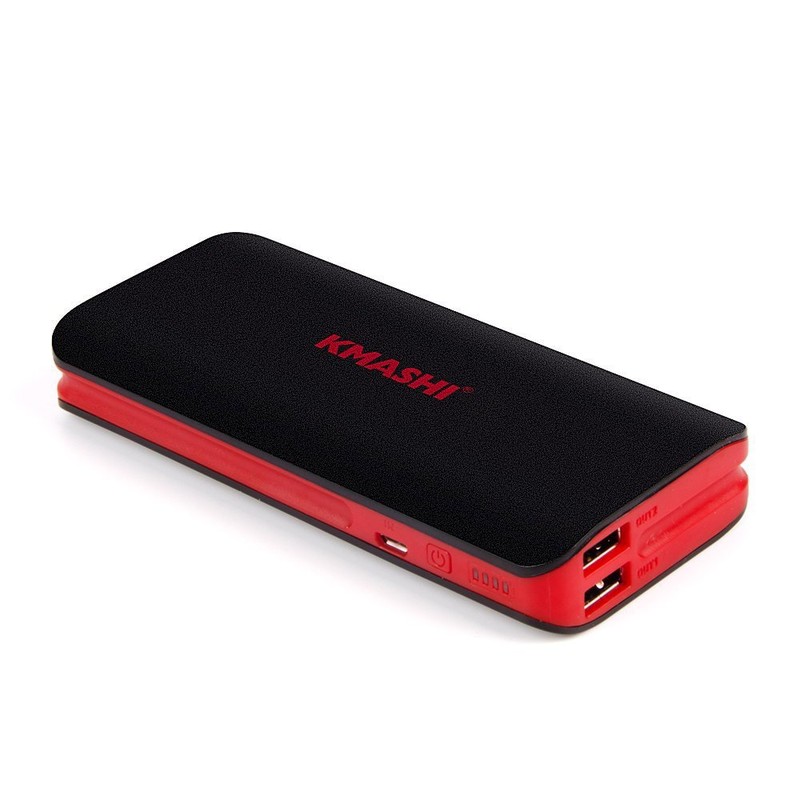
Kmashi is currently offering its 10000mAh power bank for just $9.20 at Amazon with coupon code DZIBCBG3, a savings of nearly $5. With this, you can charge two devices at the same time, and 10000mAh is enough for multiple full charges of your phone or tablet. There are four status LEDs that easily show you how much power the pack has, and it can output at a total of 5V 3.1A between the two ports.
Remember, you’ll need coupon code DZIBCBG3 to get the full savings.
See at Amazon

Can someone Photoshop the Eiffel Tower under my finger? Simple request, hilarious results
When Sid Frisjes visited France he, like many before him, attempted to get a humorous photo with him stood in front of the Eiffel Tower, with the perspective looking like he was touching it.
When he saw the image, though, he realised it was anything but.
But instead of moving further away and retaking the picture to have the desired effect, he decided to appeal to the internet. And 4Chan. The fool.
#eiffeltower #Paris, nailed it!
A photo posted by Sid Frisjes, the Coolinary Kid (@sidfrisjes) on Apr 17, 2015 at 5:13am PDT
His simple request to forumites was to manipulate the photo to make it look like he had indeed placed his finger atop the Parisian tourist attraction. Hilarity ensued.
“Can someone Photoshop the Eiffel Tower under my finger?” soon became an internet meme and we’ve collected some of the best efforts from the many submitted across a number of sites.
4Chan
There are hilarious ones, silly ones, and some that are just plain bizarre. All you have to do is click through the gallery above to check them out. If we find any more we like, we might add them too over time.
In addition, if the obvious Photoshop manipulation of an image tickles you, you should also check out our 79 Photoshop errors gallery. In many ways they are worse as they weren’t meant to be funny to begin with.
Enjoy.
Ever wondered what Wi-Fi looks like? These new pictures show it’s stunning
Wi-Fi signals are all around us, yet most of us have no clue what they would look like if we could see them. Now that’s changed.
This is Lightpainting WiFi, a collection created by the Touch Research Project at Newcastle University. The group has been able to use smart sensors and cameras to capture Wi-Fi signals in the world around us, and they’re beautiful. It calls this area, that’s just outside our visible world, Hertizan Space.
The project has employed the use of long exposure photography in conjunction with RSSI sensors to visualise the otherwise invisible Wi-Fi signals. These pictures are being dubbed “digital ethereal” by their creators.
The photos taken are either in a day to day scenario or in an enclosed studio space. The difference in the way the Wi-Fi signals move and spread out is obvious. It’s interesting to look at the photos where a smartphone sits in one place and the Wi-Fi billows out from it like an explosion.
The studio shots show how the signals can be moved by object interaction. Colours move from blue, for a weaker signal, up to red for strongest signal. Check out the gallery above to enjoy a look into an otherwise invisible world that surrounds us everyday.
READ: 79 of the worst Photoshop errors ever, you won’t believe your eyes
 AIVAnet