


Qualcomm plans to release dev kit to help improve the VR experience on mobile
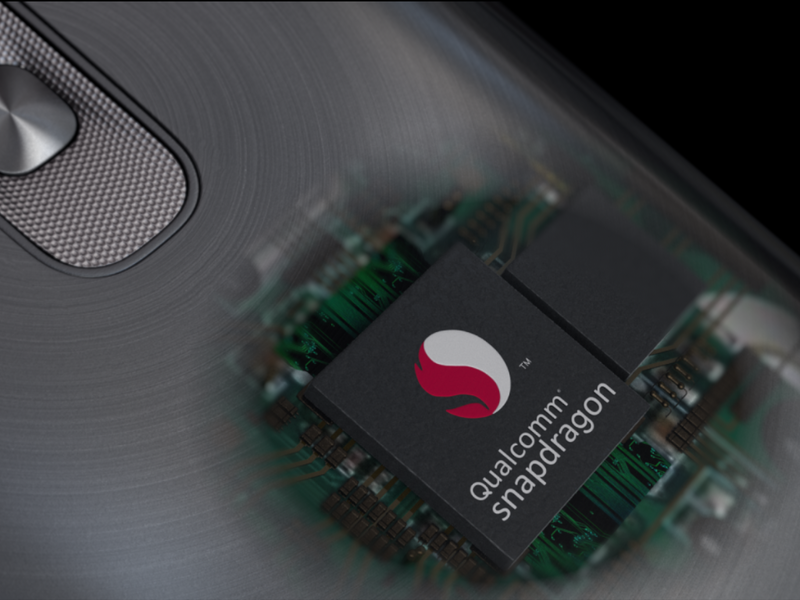
Qualcomm has announced a new software development kit for virtual reality. Utilizing the power of its next-gen processors, the company is working to offer developers an expansive array of tools for virtual reality, while optimizing everything with power efficiency in mind. Expected for Q2 2016, the new SDK with chips like the Snapdragon 820 will ensure consumers are able to enjoy a comfortable and less-demanding VR experience on mobile.
The SDK will include a number of technologies for developers, including DSP sesnor function, fast motion to photon, VR layering, and power management. Those seeking more details on these implementations should hit the press release below to see what’s on offer for developers.
As aforementioned, the SDK from Qualcomm is expected to hit public domain in the second quarter of 2016.
Press Release
SAN FRANCISCO, March 14, 2016 /PRNewswire/ — Qualcomm Incorporated (NASDAQ: QCOM) today announced that its subsidiary, Qualcomm Technologies, Inc., has introduced a new virtual reality (VR) software development kit (SDK). The next generation of mobile virtual reality applications is complex, with extreme power consumption constraints and challenging performance requirements that must be met in order for the VR applications to become truly immersive. Advanced heterogeneous processors like the Qualcomm® Snapdragon™ 820 processor are capable of supporting immersive VR experiences, but can also be difficult to fully utilize without the right set of tools for developers. The new Snapdragon VR SDK is designed to abstract the complexity of immersive virtual reality and provide developers with access to optimized, advanced VR features, to simplify development and to help them attain improved VR performance and power efficiency with the Snapdragon 820 for Android smartphones and upcoming VR headsets. The SDK is expected to be available in the second quarter of 2016 through the Qualcomm Developer Network.
For the first time, many new technologies that are crucial for an optimal VR user experience will be supported in the Snapdragon VR SDK. These include:
- DSP sensor fusion: Utilizing the full breadth of technologies built into Snapdragon 820, the SDK enables developers to create more responsive and immersive experiences by easily accessing the right combination of high frequency inertial data from gyroscopes and accelerometers via the Snapdragon Sensor Core and predictive head position processing with the Qualcomm® Hexagon™ DSP
- Fast motion to photon: Supports asynchronous time warp with single buffer rendering for fast transformation of rendered images in 3D space, which helps reduce latency by up to 50% compared with not using the SDK
- Stereoscopic rendering with lens correction: Supports 3D binocular vision with color correction and barrel distortion for improved visual quality of graphics and video, enhancing the overall VR experience
- VR layering: Generation of menus, text, and other overlays so that they render correctly in a virtual world, reducing distortions that would otherwise make them difficult to read
- Power management: Integration with the Qualcomm® Symphony System Manager SDK to provide cohesive CPU, GPU, and DSP power and performance management to help achieve stable frame rates for VR applications running in low-power, thermally-constrained devices – improving power efficiency compared to not using the SDK
“We’re providing advanced tools and technologies to help developers significantly improve the virtual reality experience for applications like games, 360 degree VR videos and a variety of interactive education and entertainment applications,” said Dave Durnil, senior director, engineering, Qualcomm Technologies, Inc. “VR represents a new paradigm for how we interact with the world, and we’re excited to help mobile VR developers more efficiently deliver compelling and high-quality experiences on upcoming Snapdragon 820 VR-capable Android smartphones and headsets.”

LG Stylus 2 to be first smartphone with DAB+ radio
LG unveiled the 5.7-inch LG Stylus 2 handset during Mobile World Congress in February but has now announced an additional feature not discussed at the time.
The phablet will come to select European countries and Australia with a DAB+ radio decoder. It will be the first smartphone with that functionality to be available.
Like DAB, DAB+ decodes digital radio broadcasts in countries that support it. The system is a step-up from regular DAB in that it is more efficient, providing better audio quality at lower bitrates and has been adopted in many regions already.
There are few DAB+ services in the UK, but a DAB+ receiver or radio can also decode and play the older DAB broadcasts, so the Stylus 2 will be able to playback digtal stations here.
The phone will also initially be available in Belgium, Germany, Italy, Netherlands, Norway and the aforementioned Australia. A release date is still to be revealed, however.
The LG Stylus 2 also features a 1280 x 720 resolution display, Android 6.0, quad-core 1.2GHz processor and 1.5GB of RAM. There is 16GB of on-board storage and a microSD card slot allows for expansion by up to a further 128GB.
Its rear camera has a 13-megapixel sensor, with 1080p video recording, while the front is 8-megapixels for selfies.
Samsung Entrim 4D VR uses nerve signals to make you feel you’re really flying
While 2016 is the year of virtual reality Samsung is already setting its sights higher for the future with a full 4D VR experience it calls Entrim.
Coming from Samsung’s secret projects lab, C-Lab, the Entrim 4D unit aims to offer a virtual reality feeling of motion as well as visuals and audio. The result is a virtual feeling of movement, like flying, without actually leaving your chair.
Entrim 4D uses a combination of Galvanic Vestibular Stimulation and algorithms to send messages directly to the nerve in the ear. This allows the headset to synchronise with the body to create a sense of movement as the video content shows corresponding movements.
The headphones are equipped with the electrodes that are able to transmit the movement data. The result should be a feeling of movement to create a more immersive sense of speed and direction. Samsung says that when this is paired with its drone, the headset can utilise drone movement data and transmit that to the headset wearer, so they feel like they’re flying too.
The result of all this should be a 4D movement VR experience that doesn’t need the motion chairs currently used to create a feeling of movement.
Before you start worrying about virtual reality already making you motion sick, this is being created specifically to tackle that issue.
The Entrim is still in developmental stages but expect this tech to appear in the future of virtual reality experiences.
READ: Samsung Gear VR Consumer Edition review
The best GoPro photos in the world, prepare to lose your breath
Since GoPro launched its latest camera range in the GoPro Hero4 the photos being created are stunning. With it comes new 4K video speeds of 30 frames per second, a rear touchscreen display and two times faster image processing. The camera remains largely the same at 12-megapixels with an f/2.8 aperture – but the photos appearing online are breath-taking.
GoPro’s decision to keep the camera the same shows that it’s already very good. Thanks to the camera, and video stills, the internet is awash with stunning images from GoPros around the world. Finding them all is a bit of a job, so we’ve done it for you.
From surfing and skydiving to animal close-ups and stunning scenery, this gallery has some breath taking images that we only get to see thanks to the GoPro. No longer are rare wildlife photos restricted to pros who spend years awaiting the perfect shot – now thousands of GoPros are scanning the world all at once, constantly. We’re only ever going to get more amazing shots to wow us.
For now enjoy this selection found mainly from Facebook, Flickr, GoPro and Photobucket.
If you’ve got photos taken on your GoPro you wish to submit then please email them to us or tweet them our way.
READ: GoPro HD Hero4 Black Edition vs GoPro HD Hero3+ Black Edition: What’s the difference?
Half-Life and Portal movies going ahead says Star Wars director J.J. Abrams
The long and eagerly awaited Half-Life and Portal movies are coming and director J.J. Abrams has confirmed more details.
Valve’s Gabe Newell and Star Wars director J.J. Abrams spoke about a team up back in 2013 but it’s only now that confirmation has arrived proper. Speaking at the SXSW festival The Force Awakens director said: “We’ve got writers, and we’re working on both those stories. But nothing that would be an exciting update.”
Of course that much detail itself is enough of an update to get even a mild Half-Life fan clicking for a YouTube fan made film to fill the wait time. That should be a long haul since it’s still in the writing stages.
Also Valve’s Newell has said in the past that if these movies aren’t perfect he’d rather do them in-house at Valve, so there will be plenty of pressure to get them right.
Which movie will come first is unclear but we’d imagine the bigger fan base of Half-Life will be catered to initially.
While we’ve got a long wait ahead of us before meeting the real-world Gordon Freeman or Portal’s Chell, we’ve got some brilliant fan-made films to keep us going in the meantime. Check the link below to see what happens when real-world Gordon Freeman goes head-to-head with Chell.
READ: Portal vs Half-Life real world video: Prepare to be gravity gunned away
This is what Legend of Zelda: Ocarina of Time could look like on Nintendo NX
As we head towards the summer and E3 rumours of Nintendo’s new console, the Nintendo NX, are bound to ramp up. For now though, with little actual information, it’s more about what it might be capable of than anything concrete.
One thing we’re pretty sure of though is that it will be on a par with PS4 and Xbox One in graphics terms at least. And that means we’ll get some stunning-looking homegrown games.
More than likely that will include a Zelda game somewhere down the line, even if it’s yet another refreshed and remastered version of The Legend of Zelda: Ocarina of Time.
READ: This is what Mario could look like on Nintendo NX
We’ve already had versions for the GameCube and Nintendo 3DS, so a Nintendo NX special edition would not be contrary to company traditions. And if it looks anything as good as the Unreal Engine 4 recreation by CryZENx we will not be complaining.
PC owners can even check out his own-made demo yourselves.
The programmer has recreated the Death Mountain crater section of the classic RPG, using Unreal Engine 4, and you can download it to try out the area yourself. He’s also posted a video showing how great it looks with modern lighting and textures which you can see below.
Hopefully, the Nintendo NX will be capable of much more than tarting up older games, but if we can get a classic or two like this demo, we’ll be very happy too.
You can download the 730MB PC demo from the link provided on CryZENx’s YouTube posting.
Six tiny robots can pull a two-ton car
Stanford university’s uBots have pulled off a feat that makes ants look like slackers. Working in concert, six of the robots managed to tow a 3,900 pound car, despite weighing just a half-ounce each — much less than other car-towing robots. The secret, according to the team, is biomimicry. The wee bots are designed to imitate gecko lizards with sticky feet that can support a heavy load but still detach easily. In previous experiments, that allowed them to climb up walls and pull heavy weights. This time, the robots are channeling ants by working as a team to pull a heavy load.
The researchers noticed that ants can boost their power by using three out of six legs at once. “By considering the dynamics of the team, not just the individual, we are able to build a team of our ‘microTug’ robots that, like ants, are superstrong individually, but then also work together as a team,” grad student David Christensen told the NY Times. Working in a similar fashion (albeit with wheels), the uTug robots can muster a force of 200 Newtons, or around 45 pounds. With their sticky tires, that’s enough to slowly but surely pull a two-ton vehicle (see the video below).
Via: NY Times
Source: IEEE (paywall)
John Oliver breaks down the San Bernardino iPhone case
John Oliver has earned himself a reputation for explaining politically complex topics in a way that anyone can understand during his Last Week Tonight talk show. After tackling net neutrality and Donald Trump, the comedian has turned his attention to the San Bernardino iPhone case. The legal tussle between Apple and the FBI has been all over the news recently, but the various arguments and counterarguments can be difficult to describe to someone that rarely reads about encryption, backdoors and government warrants. If you have friends or family that fall into this camp, Oliver’s new 18-minute breakdown is a good place for them to start.
The TV host delivers the recap with his usual wit and charm, packing in plenty of gags that should keep even the least tech-savvy viewer engaged. In the video, Oliver covers the general purpose of encryption, the San Bernardino shooter’s iPhone, exactly what the FBI has asked Apple to build and its justifications for such an order. He then summarises Apple’s counterarguments and the potential issues — technical and political — with building such a controversial workaround. It’s not the deepest of dives, but if you know someone that wants to quickly catch up with the whole affair this is an accessible, humorous and fairly comprehensive take.
Source: Last Week Tonight with John Oliver (YouTube)
App Store Algorithm Failures Reported in Several Countries
Apple came under fire over the weekend for an apparent failure of its App Store algorithm to rank app categories using any meaningful criteria.
Several users took to Twitter to voice their displeasure after subcategories in the App Store Games section were shown to be displaying multiple variations of similarly named apps spanning several pages.
More examples quickly followed, and apps with almost identical titles consisting of numbers were shown to dominate several “New”, “Featured” and “What’s Hot” sections in categories around the world, suggesting a complete breakdown in the way the algorithm processes certain content in the App Store database.
The issue was reported by users in several countries, including New Zealand, Spain and the UK, but users in the U.S. were apparently unable to replicate the problem.
Apple’s marketing chief Phil Schiller, who took over App Store leadership in December, responded to the criticism via his Twitter account, promising to investigate the issue.
@WesleyDyson @Adora Shouldn’t happen. We’ll look into it. Thank you.
— Philip Schiller (@pschiller) March 13, 2016
Back in November, Apple reportedly made significant improvements to the algorithm that ranks apps in the App Store, although those changes focused on returning more useful results following a specific keyword search.
Apple often hand-picks apps for promotion on the App Store landing page based purely on merit, but the bulk of the store’s organization is automated. Apple has not revealed specifics about how its algorithm usually sorts listed categories, however it is generally accepted among developers that install frequency, reviews, star ratings, engagement and sales play a combined role.
Tag: App Store
Discuss this article in our forums
Emicro One scooter review: Keeping up with the kids?
As we push off once again, the motor kicks into action and zoom through the English countryside without a care in the world. We effortlessly pass a man walking his dog. The two young children who have accompanied us on this adventure are doing everything they can to keep up. It’s clear they are getting annoyed by the lack of effort dad is putting in, but hey, that’s a “them” problem, not an “us” problem.
We can’t blame them, they might be on micro scooters, feet hammering floor hell for leather, but we’re on the Emicro One scooter – an electric-motor adult take on the child’s accessory that virtually every family takes to the park these days.
Emicro One review: Design
Looking like a regular kid’s scooter, only considerably more black and beefier, the Emicro One Scooter is a heavy beast (certainly compared to the regular scooters you carry when your children get bored), weighing in at 7.5kg.
Pocket-lint
Like the kids models the company sells, this scooter is capable of folding in half when you need to pack it away, and the main upright poll that delivers the handle bars is adjustable to suit a variety of different heights.
The main difference in design compared to the kids model, though, is that there is a much bigger and much wider foot-plate, presumably to cope with your grown-up-sized shoes. It certainly works: we were able to put both our feet on the board at the same time and enjoy the world as we zipped along.
To brake, you simple press the rear mud flap down against the wheel. This flap doubles as a regenerative brake to charge the battery. Clever.
Importantly there is no throttle to squeeze or twist, no real evidence that it is an electric scooter, and no complicated combination of buttons to learn. The only real giveaway is four LED lights on the foot-plate to tell you how much charge you’ve got left. And, of course, the fact it’s so heavy.
Pocket-lint
Emicro One: Performance
If you are under the assumption that you’ll be able to jump on the Emicro One and whizz off to work with zero effort from you, then don’t. The best way to describe the electric element here is as an assist to your journey, not one that fully powers it. You will still have to “scoot”, you will still have to be involved in kicking off to get moving, and it is only once you’ve got some motion that the electric motor kicks in to help you. That said, you shouldn’t underestimate how much assistance this scooter is willing to give. As we’ve said we could easily “keep up” with the kids on their scooters with very little effort.
A bit like modern cars the One has three performance programmes to choose from: eco, standard and sport. Each limits the maximum speed of the support and the maximum power of the motor. Go eco and you won’t be able to go as fast, but you do get more distance before the battery dies.
Not that distance is a major problem, as the emicro one has a range of around 12km on a single charge, something we had no problem achieving over a couple of days without plugging in. Even if you do have to charge it, you’re back up and running within 60-minutes of plugging it into the wall.
If an hour is too long to wait, or you’re miles away from a changing point, it doesn’t entirely matter. This is still a scooter through and through, and so still works as a scooter whether you opt to use the electric motor element or not.
Pocket-lint
Our very first use was without the battery as, rather embarrassingly, it turns out you can deactivate the motor element by tapping the brake lever three times in succession. It was only when we spoke to Micro Scooters to see whether we were doing something wrong, that they informed us that we were. Opps.
When the motor is going, although it is never overly fast, we found that it still goes fast enough that without focus, especially when stopping, you can certainly feel like the scooter is running away from you. The gut reaction is to giggle and then jump off as quick as you can, but we suspect with time you’ll get to learn that feeling. Well, hopefully.
Giggles aside you quickly learn to control the speed, although expect to get plenty of looks as you hurtle past. Kids on scooters is an expected everyday occurrence, an adult on one turns heads.
First Impressions
There’s a catch, there’s always a catch, and in the case of the Emicro One scooter it’s the price. Forget about the over-heavy 7.5kg of weight for a moment and contemplate the eye-watering £750 price tag. Yes, for a scooter.
It is not that we can’t see where the money goes though: built like a tank, the Emicro One is clearly happy to take a beating, plus it works a treat zipping you along at comfortable speed. Just that £750 could buy you an old banger, or get you a lot of taxi rides – or simply buy you 10 non-motorised scooters that will help you actually do some exercise at the same time.
It’s a shame, because we like the Emicro One, as do our kids and anyone who’s tried it out, smile beaming across their faces. But as as soon as we mentioned the price, that smile turned to laughter – the kind that couldn’t fathom how anyone could justify spending that much on a scooter.
 AIVAnet