


Welcome to the age of the micro-singularity

By Amber Case
Last month, over a billion people around the world suddenly knew the name and appearance of the very same woman, and simultaneously began exchanging opinions about her. And while the unveiling of Caitlyn Jenner is not news in the traditional sense, and there was no shortage of major events erupting around the globe at the same time, the Internet largely converged for several hours around discussions of who Caitlyn was, and what she stood for.
This is actually just the latest instance of what I’ve come to describe as a “micro-singularity,” which, broadly defined, happens when the world’s social Internet channels momentarily focus their awareness around a single phenomena, while it’s still happening-Émile Durkheim’s conscience collective digitally transformed into a literal entity. Recent micro-singularities include The Charlie Hebdo massacre, the llama chase, the blue versus gold dress debate, and the Boston bombing with its subsequent manhunt. Japan’s Fukushima Disaster, the Haiti Earthquake, and Michael Jackson’s death are milestones in the development of the micro-singularity.

Though we might consider the American Revolution’s “shot heard round the world” one of history’s first micro-singularities, digital technology has increased our ability to spread news. But even though they can literally impact the lives of billions in the space of several hours, our official institutions have been slow to understand what they are, how they work, or just as key, how we should deal with them.
Understanding Micro-Singularities
At their essence, micro-singularities typically bear these traits:
They’re Powered Through-and Evolving Within-Social Media
Thanks to its streamlined UI and the pervasiveness of mobile phones (most people around the world primarily engage the Internet via smartphones), micro-singularities tend to first launch on Twitter, then fan out to the other major social networks. As awareness of the triggering event reaches saturation levels, the micro-singularity generates aftershocks in the form of one or more collective responses, often via meme. So for instance, very soon after the Internet became aware of the horrific Charlie Hebdo shooting, it had also evolved a direct response that spread just as quickly: Je Suis Charlie.
They’re Organic, Subjective, and Rarely Initiated by Traditional Organizations
Micro-singularities will occasionally emerge around official, planned events such as the State of the Union or the Oscars; more typically, however, they emerge from the grassroots, powered by what most interests or concerns an aggregate of social media users. For this reason, celebrity related events are just as likely (if not more so) to trigger a micro-singularity, than a “hard news” event. (And even people disinterested in a particular celebrity will find themselves impelled to publicly express an opinion, even if it’s just annoyance.) Cataclysmic weather events, such as tsunamis and earthquakes, are just as likely to cause a micro-singularity, as everyone within the affected region and everyone connected with them can launch a cascade of awareness that rapidly encompasses the world. And as we saw with Justine Sacco’s unfortunate Tweet before flying to Africa, a single individual can trigger a micro-singularity.
They Shape The Reaction of Offline Media and Institutions
Most people around the world are not active Internet users, still getting their news through traditional offline media channels; governments and other legacy organizations also tend to process and respond to major events offline. Consequently (and ironically), the micro-singularity shapes the way these institutions react to the triggering event. For television and radio networks, the very existence of the micro-singularity itself becomes news (“Today the Internet flared up due to…”), while government agencies will sometimes send out actual press releases or hold physical press conferences directly responding to it. (Often hours or even days after it first occurs, a glacial reaction in Internet time,)
This final feature illustrates the challenge we now face: Our traditional institutions are still ill-equipped to deal with micro-singularities now, let alone in the next decade, as billions more join the Internet via low cost smartphones, and micro-singularities become even more frequent, pervasive-and, potentially, hazardous.

Better Preparing for Our Micro-Singularity Age
As micro-singularlties become a more engrained part of our daily life, our major social groups will gradually adapt to account for them. However, there are strategies we can implement now, so we’re better prepared sooner rather than later:
Micro-Singularity Emergency Protocols
An action plan is especially important for authorities to have in hand, ready to deal with a variety of micro-singularities which have historically led to real world social disruptions. Immediately after the Boston bombing, for instance, Reddit and other Internet communities pinned blame on an innocent person (who had, in fact, drowned weeks before), and little was done to slow down the promulgation of this misinformation. (And mobs using social media to locate truly guilty suspects aren’t particularly appealing, either.) For this reason, this emergency protocol should include plans to locate and protect the subject of a hostile micro-singularity.
Better Social Network Architecture
Twitter and the other key social nodes should immediately add filters and other architectural features to enhance the virtues of micro-singularities, while minimizing their negatives. For instance, Twitter’s “Trending” feature helps highlight the emergence of new micro-singularities, but fails at giving readers a fuller, more comprehensive view of them. And to prevent riots, mob rule, and other real life externalities, trending topics should automatically come with breaking systems-for example, when users attempt to post real life addresses in relation to a trending topic, Twitter could pop up a dialog, warning them of the potential consequences.
Agile, Online, Non-Hierarchal Organizations
The micro-singularity has turned industrial age hierarchy upside down, with our elected officials and corporate/cultural leaders often the last to know when one has been triggered, or why it has. They need to be part of the conversation as they happen, where they happen. All too often, however, the people in direct control of an organization’s social media channels often have the least institutional power, and must kick any response they might make (however important) up the approval chain, waiting precious hours before they can even publish it. Social media can no longer be the province of poorly paid interns, but a core node of every organization; they must learn to respond quickly and authoritatively, but with less top-down control.
Simply put, since the era of the micro-singularity Is less hierarchical and more democratic, institutions must learn to take on those qualities-or find themselves left behind.
[Illustrations: Ken Schulze via Shutterstock]
More from Fast Company:
- 5 Simple Office Policies That Make Danish Workers Way More Happy Than Americans
- Adidas Knit These Sneakers Entirely From Ocean Plastic Trash
- California Is Sitting On The Solution To Its Drought Problem
- These Beautiful Floating Villages Are Made From Old Oil Tankers
- This Throwable Camera Lets Cops See Around Corners
Filed under: Internet
France evicted from moral high ground over spying revelations

France has joined the US and UK on an ignoble list of countries intercepting international communications, according to a report from L’Observateur. The news follows a Wikileaks article detailing how the NSA recorded highly sensitive calls placed by three different French Presidents. The paper noted that since France was allegedly doing something similar, it may explain why President Francois Hollande had a muted response to the earlier revelation, calling it merely “unacceptable.” Meanwhile, it’s getting hard to keep track of who’s spying on who without a cheat sheet — not even counting spying done by nations on their own citizens.
The Wikileaks documents detailing US spying on France were pretty bad. They showed that the NSA had not only recorded the sensitive conversations of French officials, including the President, but also attempted to intercept “every French company contract or negotiation valued at more than $200 million,” according to Julian Assange. US spies then turned around and shared that information with key allies, including the UK, Canada, New Zealand and Australia.
The NSA attempted to intercept “every French company contract or negotiation valued at more than $200 million,” according to Julian Assange.
The French government reportedly didn’t freak out more because it’s own program was pretty extensive, according to L’Observateur. The French spy agency DGSE tapped up to five major undersea fiber cables with the cooperation of French operator Orange and telecom supplier Alcatel-Lucent. Ironically, France was reportedly sharing information it retrieved over the cables with the UK’s GCHQ security agency via a previous arrangement — meaning Britain was playing both sides, if true. We’d take the new allegations with a grain of salt without more proof, but it’s not the first time we’ve heard reports of widespread French spying.
Filed under: Internet
Source: L’Observateur
Here’s your first look at Telltale’s ‘Minecraft: Story Mode’ game

The people behind Minecraft just kicked off Minecon 2015 with a bang. At the fan convention’s opening ceremony, Mojang’s Lydia Winters debuted the first trailer for Minecraft: Story Mode, an upcoming title from Telltale Games. Yep, the same developer behind the point-and-click games The Walking Dead and The Wolf Among Us. As you might expect, Story Mode combines the game’s blocky aesthetic with a branching, narrative-based adventure. Players take control of Jesse, who has to find the fabled “Order of the Stone” with his friends to save the world from destruction. There’s a panel later today with the Mojang and Telltale folks, so we suspect we’ll hear a lot more details then.
Filed under: Gaming
Source: Telltale Games (YouTube)
Upcoming Samsung Galaxy A8 appears in South Korean brochure

We’ve heard an awful lot about Samsung’s upcoming high-end smartphone, the Galaxy A8, over the course of the past few months, but we haven’t had any indication of when it’s supposed to launch. Up until now that is. Earlier today, a picture emerged online promoting the unofficial phone in an independent retailer’s brochure, thus suggesting that its release is imminent.
The image below confirms everything we already know about the device. It will sport a 5.6-inch Full HD display, a Snapdragon 615 octa-core processor, 2GB of RAM, 32GB of internal expandable storage, a 16-megapixel rear-facing camera, a 2-megapixel front-facing shooter and a 3,050mAh non-removable battery.

Unfortunately, we still don’t have any information with regards to pricing or availability, but judging by the strength and credibility of this leak, we think that Samsung will take the wraps off this handset within the next couple of weeks — so be sure to check back for more information.
Will you be picking up the Galaxy A8? Be sure to let us know in the comments section below.
Source: GSM Arena
Come comment on this article: Upcoming Samsung Galaxy A8 appears in South Korean brochure
Dropbox to offer more free storage if users improve their account security

Dropbox is trying to motivate their users into increasing their account security by rewarding them with extra free cloud storage. Dropbox currently offers 2GB of free storage and charges $10 per month fro 1TB and $15 for unlimited. The company is trying to get their 400+ million users to use a two-factor authentication to protect and increase the security of their accounts.
The two-factor authentication provides an extra layer of security in addition to a regular password. This will mean that users will have to input their user name and password, and when using a new device will have to input a fingerprint, a voice command, or more commonly used a phone number to receive a code sent to them by text. According to Patrick Heim, Dropbox’s head of trust and security, who had a talk with ITPro, the two-factor authentication has been implemented in Dropbox since 2012 but not enough users use it.
“One of the things we’re working on right now is a project we haven’t broadly disclosed yet, but it’s really to incentivize consumers to go through a security health-check both in terms of the authentication settings, the sharing settings, et cetera, and when they complete that, they may get additional free storage space as an incentive.”
People nowadays rely and live their lives more and more with the use of technology. The issue of security in the digital environment has always been around and Dropbox hopes to increase the security of its user accounts with this incentive. 1 or 2 gigabytes would probably be enough to convince enough users in my opinion. Dropbox has not yet given information as to when the new incentive based project will start rolling out, and if it will for sure.
Source: VentureBeat
Come comment on this article: Dropbox to offer more free storage if users improve their account security
LG G2 to reportedly receive an update to Android 5.1.1 Lollipop
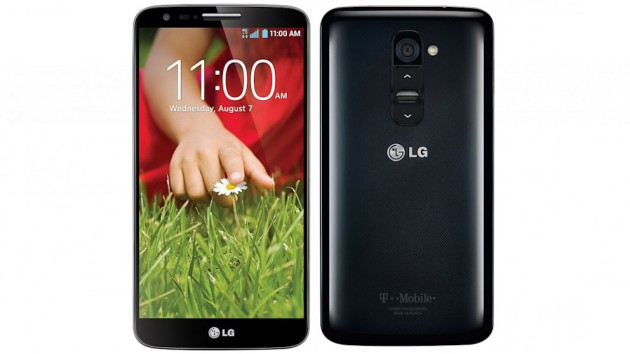
It seems that LG isn’t done with the LG G2 quite yet, as the device, according to a report from AndroidPit, will receive an update to Android 5.1.1. According to the LG software development employee that confirmed the claim, the update is already in the making and will soon be released to the LG G2. The update will not only bring firmware upgrades, but will also include LG’s custome Android user interface, LG UX 4.0. This means that the LG G2 will also have new software features similar to the ones found in the flagship LG G4.
The source claims that the update won’t be released for another 2 months. In addition, if you live in the US, the update might come even later due to US carriers’ time-consuming approval process.
Source: AndroidPit
Via: Panandroid
Come comment on this article: LG G2 to reportedly receive an update to Android 5.1.1 Lollipop
The LG Nexus 5 (2015) will not be based on the G4

We’ve known for a while now that Google is set to launch not one, but two Nexus smartphones later this year. One will be manufactured by LG and the other by Huawei. However, if a new report out is anything to go by, it would appear that the LG-built Nexus will not be based on its flagship G4 as previously thought. Instead, the South Korean company has teamed up with Google to design the upcoming device from scratch.
It’s a pretty well-known fact that up until the Nexus 6, all former Nexus-branded devices were adapted versions of popular Android flagships. However, Google wanted a more unique smartphone to flagship its lineup, so when the collaboration began with Motorola for the Nexus 6, the search engine giant broke the mould and asked the company to start from the ground up — which is exactly what it’s rumored to have done with LG.
The report claims that the smartphone is currently being referred to as the Nexus 5 (2015) internally, although the name could change at a later date and also suggests that LG could be working on a more pocket-sized device, whilst Huawei may be developing a phablet for Google, possibly codenamed the Nexus 6 (2015).
Fortunately, we don’t have to wait too much longer before we find out more about these handsets, all Nexus smartphones are launched alongside new Android versions, and Android M is expected to appear on our handsets some point this fall. We do have to commend Google, though. It’s done an amazing job at keeping the leaks under wraps and preventing any potential hardware specifications from seeping out. Well, for now, anyway.
Source: AndroidPIT
Come comment on this article: The LG Nexus 5 (2015) will not be based on the G4
Google Chrome hits 1 billion downloads on the Play Store

Today, Google Chrome become the twelfth application to hit 1 billion downloads on the Play Store. It joins an elite category of mostly Google-developed applications to have attained that number, with the exception of Facebook, Facebook Messenger and Twitter.
So what’s going to be the next app to hit 1-billion downloads? Well, according to Android Rank, it’s going to be either Street View or Play Music, which each have around 500 million downloads to date.
Congrats, Google Chrome!
Come comment on this article: Google Chrome hits 1 billion downloads on the Play Store
OnePlus has sold out of Google Cardboard VR headsets

Earlier this week, OnePlus made its modified version of Google’s Cardboard virtual reality headset available to order free-of-charge apart from the $5 delivery fee. With OnePlus gearing up to announce its next handset(s) via a virtual reality event on July 27th, a Cardboard headset be useful to view any potential easter eggs. Sadly, if you’ve been waiting for the right time to order your OnePlus Cardboard unit, you’re set to be disappointed.
If you go to the OnePlus Cardboard product page, it’s showing up a being ‘Sold Out’, which is hardly surprising considering that customers only had to pay the $5 delivery fee and that OnePlus will have had limited stock in the first place. Will OnePlus get more units? It’s hard to say, but one would hope so because there’s still just over 3 weeks to go until the OnePlus 2 launch on July 27th. If you are disappointed not to get your hands on a free OnePlus Cardboard, will you be sourcing a similar device from another outlet? Let us know in the comments below.
Source: OnePlus
Via: PhoneArena
Come comment on this article: OnePlus has sold out of Google Cardboard VR headsets
Infographic: How to use Samsung’s S Health app to achieve your fitness goals

If you’ve ever let yourself get out of shape and then attempted to reverse the process, you’ll know that it’s hard work. Results take time, and sometimes you can lose heart when you don’t see solid evidence that your effort is rewarded with sculpted muscles. Of course, if you have a Samsung smartphone, you can make use of the Korean tech company’s S Health fitness app to both track your progress and to measure just how much exercise you are actually doing, as shown in the infographic below.
The infographic shows how sleep, exercise and your diet impact on your health and how you can use the app to set goals to achieve. The S Health app offers stats such as your Most Active Day and your daily/weekly/monthly goals to help keep you motivated. Whether you are walking, running, cycling or hiking, the S Health app will track your progress. Have you used the S Health fitness app before or do you use a different app to track your progress with your fitness regime? Let us know in the comments below.

Source: SamsungTomorrow
Come comment on this article: Infographic: How to use Samsung’s S Health app to achieve your fitness goals

