


Old versus new: HTC One M8 vs HTC One M9
HTC have finally released the cover on their new flagship HTC One M9 after it was heavily leaked. With the focus primarily on small hardware improvements that significant changes, lets see how the new HTC One M9 compares to the older HTC One M8. We’ll be updating this chart as more specs get revealed over time and the benchmarks begin to get posted.
Much of the same, but better
A spec improvement, power button moved to the side, and a camera refinement sees the HTC One M9 as an incremental update to the previous model and perhaps not the major redesign some were hoping. HTC have admitted that they got it right with the M8 and it is seen in the M9 just how little they wanted to deviate from the old design given how much they liked it.
HTC describe the M9 as the technical aspects such as antenna design and frame from the M7 combined with the unibody design from the M8, combined with the latest hardware. But did HTC make enough changes to their already tested M8 design to make the M9 appealing enough to upgrade?
But it’s not just the hardware – of course the HTC One M9 comes with Android 5.0 and Sense 7, which is the best experience yet from an HTC device. HTC have really taken the relationship of the hardware and software to the next level with the M9 and this is shown off in the camera software. The boomsound is retained from the M8 and it is still as impressive as before – this should certainly be the standard moving forward for speaker design on smartphones and tablets.
HTC’s DotView case is back and is even better with the One M9 allowing even more customisable settings for consumers, taking the concept even further.
Drop us a comment below – is the new One M9 enough of an upgrade to the older model? HTC have opted to refine their M8 experience to offer us the M9, but did they chose right?
The post Old versus new: HTC One M8 vs HTC One M9 appeared first on AndroidGuys.
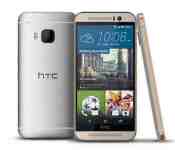
EE to carry the HTC One M9 with an exclusive single-tone gold finish, pre-orders begin March 9

EE in the UK has announced they will carry the all new HTC One M9. Pre-orders begin March 9th, but they didn’t specify and exact date as to when you will b able to get your hands on it. They will offer it in dual-tone silver and rose gold or single-tone gunmetal grey via the EE online shop, EE telesales and EE retail stores, but they will also offer a single-tone gold version exclusively for 3 months.
EE will also offer the new HTC Dot View cases, which allow users to answer calls without opening it. You will have your choice of Grey, Blue and Pink.
Click here to register for your device.
Full Press Release:
EE to offer the new HTC One M9 on the UK’s biggest and fastest network
HTC One M9 in single-tone gold, available exclusively from EE in the UK
1 March. London 2015. EE, the UK’s most advanced digital communications company, today announced it is to offer HTC’s new flagship smartphone, the HTC One M9, on its superfast 4GEE network. EE will also be the only UK network to offer the exclusive single-tone gold variant of the handset in the UK for an exclusive period of three months.
The HTC One M9 is perfectly suited to EE, with the handset’s (CAT 6) chipset able to take full advantage of EE’s 4G+ network. Offering download speeds of up to 150Mbps, 4G+ is ideal for streaming high definition video on the HTC One M9’s Super LCD3 screen, or playing high-quality audio through the HTC BoomSound™ speakers, now combined with 5.1 channel Dolby® Surround sound4 simulation for perfect, 24-bit high-definition sound.
The HTC One M9 combines a powerful UltraPixel™ front-facing camera with a 20 megapixel camera at the back for ultra sharp photos and videos in any light conditions. It also features the latest HTC Sense™ 7 experience. Highly customisable and intuitive, Sense 7 reinvents the home screen to deliver the most useful apps to the homepage based on location, boasts a more intelligent HTC BlinkFeed™, and with HTC Themes it puts users at the centre of the smartphone experience, intelligently analysing their favourite photos to modify the look and feel of their apps, colour scheme and backgrounds.
Consumer and business customers will be able to purchase the HTC One M9 handset in single-tone gold (gold available exclusively from EE at launch for a three month period), dual-tone silver and rose gold or single-tone gunmetal grey via the EE online shop, EE telesales and EE retail stores from launch. Pre-order opens on 9th March, ahead of launch.
EE will also be ranging the HTC Dot View case, which allows users to answer calls without opening it, in Grey, Blue and Pink.
Sharon Meadows, Director of Devices at EE, said: “The award-winning HTC One range has established a very dedicated fan base, and we’re sure that the third iteration will not disappoint with its great design and features. When paired with the UK’s biggest and fastest network, customers really will be able to make the very most from their smartphone experience.”
Peter Frolund, Vice President of UK and Ireland at HTC said: “We are incredibly excited to be able to offer the HTC One M9 with EE and include a single-tone gold device as an exclusive for their customers in the UK. The HTC One M9 establishes a combination of stunning elegance and design with smart features, allowing us to continue our reputation for challenging expectations in the mobile industry.”
EE’s superfast 4G service is currently available in over 500 major towns and cities across the UK, as well as approximately 4,000 smaller towns and villages.
For further information on the HTC One M9, including full details of EE’s price plans when available, consumer and business customers can register their interest at www.ee.co.uk/register
Come comment on this article: EE to carry the HTC One M9 with an exclusive single-tone gold finish, pre-orders begin March 9
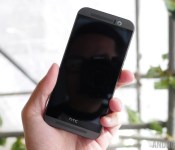
HTC One M9 hands-on and first impressions
brightcove.createExperiences();
We’re in beautiful Barcelona, Spain, where HTC took the wraps off its newest flagship model, the HTC One M9. The M9 is an iterative improvement over the already excellent One M8, but the fact that changes are minimal doesn’t take away from the intrinsic quality of HTC’s design. With that said, we’ve been spoiled with fast upgrade cycles, and few companies can pull off using the same basic design over several years. Will customers love the refinement of the M9 or will they look elsewhere for a fresh take?
We were privileged to get early access to the device ahead of today’s press event, and this is our hands-on preview of the new HTC One M9.
Design and build quality: refinement all around

From the get go, it’s obvious that HTC was happy with the design of the M8 and not shy to reuse it, in a refined form, on its newest device. Whether that’s a sensible choice or not it’s up for debate, but few will deny that the One M9 is a very compelling device. On the front, the M9 is almost identical to the M8, and yes, that black bar that many people seem to hate so much is still present. The large BoomSound speakers are present and accounted for, and the only subtle difference that could help you recognize the M9 is the slightly larger sensor module.
The M9 features “edgier” sides, which really helps to improve the grip – due to the rounded edges, the M8 was slippery and hard to handle at times, but that’s no longer a problem. In this way, the M9 is a combination of the M8’s front and the M7’s back. Coupled with the less slippery texture, grip is improved.

Turn the phone around, and the single biggest novel design element will pop right up. The camera module is now a rounded square and there’s no secondary depth sensor. HTC said it wanted to get back to offering users quality, rather than extra features. It’s safe to say that few will miss the depth sensor, and without it, the M9 looks a bit more balanced.
All in all, there’s almost nothing new and newsworthy, but HTC still managed to make the M9 better than in its predecessors from an ergonomics point of view.
Hardware and performance: smooth sailing

It’s the same story on the inside. There’s not much new stuff to talk about in terms of hardware features, aside the obligatory improvements in the processing department. With that said, the M9 delivers all the essentials you may need from a flagship phone in a well optimized package.
Joining the ranks of the G Flex 2 and the (unreleased) Mi Note Pro, the One M9 is one of the first devices to be powered by the new octa-core 64-bit chip from Qualcomm, the Snapdragon 810. There’s been a lot of talk about alleged overheating issues with this chip, but if they are any, they don’t seem to affect the M9. From our time with the device, we can say that the M9 really flies, with no sign of stuttering whatsoever, though software optimization may play a big part in this. The 3GB of RAM and the Adreno 430 GPU inside the S810 should ensure solid performance in multitasking and mobile gaming.

There’s 32GB of built-in storage, and a microSD card slot that lets you supplement memory by up to 128GB. That’s significant because the other big device launching today, Samsung’s Galaxy S6, does not support microSD, in a stunning reversal of the situation from a couple of years ago.
Battery capacity has been amped up to 2840 mAh, a 10 percent increase over the M8. Like most modern flagships, the M9 supports fast charging, however, there’s no wireless charging.
The 1080p display should be good news for those who prefer optimized performance and battery life over record PPI ratios. At 5-inch, few will be able to tell the difference between Full HD and Quad HD, so we’re actually happy to see HTC keeping it simple.
Camera: a step up, but questions remain

One of the biggest issues with the One M8 was its flaky camera performance. The 4MP UltraPixels was ultimately not up to par, with lacking performance in areas like the level of detail and even low-light shots, while the depth sensor added little real value.
For the M9, HTC is again trying to offer a great camera experience, as opposed to adding features of questionable usefulness. The 20MP sensor on the back of the phone should make possible large, detailed pictures that weren’t simply possible with the UltraPixel camera. Unfortunately, there’s no optical image stabilization, which is almost standard on Android flagships these days.

The One M9 does a great job in good lighting conditions, but it has a major weakness in low light. We’ve tested it in many low light areas, including inside Barcelona’s famous Sagrada Familia cathedral, and we were disappointed by the results. However, HTC made it clear to us that the software on the devices we tested was not final, so some improvements could come by the time the M9 reaches consumers’ hands.
The UltraPixel camera lives on as the front shooter of the M9 – coupled with a wide angle lens, the 4MP sensor should be more than capable of handling selfie duty.


Software: Sense, now with more context

=
From a visual perspective, HTC has not brought lots of changes to the Sense recipe, but Lollipop elements like the new notifications style, the settings dropdown, and the (optional) card view of recent apps are present.
Sense 7 brings some contextual intelligence to the table, most noticeable in the Sense Home widget, which is an area on the homescreen that displays shortcuts to apps you are likely to be interested in at a given time and place. So, at work, you may be shown productivity apps, while music or podcast apps could take over during your commute home. BlinkFeed has also become a little smarter, as it can recommend places nearby with good reviews in addition to just news or social feeds.

Another big addition to Sense 7 is a theming app that lets you change lots of UI elements; a nice touch is the ability to select a picture and get palette suggestions based on the predominant colors of the image.

As we mentioned earlier, the M9’s software is impressively smooth and fast, even if it’s non-final software. Overall, Sense 7 has reached a level of refinement that we really appreciate.
Final thoughts
There you have it – our first look at the much anticipated next iteration of the One series, and in this case, iteration is a particularly good term to describe the M9. From our time with it, we can say that HTC really did manage to improve on an already great concept, adding refinement and thoughtfulness to the solid pre-existing base. Whether that’s a wise approach, in this day and age, it remains to be seen.
Our biggest question mark concerning the M9 is still the camera, and particularly the low light performance. Keep it tuned for more on the new M9 and other MWC 2015 content!

HTC Grip officially announced: first look
HTC has just announced a new fitness tracking wearable designed for the truly athletic folks out there. It’s called the HTC Grip, and it’s built in conjunction with Under Armour, the American sports-centric company. HTC says the wearable is focused around the motto “athletic performance first, phone companion second”, and judging by the aesthetics of the wearable, we couldn’t agree more.

The Grip doesn’t have any buttons and is the same width all around the device. It has built-in GPS capabilities and connects to your Android phone via Bluetooth. If you don’t want to carry your smartphone with you while on a run, the built-in GPS will track your statistics while you’re out, allowing you to sync your performance metrics with your smartphone when you reconnect. Although the Grip comes without a heart rate monitor, you can use a Bluetooth-powered heart rate monitor in addition to the wearable, if you so choose.

While HTC is marketing this wearable towards Under Armour’s 130 million users, the Grip does provide basic phone companion functions. The Grip will let you view and respond to messages, it will give you call notifications, and you can even control your music with the device. HTC is quoting the battery life at around 2.5 days when the GPS is turned off, or about five hours when the GPS is left on.
Gallery
Here are the official specs for the HTC Grip:
Specs
- Curved PMOLED display
- Bluetooth 4.0, GPS
- Sizes: Small/Medium/Large
- Color: “Hero” Lime Green
- IP57 water resistance
- $199 suggested retail price
While this may not be the HTC-made Android Wear device many were hoping for, are you interested in this HTC/Under Armour fitness tracking wearable?
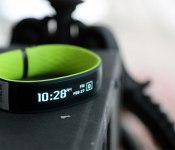
HTC’s Grip fitness tracker is a promising, puzzling first step

We’re not entirely sure why HTC decided it needed to make a fitness tracker, but it did, and it has. The end result is the HTC Grip, a device that looks more than a little like one of Nike’s FuelBands, but does so, so much more. HTC gave us a peek at an early, incomplete version of the product in Barcelona, but here’s the rub: I couldn’t connect it to my phone in hopes of testing some of its more smartwatch-y features like notifications and canned responses. Still, venture on for a first peek at what HTC and its pals at Under Armor have cobbled together.
Once you turn the Grip on, you can’t help but fiddle with that curved P-OLED screen – it’s monochrome and relatively low-res, but it’s plenty legible (especially in the shower, I’d wager). Actually touching that screen to navigate is a bit more problematic, as it seems to prefer long, slow touches to quick, jerky ones. That doesn’t sound like much of a problem… until I started taking the kid gloves off and trying to interact with it the way I would any other touch screen. The gulf in sensitivity is just jarring enough that you actually have to slow down and think about how you’re using the Grip – considering that HTC wants this to become an integral part of your life, that might be a problem.
On the plus side, the waterproof material making up the Grip’s body is surprisingly comfortable, though I’ve got to wonder just how nice it’ll feel when it’s press up against my skin mid-marathon. Speaking of working in motion, the Grip also seemed to accurately monitor steps my steps, which was honestly about all I could do with it. Too many of the Grip’s best features just aren’t ready for testing yet, but one thing seems clear: The Grip has potential. Whether or not the finished product lives up to it is another question entirely, and one we hope to answer soon.
Filed under: Mobile
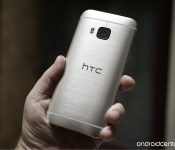
HTC One M9 specs

Behold, the HTC One M9. And the HTC One M9 specs. A lot of this should look familiar, as the phone is fairly iterative over 2014’s HTC One M9. But that’s not to say there aren’t some exciting new things under the hood. All new chipset. New camera tech. And a number of other bells and whistles.
Here, now, are the complete HTC One M9 specs.
<!–*/
<!–*/
/*–>*/
/*–>*/
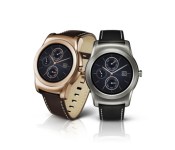
AT&T will carry the LG Watch Urbane

The LG Watch Urbane is one sweet watch isn’t it? It is likely to be available in a number of places, but AT&T is the first carrier to announce intentions to carry it. They are even likely to offer discounts when pairing it with an LG smartphone. Unfortunately no pricing or timing was specified, but stay tuned.
Full Press Release:
AT&T FIRST U.S. CARRIER TO CONFIRM IT WILL OFFER THE LG WATCH URBANE
BARCELONA, March 1, 2015 – AT&T1 announced that it will offer the LG Watch Urbane in its retail stores and on www.att.com. Pricing, availability and further details will be announced at a later date.
LG Watch Urbane Features
The LG Watch Urbane features a premium metal design with a more formal, thinner profile. The full circle P-OLED display provides you with a seamless balance of classic design while optimizing the display area. Replaceable2 22mm stitched leather straps give you additional style options and choices. Key notifications,3 social media updates and daily schedules can be displayed by just saying, “Ok Google” to search for the information you need. Designed for both luxury and durability, the LG Watch Urbane has a water resistant rating that is good up to 1 meter for 30 minutes.4 Make strides and get ahead by tracking your progress with a built-in PPG Sensor.
Supporting Quote
“AT&T is excited to add the LG Watch Urbane to its industry leading selection of wearables. LG Watch Urbane combines the style of a classic timepiece with the latest technology that makes it easy to stay connected on-the-go. It’s stylish, cutting edge and convenient, so you can wear it to nearly any occasion and still receive notifications that matter most.” – Jeff Bradley, senior vice president, Device Marketing and Developer Services, AT&T Mobility.
Supporting Resources
- For more information visit: www.att.com/watchurbane.
- Follow all AT&T news at MWC at http://soc.att.com/ATTatMWC or on Twitter at @ATT.
1AT&T products and services are provided or offered by subsidiaries and affiliates of AT&T Inc. under the AT&T brand and not by AT&T Inc.
2 Alternate band designs sold separately.
3 Some features require a connection via Bluetooth® to a compatible device with a data network connection.
4IP67 rated (water-resistant/dustproof), submersible up to 1 meter for 30 mins w/ covers tightly closed. Rinse to remove any residue. Not shockproof.
About AT&T
AT&T Inc. (NYSE:T) helps millions of people and businesses around the globe stay connected through leading wireless, high-speed Internet, voice and cloud-based services. We’re helping people mobilize their worlds with state-of-the-art communications, entertainment services and amazing innovations like connected cars and devices for homes, offices and points in between. Our U.S. wireless network offers
customers the nation’s strongest LTE signal and the nation’s most reliable 4G LTE network. We offer the best global wireless coverage. We’re improving how our customers stay entertained and informed with AT&T U-verse® TV and High Speed Internet services. And businesses worldwide are serving their customers better with AT&T’s mobility and highly secure cloud solutions.
Additional information about AT&T products and services is available at http://about.att.com. Follow our news on Twitter at @ATT, on Facebook at www.facebook.com/att and YouTube at www.youtube.com/att.
© 2015 AT&T Intellectual Property. All rights reserved. AT&T, the AT&T logo and all other marks contained herein are trademarks of AT&T Intellectual Property and/or AT&T affiliated companies. All other marks contained herein are the property of their respective owners.
Reliability and signal strength claims based on nationwide carriers’ LTE. Signal strength claim based ONLY on avg. LTE signal strength. LTE not available everywhere.
*Global coverage claim based on offering voice and LTE data roaming in more countries than any other U.S. based carrier, and offering the most wireless smartphones and tablets that work in the most countries.
Come comment on this article: AT&T will carry the LG Watch Urbane

Watch the HTC One (M9) get announced right here

The HTC One (M9) is about to get unveiled and here’s your chance to watch it right from your own living room, office, bedroom, bathroom, or wherever your heart desires. I am sure HTC will be offering up a wearable too, so check out the video below and see it all.
Click here to view the embedded video.
Also be sure to check our complete coverage of Mobile World Congress 2015.
Come comment on this article: Watch the HTC One (M9) get announced right here
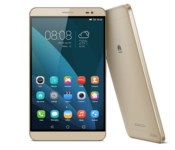
Huawei has a 7-inch, 64-Bit Octa Core LTE phablet coming soon!

Last year, Huawei released the MediaPad X1, a 7-inch tablet with LTE capabilities, and HD screen, and a solid build. This year, the company is looking to push things even further with a follow-up that boasts some very impressive hardware. Just announced in Barcelona at MWC 2015 is the MediaPad X2.
The 7-inch device features a laminated, 1200X1920 HD IPS display with promised viewing angles of 178 degrees. A 64-Bit, 2.0GHz Kirin 930 Octa-Core CPU is on board, which supports LTE Cat.6 connectivity (offering theoretical download speeds of up to 300Mbps.) along with a a 64-bit GPU Mali-T628. A 13MP rear camera (which Huawei promises has excellent low-lighting prowess) and 5 MP front camera (with F2.4 aperture) takes care of all one’s photo-snapping needs. Rounding out the specs are a 2.4G dual-band Wi-Fi antenna, Dual-SIM support (complete with Dual-LTE capabilities) and a 5000 mAh battery that should hold out for the entire day.
Huawei is eager to discuss the fact that the tablet is only 7.28mm “thick”, making it the slimmest 7-inch tablet in the world, an accomplishment bolstered by the use of “aviation aluminum metal texture”.
The device will come in two flavors: a 16GB/2GB variant in silver, and a 32GB/3GB version in rose gold. Pricing and availability have not yet been confirmed however we expect the details to come in the next few weeks or months (if not the next few hours or days).
Stay tuned to Android Authority for updates on the MediaPad X2 along with the venerable smorgasbord of mobile tech on-site at MWC 2015!
Barcelona, Spain, March 1, 2014: Huawei, a leading global information and communications technology (ICT) solutions provider, today unveiled the Huawei MediaPad X2 at Mobile World Congress (MWC) 2015. Featuring a fully laminated 7-inch ultra HD IPS screen and a slim body of only 7.28 mm, the MediaPad X2 houses an ultra octa-core chipset, making it the first 64-bit ultra octa-core, 4G-enabled LTE dual-sim phablet.
“Following the success of the Huawei MediaPad X1, and having inherited the signature feature of our large screen design, the Huawei MediaPad X2 represents our faith and commitment in creating better quality products with our technology and innovation.” said Richard Yu, CEO, Huawei Consumer Business Group. “As the second generation of MediaPad, Huawei MediaPad X2 focuses on the five classic applications that are most important to users, which include call quality, social media apps, online shopping, video and camera features to provide an enhanced user experience. We believe that MediaPad X2 will continue to inspire consumers with its outstanding design and superior functionality.”
As the world’s slimmest 7-inch phablet, the Huawei MediaPad X2 has a thickness of only 7.28 mm.
The aviation aluminum metal texture offers a more classy and business-like design. Its compact borderless screen design offers a screen-to-body ratio of 80%, which makes it easy for single-handed operation. The Huawei MediaPad X2 is the perfect integrated companion combining phone, tablet, navigator, portable battery, mobile hotspot and digital camera, creating a better connected experience for consumers all over the world with one single device.
The Signature Large Screen
Featuring a fully laminated 7-inch ultra 1200 x 1920 HD IPS screen providing a resolution up to 323ppi, the Huawei MediaPad X2 offers clarity for enhanced viewing experience. A wide angle spanning up to 178 degrees ensures optimal visual display even when the device is tilted. The LTPS HD touch display provides incredibly crisp and dynamic visual experience while CABC technology will automatically adjust screen brightness to ensure efficient battery management.
Work Hard Play Hard
Sporting a 2.0GHz Kirin 930 ultra-octa chipset, the 64 bit eight-core CPU of A53 in the Huawei MediaPadX2 has a high processing function yet consumes less power. The Kirin 930 chipset supports LTE Cat6 connectivity with a download speed of up to 300Mbps. The 64-bit GPU Mali-T628 and i3 micro-core provide the Huawei MediaPad X2 with an unprecedentedly strong entertainment experience for users, allowing them to play large-scale 3D games. Together with the integrated audio cavity, the Smart PA chip and a DTS surround sound technology, the Huawei MediaPad X2 ensures cinematic sound quality for video and movie lovers.
Running on a powerful 5000 mAh Li-Polymer battery, which is the largest capacity in the industry, the Huawei MediaPad X2 has enough juice for one day of heavy use. It can support streaming of online video for up to 12 hours, 15 hours of internet surfing or 60 hours of music playing via headphones .
Equipped with a 13MP rear camera, the Huawei MediaPad X2 is exceptionally good in low-light shooting, features a post-shooting focus adjustment metering mode, focus and exposure metering, and off-screen snapping functionality. The 5 MP front-facing camera has an aperture of F2.4 and a wide angle of 22mm, which is ideal for selfie lovers going after the perfect panoramic shot.
Stay Connected Anytime Anywhere
The 2.4G dual-Wi-Fi antenna design of the Huawei MediaPad X2 ensures stable Wi-Fi reception and connection anytime, anywhere. Dual-sim, dual stand-by and dual 4G networks further satisfies the needs of 24/7 business users. Dual-MIC reducing noise technology guarantees call quality for business users in all circumstances and scenarios.

MediaTek’s standard lets your devices share their hardware

There are plenty of standards for sharing your media collection between devices, but what if you want to borrow a device’s camera or display? MediaTek thinks it has an answer. Its new CrossMount standard lets devices share their hardware and software when they’re on the same WiFi network, letting you use whichever components make sense in a given situation. You can use your phone’s mic to dictate voice commands to your TV, for example, or use your phone’s webcam for a video chat on your tablet.
CrossMount is an open standard based on the Universal Plug and Play (UPnP) standard you probably have in some of your existing gear, so it might be easy to implement when it’s available in the third quarter of the year. A few big East Asian TV and mobile device makers have already hopped on the bandwagon, including Changhong, Hisense, Lenovo and TCL. With that said, it’s hard to know if anyone else will bite. There are still a lot of other companies that haven’t signed on, and big names like Samsung or LG may prefer to use in-house tech for any device sharing.
Not that MediaTek is putting all its eggs in one basket — it has a few chips in store as well. The darling is the MT8173, a 64-bit processor that’s supposedly the “highest performing” CPU you can get in a tablet. It mates two high-end Cortex-A72 cores with two low-power Cortex-A53 cores to deliver about six times (!) the performance of last year’s MT8125, or enough to handle 4K video with ease. And fans of mid-range phones might like the MT6753, an eight-core 64-bit Cortex-A53 processor. Neither is available just yet, though. The MT6753 won’t reach devices you can buy until the second quarter of the year, while the range-topping MT8173 isn’t poised to show up until the second half.
Filed under: Cellphones, Home Entertainment, Tablets, HD, Mobile
Source: MediaTek

