


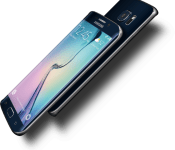
Galaxy Gifts for the Samsung Galaxy S6 includes Fleksy, Evernote and Life360 and 19 others

It’s been a couple of days since the Samsung Galaxy S6 and S6 Edge handsets were officially announced at Mobile World Congress in Barcelona and we are still finding out new things about them. What we have today is confirmation of the 22 premium apps and services that Samsung will give Galaxy S6 owners via its Galaxy Gifts program.
Kindle For Samsung – A version of Kindle optimised for Samsung devices, sometimes gives free books to users.
Magisto – Video editor
Pac-Man Friends – Pacman, doh!
VSCO – Photo editing
The Hobbit: Kingdoms – The battle for middle earth
NYTimes – New York Times Newspaper App
The Economist – Newspaper App
Audible – Audio books
Dragons of Atlantis: Heirs – Build an army of dragons and take over the kingdom
Workout Trainer – Workout plans and exercise videos
Endomundo – Fitness tracker
Uber – Get a taxi, private car or ride share from your mobile phone
Keepy – Preserve your child’s special moments
PayPal – Online payments App
Life360 – A family locator, messaging tool and communication app
LastPass – Password manager
Shazam – Identify the media playing around you
Fleksy – Keyboard replacement
Evernote – Synchronize your notes across your devices
Pocket – Save your articles to read later
Parallels Access – Remotely access your PC or Mac applications from your mobile
Hancom Office – An Office or Google Docs alternative
As you can see, there are games, productivity tools, entertainment apps and fitness applications included in the list. Some appear to be more useful than others, with a notable inclusion being Fleksy’s keyboard replacement app. It’s likely that the list may vary depending on the region. What do you think? Is this yet more Samsung bloatware? Or are these apps that you might use in your everyday life?
Source: SammyHub
Come comment on this article: Galaxy Gifts for the Samsung Galaxy S6 includes Fleksy, Evernote and Life360 and 19 others
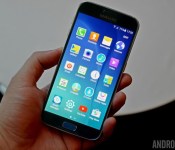
These are the 22 digital gifts for Galaxy S6 users

The list of premium apps and services that Samsung is going to offer to Galaxy S6 and S6 Edge users includes 22 entries, from games, to productivity apps, to various subscriptions.
We’ve already learned that Fleksy will be one of the perks offered in the digital gift bags coming with the Galaxy S6, but now we have the full list, and there’s a little something for everyone in there. For now, we only know the names of the apps and services that Samsung is bundling, with more details about the actual value of these freebies to come closer to the actual release date.
- VSCO
- Magisto
- Pac-Man Friends
- The Hobbit: Kingdoms
- Dragons of Atlantis: Heirs
- NYTimes
- The Economist
- Kindle for Samsung
- Audible
- Workout Trainer
- Endomondo
- Uber
- Keepy
- PayPal
- Life360
- LastPass
- Shazam
- Fleksy
- Evernote
- Parallels Access
- Hancom Office
To make a rough idea of what you can expect, check out the breakdown of the Galaxy gifts coming with the Note 4.
Samsung has greatly reduced the number of apps that are pre-installed on the Galaxy S6 and the Galaxy S6 Edge. It’s telling that there are only two screens of apps in the app launcher, although that’s partially due to Samsung grouping Google apps in one folder.
It’s good to see Samsung giving up on its obsession with bundling apps and services with its devices – though generally regarded as bloatware, these apps are still useful for some users; making them optional seems like the best compromise.
In case you somehow missed it, check out our coverage of the Samsung Galaxy S6 and S6 Edge from MWC 2015 – more videos and posts are coming today, so stay tuned.
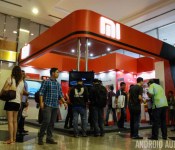
Xiaomi to open an accessory store in Europe too

Speaking at MWC, Xiaomi’s Hugo Barra announced that the company’s growing range of accessories will be heading to Europe at some point in the future. However, smartphones definitely won’t be sold through the e-commerce store.
Last month, Xiaomi made a similar announcement in San Francisco regarding opening an online store in the US. Although the company is not planning to sell smartphones in these regions any time soon, focus is still firmly on expansion in India, this store and the products on sale will offer essential feedback as Xiaomi tests the waters in Western markets.
“It’s going to be a different Mi.com experience from what we have in our markets in Asia, because we’re not selling phones… We’re only going to sell a small number of our hero accessories” – Hugo Barra
This is all part of the company’s brand awareness strategy. Xiaomi doesn’t just view itself as a smartphone manufacturer, but as a “lifestyle brand”. As well as smartphone accessories, such as power banks, fitness bands and headphones, Xiaomi also manufacturers low cost TV boxes, routers, and an air purifier designed for the Chinese market, some of which may also end up on sale in Europe sometime down the line.
Xiaomi has not announced any specific countries or dates for its new e-commerce store just yet.
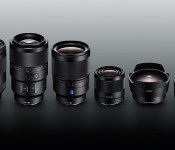
Sony unveils four much-needed lenses for the full-frame A7-II camera

We like Sony’s full frame Alpha mirrorless A7-II and light-vacuuming A7s cameras, but the downside is a narrow range of full-frame lenses. It’s now resolved the problem significantly with four new models, including a walk-around zoom and fast prime from Zeiss. The latter, a Distagon T* FE 35mm F1.4 ZA auto-focus model, creates “gorgeous” images according to Steve Huff, though it’s not for the faint of wallet at $1,698. The Sony 24-200 f/3.5-6.3 AF zoom, on the other hand, is aimed at tourists with optical stabilization, weather-sealing and a $1,000 price tag.

Rounding out the list is Sony’s FE 90mm F2.8 Macro G lens at $1,110 and the $450 FE 28mm F2 prime. Sony also revealed two new APS-C converters for wide-angle E-mount lenses, and another two (fish-eye and wide-angle) for the new FE 28mm F2 lens. With the new lenses and previous models from Sony and third-party vendors, Sony’s nearly filled up its full-frame E-mount dance card. The new zoom lens will hit shelves on March 17th, while the Zeiss lens will go on sale by mid-April. Expect to see the wide angle lens and adapters in May and the macro model by July.
Source: Sony
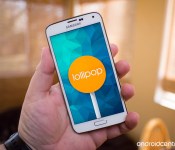
Galaxy S5 owners: How’s the Lollipop update treating you?

Even more GS5s are getting Android 5.0, but is it a net positive for everyone?
After Lollipop started slowly rolling out to Galaxy S5 owners in Europe, Verizon put us back on alert with the big update to its own Galaxy S5. Sprint followed suit the next day and T-Mobile pushed a couple weeks later. Even more people got in on the fun when Canadian carriers started pushing at the beginning of March.
As is the case with every major operating system update, some people are likely to hit a few snags when jumping between Android versions. There are some features and designs of Lollipop that are disliked, but there are also issues with the update process itself.
We’ve received a few emails to our tips inbox and read a few comments in the forums indicating there are issues, but that’s also combined with plenty of folks who seem to be happy with the update. So, for those of you who have installed Lollipop on your Galaxy S5, how is the update working on your device?

Nvidia Shield 4K console announced: 4K, Tegra X1 and Android TV for $199

Taking the stage at the Game Developer Conference in San Francisco, Nvidia CEO Jen-Hsun Huang announced the company’s latest creation in mobile gaming, the Nvidia Shield console.
Running Android TV, the Nvidia Shield is an Android console powered by the powerful Tegra X1 processor that Nvidia unveiled at CES earlier this year. The strength of Nvidia’s chips has always laid in their graphical processing capabilities, and the beefy Maxwell 256-core GPU inside the Tegra X1 means the Nvidia Shield console can handle state of the art Android games, as well as streamed console games from Nvidia’s Grid service.
Encased in cast aluminum, the Shield console looks a bit like a slim PS3, but it features Nvidia’s well known angular design accents.
Complementing the Tegra X1 chip are 3 GB of RAM, 16GB of storage (microSD supported), 7.1 audio, 4K playback and capture, and 802.11ac WiFi. The console is fairly portable, at 654 grams and 130x210x25 mm.
Nvidia is promising over 50 Shield-optimized Android games for the device, including some big titles like Crysis 3, Doom 3: BFG Edition and Borderlands: TPS. Thanks to Grid integration, console games like Batman: Arkham Origins, GRID 2 and Metro: Last Light Redux will be available for streaming from Nvidia’s cloud. And, thanks to Android TV, Shield can run hundreds of thousands of apps from the Play Store.
The Nvidia Shield console will go on sale from May at $199, a controller included.
New SHIELD Android TV Console Brings 4K Entertainment to Every Home — Harnessing Tegra X1, Android TV OS and GRID Game-Streaming Service
SAN FRANCISCO, CA–(Marketwired – Mar 3, 2015) – Game Developers Conference – NVIDIA (NASDAQ: NVDA) today introduced NVIDIA® SHIELD™, the world’s first Android™ TV console, which delivers video, music, apps and amazing games to the home.
Built on Android TV, SHIELD can play top-quality 4K video content, includes one-click access to Google Voice Search and provides the richness of Android’s app ecosystem.
SHIELD is a sleek device that comes loaded with cutting-edge NVIDIA technologies, including the recently launched NVIDIA® Tegra® X1 processor.
SHIELD is also the gateway to the NVIDIA GRID™ game-streaming service. Powered by GeForce® GTX™ supercomputers in the cloud, GRID delivers an on-demand “Netflix for games” experience at up to 1080p resolution at 60 frames per second.
“SHIELD will change the way we enjoy digital entertainment at home,” said Jen-Hsun Huang, president and CEO of NVIDIA. “It’s an incredibly powerful, efficient and advanced living room entertainment device. It’s the best Android TV experience. And it can transform into a serious gaming machine. It’s made to game.”
Made to Game
SHIELD — sold with the SHIELD controller made for serious gaming — is a single platform with access to a wealth of great games.
First, 50+ Android titles optimized for SHIELD will be available for download, including AAA titles like Crysis 3, Doom 3®: BFG EditionT and Borderlands: TPS. These can be played at blistering speed, thanks to SHIELD’s Tegra X1 processor, with its 256-core Maxwell™ architecture GPU and 64-bit CPU.
Second, favorite AAA titles, including console games, can be streamed using the GRID on-demand game-streaming service. GRID will include with its subscription price access to 50 titles, such as Batman: Arkham Origins, GRID 2 and Metro: Last Light Redux, with additional titles added each week.
Third, the GRID service can be used to purchase and stream new release AAA titles — including Batman: Arkham Knight and The Witcher 3: Wild Hunt coming later this year.
Broad Developer Support
Some of the world’s leading game developers and publishers have embraced SHIELD and the GRID service.
“The incredible processing power of Tegra X1 enables us to bring Doom 3: BFG to Android and we’re excited by the possibilities that GRID is bringing to gaming.”
– Tim Willits, studio director, id Software
“Tegra X1’s enormous processing capabilities running on Android TV gives us access to a much broader audience, and we’re delighted to partner with NVIDIA to explore a variety of exciting possibilities for SHIELD, including the remastering of the survival horror classic,Resident Evil 5.”
– Jun Takeuchi, managing corporate officer, CAPCOM
“SHIELD is definitely made to game and thanks to Tegra X1 we have The Witcher: Battle Arena playing natively on SHIELD. With GRID, we’ll be able to bring new hit games to fans immediately.”
– Benjamin Lee, The Witcher: Battle Arena lead producer, CDPROJEKT
Pricing and Availability
SHIELD will be available in May, starting at $199 with a controller. Optional accessories include additional controllers, a remote control and a stand enabling the device to stand vertically.
SHIELD is the central member of the SHIELD family of devices, complementing the SHIELD tablet, the ultimate tablet for gamers; and the SHIELD portable, the ultimate portable gaming device. More information is available at http://shield.nvidia.com.

Security flaw from the ’90s leaves Apple and Android users open to attack

A team of cryptographers have discovered that a security flaw from way back in the ’90s still leaves users today vulnerable to cyberattacks. They’ve dubbed it “Factoring attack on RSA-EXPORT Key” or FREAK, and it renders everyone who uses Safari on Mac and iOS devices or Android’s stock browser susceptible to hacking when they visit certain “secure” websites. The researchers listed these affected websites on the study’s official page, and notable entries include government-owned ones, such as Whitehouse.gov, NSA.gov and FBI.gov. To understand what FREAK is, we need to go back to the early 1990s when SSL was in the midst of being developed.
Apparently, the US government required companies to use weaker, 512-bit encryption for visitors from overseas, and stronger encryption for visitors stateside. In order to do that, SSL’s developers designed a mechanism that could deliver both. While the government eventually pulled the requirement, it was too late: this mechanism propagated and ended up being used on various software. That’s why during the research, the team managed to force browsers to use the weaker encryption, which one member was able to break within seven hours using the power of 75 computers. In comparison, a 1024-bit encryption would require a team of crackers, the power of a few million PCs, and around a year to hack into.
According to Johns Hopkins research professor Matthew Green, this “export-grade” encryption was, in theory, “designed to ensure that the NSA would have the ability to ‘access’ communications, while allegedly providing crypto that was still ‘good enough’ for commercial use.” If this fossil from the era of JNCO pants and MC Hammer can still haunt us today, one has to wonder how NSA’s alleged backdoor entries into company websites and devices can affect us in the future.
The researchers can’t say whether anyone already exploited the flaw, but they’ve proved that it can be used to steal a visitor’s personal info, as well as to hack into the affected website itself. Both Apple and Google are already working on a patch: iOS and Mac users can expect the fix for their devices to roll out next week. Android users, however, will have to wait for their manufacturers or carriers to issue an update, so it may be best to switch to Chrome for mobile, which isn’t vulnerable to the flaw, according to The Washington Post.
PS: Want to read FREAK’s more technical details? Check out the researchers’ “State Machine AttaCKs” website.
[Image credit: Shutterstock]
Filed under: Internet
Source: The Washington Post, Tracking the FREAK Attack, Cryptographic Engineering, Reuters, SMACK
Nokia 1100 smartphone spotted doing a benchmark while running Android 5.0
As Android fans, we’ve toyed with the idea of a Nokia manufactured Android smartphone for some time now – we did get the Nokia X, but with its forked version of Android and budget performance, it wasn’t exactly what we envisioned. According to Nokia’s agreement with Microsoft, the outfit is unable to put out a […]
The post Nokia 1100 smartphone spotted doing a benchmark while running Android 5.0 appeared first on AndroidSPIN.
Scouts honour: Peter Chou says HTC is still working on its HTC smartwatch
For what seems like an eternity, we have known that a HTC smartwatch is being worked on behind the Taiwanese manufacturer’s closed doors. However, HTC has probably learned from just putting out devices that everyone else is churning out, and is really taking its smartwatch project very seriously. In an interview at MWC, HTC CEO Peter […]
The post Scouts honour: Peter Chou says HTC is still working on its HTC smartwatch appeared first on AndroidSPIN.

Can HTC “sell” the M9 to casual customers?

Honesty speaking: can you actually tell which One is which?
Back in January, we asked our staff and readers about the looming realization that the HTC One M9 would look just like the M8; based on leak-after-leak, the unthinkable seemingly became more plausible. As of March 1st, it became reality. Hopes of HTC pulling the most epic case of trolling the tech world had ever seen were dashed in the presence of what looks to be the same device from last year, minus a Duo camera. In this piece, we’re going to take a look at what this means for HTC and why it’s not all bad.
The Build-Up:
As a quick refresher, leaks in earnest for the HTC One “Hima” began a short while ago via renders from case manufacturer Spigen. In the days leading up to MWC 2015, these leaks had expanded to promotional videos to carrier promotional material. Still, there was the image that so many were convinced was the real M9, or at least hopeful enough to suspect Taiwan’s most famous smartphone OEM was trolling us all by releasing the so-called “M8s” pics.
With the official unveiling now done-and-dusted, we all know the leaks were legitimate, and HTC wasn’t stoking the flames of countless potentially burned bridges in the form of businesses around the world who had bought into a fake promise.
A Costly Creation:
There is one very large problem with the M9’s existence, and arguably this isn’t so much an opinion as it is a sad reality: customer confusion and apathy. We all know the difference, granted. But think about the hundreds of millions of casual customers in the world; it could be your parents, your children’s teachers, the people who deliver your newspaper (assuming anyone reads physical paper these days), anyone really. Think of them, and then consider the following three scenarios:
A. You don’t care about phones nor do you follow them. They are a tool and nothing more. Your 4-year old model isn’t working well these days, so you go to a carrier store to get a new one.
B. Your family member needs a new phone. A casual/mainstream user at best, they don’t care about specs at all.
C. You bought a phone a few months ago and it just broke. You didn’t get insurance and are thus out the money.
Now imagine any given carrier store: The HTC One M8 is available for free on a two-year agreement. The HTC One M9 costs $199 for the same. You look at both; the cheaper One has two cameras, the other has a single One.

So you’re in the store and have both devices in hand…
Decision: Which do you chose? As much as some might deny it, the demands of life dictate that people will chose the free model, hands down, especially if the so called “new” model doesn’t look the slightest bit different. Make no mistake, this isn’t Apple wherein a casual consumer might be tempted to get the newer model just because they know Apple. This is Android, there are dozens of devices, and HTC is just one of the many companies selling one from a country far away. Money is always an issue to all but the most extreme enthusiast.
These are but three scenarios; imagine an infinite number more. Now consider what are, arguably, the only two wherein someone might actively buy an HTC One M9:
1. You love HTC. Money is irrelevant.
2. You must have the latest and greatest. Money is irrelevant.
Granted there can be numerous variations of these situations as well, but there is one key factor here: extreme minority. The specific “niche” needs of those with cash to burn don’t match those of the masses, and therein lies the problem HTC faces: it has just started to recover from a prolonged period of financial dismay, and the last thing it needs to do is alienate mainstream customers, the very individuals who can “fix” its cash flow troubles. Were the M9 to look different, it would immediately be taken as a “legitimate” new product by all those who don’t care about the difference between a Snapdragon 800 and an 810; the consumers who don’t snap photos constantly.
The Samsung Situation:

While not so different from the front, just a few seconds comparing the two will reveal night-and-day build differences.
Now on the other hand, let’s revisit the same carrier store and take a look at say, the Galaxy S5 vs the Galaxy S6. The difference is night-and-day to say the least. While one might argue the S6 isn’t as beautiful as the M8/M9, it doesn’t have to for people to notice. The fact that the S6 has a QHD SAMOLED screen is a major sales point, as could be other elements like the fingerprint sensor, bio-metric reader, and more. Even if customers don’t understand what these mean or how to use them, marketing trumps sensibility more often than not.

This post’s second riddle: try to guess *these* two apart.
Ah yes, the final thing Samsung has going for it, ironically speaking: The Galaxy S6 looks a bit like that phone. You can bet your britches that at least some mainstreamers will actively seek to purchase the S6 for its similarities.
Could-Have, Should-Have
Many of you will recall the infamous real HTC One M9 picture that @evleaks published, and which was subsequently used by case manufacturers in their own leaked renders. Here’s a reminder:

While engineering and manufacturing limits might have rendered this pair of concepts an impossible concoction, at the very least, they look different from what the real M9 ended up looking like. Heck, they arguably look different from just about anything out there, yet still have that HTC feel to them. In an effort to determine just how many people liked this (now) fake design better, I ran a small survey on Google Plus. The question: was the evleaks render preferable to the real product.
https://plus.google.com/+MatthewBenson321/posts/a8jCDy2hW4h
As of the time of publishing this story, 135 people responded and 75%, an overwhelming majority, said yes, they liked the fake render better. Is this a massive sample size? Obviously not, but at the very least it is one way of substantiating a belief that even fans aren’t necessarily happy with the design choice.
Don’t write-off HTC yet!

This dual-tone color combination definitely is eye-catching to say the least!
While this opinion has been of a largely negative tone, there are a few important things to keep in mind. For one, the M9 is by no means an ugly or underwhelming phone. The body may be recycled, but it’s still a stunning piece of design in 2015, and with the Duo Ultrapixel camera set up now gone, the phone need no longer be plagued by rampant criticism of the picture potential. In fact, here’s a checklist of just why the M9 is such a significant improvement as compared to the M8: better CPU and graphics, more RAM, better camera, bigger battery, more LTE bands, new colors, Lollipop out-of-the-box, and it’s even slightly smaller/lighter.
HTC also has the benefit of possibly drawing in customers who were on the fence about the Galaxy S6. Maybe Samsung’s decision to remove microSD support or replaceable batteries has irked them. Perhaps the S6 doesn’t look different enough from the S5. This could be said about other OEM’s offerings as well.
Truth be told, just about the only thing (arguably) not good about the HTC M9 is its reused design: with all the improvements contained inside the premium build, there is absolutely no question this is a brand new, state-of-the-art flagship that can hold its own among rival products.
For the full break-down of spec comparisons between the M8 and M9, please see our comparison coverage here.
Let us know your thoughts!

