


Tests show the Samsung Galaxy S6 screen is a class above the rest
Ignoring the recent discovery of the touch input issues that plague the Galaxy S6 (or at least the units on display at MWC 2015), DisplayMate has conducted their own analysis of the screen technology and are suitably impressed.
After looking at a number of factors of the Galaxy S6 screen, DisplayMate concluded that the device has the best display they have ever seen on a smartphone.
Here’s the full summary:
Display resolution:
The Galaxy S5 had a Full HD 1920×1080 pixel display with 2.1 Mega Pixels – state-of-the-art at that time. The Galaxy S6 provides a major resolution enhancement with a Quad HD 2560×1440 pixel display, the same as the 5.7 inch Galaxy Note 4 but now on a much smaller 5.1 inch screen size. That’s currently the highest resolution for Smartphones, with 3.7 Mega Pixels, almost double the number of pixels on an HDTV (and over 4 times the number of pixels on the iPhone 6). This provides lots of image detail – it can display four complete HD 1280×720 images at once. The display has Diamond Pixels (see below) and Sub-Pixel Rendering with 577 pixels per inch (ppi), the highest on any consumer display, providing significantly higher image sharpness than can be resolved with normal 20/20 Vision at the typical viewing distances of 10 inches or more for Smartphones, so the display appears perfectly sharp.
Screen brightness:
More importantly, on the Galaxy S6 the Maximum Brightness can go much higher when Automatic Brightness is turned On, so that users can’t permanently park the Manual Brightness slider to very high values, which would run down the battery quickly. High screen Brightness is only needed for High Ambient Light, so turning Automatic Brightness On will not only provide better high ambient light screen visibility but also longer battery running time.
Galaxy S6 Edge:
What is especially important and news worthy is that the performance of the OLED display on a flexible plastic substrate for the Galaxy S6 Edge (and Galaxy Note Edge) is now essentially the same as on a traditional flat and hard substrate for the Galaxy S6, even at 500+ pixels per inch and 2560×1440 resolution. The most significant point is that curved and flexible displays are definitely the wave of the future because they offer many important visual and functional advantages for both mobile displays and TVs
For a full breakdown, check out the source link.
The post Tests show the Samsung Galaxy S6 screen is a class above the rest appeared first on AndroidGuys.
HTC One E9 specs and images surface
Whilst the HTC One M9 was only just released, it doesn’t mean HTC have sat back and relaxed. According to a new leak, a handset called the HTC One E9 is in the works which gives a flatter design.
With a 5.5-inch display, which reportedly may be Quad-HD, the E9 is said to be powered by a 64-bit MediaTek processor and feature a 13-megapixel front camera and 4-megapixel UltraPixel camera on the back.
There’s currently no launch date or pricing, but if you don’t like the curves of the newly announced HTC One M9 then this may be for you.
The post HTC One E9 specs and images surface appeared first on AndroidGuys.
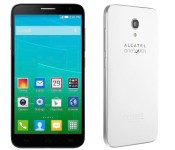
Deal: Alcatel Onetouch Idol 2 S on sale for $188 through March 17th

If you’re looking for an unlocked Android smartphone without breaking the bank, Alcatel might have a deal for you. The Alcatel Onetouch Idol 2 S is currently on sale for only $188.29 until next Tuesday, March 17th. The device is usually sold for $268.99 off-contract, so we’d say this is a pretty good deal.
The Idol 2 S features a 5-inch LCD display with a 720 x 1280 resolution, a 1.2GHz quad-core Qualcomm Snapdragon processor backed by 1GB of RAM and a 2150mAh battery. It also comes with 8GB of on-board storage, MicroSD expansion up to 32GB, an 8MP rear-facing camera and a 1.3MP front-facer. While the majority of these specifications are acceptable, the device only runs Android 4.3 Jelly Bean. The lack of KitKat support is a bit disappointing, though we’d wager to say that the price point and other specs help make up for it.
If you’re interested in picking up the Idol 2 S, head to the link below before March 17th. And if you’re interested in the newest offerings in the Idol lineup, check out our hands-on video at MWC 2015 with the Alcatel Onetouch Idol 3 smartphones.
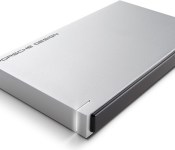
LaCie’s latest portable drive is (almost) ideal for your new MacBook

Dead set on snagging one of those extra-slim MacBooks, but won’t make the leap until you have an easy way to back up your files? LaCie has your back. It just unveiled a new version of its Porsche Design Mobile Drive that uses the same USB Type-C port as Apple’s latest portable (and eventually, other computers), saving you the hassle of using an adapter just to offload that photo project or back up to Time Machine. It’s not quite a dream storage device, though. You’ll still need an adapter (thankfully included) to hook up to regular USB devices, and there’s no passthrough port. Unless you get a hub, you’ll have to choose between powering your Mac and expanding your storage. If that’s no barrier, though, you can get the Mobile Drive in the second quarter in 500GB, 1TB and 2TB models. Pricing isn’t available yet, but the regular USB models cost $80, $100 and $150 — it won’t be surprising if the USB Type-C versions are in that ballpark.
Filed under: Storage
Source: LaCie, BusinessWire

High-End Retail Shops Around the World Preparing to Showcase Apple Watch
During yesterday’s Apple Watch event, Apple CEO Tim Cook suggested the high-end Apple Watch Edition will be available in limited quantities at a select number of stores. He was likely referring to some of the pop up shops we’ve seen under construction, in upscale department stores Galeries Lafayette in Paris and Selfridges in London.
Women’s Wear Daily has shared some more information on the locations where we will see the $10,000+ Apple Watch Edition and other versions of the Apple Watch shown off around the world. Described as “shop-in-shops” in high-visibility locations, each of Apple’s pop up stores will ensure customers looking to make major purchases will get the best service possible.
At Selfridges, the Apple Watch will be displayed in the aptly named Wonder Room, which houses high-end jewelry and watches in a brightly lit room decked out with treasure-filled glass cases. At Galeries Lafayette, the Apple Watch will be displayed among European brands on the first floor of the facility, and at the Isetan Department Store in Shinjuku, Tokyo, the Apple Watch will be displayed on the ground floor.
Other speciality fashion stores will also sell select Apple Watch models, including Colette in Paris, where the Apple Watch had its fashion world debut, Dover Street Market in London and Tokyo, Maxfield in Los Angeles, The Corner in Berlin, and Lane Crawford in Hong Kong, Shanghai, Beijing, and Chengdu. All of these are fashion-oriented upscale stores.

Unlike with the iPhone and the iPad, Apple will likely be keeping a tight rein over which of its resellers are able to offer the Apple Watch. As it is positioned as a fashion accessory, it makes more sense for customers to be able to walk into a high-end store to make an Apple Watch purchase rather than a Best Buy or an AT&T store.
For the Apple Watch Edition especially, Apple wants to create a special, one-on-one buying experience that’s not exactly possible with today’s crowded retail Apple Stores. There have been hints that Apple is planning to redesign many of its retail locations to facilitate Apple Watch sales, and some of those changes may be implemented ahead of the Apple Watch’s April 10 debut date.
Apple vice president of special projects Paul Deneve commented on Apple’s plan to sell the Apple Watch in speciality stores, saying that shopping for a watch is a “deeply personal” experience.
“The experience of shopping for an Apple Watch is a deeply personal one. The department stores and specialty stores that we’re working with are some of the best in the world at offering such experiences, so it was natural for us to see our product there,” said Paul Deneve, Apple’s vice president of special projects who joined the tech company after years helming fashion houses including Yves Saint Laurent, Lanvin and Nina Ricci. “Given the very focused distribution that we’ve pursued for this launch, every door that sells Apple Watch will provide a unique experience for every customer that walks in.”
Apple will begin accepting pre-orders for the Apple Watch on Friday, April 10. At that time, the company will also be displaying the Apple Watch in its retail stores for customers to try on, and it’s likely many of the pop up shops may open their doors at that time. The Apple Watch’s official launch date is April 24.
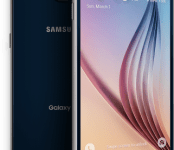
New tests show that the Samsung Galaxy S6 has the best display of any phone

When the Galaxy S6 was announced, eyes widened as Samsung stated the 5.1-inch display has 2560×1440 resolution. That same resolution can be found on the Galaxy Note 4; however, this flagship device has a display that is more than 0.5in smaller. It is what allows the Galaxy S6 to have 577 pixels per inch. DisplayMate, who often conducts tests on mobile device displays, feels that the Galaxy S6 has the best display they have ever seen on a smartphone.
Everything from display resolution and screen brightness to dimming and power efficiency was applauded.
Display resolution:
The Galaxy S5 had a Full HD 1920×1080 pixel display with 2.1 Mega Pixels – state-of-the-art at that time. The Galaxy S6 provides a major resolution enhancement with a Quad HD 2560×1440 pixel display, the same as the 5.7 inch Galaxy Note 4 but now on a much smaller 5.1 inch screen size. That’s currently the highest resolution for Smartphones, with 3.7 Mega Pixels, almost double the number of pixels on an HDTV (and over 4 times the number of pixels on the iPhone 6). This provides lots of image detail – it can display four complete HD 1280×720 images at once. The display has Diamond Pixels (see below) and Sub-Pixel Rendering with 577 pixels per inch (ppi), the highest on any consumer display, providing significantly higher image sharpness than can be resolved with normal 20/20 Vision at the typical viewing distances of 10 inches or more for Smartphones, so the display appears perfectly sharp.
Screen brightness:
More importantly, on the Galaxy S6 the Maximum Brightness can go much higher when Automatic Brightness is turned On, so that users can’t permanently park the Manual Brightness slider to very high values, which would run down the battery quickly. High screen Brightness is only needed for High Ambient Light, so turning Automatic Brightness On will not only provide better high ambient light screen visibility but also longer battery running time.
Galaxy S6 Edge:
What is especially important and news worthy is that the performance of the OLED display on a flexible plastic substrate for the Galaxy S6 Edge (and Galaxy Note Edge) is now essentially the same as on a traditional flat and hard substrate for the Galaxy S6, even at 500+ pixels per inch and 2560×1440 resolution. The most significant point is that curved and flexible displays are definitely the wave of the future because they offer many important visual and functional advantages for both mobile displays and TVs
DisplayMate provides a great amount of detail with their tests, so we highly recommend taking a look at the source link below.
Source: DisplayMate
Come comment on this article: New tests show that the Samsung Galaxy S6 has the best display of any phone
Multi-window support could soon be coming to Android

One of the best features that has been on the Samsung Galaxy Note series for a while is the ability to put apps into a window, allowing you to view multiple apps at once. This is otherwise known as “multi-window” support. It seems with the latest code commit of AOSP after the announcement of Android 5.1 yesterday, there is a line of code that suggests multi-window support could be coming to stock Android.
Phandroid reports this line of code, and mentions that the feature is almost mentioned in passing, and that’s it. You can see the full commit below.
commit ed7698c8ed66b959d723caa7bfe01530d306fb8d
Author: Craig Mautner cmautner@google.com
Date: Tue Jan 27 11:44:59 2015 -0800
Defer tap outside stack until multiwindows
Taps outside of the stack boundary were causing the current app to
lose focus. This led to timeouts waiting for the app to respond.
Disabling the tap recognition keeps the focus from changing. It will
be reenabled for multiwindows.
There is no other mention of this found elsewhere, and there is no knowing when this feature could be implemented, if even at all. However, with Google I/O coming up, anything is possible, and if nothing else we could get an announcement that the feature is in the works.
The post Multi-window support could soon be coming to Android appeared first on AndroidGuys.
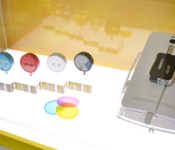
Asus announces new flash accessories for the Zenfone 2
Taking top notch pictures is important to many, and Asus hopes their new flash accessories will help do just that.

The smartphone camera is something that many people are concerned with, and manufacturers are getting more serious about putting quality cameras in their devices. Asus has just announced some new accessories for the Zenfone 2 which are sure to enhance the quality of photographs when paired with the device’s 13MP PixelMaster camera.
Google CFO Patrick Pichette announces his retirement
Google CFO Patrick Pichette announced today that he is retiring from the company after 7 years with the company.
Samsung Galaxy S6 vs Galaxy Note 4 quick look
brightcove.createExperiences();
Samsung’s Galaxy Note line has grown from a niche product at the time of its introduction, to its latest member, the Galaxy Note 4, being dubbed as “Samsung’s true flagship.” That said, the company’s original S series flagship line has been going strong as well, and while faltering a bit in 2014, with the latest addition to this lineup, the Galaxy S6, Samsung has come back as strong as ever. So how do these two very distinct flagship devices fare against each other? We find out, as we take a quick look at the Samsung Galaxy S6 vs Galaxy Note 4!

For the first time in a comparison involving two flagship Samsung devices, we’re looking at both smartphones featuring metal frames, a design element that was first introduced with the Galaxy Alpha, and has become the standard since. In the case of the Galaxy Note 4, plastic in the form of a faux leather back is still to be found, which is also removable, allowing for access to the microSD card slot and replaceable battery. The signature tactile home button up front is integrated with a fingerprint scanner, and 2.5D glass over the display adds some visual flair to the front of the device. As this is a Note device, you will also find an S-Pen stylus nestled into the bottom corner.

The Samsung Galaxy S6 may retain a lot of the design language of its sibling flagships, but introduces a complete overhaul with regards to build quality and material, with the device boasting a premium metal and glass unibody design. The metal frame keeps the tapered, raised look on the top and bottom corners that we also see with the Note 4, and is really nice. The curved sides do result in a more rounded look, compared to the rigid lines of the Galaxy Note 4, and the Galaxy S6 is as thin and sleek and you’d expect to see from a Samsung flagship. This design choice is not without its compromises though, with the battery now not being removable, and with the microSD expansion being given a miss as well. The camera module also tends to protrude quite a bit, which could be problem when sliding or placing the phone on its back on a flat surface.

Things are quite even on the display front, with both smartphones featuring Super AMOLED displays with Quad HD resolutions. The difference in size, 5.7-inches for the Galaxy Note 4 and 5.1-inches for the Galaxy S6, results in a higher pixel density count for the latter, but the difference isn’t significant enough to be particularly noticeable. Samsung is well-known for its display prowess, and that really shines through with both devices. Deep blacks, vivid colors, great viewing angles and fantastic brightness are all features of either display, and you’ll have a great viewing experience on both. While the Galaxy S6 gets the edge for its higher pixel density and more manageable size, the larger display of the Galaxy Note 4 is the better choice from a media-consumption and gaming standpoint.

In performance, we see Samsung setting a bit of a precedent going from the Galaxy Note 4 to the Galaxy S6, as former packs a quad-core Qualcomm Snapdragon 805 processor, backed by the Adreno 420 GPU and 3 GB of RAM, with another version coming with the Exynos 5 Octa, also with 3 GB of RAM. As expected, the performance with either iteration is pretty great. But, with the Galaxy S6, Samsung has decided to give Qualcomm a pass this time, in favor of getting fully behind its in-house octa-core Exynos 7420 processor, also backed by 3 GB of RAM. The Galaxy S6 just oozes power, and it cannot be emphasized enough how smooth the performance was in the short time I got to spend with it, with the more streamlined version of TouchWiz certainly a contributing factor as well.

Things remain largely identical in terms of other hardware, with both smartphones featuring fingerprint scanners integrated into the home button, but in different implementations, with the touch type iteration definitely better than the swipe version of the Galaxy Note 4. Both also have heart rate monitors on the back, positioned slightly differently, but still in proximity to the rear camera. The Galaxy Note 4 does come with expandable storage and a removable battery though, and of course, the big selling point of the Note series is the availability of the S-Pen stylus and everything that it entails.

On the camera side of things, both smartphones feature similar setups when it comes to the rear camera, with its 16 MP shooters, and as such, we can expect the quality to be about the same, but of course, a more thorough testing of the Galaxy S6 camera is required before making any final judgments. There are some improvements in the case of the Galaxy S6 though, with the front-facing camera being upgraded to a 5 MP unit, and both the front and back cameras featuring f 1.9 apertures with auto HDR, which should allow for some great shots in low light.

When it comes to software, it has been quite easy to compare the overall experience between device iterations because TouchWiz is TouchWiz, a feature packed user interface, even more so in the case of the Galaxy Note 4, which features a slew of applications and features to take advantage of the S-Pen stylus and the larger screen real estate. That story has somewhat changed with the Galaxy S6 though. Even if things remain quite similar aesthetically, apart from any Lollipop-related changes that will make their way to the Note 4 a well, the number of pre-installed applications have been reduced, with users given the option to choose what they want. The experience on the Galaxy S6 is very fluid in its transitions, and the complete package doesn’t seem to be as overwhelming as previous versions.
Specs Comparison
| Samsung Galaxy S6 | Samsung Galaxy Note 4 | |
|---|---|---|
| Display | 5.1-inch Quad HD Super AMOLED display 577 ppi |
5.7-inch Quad HD Super AMOLED display 515 ppi |
| Processor | 2.1 GHz octa-core Exynos 7420 processor Mali-T760 |
2.7 GHz quad-core Qualcomm Snapdragon 805 processor Adreno 420 GPU |
| RAM | 3 GB | 3 GB |
| Storage | 32/64/128 GB not expandable |
32/64/128 GB, expandable up to 128 GB |
| Network | 4G / LTE / HSPA+ 21/42 Mbps | 4G / LTE / HSPA+ 21/42 Mbps |
| Connectivity | Wi-Fi 802.11 a/b/g/n/ac, Bluetooth 4.1, NFC, A-GPS / Glonass, USB 2.0 | Wi-Fi 802.11 a/b/g/n/ac, Bluetooth Smart Ready (Apt-X) 4.1, NFC SlimPort, A-GPS / Glonass, USB 2.0 |
| Software | Android 5.0 Lollipop | Android 4.4 Kitkat |
| Camera | Rear 16 MP with OIS. Front 5 MP wide angle lens |
Rear 16 MP with OIS. Front 3.7 MP |
| Battery | 2,550 mAh | 3,220 mAh |
| Dimensions | 143.4 x 70.5 x 6.8 mm 138 grams |
153.5 x 78.6 x 8.5 mm 176 grams |
Gallery


So there you have it for this quick look at the Samsung Galaxy Note 4 vs Galaxy S6! These are the two giants of the Samsung ecosystem currently, and are certainly worthy of the term “flagship.” What matters here is what features you need to get the most out of your daily smartphone usage, and if that includes an S-Pen and a large display, the Note 4 is the way to go. The Galaxy S6 features a beautiful design and a sleek body, but isn’t without its compromises in terms of the expandable storage and replaceable battery, and those are two more factors that may lead to some favoring the Note series over the latest addition to the Galaxy S lineup.
 AIVAnet