


Last chance: Pay What You Want Front-End Developer Bundle

If you haven’t jumped on this deal yet, this is your final chance! That’s right, the Pay What You Want: Front-End Developer Bundle that readers have been snatching up at a rapic pace …


Japan Display, one of Apple’s suppliers of displays for their mobile devices, has confirmed that they will build a $1.4 billion display factory. The factory will reportedly be focused on producing displays for Apple.
Previous reports indicated that Apple and Japan Display had been in talks for a partnership for a $1.7 billion plant. As with the previous reports, Apple is said to be making an investment in this plant, according to Reuters:
The company did not name Apple, in line with its policy of not identifying clients. A person familiar with the matter said Apple would also invest an unspecified amount in the plant, which would further the Japanese screen maker’s aim of becoming the primary supplier of high-tech screens for iPhones.
The plant is set to open in 2016, and should boost Japan Display’s LCD production capacity by 20%.
Japan Display isn’t the only company said to be building a plant for Apple. In November 2014, it was reported that Foxconn was building a display plant with a single client in mind. In both cases, it seems likely that Apple is the client. Few other companies could generate the demand that would require these dedicated facilities.
Source: Reuters
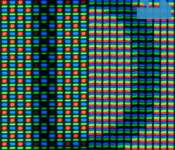
While today’s smartphone screens are all getting bigger, brighter and sharper, the technology used to produce the wonderful images we see varies among different smartphone manufacturers. You may have noticed that Samsung’s smartphones appear to be much more colorful and saturated than other handsets, or HTC’s phones giving off a more calm and natural color set. But why is this? Let’s take a look at the different types of screens you’ll find when deciding your next smartphone.
AMOLED stands for Active-Matrix Organic Light-Emitting Diode, but you can think of this as “the super colorful screen”. AMOLED technology is widely used for smartphones because of their gorgeous color reproduction abilities and very deep blacks. These screens don’t need a backlight, as each pixel is able to produce its own light when it needs to. This makes blacks look amazing when viewing a picture or video, because the pixels do not have a to provide light at all, rather than LCD displays where the backlight bleeds through and you get a dark grey color where there should be black.
AMOLED displays do have their drawbacks however, as they are more expensive to produce, and are not as sharp as LCD displays when looking up close. This is because AMOLED uses a different subpixel arrangement than LCD displays do, which makes individual pixels more noticeable. Below is an example provided by surfreview.com of the layout of pixels between AMOLED on the left and LCD on the right.

Motorola is a recognizable example of a manufacturer that uses AMOLED screens on their smartphones, like the Moto phone series. The Moto X, Droid Turbo and Nexus 6 produce colors that almost pop right out of the screen, however the whites on the screen appear slightly more yellow than LCD screens. But doesn’t Samsung use AMOLED too?
This is the more advanced screen technology Samsung uses in their phones. The key difference between this and regular AMOLED screens is that Super AMOLED is built with touch sensors in the display itself, rather than adding another touch sensitive layer on top, resulting in one of the thinnest displays on the market. Other benefits to Super AMOLED include better brightness and battery life compared to regular AMOLED.
Liquid Crystal Displays. These are commonly used on televisions, computer monitors and more, but continues to advance further every year. These displays offer the most realistic colors you can find on a screen, but they won’t offer as great of contrast ratio as you would find on an AMOLED screen (deep blacks, brighter colors). LCD panels require an extra layer of glass than AMOLED displays, and use a backlight for brightness, which can lead to light bleeds leaking through the display or awkward looking viewing angles. There are a few types of LCD displays used in phones:
Standing for Thin Film Transistor, this display makes wiring of LCD screens more efficient by reducing the number of electrodes per pixel, or giving the display better image quality over standard LCD displays.
Another popular form of LCD displays are IPS, or In-Plane Switching displays. IPS screens offer a broader range of viewing angles and colors than TFT displays, and are used much more often. LG uses IPS LCD displays on their phones, such as the G2, G3, Nexus 4 and Nexus 5.
HTC is a proud user of Super LCD technology, as they use the S-LCD 3 displays on their One lineup. Super LCD removes the air gap between the outer glass and LCD display. Super LCD displays offer better power consumption when viewing lighter colors, such as the whites when web browsing. With this technology, HTC offers some of the sharpest displays on the market, making it very hard to see pixels up close.
 Super AMOLED on left, Super LCD on right
Taking a look at a few categories, each one has their strengths and weaknesses. In terms of brightness, LCD displays come out on top. A good comparison example would be the HTC One M7 and Galaxy S4, as the One was able to put out 500 nits of light output, compared to the S4’s 300 nits, along with a similar comparison between the One M8 and Galaxy S5. This is a pretty significant difference, and gives HTC and LG’s phones a better edge when viewing outdoors in sunlight.
On the flip side, contrast ratios appear much better on AMOLED displays. When viewing your phone in the dark, you won’t even be able to tell that your phone is on, if for example, a video goes to a black scene. This allows the phone to save power when using dark-themed apps or if you use a dark wallpaper. LCD displays do not compete as well, as you will notice the backlight even when viewing dark images. However, Super LCD and IPS LCD are better at handling white screens, as they use less power and appear less “yellow” than AMOLED screens.
Viewing angles tend to look better on AMOLED displays, such as the Galaxy phones and Moto phones than LCD displays do, meaning when viewing an AMOLED display from the side, you won’t notice a backlight leaking through as you typically would on an LCD.
As the years have gone on, both types of displays have adapted to fix their own problems to compete with the other. The Galaxy S5 last year offered more realistic colors than it’s predecessors, but still overs-saturates a bit. LCD displays have improved as well to offer greater viewing angles and better colors to compete with AMOLED displays. If you want your colors to “pop out at you” and witness the deepest blacks possible on a display, then AMOLED is for you. If you prefer natural and more realistic colors and the brightest possible screen on the market, then LCD is the way to go. As a side note, many photographers prefer using LCD displays, as the photo previews give the user the most exact look of the photo, rather than exaggerated colors on AMOLED displays, such as greener grass and more blue skies.
So, when you bought your smartphone, was the screen the biggest deciding factor? Which one is your preference and why?
The post AMOLED vs LCD: What is best for you appeared first on AndroidGuys.
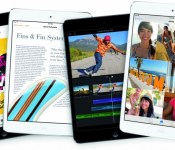
A new report out of Japanese Apple blog Mac Otakara [Google Translate] suggests that a refresh of the iPad Mini line could be hitting mid-cycle, bringing a beefier processor and faster Wi-Fi to a fourth-generation iPad mini.

Considering that the iPad Mini 3 was only a slight refresh on its predecessor, packing the same processing speed and power and essentially adding only Touch ID and a gold color option into the mix, many have hoped the fourth generation version of the device would be a more substantial update than last year’s. Mac Otakara‘s report states that the update would replace the iPad Mini 3’s current A7 processor and 802.11n Wi-Fi with an A8 CPU and 802.11ac Wi-Fi.
Mac Otakara tells MacRumors, however, that there is some uncertainty with this rumor, and Mac Otakara is not convinced it is accurate.
A short product cycle for an iPad would not be unprecedented, as the 9.7-inch iPad saw a seven-month interval in its third-generation, with the fourth-generation model shifting the iPad update cycle from the early part of the year to the late part and allowing Apple to quickly make the transition to the Lightning connector across its iOS device lineup.
Timing on a potential mid-cycle refresh for the iPad mini is not entirely clear, but the obvious candidate in the near-term is Apple’s “Spring Forward” event this coming Monday, March 9. Mac Otakara also says Apple has been pushing out iPad and notebook shipping estimates for resellers to 2-3 weeks, perhaps hinting at some imminent lineup changes.
Apple reportedly has a MacBook Air refresh in the works and shipping estimates for the 13-inch Retina MacBook Pro have also slipped today, fueling rumors of updates at Monday’s event. The company will, however, most likely dedicate much of the show to details on the Apple Watch, so it is unclear how many other updates Apple will want to include in the event.
Anytime I see April 1st as a date from a carrier, manufacturer or pretty much anyone else, I immediately think it is an Aprils fools joke. I highly doubt it is a joke when it comes to pre-ordering of Samsung’s new flagship devices on the biggest carrier in the US though. A tweet went out […]
The post Verizon will take Samsung Galaxy S6 and S6 Edge pre-orders April 1 appeared first on AndroidSPIN.


MWC 2015 has wrapped up and our team is now getting ready to pack up and head home. Before MWC even began, we knew it was going to be a stellar show, with our eyes locked on HTC and Samsung in particular. It’s true that the spotlight shone brightest on HTC and Samsung this week, but honestly there were a ton of great devices showcased and at least a few surprises as well, such as the exceptionally attractive Huawei Watch and the eye-scanning ZTE Grand S3.
As is our tradition, we have now spent some time going over the many great products we saw over the course of the last several days and have picked out nine devices which we feel are worthy of being showcased as Android Authority MWC 2015 top picks.
Easily one of the biggest announcements of MWC 2015, the Samsung Galaxy S6 finally brought the world a much needed infusion of premium materials, melding a glass back with a metallic frame. The design may have required a few sacrifices, such as the lack of microSD and a non-removable battery, but the latest member of the Galaxy S family certainly takes things up a notch when it comes to looks.
On the hardware front you’ll find an Exynos 7420, no Snapdragons here. You’ll also find 3GB RAM, a 5.1QHD display, and internal storage options that begin at 32GB and go up as high as 128GB. Samsung hasn’t just changed up the aesthetics and given us a hardware upgrade, the software side has also received improvements including a new theme system, a dramatic reduction in bloatware and several other improvements that should make the Galaxy S6’s software the fastest iteration of TouchWiz to date.
The Galaxy S6 finally brings Samsung’s design language a bit more on par with premium devices like those from HTC and Sony, and, for the most part, the device seems to have been well received by the tech world at large. We’ll certainly be diving in deeper with the Galaxy S6 in the months to come, but there’s no doubt in our mind that the latest Galaxy is worthy of being deemed an AA top pick.

Learn more about Galaxy S6:
Announced alongside the Galaxy S6, the Samsung Galaxy S6 Edge might not be dramatically different from its standard-screened brother, but its unique dual-curved display helps it stand out from the crowd. The Galaxy S6 Edge packs the same specs as its brother, with only a few minor changes like a slightly larger battery. That means you get a 5.1-inch QHD display, a 64-bit Exynos 7420 processor and 3GB RAM. One area that the Edge does stand out from the GS6, aside from aesthetics, is when it comes to the software.
The Galaxy S6 Edge offers two special features. The first of these is People Edge, which lets you assign colors for up to five contacts, and when you put the phone face down, you can know who is calling because you see the colors from the right edge. The other special feature is the ability to show notifications and bits of info on the edge, giving users a quick way to see texts, calls and more, without the need to open the case.
For those that are impressed by what Samsung did with the Galaxy S6, but are looking for a product that will stand out in an even bigger way, you can’t go wrong with the Galaxy S6 Edge. And that’s why it’s no surprise we chose the Galaxy S6 Edge as a top pick.
Learn more about Galaxy S6 Edge:
The HTC One M9 might not have seen the aesthetic enhancements some were hoping for, but that doesn’t mean it isn’t a device worthy of your attention. Further refining the design language started with the M7 and arguably near-perfected with the M8, the M9 takes what we loved about its predecessors and infuses the experience with a few coats of extra polish.
Gone is the much criticized UltraPixel rear cam, replaced with a 20MP shooter. Other improvements include the jump to a Snapdragon 810 with 3G RAM, and several software improvements introduced with Sense 7.0 including HTC themes and more. HTC One M8 owners might find the device too similar to be worth an immediate upgrade, but M7 owners and those new to HTC will certainly be tempted by the stylish One M9 and its 2015-level specs.
Could HTC have done more to set the One M9 apart from the M8, aesthetically? Arguably so, but don’t be fooled, this is still one premium device with quite a bit of raw power under the hood.
Learn more about HTC One M9:
Before MWC we heard at least a few rumors and whispers about Huawei’s plans for wearables and for Android Wear. At MWC 2015 the Huawei Watch became a reality, and what a stunning looking watch it is. The new wearable stands out as the most “watch-like” smartwatch to date, bearing a full circle display like the LG G Watch and Urbane, but within a less bulky package. The Watch also offers a 1.4-inch AMOLED display with a resolution of 400×400 that’s protected by a sapphire crystal display, and the body is equally durable thanks to 316L corrosion-resistant stainless steel.
As far as internal hardware and software goes, the Huawei Watch should perform similarly to its existing brethern from the likes of LG, Sony, Samsung, Acer and Motorola. There’s a Snapdragon 400 underneath backed with 512MB RAM, and the software is the same stock experience as you’ll find elsewhere, although Huawei is bringing 40 unique watch faces to help set its wearable apart.
Android Wear is still very much in its infancy and while the platform is far from a mainstream success at this stage, devices that push decent specs with excellent aesthetics are exactly what Android Wear needs if it is ever going to appeal to more casual watch buyers and not just the hardcore techies that want and need the latest and greatest.
Learn more about the Huawei Watch:
The LG Watch Urbane was actually announced a bit ahead of MWC 2015, but it wasn’t until this week that we had the opportunity to go hands-on with the latest LG watch. The latest watch features a premium metal design that’s sleeker and more elegant than the G Watch R, though, aside from aesthetics, we’re looking at pretty much the same device.
That means you’ll get a Snapdragon 400 with 512MB RAM, a 1.3-inch POLED 320×320 display and a 410mAh battery. There’s also the same stock Android Wear experience, which, judging by the G Watch R, should fly through the elements with these specs. Whether the Urbane is as attractive as the Huawei Watch, or more so, will largely depend on your own personal tastes, but there’s no denying that LG is continuing to step up its game with each new watch it brings to the plate.
Learn more about the LG Watch Urbane:
An underlying theme with all the mid-range smartphones featured in this list is that they all have something unique to offer, beyond what their otherwise mid-range nature, and associated price point, would suggest. In the case of the Alcatel OneTouch Idol 3, that differentiating factor comes in many forms.
Apart from the the fact that this device packs an impressive 13 MP rear camera and an 8 MP front-facing unit that should be a delight for selfie lovers, as well as a beautiful Full HD display, the OneTouch Idol 3 also boasts a fantastic audio experience with dual front-firing speakers featuring JBL audio with Clari-Fi technology, with the built-in MIX music application available to really let the amateur DJ in you shine. All these features are often not available with even far more expensive flagships, which is why the Alcatel OneTouch Idol 3 is deserving of our top pick list for MWC 2015!
Learn More:
It’s not really a surprise to see the Sony Xperia Z4 Tablet make it as our top tablet pick, with every earlier iteration making its way on to a similar list previously. Sony continues to excel in the high-end tablet arena, with the Xperia Z4 Tablet taking everything we loved about its predecessor and making it even better.
Weighing just 389 grams and only 6.1 mm thick, the Xperia Z4 Tablet further refines the already fantastic design language and handling experience, and of course, comes with the bump in specifications you’d expect from a current generation high-end Android tablet. The minimalistic Xperia UI on top of Android 5.0 Lollipop really lets the Snapdragon 810 processing package shine, and media consumption will be a blast on the Quad HD display. Sony staples like water and dust proofing also return with this device, which is just one of the many reasons why the Sony Xperia Z4 Tablet is our pick for the best tablet at MWC 2015!
Learn More:
It is easy to mistake the Lenovo Vibe Shot for a slim point and shoot digital camera when looking at it from the back, which is exactly the affect the company hoped to achieve. Premium mid-range best describes the look and specifications of this smartphone, but its standout feature is the 16 MP rear camera and 8 MP front-facing unit, and the overall experience it offers.
A dedicated tactile shutter button is coupled with a physical toggle to easily switch between “Smart” and “Pro” modes, with the latter offering the level of manual control you’d usually get with a regular camera. The 16 MP auto-focus rear-facing camera comes with a 6-piece modular lens, an infrared auto focus, tricolor flash, OIS, and 16:9 BSI sensor, and in our short while with this device, we were certainly impressed with it, and can’t wait to put it through its paces. For all that it offers, the Lenovo Vibe Shot merits one of our top smartphone picks of MWC 2015!
Learn More:
Even with a couple of huge flagship announcements dominating this year’s event, the smaller players in the world of Android found a way to not get lost in the crowd, mostly due to the unique features they offered. In the case of the ZTE Grand S3, this noteworthy feature was in the form of “Eyeprint ID.”
The device uses the 8 MP optics of the front-facing camera to not only capture a video of how your eyes look, but also see the blood vessels inside of the eyeballs, and further refines the scan information every time you use this feature to unlock your smartphone. It is a first implementation that is sure to get better over time, and this may not be the fastest way to unlock your smartphone, but this remarkable attribute of an otherwise decidedly mid-range smartphone is the reason why the ZTE Grand S3 is entitled to one of our top smartphone picks of MWC 2015!
Learn More:
CES might have been a bit tepid this year as far as mobile is concerned, but at least MWC 2015 made up for, with several OEMs bringing their A-game. While we listed some of the biggest hitters, there were many other products announced at MWC 2015 that helped make this event an absolute thrill to watch unfold.
What do you think about this year’s Best of MWC 2015 top picks winners? Agree, or feel we left anything out? Let us know what you think in the comments.
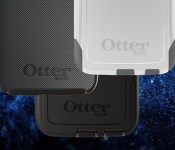

OtterBox, the extremely popular durable case manufacturer, has today announced its plans to offer a selection of different case designs for Samsung’s flagship smartphone of 2015, the Galaxy S6. These cases have all been approved by the Samsung Mobile Accessory Partnership Program, meaning that they’ve been “designed specifically for Samsung mobile devices and have been certified to meet Samsung performance standards.”
Here’s what OtterBox had to say about the cases it’s set to manufacture for the Galaxy S6:
Defender Series provides tough protection and is the best-selling case in the OtterBox lineup. The rugged GALAXY S6 case is composed of three layers, including a built-in screen protector, polycarbonate mid-layer and synthetic rubber slipcover. Defender Series for GALAXY S6 will be available in a variety of color and design options, including Realtree camo.
Commuter Series provides premium protection in a sleek design that slides easily in and out of pockets. With one layer of synthetic rubber and one layer of polycarbonate, the slim GALAXY S6 case will come in a variety of “Build Your Own” color combinations to match any style.
Symmetry Series provides seamless protection and style with a dual-material construction and a beveled edge to keep the screen safe. Wraparound graphics and vibrant color options add a flash of personality to the GALAXY S6.
Alpha Glass keeps the vibrant GALAXY S6 screen safe from scratches and cracks, with a thin layer of fortified glass that maintains the truest touchscreen experience. Bubble-free and anti-shatter, Alpha Glass comes in Clear and Privacy options.
Unfortunately, the OtterBox cases aren’t available to purchase just yet, but they have been listed on the company’s website together with their prices, which start at $40 for the Symmetry Series and end at $65 for an NFL Edition Defender Series Case — which you can choose to put your favorite pro football team’s logo on it.
Source: OtterBox
Come comment on this article: OtterBox announces its cases for the Galaxy S6
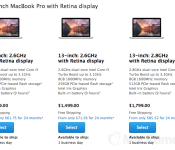
MacBook Air and 13″ Retina MacBook Pro shipping times have slipped on the Apple Online Store from “in stock” to “1 business day” ahead of Apple’s upcoming “Spring Forward” media event on Monday. Earlier this week, we reported that a MacBook Air refresh with the latest Intel Broadwell processors and Intel HD 6000 graphics appears imminent, and it is plausible that Apple also updates the MacBook Pro with similar hardware.

The shipping dates have slipped across North America, with the Apple Online Store in the United States, Canada and Mexico showing the longer “1 business day” estimate. A spot check of the United Kingdom and Australia online storefronts still shows regular shipping times. In-store availability of the MacBook Air and MacBook Pro in the also appears unaffected in the United States based on Apple Stores in New York and California.

Intel’s Broadwell processors are available for all MacBook Air models and the 13-inch MacBook Pro, although more powerful chips for the 15-inch MacBook Pro are not expected until later this year. Nevertheless, Apple may choose to focus its March 9 media event solely on the Apple Watch and could hold off on refreshing its MacBook Air and MacBook Pro lineups until a later date.
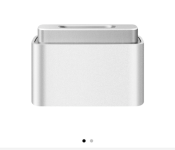
Apple has quietly listed the MagSafe to MagSafe 2 converter as discontinued on the Apple Online Store in the United States and Canada this week. The converter is required to charge a MagSafe 2-equipped MacBook Air or MacBook Pro when the notebook is connected to a Thunderbolt Display or Cinema Display. The converter still appears to have in-store availability, although for how long remains unknown.

Apple discontinuing the MagSafe to MagSafe 2 converter would prove problematic for Thunderbolt Display and Cinema Display users. The company does include the converter in the box for the Thunderbolt Display, but not being able to purchase a replacement if you misplace one would be an issue. We have reached out to Apple for comment and will update this story if we hear back.
(Thanks, Chris!)

If you haven’t jumped on this deal yet, this is your final chance! That’s right, the Pay What You Want: Front-End Developer Bundle that readers have been snatching up at a rapic pace is ending on Sunday. That means this is your last opportunity to grab over 93 hours and 7 courses of expert coding training for less than the price of a couple coffees. MySQL, PHP, JavaScript, jQuery, CSS, HTML — they’re all covered. What are you waiting for? Get to coding, today!
See more at deals.androidguys.com
If you haven’t jumped on this deal yet, this is your final chance! That’s right, the Pay What You Want: Front-End Developer Bundle that readers have been snatching up at a rapic pace …

Feeling jealousy when your friends whip out their fancy new tablets at get-togethers? Smiling through the pain as they swipe through photos of their recent trip to the Carribean while you try to …

Learning to hack, ethically, is a necessity in today’s age of ever-growing digital threats. Whether your goal is to build your business or simply stop your secure data from being breached, …

It seems, at times, that there’s a disparity between the technological power that we harness in our handsets and the lack of sophistication of some of our appliances at home. With my …
The post Last chance: Pay What You Want Front-End Developer Bundle appeared first on AndroidGuys.


Nintendo’s digital store is beefing up with some top-notch independent titles in the coming months, and the company showed off a few familiar games during a presentation at GDC 2015. We’re talking games headed to the Wii U eShop that have already launched on other platforms, including Klei Entertainment’s Tim Burton-esque survival game, Don’t Starve: Reign of Giants, Young Horses’ PS4 launch title Octodad: Dadliest Catch and the beautiful, educational platformer Never Alone from Upper One Games. Our list below includes the freshly announced Wii U games and a bit of information about each one, so you can make platform decisions in peace.
Now to convince everyone he should be in Smash Bros.
– Phil Tibitoski (@PTibz) March 4, 2015
Don’t miss out on all the latest from GDC 2015! Follow along at our events page right here.
 AIVAnet