


1TB Wi-Fi hard drive + 10TB cloud backup from iDrive, $97

When my parents were young, they’d collect photographs in shoeboxes, albums, and scrapbooks. Now, all of my photos and videos are on a small MicroSD card tucked into the back of my phone. …


brightcove.createExperiences();
We’re here at MWC 2015 where Lenovo just unveiled two new budget-friendly Android tablets. We scored some hands-on time with the bigger of the two, dubbed the Lenovo Tab 2 A10. This 10.1-inch tablet is one of the first tablets to feature Dolby ATMOS 3D Cinema audio enhancements, which aims to make your audio experience much clearer. For the price, this tablet has great specifications and a solid build quality. So, is it worth the money? Let’s find out in our hands-on and first impressions of the Lenovo Tab 2 A10!

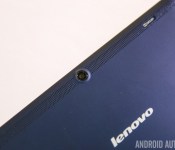
The A10 has a very minimal design no matter which way you look at it. The majority of the tablet is made of a soft-touch plastic, which will likely be plenty durable for most users. The front bezels have a glossy finish and are very quick to pick up fingerprints. The back design is quite understated, only showing a Lenovo logo in the center. Up top is where the rear-facing camera sits, flanked by the Dolby ATMOS-enhanced speakers. We got hands-on time with the Midnight Blue variant, and there will also be a Pearl White version available at launch.

As the name suggests, the Tab 2 A10 features a 10.1-inch IPS LCD display with a 1920×1200 resolution and offers 218ppi. The display has been offering up great viewing angles and clear color reproduction so far. Bottom-line, just about anything you watch or read should look pretty good, even if there are other tablets out there that certainly offer higher resolution displays.

The Wifi-only model features a 1.5GHz quad-core 64-bit MediaTek MT8165 processor, and the LTE model brings a 1.5GHz quad-core 64-bit MediaTek MT8732 processor. Both tablets are backed by 2GB of RAM. In our time with the device so far, these processors have not slowed down a bit. Moving through Lenovo’s software is lag-free, and switching between multiple apps didn’t give us any problems.

One of the biggest reasons to buy this tablet is for the speakers. Both variants feature Dolby ATMOS 3D Cinema audio enhancements which has actually worked out quite well so far. The speakers are rear-facing, which isn’t the most ideal location on the tablet. With that said, the speakers are difficult to cover up when holding the tablet either in landscape or portrait, which is nice to see. The Dolby ATMOS-enhanced speakers really give off quality surround sound no matter what audio we listened to. The audio tech also works well with headphones, so you’ll get a great audio experience no matter which way you like to listen.

The tablet features a 7200mAh battery, which Lenovo says will allow the tablet to last up to ten hours of use. Obviously we haven’t tested the battery in full yet, but the 7200mAh capacity should be enough to make it through multiple days of use on a single charge. The tablets also come with an 8MP rear-facing camera and a 5MP front-facing camera. Don’t expect anything groundbreaking in terms of image quality, but the cameras are there if you need to snap a quick picture.

You’ll also get 16GB of on-board storage with both variants, though there is room for MicroSD expansion up to 32GB. Overall, if you can get past the low storage amount, this seems like a great tablet for viewing all types of multimedia content.

The software is similar to what we’ve seen on many other Lenovo products in the past. The software is minimalistic and easy-to-use. In turn, it’s much easier on the processor so the UI and apps will run smoothly. The current software is running Android 4.4 KitKat, though Lenovo promises a software update to Android 5.0 Lollipop sometime in June.
That was our quick look at the Lenovo Tab 2 A10! Overall, the device is simple, fast, and features great audio quality across the board. The Wifi-only version will launch in April starting at $199, and the LTE model will start at $279. This isn’t the most feature-packed tablet we’ve ever used, but if you’re looking for a great multimedia-centric tablet at a reasonably low price, you may want to consider this one.

Epic Games has announced that it is getting rid of its $19 monthly fee for developers who want to make games using Unreal Engine 4. Epic will still take 5% of any gross revenue generated by an Unreal Engine 4-based app or game every quarter after it reaches $3,000 in revenue.

Epic first announced its affordable $19 monthly fee for Unreal Engine 4 in 2014, which can be used to make games for the Mac, the iPhone and the iPad, among other platforms. So why is it ditching this revenue stream? Epic stated:
The past year has been a whirlwind for everyone at Epic Games. Our community has grown tremendously. The quality and variety of creative work being done has been breathtaking. When we asked people to submit their projects to be shown this year at GDC, we had the challenge of picking just 8 from over 100 finalists that were all good enough to show.
The state of Unreal is strong, and we’ve realized that as we take away barriers, more people are able to fulfill their creative visions and shape the future of the medium we love. That’s why we’re taking away the last barrier to entry, and going free.
Any developers who had signed up for the old paid subscription fee will get a $30 credit that can be spent in the Unreal Engine Marketplace for purchasing additional content.
Source: Epic Games

 At Mobile World Congress today Senior Vice President of Google Sundar Pichai revealed a handful of new projects the company is working on, including a new mobile payments solution called Android Pay (via The Verge).
Though only spoken of briefly, Pichai mentioned that the new service would take a decidedly more developer-focused route, calling Android Pay a “developer tool” that would give those developers considerable flexibility in how to implement the payments service.
He noted that the service was less a new consumer-level product and more of an “API layer” that will give other developers and companies the chance to build interesting mobile payment solutions on Android platforms.
“We are doing it in a way in which anybody else can build a payments service on top of Android,” said Pichai. “So, in places like China and Africa we hope that people will use Android Pay to build innovative services.”
Although Pichai did not explain the details of Android Pay to any great degree, he claimed it would “start with NFC” and eventually accommodate biometric sensors as well.
Google’s news follows on the heels of Samsung’s own entry into the contactless payment market with Samsung Pay just yesterday. Samsung’s offering is set to be baked in to the upcoming Summer release of the Galaxy S6 and S6 Edge smartphones, which will include a fingerprint scanner to help secure mobile payments made on the device, falling far more in line as a direct competitor to Apple Pay than Google’s new service.
Samsung is attempting to come out of the gate strong, with the company having already made deals with MasterCard and Visa to support the service and attempting to line up various other companies and banks before the new Galaxy phone launches this summer. The announcement appears to be a direct continuation of Samsung’s acquisition of mobile payments-focused company LoopPay earlier in February, setting itself up to battle Apple Pay in the coming months.
Pichai noted during MWC that Android Pay is a bit more malleable of a service, not locking itself onto one specific phone or brand similar to Apple Pay or the upcoming Samsung Pay. He continued that the company doesn’t mean to directly compete with Samsung’s newly announced mobile payments service, and mentioned that Google wanted to “work closely [together] to see how we can align [with them].”

When my parents were young, they’d collect photographs in shoeboxes, albums, and scrapbooks. Now, all of my photos and videos are on a small MicroSD card tucked into the back of my phone. What if I were to lose that phone or, even more likely, that card? Sure, I can back the images up on my laptop’s internal hard drive — and I do — but there’s only so much space and who’s to say the laptop will even last? With this deal from iDrive, you’ll be able to benefit from the best of both worlds — physical and digital.
This deal includes a 1TB Wi-Fi hard drive with 256-bit AES encryption and is compatible across all platforms (Mac, PC, Android, etc) at rapid transfer rates. That means you’ll be able to back up your entire mobile device, wirelessly! If you do prefer a more tactile approach, it also comes with USB 3.0 capabilities for even faster transfer speeds. What’s even cooler is that this deal also includes a 1-year subscription to iDrive Pro Personal, a 10TB cloud storage solution. With that much space — both physical and digital — we’re potentially talking about a lifetime of photo, video, and file storage. Even better yet is that you can grab this bundle, normally priced at $475, for just $97.
See more at deals.androidguys.com
When my parents were young, they’d collect photographs in shoeboxes, albums, and scrapbooks. Now, all of my photos and videos are on a small MicroSD card tucked into the back of my phone. …

Time is running out on our popular Pay What You Want: Learn to Design Bundle so if you haven’t signed up for a chance to win, what are you waiting for? You’ll recieve over 80 hours of …

We’re giving away a FREE 50″ LG TV and throwing in a sound bar speaker to boot! There’s no purchase necessary and you can enhance your chances of winning by sharing the giveaway …

One of our most popular quadcopters, the Limited Edition Code Black Drone is a perfect item for video enthusiasts, gadget-lovers, aviation fanatics, kids, Batman fans (chicks dig the drone), and …
The post 1TB Wi-Fi hard drive + 10TB cloud backup from iDrive, $97 appeared first on AndroidGuys.
Acer announced the latest additions to its popular Z-series of smartphones at the Mobile World Congress on Sunday. The two new devices, the Z520 and the Z220 smartphones feature sleek design, excellent camera features and impressive quad-core performance to create a seamless mobile experience. The handsets appeal to different consumer groups adding to the growing list of smartphone offerings from Acer. The Z520 will target the users who play a lot of media on their phones whereas the Z220 is meant for those looking to buy an entry level smartphone.
The Z220 will be the first Acer smartphone to feature the Android 5.0 (Lollipop) OS and will feature 1GB RAM backed by 8GB of internal storage and comes with a Qualcomm Dual-core 1.2Ghz Snapdragon 200 processor. The device has a 4-inch WVGA display capable of generating a pixel density of 233 pixels per inch. A 5MP flash-equipped rear shooter sits on the back of the device with a 2MP front camera. The camera also allows you to control and adjust various shooting parameters such as exposure, focus and brightness letting you capture the perfect images. The sleek device also features a new textile pattern design inspired by Thai silk giving it a very elegant yet trendy appearance.
The Z520 promises to bring a host of features for media enthusiasts such as the DTS™ Studio Sound, which will deliver astonishing stereo sound with bigger sound field, higher vocal clarity and more natural details. The device comes with an 8MP auto-focus, rear-facing camera with LED flash allowing you take some crisp images. The device also boasts of a voice activated selfie camera making sure you don’t need to touch your phone to take that perfect selfie!
Both these smartphones come with Acer’s Quick Mode which comes with 3 distinct pre-set profiles catering to different customer segments based on their familiarity with the Android interface.
Source: Acer
The post Acer launches Z220 and Z520 smartphones at MWC appeared first on AndroidGuys.


Qualcomm is certainly making some news this week at Mobile World Congress. With a new 820 chip, a collaboration with Cyanogen, and now a new fingerprint sensor that promises to be better than Apple’s Touch ID.
Based on Snapdragon Sense ID, this new fingerprint sensor verifies your fingerprint in 3D using ultrasonic waves. This ultrasonic technology is now being used in biometric security applications. It can “penetrate the outer layers of skin, detecting three-dimensional details and unique fingerprint characteristics, including fingerprint ridges and sweat pores.” What that means is that others won’t be able to use a copy of your fingerprint to break into your phone. Apple’s Touch ID is based on a 2D image scan.

Qualcomm’s sensor can even read your fingerprint when it’s wet or even somewhat dirty. It can scan through glass, aluminum, stainless steel, sapphire, and plastics. This means that phone manufacturers don’t have to use a different material than what is already on the phone just for the sensor.
You can check out the video below to learn more..
Click here to view the embedded video.
Qualcomm will sell the sensor as a standalone part or it will be built into the new Snapdraon 425 and 810 chipsets. You can expect to see the first devices with this tech later this year.
Be sure to check out our complete coverage of Mobile World Congress 2015.
source: The Verge
Come comment on this article: Qualcomm’s new fingerprint sensor might be better than Apple’s Touch ID


In an effort to boost Google+, Google announced that it will be splitting the service into two distinct services in a recent reorganization. Not only that, but it looks like product VP Bradley Horowitz will lead the newly reorganized Google+ endeavor. He will oversee the split with it dividing into Streams and Photos. This comes off a recent interview with Android and Chrome head, Sundar Pichai.
As he said in the interview, Google sees Photos, Streams and Hangouts as three important and separate products and Google will move each into three independent focuses. As Horowitz put it on Google+:
“Just wanted to confirm that the rumors are true — I’m excited to be running Google’s Photos and Streams products! It’s important to me that these changes are properly understood to be positive improvements to both our products andhow they reach users.”
That said, we only know how this move correlates with Streams and Photos and what will happen to Hangouts is still up in the air. Given Google’s focus on making it an all-encompassing communications tool, it does carry a lot of weight in terms of importance for the search giant.
Come comment on this article: Google+ splits into Photos and Streams in reorganization


In this special edition of the FDP, Josh gets together with a couple very special guests to talk about the devices they will be covering at the Mobile World Congress in Barcelona, Spain. Michael Fisher (@captain2phones) of PocketNow (@pocketnow) and Nicole Scott (@nicole_scooter) of MobileGeeks (@mobilegeekscom) join the show!
While pondering over HTC, Alcatel, LG, and Samsung devices, quite a few fun moments happen in the hotel room where what Josh calls “The Trifecta of Collaboration” recorded this special episode. Among them are a botched tribute by Josh to the late Leonard Nimoy, talks about Barcelona and its beauty, and the exact opposite of beauty as Michael Fisher expresses his disgust at La Sagrada Familia.
It’s a jam-packed, longer-than-usual episode that you won’t want to miss. Enjoy!
The Friday Debate Podcast – discussing topics in Android every week.
RSS Feed
iTunes
Stitcher
Direct Download
Samsung Galaxy S6 First Look!
Samsung Galaxy S6 Edge First Look!
HTC One M9 First Look!
LG Urbane First Look!
Joshua Vergara
Twitter | Google+
Joseph Hindy
Twitter | Google+
Andrew Grush
Google+
Jonathan Feist
Twitter | Google+
Recorded on February 28, 2015 – Hosted and Produced by Joshua Vergara


If you didn’t think that your opinion of Tinder could go any lower, something new pops up to make you change your mind. The hookup app has reportedly launched its long-awaited paid tier, but in Europe, users will have to overcome something worse than left-swipes: ageism. Tinder Plus users who are under 28 years old will be able to subscribe to the service for just £3.99 ($6.39) a month, but users over that age will be asked to spend £14.99 ($23.03) — nearly four times as much for the same thing.
Tinder has been building hype for its paid tier since the end of last year, pushing users over to a freemium version of the existing app with limited functionality. Tinder Plus, meanwhile, enables users to undo left-swipes and alter their location when they’re on the go. It’s not yet clear if this pricing is an experiment, or if the US price of $9.99 will be similarly changed, but it looks as if you just got one more reason to lie about your age on Facebook.
Filed under: Internet
Via: Business Insider
Source: Evening Standard

 Apple CEO Tim Cook reportedly said at the company’s flagship Apple Store in Berlin that the Apple Watch launch in April will not be limited to the United States, according to retail employees in attendance that spoke with 9to5Mac.
Cook specifically confirmed that the Apple Watch will launch in Germany during the month of April, indicating that a wider international launch in other countries could be on the horizon. MacRumors previously reported that Apple is targeting an early April release date for the Apple Watch based on a source that has proved reliable.
The report corroborates that the Apple Watch may be released in the United States in early April, followed by Germany and other countries later in the month. The first wave of countries that Apple has often launched previous iPhones and iPads in typically includes the United States, Canada, United Kingdom, France, Germany, Australia, Hong Kong, Singapore and Japan. Cook did not confirm that the Apple Watch would launch in April in all of those countries.
Apple Watch starts at $349 and will be available in three models: Apple Watch Sport, Apple Watch and Apple Watch Edition. Apple is expected to provide more details about the wrist-worn device at its highly-anticipated “Spring Forward” media event on March 9th at the Yerba Buena Center for the Arts in San Francisco. MacRumors will be providing live coverage of the event, which should provide more specific pricing and release date information about Apple’s first wearable device.


 AIVAnet