


Google announces new features for Google Play Games and AdMob at GDC

While Mobile World Congress is happening in Barcelona this week, there is also another important event going on at the same time. The Game Developers Conference (GDC) is taking place at the Moscone Center in San Francisco.
Today is Google’s Developer Day and they just unveiled a few new features for Google Play Games and AdMob.
The Nearby Connections API will allow smartphones and tablets to seamlessly connect as second-screen controls to a game running on Android TV. They announced Beach Buggy Racing as one game that will utilize this new API in their summer release.
Google Cardboard was given to last year’s Google I/O attendees and we have already seen some cool apps along with hardware inspired by it such as the LG VR and the new ViewMaster. The Cardboard SDK for Android and Unity will make it easy for developers to build VR apps or add the necessary code to existing apps to make them VR compatible.
Now when it comes to game development, game content and optimization is obviously important, but let’s not forget about revenue. Google announced three updates to the AdMob platform. Native Ads (limited beta) will allow developers to customize ads to match the visual design in their game. In-App Purchase House Ads Beta will show those users that are more likely to spend on in-app purchases a customized text or display ad. Finally, Audience Builder allows developers to create lists of audiences based on how they use their game, then create customized experiences to grow app revenue.
All of these updates should appear over the next few weeks and some will require an update to Google Play Services.
source: Android Developers
Come comment on this article: Google announces new features for Google Play Games and AdMob at GDC

KloudMix beta updated in the BlackBerry Beta Zone

If you’ve been checking out the native BlackBerry 10 Mixcloud client better known as KloudMix, you’ll want to ensure you load up the BlackBerry Beta Zone and grab the latest version. Updated to v1.0.17.1, this release covers a few bugs and feature requests for the app, including uploading, track seeking and landscape support throughout the whole app. Have a look at the full list of changes below.

Google no longer requiring OEMs to encrypt Lollipop-running devices by default

Back when Google introduced Android 5.0 Lollipop, it made headlines for seemingly all the right reasons. Among the huge visual overhaul and the switch to the new ART runtime, Google announced that new devices running Lollipop would need to be encrypted by default. It seemed as though everyone was singing Google’s praises as this meant in the future, Android as a whole would be, essentially, much more secure. But Google seems to be changing their minds on this whole matter, as the company is now not requiring OEMs to encrypt devices by default.
Encryption by default isn’t dead in the water, though. Google has plans to relaunch this feature in a future update to the OS. According to the Android 5.0 Compatibility Definition, the rules have changed from being required to encrypt by default, to just being very strongly recommended.
9.9. Full-Disk Encryption:
If the device implementation has a lock screen, the device MUST support full-disk encryption of the application private data, (/datapartition) as well as the SD card partition if it is a permanent, non-removable part of the device [Resources, 107]. For devices supporting full-disk encryption, the full-disk encryption SHOULD be enabled all the time after the user has completed the out-of-box experience. While this requirement is stated as SHOULD for this version of the Android platform, it is very strongly RECOMMENDED as we expect this to change to MUST in the future versions of Android.
This wasn’t the case with Google’s initial release of the update, though. The Nexus 6 and Nexus 9 devices both had encryption turned on by default when the launched. Alternatively, the demo models of the Samsung Galaxy S6 and HTC One M9 handsets at MWC didn’t have encryption turned on, and neither does Motorola’s Moto E (2nd Gen.) handset.
So, what changed? Perhaps we need to look back to November, when a few folks decided to run benchmarks on Google’s Nexus 6. It turns out, having a device with encryption turned on by default causes significant performance issues compared to one without it turned on. We obviously have a problem on our hands, and perhaps Google released this feature too early.
Ars Technica guesses that Google isn’t enabling encryption by default anymore in order to give OEMs ample time to plan for the change. The problems caused by performance can obviously be countered by updated processors, faster flash memory, and more.
No matter the reasoning, there’s no need to worry. If you’re planning on getting a new device running Lollipop in the near future, you can still turn encryption on manually. We’ll be sure to let you know when Google reverts back to its original default encryption methods.
Dungeon Hunter 5 slashes its way onto Windows and Windows Phone on March 12
Gameloft has announced today that its popular hack and slash series, Dungeon Hunter, is about to get a sequel. Dungeon Hunter 5 will be bringing its dungeon crawling goodness to Windows and Windows Phone on March 12.

Yahoo! Turns! 20!

You now have permission to feel ancient: Yahoo, one of the web’s first big service providers, has turned 20 years old. The company has seen a lot in the past couple of decades, to put it mildly. It rose to fame as a web directory in the 1990s, and quickly became the web portal of choice for legions of early users. However, it suffered under both the dot-com bubble collapse and the pressure from an upstart, search-focused rival called Google — it spent much of the early 21st century scrambling to keep up, including an eventual deal to use Microsoft’s Bing search in place of its own tech. The firm’s revolving door approach to CEOs didn’t help, either. Yahoo is doing much better now that current CEO (and ex-Googler) Marissa Mayer has addressed some of the company’s mistakes, but it’s safe to say that this web pioneer doesn’t look much like it did back in the heady days of Windows 95 and dial-up modems.
[Image credit: David Paul Morris/Getty Images]
Filed under: Internet
Source: Yahoo (Tumblr)
OS X Yosemite 10.10.3 Public Beta With Photos App Now Available
 Apple today made a pre-release version of OS X Yosemite 10.10.3 available to those who are signed up for the company’s OS X public beta program, giving them early access to the new update and the new Photos for OS X app.
The public beta carries a build number of 14D87p, a slightly later build number than the 14D78h from the second developer beta of the software, released last week.
All registered public beta test members should be able to download OS X Yosemite through the Mac App Store.

When and where to buy: Samsung Galaxy S6 edge

Samsung’s latest flagship smartphone and its variant, the Galaxy S6 edge, was announced at Mobile World Congress on March 1. According to the hardware maker, the new dual-edged display phone will roll out to some 20+ countries on April 10.
We’ve gathered up links and details for the various U.S. wireless providers; these will help if you’re interested in signing up for additional information or want to pre-register for your own device. It’s worth pointing out that this model will not be as universally offered as the standard Galaxy S6
Pricing has yet to be announced by any party however we’ll update this page over time. Note that all parties listed below have been confirmed by Samsung.
Carriers
Retailers
- Best Buy
- Amazon
- Costco
- Sam’s Club
- Target
- Walmart
The post When and where to buy: Samsung Galaxy S6 edge appeared first on AndroidGuys.
Sony introduces new mid-range Xperia M4 Aqua
Fresh of Sony’s announcement of the Xperia Z4 tablet Sony also introduced the Xperia M4 Aqua. Sony claims to set the new mid-range standard with the M4 Aqua. Sony has been knows to create some of the best tablets and phones on the market for android. The Xperia M4 Aqua boast no compromise in features offering the most popular features from their Xperia Z line of tablets.
The phone will with some high end specs for a mid-range device. Sony states that the M4 will come with a 13MP camera with F2.0 aperture, octa-core 64-bit Snapdragon 615, and be water proof. The device will be launching in 80 countries worldwide and more than 100 carriers in Spring of 2015. The M4 Aqua comes in white, black, coral, and silver. The device itself comes with a metallic and tempered glass with cues from the Sony OmniBalance design.
With a crowded smartphone market Sony appears to be opting for dominance in the more affordable mid range line of smartphones while still offering a premium look and feel. Another key about the M4 Aqua is in the name itself boasting being waterproof, a feature dropped from the Galaxy line this year. Will it be enough to go head to head with other phones in the mid-range such as the Moto G and E? Or is this Sony backing away from the high end Android game?
The post Sony introduces new mid-range Xperia M4 Aqua appeared first on AndroidGuys.

ARCHOS announces new Magnus tablet line, new “Fusion Storage” option for devices

ARCHOS has announced they are bringing a new line of tablet devices to market in April 2015. The tablets will be part of a new “Magnus” line of devices that focus on making large amounts of storage available for users. Along with the new tablets, ARCHOS is also introducing a new technology dubbed Fusion Storage on their new smartphones and tablets, as well as some unspecified existing devices, that seamlessly combines internal memory and microSD card memory capacity.
The line of Magnus tablets includes the ARCHOS 94 Magnus which comes packed with 256 GB of internal storage. The screen is a 9.4-inch IPS screen running at 1280 x 800 resolution and the device will have 1.5 GB of RAM. The ARCHOS 101 Magnus+ will come with 128 GB of memory, 2 GB of RAM and a 10.1-inch screen running at 1920 x 1200 resolution. Finally, the ARCHOS 101 Magnus will have 64 GB of storage, 1 GB of RAM, and a 10.1-inch 1024 x 600 resolution display. All three devices can handle an additional 128 GB microSD card and they will be running Android KitKat. Both the ARCHOS 94 Magnus and ARCHOS 101 Magnus+ will list at a retail price of £249 ($382 USD) while the ARCHOS 101 Magnus will be priced at £129 ($198 USD).
ARCHOS is also trying to help owners of its devices deal with the growing size of apps and data and the memory requirements they demand. They have developed a Fusion Storage technology that “fuses” internal memory and external memory into a single block of memory. Fusion Storage will manage use of the space by apps.
ARCHOS indicates they will be present at MWC 2015 to show how the new Fusion Storage technology works and likely to let attendees check out their new hardware. You can hit the source link to read the full ARCHOS press release, but be sure to come back to TalkAndroid for more MWC 2015 coverage.


source: ARCHOS
Come comment on this article: ARCHOS announces new Magnus tablet line, new “Fusion Storage” option for devices
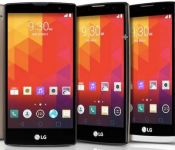
Hands on with LG’s new mid-range smartphones (updated)

While LG may not be bringing its flagship G4 to MWC, the company is focusing on other areas of the Android market, with the LG Watch Urbane, and a slew of mid-range smartphones that the company introduced last week. We go hands-on with the LG Spirit and the LG Magna! Update: We’ve now added Josh’s videos for the Joy and Leon,.
LG Spirit
First up is the LG Spirit, which features the rear-mounted button layout that has become a signature element of LG’s latest smartphones, and also comes with a bit of a curve similar to the G Flex 2, even if the similarity is from a purely aesthetic point of view. On the specifications front, things are decidedly mid-range, with the device featuring a 4.7-inch HD display, a quad-core processor, 8 GB of internal storage, 1 GB of RAM, an 8 MP rear camera, along with a 5 MP front-facing unit. The device runs Android 5.0 Lollipop with the latest iteration of the LG G UI on top.


LG Magna
Second is the LG Magna, the best of the lot in LG’s latest mid-range lineup. Like the Spirit, the LG Magna also features signature design elements such as the rear placement of the volume rocker and power button, and also has a bit of a curve to it, limited to the body of the device, as it doesn’t feature a curved display. The 4G LTE iteration comes with a brushed metal design back cover similar to the LG G3, while the 3G version will feature a regular polycarbonate back cover. Things remain the same in terms of specifications, save for the display, which is a 5-inch HD display, and also runs Android 5.0.2 Lollipop. It’s always great to see a mid-range smartphone offer features and the build quality of its flagship counterpart, and that is exactly what the LG Magna does.
LG Leon
Next on the list is the LG Leon, the third smallest of the bunch. The Leon looks very similar to the other three, carrying over LG’s classic design language with its rear-mounted volume buttons and power/standby key. The device features curves around the back, making it a really nice device to hold. The device has a 4.5-inch FWVGA screen with a pixel density of 220ppi. This device comes in either 4G or 3G-capable variants as well. The 4G model is powered by a 1.3GHz quad-core processor, and the 3G version comes with a 1.2GHz processor. Both variants are backed by 1GB of RAM and both have a 1900mAh removable battery as well as 8GB of internal storage. The rear-facing cameras come in either 8MP or 5MP flavors (depending on region) and both variants have a front-facing VGA camera. Additionally, the 4G LTE model comes with a brushed metal design back cover similar to the LG G3, while the 3G iteration will feature a regular polycarbonate back cover.
The processors in these devices may not be best-in-class, but LG’s G UI skin running atop Android 5.0 Lollipop is minimalistic, and is simple enough for the processor to power with ease. We don’t have any pricing or availability information yet, but we do know that all four devices will be priced similarly to LG’s previous Optimus L and F series devices.
LG Joy
Lat but not least, we have the LG Joy. This is the most competitively-priced device out of the bunch, offering up a 4-inch WVGA display with a pixel density of 233ppi. In terms of design, the Joy takes queues from LG devices in the past, bringing back the side-mounted volume buttons and power/standby key. As for the internals, the device has either a 1.2GHz quad-core or dual-core processor, 8GB or 4GB of internal storage, and 1GB or 512MB of RAM, all depending on which version you go for. The device also comes with a 1900mAh removable battery, a 5MP rear-facing camera and a VGA front-facing camera. Depending on the market, the Joy will run either Android 5.0 Lollipop or 4.4 KitKat, powering LG’s G UI interface.
The LG Joy is thicker than the others, and has a smooth plastic finish on the back of the device. Again, we don’t have any pricing or availability information quite yet, but we will update you when we hear anything about these devices.
So there you have a quick look at the four new mid-range smartphones available from LG. Be sure to stay tuned to Android Authority as we bring you more MWC 2015 coverage!
 AIVAnet