


How to make your subscription boxes a success
Every week more and more people are quitting their day jobs in favour of starting their own businesses and a business model that has become particularly popular as of recently is subscription boxes. But with so many people setting up subscription box businesses, how can you make sure yours goes on to become a success? Whilst there can be no guarantees, we have provided a few tips to get your business off to a good start!

What product will you sell?
Image source: https://farm6.staticflickr.com/5508/11213950313_6403f8f33f.jpg
Identify a gap in the market
Everyone seems to be latching onto the subscription box business model, as subscription boxes are currently very popular with consumers. In all honesty, any business from any industry can make a subscription box if they put their mind to it, so you need to find a way to make your subscription box stand out from the rest.
Are there any products that are not currently available in subscription boxes? Where are there gaps in the market? Identify these and give your subscription box a unique selling point and you will already be on your way to making it a success.
Understand your target audience
Once you have identified a gap in the market and created a unique selling point for your subscription box, you need to think about your target audience. Taking the time to properly research and understand your target audience will certainly pay off when it comes to selling your subscriptions.
Ask yourself who your target audience is and how you can reach them. What social media websites do they use? Do they read blogs? What products do they like to buy? Are there any brands they are particularly loyal to? Being able to answer these questions will put you in a good position when it comes to engaging with your target audience and marketing your subscription boxes to them.

Make your subscription boxes a success
Image source: https://farm8.staticflickr.com/7365/9236775151_f6a019dea5.jpg
Build strong partnerships
Without products, your subscription box will simply be an empty cardboard box, so you need to consider how you are going to source them. There is two ways you can go here. You can either buy the products in bulk to use in your subscription boxes or you can spend time building strong partnerships with relevant industry brands to get the products for free. The second option may take longer to roll out, however you will benefit from bigger profit margins.
If you do decide to partner with other companies to source products for your subscription boxes, you will need to spend time thinking about how to approach them. Remember that your proposal will need to benefit the other brands too.
Choose a reliable web platform
Once you are well on the way to creating your subscription boxes, you will need to choose a reliable web platform to sell them on. There are many different ecommerce platforms out there that you can sign up to and use, however you may actually benefit more from using a dedicated subscription box platform like Subbly.
The benefit of choosing a dedicated subscription box platform is that all of the ‘hard bits’ have been done for you. There will be no need to worry about coding your website and trying to set up recurring profiles. Instead you will be able to spend the majority of the setup time customising your website with your subscription box branding – what we like to call the ‘fun bits.’
Promote, promote, promote!
Unfortunately a good product alone is not enough to make your subscription box brand a success. In order to stand a chance of beating your competition, you are going to need to invest a lot in promoting your boxes – and by invest we don’t just mean money, but time and effort too.
The more creatively you promote your subscription boxes, the greater chance you stand of making an impact on the market. Don’t just follow what all of the other subscription box retailers are doing. Think of your own ideas and don’t be afraid to ask your key influencers for their input too.
Image credits: Olive Oil Lady&Wicker Paradise
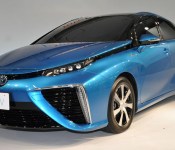
Toyota’s hydrogen car gets a name and more US filling stations

Toyota’s $69,000 fuel cell vehicle (FCV) coming next year is called the Mirai and will have a network of hydrogen stations in the US Northeast to support it. The Japanese automaker proclaimed that “the future has arrived,” (Mirai means “future” in Japanese) which may make the thousands of people who’ve owned a Honda FCX Clarity FCV since 2005 gag. But despite being late to the game, Toyota is now making a huge bet on FCVs. It has teamed with Air Liquide to build 12 hydrogen stations in New York, New Jersey, Massachusetts, Connecticut, and Rhode Island. The stations will be “strategically placed” so that drivers of the 300-mile-range Mirai can tool around the region without (much) range anxiety. Previously, Toyota said that 19 hydrogen stations would be installed in California.
Ironically, Toyota’s announcement comes at the same time Honda said that its own hydrogen car would be postponed until 2016. That must be galling for a company that built the first production FCV, but Honda added that it would soon announce its own infrastructure plans too. Hydrogen-powered cars are about half as energy efficient as battery-powered vehicles, because not only is energy lost in making hydrogen, but fuel-cells (like Toyota’s) are only 60 percent or so efficient. In addition, both Honda and Toyota now have to play catch-up with Tesla and others on re-fueling infrastructure. Despite those issues, FCV’s do have one big advantage for drivers — it only takes 5 minutes to fill one up.
[Image credit: Autoblog]
Filed under: Transportation
Via: Autoblog
Source: Toyota
Apple Now Accepting UnionPay as Payment Option for App Store Customers in China
 Apple today announced that it is now accepting UnionPay as a payment option for App Store customers in China. Established in 2002, UnionPay is the most popular payment card company in China with over 4.5 billion cards issued. With today’s announcement, users can simply link their UnionPay debit or credit card for easy purchases.
“The ability to buy apps and make purchases using UnionPay cards has been one of the most requested features from our customers in China,” said Eddy Cue, Apple’s senior vice president of Internet Software and Services. “China is already our second largest market for app downloads, and now we’re providing users with an incredibly convenient way to purchase their favorite apps with just one-tap.”
The acceptance of UnionPay in the App Store is the latest move by Apple to expand its presence in China. The company is also in talks with major Chinese e-commerce company Alibaba over a China-focused payments partnership, which could see the Alipay electronics payment service integrate with Apple Pay. Discussions between the two companies were acknowledged by Alibaba Executive Vice Chairman Joseph Tsai and Alibaba founder Jack Ma.
TalkTalk ditches Vodafone to offer 4G plans with O2’s help

As one of the UK’s only quad-play providers, TalkTalk offers mobile plans alongside its TV, phone and internet packages. Since 2010, the company relied upon Vodafone’s infrastructure to underpin its own network, but it’s now decided it wants to try something new. In a joint announcement, TalkTalk and Telefónica (UK) today publicised an agreement that will see the UK media company switch across to O2’s network, allowing the carrier to provide 3G and 4G services for its customers. With Virgin Media bundling mobile plans with its traditional home bundles and Sky thought to be readying the public launch of its own network (with Vodafone’s help), TalkTalk now faces significant competition in the battle over low-cost tariffs. However, considering 9.5% of its total customer base already own one of its SIMs, the provider is already off to a pretty decent start.
Filed under: Cellphones, Wireless, Mobile
Source: TalkTalk

State Department shuts down unclassified email to cope with hack

The US government is no stranger to dealing with cyberattacks, but it just took a rare and relatively extreme step to keep itself safe. The State Department shut down its entire unclassified email system this weekend to bolster its defenses after spotting “activity of concern” (read: potential data breaches) that happened at the same time as an earlier hack that targeted the White House. Officials aren’t naming culprits at this stage — they’ve pinned some previous attacks on China and Russia, but it’s not clear that there was digital warfare involved this time around. More details are expected to come once the security upgrades are in place, so you may get a better sense of what happened in the near future.
[Image credit: AP Photo/J. Scott Applewhite]
Filed under: Internet
Source: AP (SFGate)

Autonomous, human-sized security robots are almost here

You might not see quite so many security guards on the beat in the future. After roughly a year of work, Knightscope is almost ready to deploy the K5, a human-sized (5 feet tall) autonomous robot that’s designed to take care of the more mundane parts of security patrols. The machine only needs a bit of initial instruction (plus GPS and laser rangefinding) to get a feel for its surroundings. After that, it keeps watch on its own using a mix of four cameras, microphones, radar and environmental sensors that can detect fires and gas leaks. The K5 uses either cellular data or WiFi to both share its findings and let its overseers speak, and it’ll set off an alarm if you try to immobilize it.
Only four K5s are going into service by the end of the year; while that’s better than other robots, many of which are strictly experimental, it’s not ushering in a sea change. If automatons like this catch on, though, they could change how building security works. Independent robots will let human guards respond only when it’s both necessary and safe, such as to confront an unarmed intruder or help out the injured. That’s not going to be much comfort to employees that might not be needed for much longer, but the bots could be worthwhile if they keep people out of harm’s way.
Filed under: Robots
Source: Knightscope

Times Square’s new digital billboard is almost the length of a football field

New Yorkers passing through Times Square will see (whether they want to or not) the biggest, most expensive digital billboard (at least in the US) when it turns on this Tuesday night. The screen is big enough to run a whole block, from 45th to 46th Street along Broadway, and is made up of 24 million pixels. (To contrast, 4K TVs weigh in with around 8 million pixel, although the scale here is massively different.) Oh yeah, it’s also eight stories high. According to the New York Times, the cost of this prime advertising real estate comes in at over $2.5 million for four weeks. Google, a company that has the means, will take over the big screen as the debut advertiser until 2015. But we can go bigger: LG’s already using the world’s biggest billboard in Saudi Arabia, which is 820 feet long.
[Image credit: Richard Perry/The New York Times]
Filed under: Displays
Source: NYT

How would you change Huawei’s Ascend P6?

Huawei’s career trajectory from Chinese white-label OEM to brand mainstream users “know” really hit a milestone with the Ascend P6. After all, this was the device that was designed to blend the best of iOS and Android into a mainstream device that looked good. Certainly, the P6 was a knock-out, but when we placed it in James Trew’s experienced hands, he found that it didn’t have the brains to match its stylish exterior. What you were left with, then, was a device that impressed up until the point that you used it. Still, plenty of you will have picked up this device free on contract, so the question that we want to ask is simple: what would you have done differently? Head on over to the forum and drop some truth bombs.
Filed under: Cellphones, Mobile
Source: Emgadget Product Forums

Toshiba joins other tech giants in growing super-clean vegetables

The name “Toshiba” conjures images of stacks of laptops piled high and maybe the occasional television, but the Japanese electronics giant is turning its attention to something just a little more humble: lettuce. Well, spinach too. And swiss chard. Quartz’s Dan Frommer tells the tale of a Toshiba-owned clean room nestled in the industrial corners of Yokosuka where people clad in special suits dutifully plant seeds and plop them on tall racks under an array of fluorescent lights. The end result? Tasty veggies that you won’t need to wash (though if you’re a mild hypochondriac like your author, you’d probably give ‘em a quick rinse anyway).
Toshiba isn’t diving into the world of clean cuisine just because it wants to appease Japan’s gourmands. No no — it aims to produce some 3 million bags of greens a year to help firm up its position as an end-to-end healthcare company. It’s actually pretty brilliant, if a bit paradoxical: Toshiba wants to sell those healthy, pristine greens and the technology (mostly centered around internal imaging for now) that’ll help when something ails you. It’s not the only Japanese megaconglomerate to dabble in a spot of indoor agriculture, either. Sony converted a closed semiconductor factory in Miyagi prefecture into an elaborate growing operation that churns out specially tweaked lettuce that’s chock full of extra beta carotene, and Fujitsu — a massive company that dabbles in some really obtuse stuff — has a room in Wakamatsu churning out low-potassium lettuce for folks with chronic kidney disorders. Forget about hacking gadgets together, maybe the future is in hacking the very stuff that keeps us going.
Source: Quartz
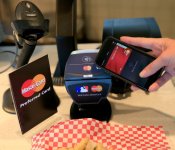
Early Apple Pay stats point to a modest but promising start

Sure, Apple was quick to tout a surge of Apple Pay registrations, but how often are people actually using the iPhone-focused payment service? A fair amount, apparently. Whole Foods tells the New York Times that it racked up 150,000 transactions in the three weeks after Apple Pay became available. That’s not a lot in the grander scheme of things (just 7,143 payments per day), but it’s significant for a single store and a brand new service with limited device support. Other shops aren’t quite so forthcoming with stats, although they suggest that there has also been an uptick. Walgreens says its mobile payments have doubled, while McDonald’s says that Apple Pay now makes up half of its tap-to-pay purchases.
It’s not clear that Apple Pay will be successful in the long run; that depends on additional hardware support and cooperative retailers. Toys “R” Us notes that its boost in mobile payments doesn’t amount to much when cash and credit are still far more popular. Even if Apple Pay doesn’t pan out, though, there are hints that it’s helping others. Both Google and Softcard say they’ve seen increased usage in the past few weeks due to increased awareness of tap-to-pay services — that’s good news for mobile payments as a whole, no matter which smartphone you’re using.
[Image credit: Getty Images for Mastercard]
Filed under: Cellphones, Mobile, Apple
Source: New York Times
 AIVAnet