



AT&T Stops Using ‘Perma-Cookies’ to Track Customer Web Activity
 In late October, researchers discovered that AT&T and Verizon had been engaging in some unsavory customer tracking methods, using unique identifying numbers or “perma-cookies” to track the websites that customers visited on their cellular devices to deliver target advertisements.
Following significant negative attention from the media, AT&T today told the Associated Press that it is no longer injecting the hidden web tracking codes into the data sent from its customers’ devices.
The change by AT&T essentially removes a hidden string of letters and numbers that are passed along to websites that a consumer visits. It can be used to track subscribers across the Internet, a lucrative data-mining opportunity for advertisers that could still reveal users’ identities based on their browsing habits.
AT&T’s customer tracking practices, called “Relevant Advertising,” were the result of a pilot program the company had been experimenting with, which has apparently come to an end.
While AT&T has opted to stop using the invasive tracking method, Verizon is continuing to utilize perma-cookies to track the web activity of its customers. Unlike AT&T’s experimental program, Verizon has been using Relevant Advertising techniques for approximately two years.
Verizon Wireless, the country’s largest mobile firm, said Friday it still uses this type of tracking, known as “super cookies.” Verizon spokeswoman Debra Lewis said business and government customers don’t have the code inserted. There has been no evidence that Sprint and T-Mobile have used such codes.
“As with any program, we’re constantly evaluating, and this is no different,” Lewis said, adding that consumers can ask that their codes not be used for advertising tracking. But that still passes along the codes to websites, even if subscribers say they don’t want their data being used for marketing purposes.
Verizon and AT&T customers are able to check whether their devices are sending identifying codes by visiting a website created by Kenneth White, one of the security researchers who discovered the tracking methods.
While Verizon customers can opt out of tracking on the Verizon website, that does not stop the identifying code from being inserted into the URLs of the websites that they visit.
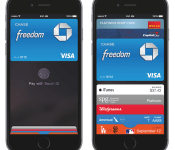
Apple Pay Doubled Mobile Wallet Transactions at Walgreens, Accounted for 50% of Tap-to-Pay Purchases at McDonald’s
Apple Pay has been available in quite a few retail stores since its release more than three weeks ago on October 20, but thus far there’s been little concrete indication of its popularity with customers. A new report from The New York Times, however, sheds some light on Apple Pay’s early success.
McDonald’s, an early Apple Pay partner that accepts the payment system in all of its 14,000 restaurants in the United States, saw Apple Pay accounting for 50 percent of all of its tap-to-pay transactions. At Walgreens, a drugstore chain of more than 8,000 stores, Apple Pay doubled the number of mobile wallet payments being made.
As shared earlier this month, Whole Foods processed 150,000 Apple Pay transactions between October 20 and November 6, which equated to an estimated one percent of all Whole Foods transactions.

Some stores, however, haven’t seen as much success with Apple Pay. According to Toys R Us, which has 870 stores in the United States, while there was an increase in mobile payments, it was minor “because customers were still learning about the new technology.”
As noted by The New York Times, the interest consumers are expressing in Apple Pay hints at a growing acceptance for mobile payment solutions. Denée Carrington, a Forrester Research analyst attributed Apple Pay’s early success to the “strength of the Apple Brand” and the ease of the experience. “I’m not saying it’s changing the landscape overnight,” she said. “But this has never happened with other mobile wallets.”
Along with bolstering mobile wallet usage in retail stores, Apple Pay has also been responsible for increasing consumer interest in the mobile payment arena in general. Google Wallet, for example, saw a surge in usage after the launch of Apple Pay, and Softcard, another mobile payment solution backed by AT&T, Verizon, and T-Mobile has also seen a growing number of users.
According to Softcard CEO Michael Abbott, “Apple Pay has been a huge tailwind” and a “rising tide that has lifted all boats.”
Mr. Abbott said that because of Apple, many companies now want to support the same technology for paying by phone: near-field communication, which enables devices to exchange information wirelessly over very short distances. This consistency would help make paying for things with a smartphone less confusing for shoppers.
Apple currently has 36 retail partners that accept Apple Pay in their stores, and new partners are signing up on a regular basis as the payments service catches on. Just this week office supply store Staples and grocery chains Winn-Dixie and BI-LO began accepting Apple Pay payments.
IBM’s new computers may change how we process big data

IBM HQ. INT. DAY.
An oppressive curtain of rain beats down against the window of this small meeting room in IBM’s New York HQ. Two IBM scientists are engaging in excited conversation with a representative from the DEPARTMENT OF ENERGY while a third IBM employee sits at one end, removed from the action, chewing their pen and staring out of the window.
DOE REPRESENTATIVE:
What do you mean $300 million won’t get me the two supercomputers I need?
SCIENTIST #1:
You’re generating too much data. There isn’t enough bandwidth for it all to go through.
DOE REPRESENTATIVE:
I don’t understand. You’re the supercomputer company, make it happen!
SCIENTIST #2:
No, it’s not that. Look, each day the world generates 2.5 billion gigabytes of data. Honestly, processing it is the simple part. The hard part now is moving it to and from the chip.
DOE REPRESENTATIVE:
Can you explain it to me like I’m a child?
SCIENTIST #1:
Imagine that you run some water through a generator, like a hydroelectric dam. Building and running a dam is the easy part, it’s the miles and miles of waterways each side to move the water — that’s the problem.
DOE REPRESENTATIVE:
So the issue is that there’s too much water to move efficiently.
Bingo.
DOE REPRESENTATIVE:
So how do we fix it?
SCIENTIST #2:
That’s the problem. We can’t.
DOE REPRESENTATIVE:
Then I’m just gonna have to take this $300 million somewhere else.
The DOE REPRESENTATIVE gets up to leave, just then, SCIENTIST #3 turns around in his chair to face the audience. Except it’s not a scientist, but DON DRAPER from popular TV series Mad Men.
DON DRAPER:
Wait. What if you didn’t have to move the water at all?
There is a STUNNED SILENCE.
DON DRAPER picks up a WHITEBOARD MARKER, gets up, and begins scribbling on the wall.
DON DRAPER:
What if we created something called “Data Centric Computing,” that, rather than pumping information in and out of supercomputers, we put the processing power into the data itself.
SCIENTIST #2:
But that’s impossible.
DON DRAPER:
Think about it. If we put computing power on every stage of the process, then we won’t have to move the data at all. It’ll be like putting a tiny hydroelectric dam on every river in the country. That’s how you get the power you need.
DOE REPRESENTATIVE:
Make it happen. I want one in the Lawrence Livermore National Laboratory and one in the Oak Ridge National Laboratory by 2017.
The DOE REPRESENTATIVE hands over a check for $300 million. The SCIENTISTS sit, open mouthed in admiration. DON DRAPER goes over to the cabinet and fixes himself a large glass of Woodford Reserve, no ice.
Filed under: Desktops
You’ll soon be able to make Skype calls in your browser

Microsoft has just announced that you’ll soon be able to make video and voice Skype calls from just about any computer with a web browser. Skype for Web (beta) calls will work on Chrome, Safari, Firefox and of course, Internet Explorer, with the addition of a “small plugin,” at least for now. Microsoft said that it’ll eventually work natively on browsers without plugins or downloads once WebRTC is more widely implemented. That’ll be especially handy for users with no access to the dedicated app who may want to chat with or message friends from, say, an internet cafe in a foreign country.
It’s arriving to “a small number of existing and new users” in a limited beta on Skype.com. If you don’t see an invitation next time you log into your Skype account, that means you’re not on that list for now.

Filed under: Internet, Microsoft
Via: The Verge
Source: Skype Blog
British retailers are using Shazam to hijack rivals’ Christmas ads (update)

With just over a month until Christmas, brands are firing up their festive marketing campaigns to extract as much money as they can out of consumers. It looked as if John Lewis had the 2014 ad title all sewn up when Monty the penguin first waddled onto our TV screens, but responses, from Sainsbury’s in particular, have made it far from a forgone conclusion. In times gone by, John Lewis would just take out newspaper ads or takeover a billboard to keep its campaign at the forefront of the public’s mind, but this year it’s utilising a clever, mobile first, strategy.
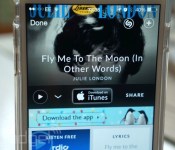
Recognising that many smartphone owners will take out their device to identify a particular song used in an advert, John Lewis has begun displaying ads in music discovery app Shazam to effectively hijack rival campaigns. As Brand Republic points out, the ad, which features a link to the retailer’s Monty-themed app, is highlighted when users Shazam Julie London’s Fly Me to the Moon, as used by Marks & Spencer, and Paul McCartney and the Frog Chorus’s We all Stand Together, which features in Debenhams’ festive campaign. John Lewis’ banners also appear against the track it uses for its own ad, Real Love by Tom Odell.
As Shazam VP Miles Lewis (who incidentally has no connection to John Lewis) points out, rival retailers may have missed a trick by not securing the ad placements against their TV spots. “The debate we’re having with agencies and clients is – you’ve spent all this time on SEO perfecting and protecting your brand but now there’s this new frontier,” he told Marketing. “Audio IP is a new development, and some agencies and clients see this as an opportunity. Why would you let a rival brand buy that?” Shazam shows ads in the free versions of its apps, but those who have paid for the company’s ad-free Encore app won’t have noticed the Christmas ad war unfolding in front of them.
According to Lewis, the Marks & Spencer ad has been “Shazamed” over 2,500 since its release, while Monty has gathered more than 20,000 tags. It’s actually allowed John Lewis to exact revenge on Marks & Spencer, after it was on the receiving end of a similar manoeuvre for a Christmas ad in 2012: those searching for Gabrielle Aplin’s Power of Love got a face full of M&S ads.
Update: Brand Republic has since published a follow-up report stating that John Lewis is now actively stopping its ads from appearing against Marks & Spencer and Debenhams Christmas tracks. The article notes that John Lewis’ positioning was simply a coincidence and may have appeared against the tracks as they rose in popularity. In our tests, John Lewis banners were shown first on three different devices — make of that what you will.
Filed under: Cellphones, Internet, Software
Source: Brand Republic

Major content networks launch Streaming Video Alliance without Netflix or YouTube

Float around the internet long enough, and you’ll find a video stream that just doesn’t wanna work. Maybe you’re lacking some plug-in, or something’s up with your browser? Either way, bad times. To help end situations like this, and to ensure the best video streaming experience possible, some of the biggest names in content delivery have formed “The Streaming Video Alliance.” While big names like Yahoo, Major League Baseball (a powerhouse of its own) and Fox are onboard, there are two notable omissions: Netflix and YouTube. Like, really big omissions — as these two account for over half of all internet downloads in the US (according to Sandvine).
By comparison, the third most popular service (Amazon Video, also not part of the alliance) is a huge drop down at just 1.6 percent of peak period downloads. Still, the Streaming Video Alliance (not to be confused with the Internet Streaming Media Alliance) has enough names signed up that its influence on what you watch isn’t to be sniffed at. The door is, of course, still open for Netflix and YouTube (or Amazon) to join at any time. The alliance’s main goals may center on the bits you’ll never see — content delivery techniques, industry collaborations and business standards — but they all result in one thing: you watching the game without a glitch.
Filed under: Home Entertainment, Internet, Mobile
Via: Market Watch
Source: Streaming Video Alliance

New tech can run your car’s infotainment system for you

If you’ve ever listened to CDs or digital music on a car or the computer, you’ve already encountered Gracenote — even if this is the first time you’ve heard of the name. Gracenote recognizes tracks as they’re played and displays the title, artist, and (for newer auto infotainment systems) even the album art. Now Gracenote has launched a brand new product for in-dash systems called “Entourage,” which is a completely different entity from the company’s Automatic Content Recognition System for TV with the same name. Entourage for cars was developed to augment your streaming and internet radio apps — it’s not an app itself, but rather a technology that infotainment systems can use. A company spokesperson gave this scenario to GigaOM as an example: when you hear a particular song playing on FM radio, you can tell your car’s dashboard loaded with Entourage to create playlists across all your apps, or even in just one of them, like Pandora.
It has many other capabilities that infotainment makers can add to their products (above, you’ll see a mockup of what an Entourage-powered music console could look like), but we won’t be able to test any of them out until the technology debuts in 2017 car models. Right now, Gracenote is already working with Ford to integrate an Entourage-based service to its in-dash system that can analyze weeks, even months, of music you’ve been listening to. The service will then compare the songs against your driving behavior and environmental conditions at the time, in order to create customized radio stations or playlists based on your moods.
Filed under: Transportation
Via: GigaOM
Source: Gracenote

Lisa Kudrow doesn’t get the internet, but the internet gets ‘The Comeback’

Lisa Kudrow doesn’t care for Twitter. It’s not that the former “Friend” doesn’t get it, either. Kudrow, whose production company, Is or Isn’t Entertainment, is behind savvy TV projects like Web Therapy (YouTube-style therapy sessions) that are inspired by internet culture, just doesn’t see the point. “I am not on Twitter all the time. I can’t do it. I don’t care enough about what everybody’s thoughts and feelings [are] or what they’re doing. I don’t. I can’t,” she tells me. Twitter, however, cares very much for her. Or, I should clarify, it cares for the eminently GIF-able Valerie Cherish, her character on The Comeback.
#fivemin-widget-blogsmith-image-606595display:none; .cke_show_borders #fivemin-widget-blogsmith-image-606595, #postcontentcontainer #fivemin-widget-blogsmith-image-606595width:570px;display:block;
 trydocument.getElementById(“fivemin-widget-blogsmith-image-606595″).style.display=”none”;catch(e)
I spoke with Kudrow over the phone a few days before her brilliant, but canceled (and certainly not forgotten) HBO series The Comeback was to debut its second season nearly a decade after the original series premiere. To say that the show, which intelligently mocked the burgeoning reality TV phenomenon of the early aughts, was ahead of its time is somewhat of an understatement. The concept of “must-see schadenfreude TV” hadn’t really taken hold of America until after HBO gave the show the axe in late 2005. In the ensuing years, we not only embraced unscripted programming (as reality TV is officially called), but we also accepted it as legitimate entertainment and minted a new breed of celebrity. And Kudrow agrees this pop cultural shift helped give her overlooked show a second life. “It’s not nearly as shocking now as it was then. And I think even now, it was tame,” she says of that first season. “Valerie wouldn’t last three seconds with the Real Housewives of anywhere.”
“It’s not nearly as shocking now as it was then. And I think even now, it was tame. … Valerie wouldn’t last three seconds with the Real Housewives of anywhere.”
But the growing acceptance of D-list celebrities wasn’t the only factor in The Comeback’s posthumous appreciation. On-demand and streaming video also played a vital part — neither of which were commonplace technologies during its original run/airing. In fact, the first season of the series only recently made it onto HBO’s streaming service, HBO Go, when talks of an actual second-season comeback were finalized. Before that, audiences had to either rely on an HBO cable subscription and access to its on-demand library (when the show was briefly available) or turn to YouTube for low-quality rips of the episodes.
You’d think Kudrow would be keenly aware of the cult following The Comeback accrued in the years after its cancellation; all of the memes and GIFs of the show shared across social media. But Cherish’s greater internet afterlife as an affable icon (and a gay one, at that) of obliviousness isn’t something Kudrow was even truly aware of until we spoke.

Lisa Kudrow’s Valerie Cherish filming her reality series in The Comeback.
“No, the research I did was, well, I’ve been to YouTube and I know there are some episodes on there, but that’s only like 10,000 people [that] have seen it,” she says of the younger generation now embracing the show. “That’s not really a big deal. You know? That’s it. I had no idea how people were seeing it other than DVD because it wasn’t on anything official. So, no, I just noticed more and more people under 30 were saying, ‘I like Friends fine, but can we talk about The Comeback?’ Like what?! Really? Yes! Huh?”
Web 2.0 technology and the viral nature of the internet may be responsible for the resurgence in the show’s popularity, but that doesn’t mean Kudrow understands millennial behavior. Case in point, she’s seen the GIFs of Cherish circulating on social networks, but doesn’t quite grasp their popular appeal. “I just think she lends herself to all those kind of quickie, got-it-in-a-shorthand sort of way of communicating,” she admits. It’s not that Kudrow doesn’t get the concept of the GIF, although she did candidly ask me, “What are GIFs?” (I had to explain.) It’s just that she would choose different clips to make GIFs from the show. “Some of them seem like just sort of a random snippet to me and I’m not sure I understand the significance to people,” she explains. “There are other things, to me, that would be, ‘That’s a funny snippet!’”
“I think also what’s fantastic about like a web series kind of thing is … you can kind of do whatever you want and then you see if it works or not.”
Still, Cherish’s return to the spotlight and premium cable TV (she stars on an HBO show within the actual HBO show) isn’t ignorant of the millennial influence dominating media. The new season draws on certain aspects of current internet culture. In fact, Kudrow and Michael Patrick King (co-creators/writers) made it a point to include recent trends when scripting the new season, though they didn’t intentionally script it to be meme-worthy or GIF-able. “We were really in sort of the mindset of … what we did before, but nine years later,” she says. “And I felt like, I think, ‘I don’t know, we might be taking care of it, but are we paying attention enough to what’s going on now with millennials?’ … I think we worked in enough for what’s relevant to Valerie.”

Kudrow consults with co-creator/executive producer Michael Patrick King on the set of The Comeback.
The end result of that cultural navel-gazing is a Valerie that twerks, live tweets and vlogs, according to Kudrow. “You know, she’s on a show, so she’s gonna be asked to … have to live tweet,” she says. “So there’s that stuff. But it’s not like a big problem or a hurdle. … And she’s game, game for it all! Even though she has, I don’t know what number. I always come up with a lame number for a character that I’m doing. All those ‘500 fans’ are gonna be real excited.”
Kudrow concedes that there’s a Luddite aspect to the character of Valerie Cherish. She’s an older person that’s eager and willing to adapt to tech trends, and often to humorous consequence. Of Valerie’s weekly vlog, she explains: “What we have her doing is just basically technically fail … flailing. ‘Is it on?’ And then she does: ‘I just want to give a shout out to my subscriber who said, ‘Will you do an impression?’ Then she does an Edith Bunker impression to tell everyone her big news that she’s on an HBO show.”
Just don’t expect Kudrow’s Valerie Cherish to mirror the pitfalls of our internet culture too closely. When I broached the subject of Snapchat, celebrity nude selfie leaks and whether such a thing would happen to Valerie this season, Kudrow balked. “No. No. Oh my god. How gross. No, I don’t think she would do it. … We didn’t address Snapchat. We just didn’t.”

Kudrow performs Valerie’s famous catchphrase, “I don’t want to see that!”
I asked Kudrow if she’d designed the second season of the show to be binge watched, likening it to how writer/producer Mitchell Hurwitz laid out the fourth season of Arrested Development on Netflix. Other programs, like the Pivot/ABC co-production Please Like Me, have even embraced ever-changing title sequences to keep those marathon streaming sessions from wearing thin on viewers. But, as Kudrow explains, none of that streaming-only behavior factored into the production of The Comeback‘s second season: “No, we felt like if people were able to binge watch the first season, then they can binge watch the second season. Obviously in 2005, we weren’t even considering binge watching. No, unless you had a DVD. And at the time, we just didn’t even think about, ‘But who would sit down and watch a bunch in a row?’”
“We felt like if people were able to binge watch the first season, then they can binge watch the second season.”
The new season of The Comeback may not have found new life on a native streaming platform like Arrested Development did — the show’s owned by HBO, so it wouldn’t make much sense — but Kudrow’s open to the format for other projects. “We’re practically not-for-profit at this point. You have to put [shows] wherever you can so that you can continue to do more,” she says of her production company’s efforts. She adds, “I think also what’s fantastic about like a web series kind of thing is … it’s so original that you can’t even imagine how you’d pitch it to a network or a studio. Then that’s really the beauty of, ‘Good you put it out there.’ [Because] you can kind of do whatever you want and then you see if it works or not. It’s such a great place to experiment.”

Lisa Kudrow sitting pretty as Valerie Cherish.
It’s clear that, unlike her The Comeback character Valerie Cherish, Kudrow is not as adorably clueless about the technology powering our world. She’s adapted insofar as her production company is concerned, but personally, she just doesn’t seem to care for it all that much. Indeed, her Twitter bio warns, “Lisa Kudrow’s company usually tweets on her behalf. But sometimes not?” That said, if you do happen to get a reply from her @handle, know that it’s still actually her on the other end. Just don’t ask her to multitask or live tweet like Val.
“I can’t read and tweet while watching a show. I’m not … my brain is single-focused. I can’t do that. So that is me tweeting … some things are me and some things aren’t. Sometimes it’s me and sometimes it’s my office. We’re just being honest.”
Kudrow may not “get” the allure of social media, but she owns her digital life. Though she jokingly regrets the transparency. “Now I blew [it]. I had a chance to excuse any personal responsibility for things I don’t like.”
What’s not to like, Lisa?
[Image credit: HBO]
Filed under: HD

Amazon adds instant definitions, family sharing to newer Kindles

Remember all those new Kindle software features Amazon promised? You know, the ones that were announced alongside the shiny new Kindle Voyage? The company’s been coy about when exactly we’d get them packaged up for our installing pleasure, but it’s now ready to spill the metaphorical beans — a software update will ferry those features to the Voyage, the new $79 basic Kindle and the second-generation Kindle Paperwhite over the air during the coming weeks… unless you want to just install the update yourself right now.
In case you’ve forgotten, this update’s changelog is sort of a doozy: WordWise shoehorns brief definitions into the margins above tricky words to help you up your vocabulary, while Kindle Freetime Unlimited gives parents access to a wide swath of kid-friendly content for $2.99 a month. The most intriguing new addition is the most conceptually simple — Amazon’s Family Library lets people tap into the e-book libraries of “a spouse or partner,” plus the ability to manage child accounts too. And the rest of it? They’re mostly just tweaks to existing features. Now you can use X-Ray to bounce through all of a book’s images, and then more easily share your progress through Pilgrim’s Progress via Goodreads. Yeah, yeah, not every addition to the mix will upend the way you read, but we’re definitely looking at a hefty batch of changes here.
Via: BusinessWire
Source: Amazon Software Updates

Europe’s space agency is also sending a 3D printer to the ISS

The ISS will soon serve as home to not one, but two 3D printers, courtesy of the European Space Agency. It’s a small cube that measures 10 inches on all sides, and it’s slated to reach orbit in the first half of 2015 to coincide with Italian astronaut Samantha Cristoforetti’s ISS expedition. The device, called Portable On-Board Printer or POP3D, was developed by Italy’s ASI space agency to require very little power while creating objects through a heat-based process — a technology different from what NASA’s device uses. Aboard the ISS, it will be printing out biodegradable plastic components (it’s unclear what those parts will be at this point), which will then be sent back to Earth for comparison against similar ones printed on the ground.
Both NASA and the ESA are testing out these 3D printers in low Earth orbit, in order to see if they can feasibly produce equipment and parts needed for experiments and repairs. In the future, 3D printing could save space agencies money, as astronauts could just print out whatever they need on the space station itself, instead of asking the ground crew to send things over aboard an unmanned vessel.
[Image credit: ESA]
Filed under: Misc
Via: 3D Print
Source: ESA
 AIVAnet