



12.9-Inch ‘iPad Pro’ Production Rumored for Q2 2015 Amid Manufacturing Difficulties
Apple’s 12.9-inch “iPad Pro” may not enter mass production until the second quarter of 2015, according to new predictions from often-reliable KGI Securities analyst Ming-Chi Kuo. He believes that the iPad Pro will use an oxide panel to achieve a “high resolution, quick response, and high color saturation,” and that the time needed for component yield and assembly to improve will push back production until 2Q 2015.
Earlier this year, a report from Bloomberg suggested the iPad Pro might be released in early 2015, but an October report from The Wall Street Journal indicated Apple had delayed its planned December mass production of the tablet in order to focus its attention on producing more iPhone 6 Plus units, leaving a potential iPad Pro release date up in the air.
 Mockup of 12.9-inch iPad Pro next to 13-inch MacBook Air
Little is known about the iPad Pro aside from its 12.2 to 12.9-inch display size, which dwarfs the smaller 9.7-inch iPad Air 2 and the 7.9-inch iPad mini 3. Rumors have also suggested that it will offer the same A8X processor introduced with the iPad Air 2 along with an ultra high resolution display and a 7mm-thick form factor that’s similar to existing iPads.
Kuo’s report also focuses on forecasting iPad shipments, which he believes will fall 54.5 percent quarter over quarter to just 9.8 million units during the first calendar quarter of 2015. He points towards the lack of new applications and a saturation of the tablet market as the basis for his prediction.
We believe that, in a major shift, while Apple (US) used to be able to use new form factor designs to boost demand, it has failed to do so this time around. The lighter and thinner iPad Air 2 will face strong headwinds in increasing sales in 1Q15, we believe; we also hold that this means that iPad, along with the entire tablet market, is faced with structural challenges characterized by a lack of new applications and market saturation. We don’t think these challenges will be easily overcome by upgraded specs, new form factor designs or lower prices.
Kuo’s estimate is rather low, considering Apple sold 16.35 million million iPads during the first calendar quarter of 2014, but iPad sales have been down for the past three quarters in a row. During the fourth fiscal quarter of 2014, Apple sold 12.3 million iPads, down from 14.1 million units in 2013.
According to Apple CEO Tim Cook, the drop in iPad sales is just a “speed bump” that the company will overcome. He told investors earlier this year that “significant innovation can be brought to the iPad,” and suggested Apple was working on such improvements. The upcoming 12.9-inch iPad Pro may be Apple’s first step towards bolstering its iPad lineup, and the company is also said to be working on new iPad features, like split-screen multitasking.

Apple Watch Chipmakers Said to Be Gearing Up Production
Chip suppliers within the Apple Watch supply chain have begun “gearing up” to start production for Apple’s new device, according to a new report from Digitimes. Chip orders are estimated to be around 30 – 40 million units for a debut in early 2015.

Digitimes had previously reported, prior to Apple’s September 9 event, that the device was at the engineering verification test stage and needed to complete product verification testing before entering mass production. It appears that the Apple Watch has now passed that milestone and is beginning to enter mass production for its debut in early 2015.
Apple Senior Vice President of Retail and Online Stores Angela Ahrendts had previously revealed that the device would debut in Spring 2015, with several reports indicating that Apple was aiming for Valentine’s Day 2015 as a potential launch date. Apple Watch pricing will start at $350 for the aluminum version, while the stainless steel and gold editions will reportedly retail for prices starting at $500 and $4,000 respectively.
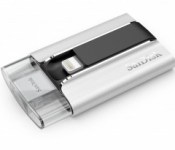
SanDisk iXpand Flash Drive Offers USB and Lightning Connectors for Easy File Transfers [iOS Blog]
 Similar to the Kickstarter-funded iStick from earlier in the year, SanDisk today announced the iXpand Flash Drive. The drive allows users to easily transfer photos, videos, and other files between an iOS device with a Lightning connector and a desktop or notebook with a normal USB port.
When the flash drive is plugged into an iPhone or iPad, the iXpand sync app is launched and can be configured to automatically sync photos and videos from the device’s camera roll to the flash drive. Entire movies (including most popular non-native and PC-friendly formats, like AVI and WMV) can also be stored on the iXpand and played from the flash drive directly onto the iPhone or iPad.
“According to IDC, nearly three-quarters of all images are now captured on smartphones and tablets,” said Dinesh Bahal, vice president, product marketing, SanDisk. “With this significant increase in mobile-generated content, consumers are looking for easy ways to manage it all. In fact, our research shows that 82% of U.S. smartphone users find transferring photos, videos, music and other files to be very important to them. We created the iXpand Flash Drive to offer consumers a quick and safe way to move their favorite content between devices so it’s available when and where they want it.”
The flash drive also offers users an added layer of security in cross-platform encryption. While in the iXpand sync app [Direct Link], files can be password protected while the drive is connected to an iPhone or iPad, then decrypted on a Mac or PC and vice versa.
Available in 16GB, 32GB, and 64GB sizes, the iXpand Flash Drive is compatible with the iPhone 6, iPhone 6 Plus, iPhone 5s, iPhone 5c, iPhone 5, iPad Air 2, iPad Air, iPad mini 3, iPad mini 2, and iPad mini running iOS 8 or iOS 7.
The 16GB and 64GB versions of the drive can be purchased directly off of SanDisk’s official website today and sell for $59.99 and $119.99 respectively. Beginning November 16, Best Buy will exclusively sell the 32GB version in retail and on their website for $79.99.

Staples and Radio Shack to Offer Modest Black Friday Discounts on iPads, iPods, and More
Customers looking for discounts on Apple products this Black Friday have two more retailers to add to their shopping lists — Staples and Radio Shack. Black Friday discount website BFads recently published leaked sales flyers from both retailers in advance of the biggest shopping day of the year.

Staples is offering discounts on a variety of Apple gear, including $80 off the 16GB iPad Air WiFi ($319), $60 off the Retina iPad mini 2 ($239), $70 off the iPad with Retina Display ($279) and $20 off the Apple TV ($79). The office supplier also is taking 10 percent off all Beats by Dr Dre headphones and 15 percent off all iTunes gift cards of $50 or more. As an added bonus, customers with an iPhone 6 or 6 Plus can save time during checkout by using Apple Pay.

Radio Shack isn’t offering any discounts on iPad or iPhone models, but the retailer still is lowering prices on the Apple TV ($85), iPod Touch 16GB 5th generation ($149), and iTunes gift cards (15 percent off). Other Apple-related items going on sale include the Beats Solo HD Drenched headphones ($69.99 After Mail-in Rebate) and a variety of Apple iPhone and iPad accessories.
For even more Black Friday sales, be sure to check out our Black Friday roundup. We are updating that page with additional deals on Apple-related items as they are announced.

Jonathan Ive Talks Design, Failure, and More in Appearance at London’s Design Museum
Jonathan Ive, Apple’s Senior VP of Design, made a rare public appearance at the Design Museum in London yesterday (via Cult of Mac). At the event, he discussed everything from his view on the future of design to his opinions on failure with museum director Deyan Sudjic.
We shouldn’t be afraid to fail – if we are not failing we are not pushing. 80% of the stuff in the studio is not going to work. If something is not good enough, stop doing it.
The talk with Sudjic also included a roomful of up-and-coming design students, with Ive offering additional perspective on the design process and rejection.
“The best ideas start as conversations. A small change at the beginning of the design process defines an entirely different product at the end. At the start of the process the idea is just a thought – very fragile and exclusive. When the first physical manifestation is created everything changes. It is no longer exclusive, now it involves a lot of people.” Ive also mentioned, “There are 9 rejected ideas for every idea that works.”
 Photo by @nickcorston)
Unfortunately for those design hopefuls listening to Ive, the odds of working in his team are slim. Apple’s Industrial Design team is notoriously difficult to get into, in large part because its members never leave the company. The eighteen-person team hasn’t seen a single member leave for fifteen years. “I like to work in a small team,” Ive told Sudjic. “There is only 18 of us on the design team. Nobody has ever left.”
Ive also touched on how to gain experience in the field, design studies in schools today, and the difference between making something different and making it better.
Our goal is to desperately make the best products we can. We’re not naive. We trust that if we’re successful and we make good products, that people will like them. And we trust that if people like them, they’ll buy them. And we figured out the operation and we’re effective. We know what we’re doing, so we’ll make money, but it’s a tough sequence.
Ive has famously remained out of the spotlight for much of his tenure at Apple, but has opened up considerably since taking on new responsibilities for software design and more recently with the impending launch of the Apple Watch. Recent appearances have included an awards ceremony hosted by the San Francisco Museum of Modern Art and a Vanity Fair summit in San Francisco.
Update: Dezeen also has a very thorough overview of Ive’s interview.
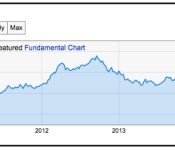
Apple’s Market Capitalization Sets First New Record High in Two Years at Over $660 Billion
Apple’s market capitalization reached a record high today, breaking the $660 billion mark to sit in the range of $662-664 billion for much of the day’s trading so far. The new high breaks a previous closing record of $658.15 billion set on September 19, 2012 and intraday high of nearly $661 billion reached two days later. Market capitalization measures the market value of a business and is calculated by multiplying the stock price by the number of available shares.

Apple comfortably leads all U.S. companies in market capitalization, with its closest competitors being Microsoft and Exxon, which have market capitalizations of just over $400 billion each. Fourth-place Google falls sits at roughly $370 billion.
While Apple’s share price has been routinely setting new records since surpassing its previous September 2012 high in August, it has taken a bit longer for Apple to return to its record market capitalization levels as the company’s expanded stock buyback program has reduced the number of outstanding shares.
Apple’s stock has surged 17 percent in just the four weeks since Apple’s October media event and subsequent earnings announcement where the company announced strong fiscal Q4 2014 earnings fueled by the iPhone 6, iPhone 6 Plus and record Mac sales. The company’s share price is up approximately 50 percent over the past twelve months.
Apple last quarter reported $8.5 billion in profit on $42.1 billion in revenue with sales of 39 million iPhones, 12.31 iPads and 5.5 million Mac units. While Mac and iPhone revenue climbed, iPad sales slumped with quarterly revenue dropping 14 percent year over year and 10 percent from the previous quarter. iPad sales are expected to temporarily rebound in the upcoming quarter following the introduction of the new iPad Air 2, with holiday season discounts expected to propel sales of Apple hardware.

Shipping Estimates for 27-Inch Retina iMac Slip to 2 to 3 Weeks
Supplies of the 27-inch iMac with Retina 5K display have been slowly dwindling ahead of the holidays, and as of this week, shipping estimates for both standard and custom configurations have slipped to two to three weeks.
At launch on October 16, shipping estimates were briefly at a day before slipping to 3 to 5 days, later moving to 7 to 10 days before slipping again on Monday.

The base Retina iMac, with a 3.5GHz processor, 8GB of RAM, and a 1TB fusion drive, is in stock at many retail Apple Stores around the country and can be picked up same day, but when ordered from the online store, it carries the same two to three week shipping estimate as all custom configurations.
While Retina iMacs ordered from the online Apple Store may not arrive until December, some Apple resellers have available stock that will ship much earlier. Amazon, for example, has the base model in stock available with Amazon Prime shipping and a $50 discount.
MacMall has the base model in stock for immediate shipping, plus the site has several machines with various custom configurations on hand, which it says will ship in five to seven days. MacMall is also offering a discount of $50 on much of its stock.
Other stores like Best Buy and B&H Photo also have the base Retina iMac in stock and available to ship immediately.
Equipped with a 5120 x 2880 “5K” Retina screen, Apple’s newest iMac has received largely positive reviews for its impressive display, and configured with a 4.0GHz processor and 32GB of RAM, the higher-end Retina iMac models are able to outperform the low-end Mac Pro.

MacRumors Folding@home Team Reaches Two Billion Points [Mac Blog]
The MacRumors Folding@home team has contributed over two billion points to the distributed computing medical research project, reaching this milestone on November 12. It took 11.5 years for the MacRumors team to accumulate its first billion points, but the team completed its second billion points in only 12.5 months, thanks in large part to today’s faster GPUs, as well as Quick Return Bonus Points and users running the client software with optimized configuations. The team has risen from #55 to #45 among the over 225,000 folding teams.
We’re proud that our supporters and forum members are contributing to medical research by participating in Folding@home, and MacRumors encourages you to join our team as well. Folding@home participants receive work units as computation assignments and completed work units are assigned points based on their value to the project’s scientific purposes. Client software is available for OS X, Windows, and Linux, and users should feel free to ask questions in our Distributed Computing forum.
The MacRumors Folding@home team was formed in May 2002 by MacRumors owner Arnold Kim. The team currently averages over 78 million points per month, almost 40 times its rate a year ago. Over 2000 users have contributed to the MacRumors team effort, with 5 team members (rwh202, twoodcc, Louis_Wu, ChristianFAH, and whiterabbit) each having contributed over 100 million points. Additional team statistics and graphs can be viewed at Extreme Overclocking.
Folding@home, run by Stanford University since October 2000, uses otherwise-idle computers to run protein folding simulation software, helping researchers search for cures for Alzheimer’s disease, Huntington’s disease, Parkinson’s disease, AIDS, influenza, and many forms of cancer. The software simulates how proteins, RNA, and nanoscale synthetic polymers fold, both to gain understanding of how proteins fold into their three-dimensional structure and to study the causes of the abnormal folding that leads to disease.

U.S. Government Warns iOS Users About ‘Masque Attack’ Vulnerability
The United States government today issued a bulletin warning iPhone and iPad users about the recent “Masque Attack” vulnerability, a security flaw that first surfaced on Monday of this week, reports Reuters. Masque Attack is a vulnerability that can allow malicious third-party iOS apps to masquerade as legitimate apps via iOS enterprise provision profiles.
Written by the National Cybersecurity and Communications Integration Center and the U.S. Computer Emergency Readiness Teams, the bulletin outlines how Masque Attack spreads — luring users to install an untrusted app through a phishing link — and what a malicious app is capable of doing.
An app installed on an iOS device using this technique may:
-Mimic the original app’s login interface to steal the victim’s login credentials.
-Access sensitive data from local data caches.
-Perform background monitoring of the user’s device.
-Gain root privileges to the iOS device.
-Be indistinguishable from a genuine app.
The post also advises iOS users to protect themselves by avoiding apps that have been installed from sources other than the App Store or an organization they’re affiliated with, avoiding tapping “Install” on third-party pop-ups when viewing web pages, and tapping “Don’t Trust” on any iOS app that shows an “Untrusted App Developer Alert.”
Masque Attack in action
Computer security alerts issued by the government are fairly rare, and only 13 have been sent over the course of 2014. Other vulnerabilities that have prompted alerts include Heartbleed and an SSL 3.0 flaw called “Poodle.”
FireEye, the team that discovered Masque Attack, has notified Apple about the vulnerability, but it has not been patched in the recent iOS 8.1.1 beta thus far. It also affects iOS 7.1.1, 7.1.2, 8.0, and 8.1, and as of today, Apple has not yet commented on Masque Attack.
Masque Attack, along with WireLurker, another vulnerability outlined earlier this month, is unlikely to affect the average iOS user so long as Apple’s security features are not bypassed. Masque Attack works by circumventing the iOS App Store to install apps, while WireLurker is similar, infecting machines via third-party software downloaded outside of the Mac App Store.
Both WireLurker and Masque Attack can be avoided by staying away from suspicious apps and avoiding links that prompt users to install apps outside of Apple’s App Stores.

Apple Seeds New Betas of Safari 8.0.1, 7.1.1, and 6.2.1 [Mac Blog]
Apple has released a new Safari 8.0.1 beta for developers running OS X Yosemite, along with a Safari 7.1.1 beta for Mavericks and a Safari 6.2.1 beta for older versions of OS X.
The new Safari builds can be downloaded through the Software Update mechanism in the Mac App Store. Safari 8.0.1 for OS X Yosemite requires OS X 10.10 or 10.10.1, while Safari 7.1.1 for OS X Mavericks requires OS X 10.9.5 and Safari 6.2.1 for OS X Mountain Lion requires OS X 10.8.5.

In the beta notes for Safari 8.0.1, Apple asks developers to focus on features like Extension compatibility, WebGL graphics on Retina displays, Password AutoFill, and more.
Focus Areas
Please focus testing on the following areas:
– General website compatibility
– Extension compatibility
– WebGL graphics on Retina displays
– Password AutoFill when passwords are synchronized across multiple devices
– Syncing history between devices (OS X Yosemite only)
– Importing usernames and passwords from Firefox (OS X Yosemite only)
In addition to a Safari update, Apple is also working on the first OS X Yosemite update, OS X 10.10.1, which asks developers to focus on Wi-Fi, Exchange accounts in Mail, and the Notification Center.
 AIVAnet