


LG’s POLED display points to devices right around the corner

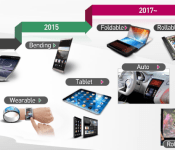
With LG finally releasing the LG G Watch R and adding to the choices for a round faced Android Wear device, buyers will also get some more new technology from LG. For the display, LG used Plastic OLED, or POLED, a technology that the company sees as very important to the future development of electronic devices. LG recently added a new page on their web site explaining some of the benefits of the technology and dropping some hints about how they see it being used in the coming years.
The main change that LG shares about POLED is the material and the switch from the traditional glass OLED. The plastic material developed by LG is capable of withstanding high temperatures while maintaining chemical stability when being used as a display. Through the use of plastic, the display can achieve some level of flexibility and curving. The manufacturing process also results in the elimination of bubbles and foreign substances with the POLED’s layers.
POLED has some other benefits as well. Displays can be produced that have very thin bezels, they are much thinner than current OLED or LCD displays, and they are more stable over time due to the encapsulation of OLED elements in the plastic. Being made of plastic instead of glass, POLEDs are much less susceptible to breakage.
One of the benefits that may not be apparent for a while though has to do with the ability of the new material to bend, fold and otherwise be curved to different shapes. LG hints that we could see some devices on the market as soon as next year and for a few years thereafter that make use of POLEDs for things like smartwatches that curve around the entire wrist, foldable displays in smartphones, and maybe even a large display that can be rolled up into a tube. It is hard to tell whether LG’s roadmap for POLEDs represents some outside-of-the-box wishful thinking or the potential for actual products, but it should be exciting to see how they develop uses for the technology.

source: LG
via: G for Games
Come comment on this article: LG’s POLED display points to devices right around the corner

Chromebooks continue to dominate in the education sector

This week Google is hosting the Global Education Symposium, a meeting of education ministers from 18 countries, where participants will explore how technology can be implemented to meet educational needs. This gave Google an opportunity to highlight the success of their Chromebook devices in the education sector.
According to Google, IDC continues to find Chromebooks are the best-selling devices in the U.S. education market this year. During 2014, several major deployments started, including 50,000 units in Montgomery County, MD; 32,000 devices in Charlotte, NC; and 26,000 units in Cherry Creek, CO. These examples join existing deployments like Malaysia where the national school system has converted to Chromebooks. According to Google, their education oriented technologies, including Chromebooks, are now used by 40 million students globally.
Besides the market success that Google is enjoying, they also point out the successes end-users are achieving by having technology available to them. At a school in Oakland, CA, the students are able to use Scratch to create video games. Students in Chesterfield County, VA, can get access to feedback and support from teachers even after school hours and in Fairfield County, SC, when combined with other technologies like Google Apps for Education, the school system saw double-digit improvements on state performance tests.
Do you have any experiences with Chromebooks being used in education?
source: Google Blog
Come comment on this article: Chromebooks continue to dominate in the education sector

Mirror Beta app records your display while mirroring it elsewhere on Lollipop

A new version of Android typically means new possibilities. With Android 5.0 Lollipop, developer Koushik Data is pushing the envelope with his Mirror app. Right now, anyone with a Lollipop device can record their display and mirror it with the Mirror Beta app. Having the root to your device is not necessary. The mirroring part of Mirror Beta connects to things like Amazon Fire TV, Apple TV, Chrome, or another Android device. Remember that this is the beta version of the app, but expect it to make the jump to the stable version soon.
Hit the break for the gallery and download links.


Come comment on this article: Mirror Beta app records your display while mirroring it elsewhere on Lollipop
Chrome OS will soon use Roboto font by default
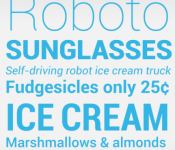
 If you like the Roboto font that Google introduced in Android 4.0, you’ll be happy to know that it’s looking like Roboto will soon become the default typeface in Google’s Chrome OS. The custom operating system currently uses Noto Sans.
Google slightly refined Roboto in Android 5.0 Lollipop, and in an effort to keep things uniform across all of their products, it makes sense to see the font face make the leap to Chrome OS. No word on exactly when the change will happen, but the most plausible date would be with the release of Chrome OS version 41.
source: OMG Chrome
Come comment on this article: Chrome OS will soon use Roboto font by default
Samsung will invest in $3 billion smartphone plant in Vietnam
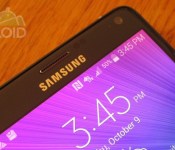
 According to a report from Reuters, Samsung is looking to invest several billion dollars into building a smartphone manufacturing plant in Vietnam soon. The company already owns a $2 billion smartphone plant in the Thai Nguyen province, which is where the second, $3 billion plant will be built. Right now, that 3 billion number is just an estimate, as Samsung is still in talks with the Vietnamese government to make the plans official.
Opening a second plant in Vietnam would help Samsung lower costs, which would, in turn, help them to compete on the low-end side of the Android market where their market share is taking the biggest beating. Within the first four months of opening the original $2 billion plant, the factory produced about $1.9 billion in outgoing revenue, so Samsung would easily be able to recoup its costs with a second plant.
source: Reuters
Come comment on this article: Samsung will invest in $3 billion smartphone plant in Vietnam
Want the Nexus 6 from Sprint? Carrier only offering one configuration

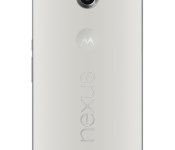
The Nexus 6 in all of its color and storage options is available from Google Play. No matter what carrier you have, Google Play’s Nexus 6 will be supported with an appropriate SIM card. Carriers in the United States, though, will be selling the device themselves. Prospective buyers just won’t see the same amount of configurations on a carrier-by-carrier basis. Sprint clarified today that it would only offer the Midnight Blue model with 32GB of storage. Want 16GB? Or do you want Cloud White? You cannot have either one if purchasing through Sprint.
So, again, the Play Store will offer exactly what you want because carriers decide to make odd choices.
Source: /r/Sprint
Come comment on this article: Want the Nexus 6 from Sprint? Carrier only offering one configuration
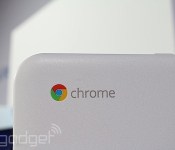
Schools in the US love Google Chromebooks

When it comes to the Chromebook, Google isn’t shy about its beliefs that it is the perfect computing device for education sectors around the world. And here in the US, schools and students have started to feel the same way. In a blog post, where it highlights different ways in which educational institutions in California are using Chromebooks, Google pointed out that recent IDC numbers have its line of computers as being the best-selling device in K-12 education. The report takes into consideration laptops and tablets, so this is a notable achievement for the technology company.
Some school districts like Montgomery County, MD, for example, are using over 50,000 Chromebooks, and that’s after only beginning adoption earlier this year. But Google isn’t quite satisfied, as it wants Chromebook to keep reaching even more students and schools — especially outside its home soil, where resources are particularly limited.
Filed under: Desktops, Laptops, Google
Source: Google

Elon Musk confirms satellite plans, announcement ‘2 – 3 months away’

This weekend the Wall Street Journal published rumors linking everyman billionaire Elon Musk to an internet-via-satellite project and tonight he addressed those rumors. In a tweet Musk said his company SpaceX is “in the early stages of developing advanced micro-satellites operating in large formations.” We’ll have to wait for more details though, as he said an announcement is a couple of months away. The rumors suggest Musk is working with Greg Wyler, formerly of Google / O3b Networks, to launch a total of 700 satellites. The difference between their satellites and others in use would be the size of the fleet — 10x the size of the largest currently in orbit — and the size of the satellites, which would be much smaller than those currently used for communications. If it all comes together, expect to see states bidding (again) for the right to build Musk’s next big thing, and takes on competition from Google (with satellites and balloons) and Facebook (drones) to extend the internet’s reach from above.
[Photo credit: Kevork Djansezian/Getty Images]
SpaceX is still in the early stages of developing advanced micro-satellites operating in large formations. Announcement in 2 to 3 months.
– Elon Musk (@elonmusk) November 11, 2014
Filed under: Internet
Source: Elon Musk (Twitter)
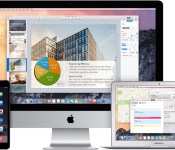
Apple Expanding Focus on Enterprise, Developing Dedicated Sales Force
Apple is planning an aggressive expansion into the enterprise market, hiring a sales team focused on talking with key enterprise customers, reports Reuters. The sales team may also work alongside “a dozen or so” developers focused on creating corporate-facing apps.
Apple is said to have developed partnerships with several app development startups, including ServiceMax and PlanGrid, both of which build customized industry-specific apps. ServiceMax, for example, already has customers that could be valuable to Apple, including Procter & Gamble and DuPont. Apple is also pursing other relationships with similar corporate app developers, possibly for an initiative aimed at providing custom-made apps for corporate customers.

Apps developers and other sources familiar with Apple’s plans who could not speak publicly provided additional details on how the iPhone maker is working behind the scenes.
The iPhone maker has worked closely with a group of startups, including ServiceMax and PlanGrid, that already specialize in selling apps to corporate America. The two people familiar with the plans, but who could not speak publicly about them, say Apple is already in talks with other mobile enterprise developers to bring them into a more formal partnership.
In addition to forming partnerships with app developers, Apple is also said to be sending sales teams to speak with the chief information officers of major companies, including Citigroup, which is already in talks to sign up for an enterprise package with Apple.
Earlier this year, Apple announced a major enterprise-focused partnership with IBM, with IBM selling iOS devices to its corporate customers and developing more than 100 industry-specific native apps that are built from the ground up for the iPhone and the iPad in six sectors: banking, government, insurance, retail, travel, transportation, and telecommunications. According to the most recent earnings call, IBM’s first apps will be coming before the end of the year. Apple has also developed a special AppleCare for Enterprise, which includes on-site repairs handled by IBM.
Apple’s major enterprise push may be an effort to boost flagging iPad sales by attracting a new market and introducing new use cases. iPad sales have been on the decline in recent months, and during its October earnings call, Apple announced sales were down for the third straight quarter in a row.

New Wear FaceLift app automatically changes Android Wear watch faces

Over the years, one feature that we have seen developers try to add to third-party launchers for Android smartphones and tablets is the ability to change the homescreen layout based on some context. That context could be something like time of day or location. A new app for Android Wear devices may be the first step in bringing that kind of context sensitive capability to the new breed of smartwatches. Wear FaceLift is rudimentary at this time, but the app points the way to greater functionality for Android Wear devices in the future.
Wear FaceLift does not really rely on any kind of context, but it does add the ability to change watch faces without user interaction once set up. Currently the app can only be programmed to change watch faces on a set time interval. Based on the screenshots, it appears the intervals have been predetermined by the developer. Hopefully that will change and users will be able to choose their own interval.
Since the app is only in a beta stage at this point, users will still have to deal with some peculiarities. For example, if a user installs or removes a watch face, they will have to go back through the configuration of Wear FaceLift to re-select the watch faces to use.
While simplistic, it does not take much imagination to see that adding the appropriate logic to the app will enable more context-specific watch face changes. Wear FaceLift will work on any Android Wear smartwatch, both round or square/rectangle watches. If you want to give Wear FaceLift a try, you can use one of the download links below. The developer indicates the $1.49 price for this beta version is a sale price.


Come comment on this article: New Wear FaceLift app automatically changes Android Wear watch faces
 AIVAnet