



Play Music Revisited: All Access enters the material world with Songza Concierge

It’s been just about a year and a half since Google released its music streaming service, All Access. In that time, Google acquired Songza, a lesser known curated music streaming service, back in July. Since then, it has been speculated that Google would eventually roll those features into its ever-popular music service.
Google recently brought Material Design to the Play Music app, but they also added Songza’s Concierge, bringing a whole new element to All Access. Given that Play Music has joined the material world, it’s time to give it a revisit. A month after All Access came out, I heralded it as an amazing streaming experience, hit the break to see if I still do so a year and a half later.
I have to admit, while I love Google Music I’ve been straying. Prior to Google’s addition of Songza support, Spotify was my go-to for the past few months in conjunction with Milk Music. However I have to say that since the update, Play Music has been the only app that I have used.
The main reason I used Spotify and Milk Music was they were simple for tapping a station and listening. It wasn’t finding a song and starting a radio station. It was a set and forget style that I really liked. To do so with Play Music involved remembering what song was close to the genre I wanted, finding it, then setting the station. Granted it that wasn’t always the case, but Google Music never had a set it and forget it option.
Enter Songza support. The best part is it gives you a set of options given your current time of the day. First thing in the morning, it’s waking up, During the day it’s keeping the work day light, energetic and fun. At night it may offer options for entertaining or offer a station for mellow relaxation. But even then it’s more specific than that.

Want to wake up to earthy rock? Google has that. Prefer upbeat country hits? No problem. If you’re like me, you’re a fan of random 90s stations. I even found a random 90s dance station that brought me back to middle school when dancing was nothing more than moving one’s feet back and forth in an almost robotic manner, but I digress.

While slightly more than a single tap for setting and forgetting, Songza support made it easier to do in Play Music. Of course it’s not without its faults.
One thing I’ve noticed with Milk Music, Spotify, Slacker and the other streaming services is that I can set them, forget them and go through the entire day and not hear the same song. That’s not the case in Play Music. After a certain amount of songs, the playlist starts over. It randomly reshuffles the same songs just a bit but essentially it’s the same songs you’ve heard. I have noticed that if you refresh the station it picks new songs. So while it may not be perfect, it certainly is a start.
Other than that I still have no complaints about Google Music. I’ve added many an album to my collection and while I know I’m renting them, I can still listen to them at any time. Sadly there was a snafu with my original $7.99 per month and I pay the normal $9.99. So after all this time, have I changed my perspective about Play Music?
No. I still think that Play Music is amazing, but unlike in the beginning it won’t be my end all be all, and I will still use a variety of other services. When All Access arrived, the streaming music scene wasn’t as congested as it is now. There is certainly a lot of music services out there wanting your money.
All Access is still a strong option and with the added benefit of Songza it’s made listening to music nostalgic, fun and enjoyable again, and that is where Google has the advantage.
Come comment on this article: Play Music Revisited: All Access enters the material world with Songza Concierge

Barclaycard Launches New Apple Rewards Visa Card With 3x Points on Apple Store Purchases
Barclaycard last week announced a revamped version of its credit card partnership with Apple, the Barclaycard Apple Rewards Visa, offering a new Apple rewards program and financing deals (via AppleInsider).
The new reward card offers three points per dollar spent at the Apple Store (iTunes and App Stores do not qualify), two points spent in restaurants, and one point on all other purchases. Once a customer breaks 2,500 points, they receive a $25 Apple Store gift card.
Within the first thirty days of opening an account, users can also finance purchases made through Apple with deferred interest. Purchases under $498 can be financed for six months, $499-$998 for twelve months, and $999 and over for eighteen months.

The last Barclaycard with iTunes Rewards didn’t have a triple-points reward tier for customers. It started at paying out two points for every dollar spent at the Apple Store or iTunes Store, and one point for every dollar spent everywhere else. Instead of an Apple Store gift card, the payout at 2,500 points was an iTunes gift card.
The card isn’t yet confirmed to work with Apple Pay, but is expected to as both Visa and Barclaycard are participating partners. The new card also supports Chip & Pin security, not Chip & Signature like most other new cards in the United States, with an embedded EMV Chip for security.
The Barclaycard Apple Rewards Visa can be applied for today on Barclaycard’s Official Website. Apple is also promoting the new card, touting its reward and financing options, on the company’s online store.
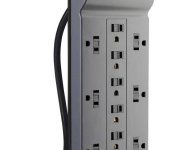
Accessory of the Day: Belkin 12 outlet surge protector, $16.99

Protect your valuables and ensure every piece of equipment has power with a high-quality surge protector. This Belkin 12-outlet surge protector features an 8-foot cord, safety covers, detachable cord-management clip, and a lifetime warranty. Grab one for just $16.99 and you’ll have it within two days (Prime customers). Great buy!
Join Prime and get this deal with FREE two-day shipping!
Also worth checking out:
- Turtle Beach DXL1 Surround Sound Gaming Headset – $59.99
- Google Chromecast – $32.49
- Cards Against Humanity – $25.00


The post Accessory of the Day: Belkin 12 outlet surge protector, $16.99 appeared first on AndroidGuys.

Leaked T-Mobile document suggests that Nexus 6 will only be available at 300 stores nationwide

The Google Nexus 6 has been one of the hardest devices to obtain this year. Although it hasn’t been officially released, pre-orders commenced on October 29th through the Google Play Store and have since sold out… not once, but twice. Not only did the Google Play Store run out of inventory, the Motorola online store sold out as well.
There has been a glimmer of hope for some Nexus die-hards through T-Mobile (myself included). An earlier leaked document suggested that the magenta carrier would launch the Nexus 6 on November 12th. This has since been confirmed through calls we made to T-Mobile.
Unfortunately, it seems that while they will indeed launch the Nexus 6 this Wednesday, not all stores will get the device. The document (which can be seen below) came courtesy of the XDA forums. It shows that over 1800 stores nationwide will get a demo unit of the Nexus 6, whereas only 300 stores will actually have stock to sell.
It is unknown if this document is legitimate, but we will definitely find out soon.
Nexus 6 store list (download link)
The post Leaked T-Mobile document suggests that Nexus 6 will only be available at 300 stores nationwide appeared first on AndroidGuys.

Samsung’s Project Zero rumored with dual-edged display?

With recent reports arising that suggest the next Samsung Galaxy S device is currently operating under the code name “Project Zero” many are expecting a massive shift in the design direction of Samsung’s flagship line. As our readers will know, Samsung recently surprised many by announcing two Galaxy Note devices this quarter, the expected Galaxy Note 4, alongside the aptly named Galaxy Note Edge. Unfortunately many prospective purchasers were disappointed to find that the Galaxy Note Edge may be released as a “limited concept device“.
However, thanks to a recent tip from senior analyst Jerry Kang during the last IHS Display Analyst Conference we may now know the reason for this. Jerry Kang claims that the Samsung Galaxy S6 will feature a dual-edged display, not drastically different to the Galaxy Note Edge which featured one edge. We can infer from all the pertaining information that Samsung released the Note Edge, initially planned to arrive with a dual-edge display, as a means of gauging consumer reaction for the concept.
Samsung is not afraid to shake things up, as they’ve proven before with devices such as the Samsung Galaxy Round, the camera-oriented Galaxy K series, and even the original Note device (considered by many to be the first successful “phablet”). With Samsung’s Q3 profits down 60% year-on-year it is easy to see why may they feel the need to try something new, and it will certainly make for an exciting build-up to what is usually a fairly predictable flagship release from the Korean electronics giant. Let us know in the comments, do you think a dual edged display will be enough to turn around Samsung’s fortunes?
The post Samsung’s Project Zero rumored with dual-edged display? appeared first on AndroidGuys.

Homemade ‘Castlevania’ board game looks beautiful and fun to play

If you style yourself as a fan of Castlevania, you have nothing on Reddit user XsimonbelmontX. He’s created a board version of Nintendo’s classic NES game that looks like a hoot thanks to well-thought-out gameplay and stunning craftsmanship. It features 11 characters with upgradeable weapons, 100 items like special armor and over 100 monster cards. The board layout pays homage to the original version of Castlevania, with players battling together through five levels in order to resurrect (and then re-murder) Dracula himself.

XsimonbelmontX crafted the game using off-the-shelf gameplay items and an inkjet printer, though the board itself (above) was professionally made. Castlevania fans on Reddit are clamoring for their own (with one saying he’d pay up to $80), though it seems pretty unlikely that publisher Konami would ever share the copyright. You can see a large gallery of the cards, dice, board and case right here.
[Image credits: XsimonbelmontX]
Filed under: Gaming
Via: Kotaku
Latest Firefox browser puts web privacy one button away

You may be very privacy-conscious in this era of mass surveillance, but your web browser hasn’t done much to keep up — big updates like Do Not Track and private browsing windows arrived years ago. Mozilla isn’t satisfied with this state of affairs, so it’s releasing a new version of Firefox that puts privacy front-and-center. The centerpiece is a “forget” button that makes it easy to scrub cookies, history and other details; you won’t have to jump through hoops to eliminate traces of where you’ve been, whether you’re concerned about data theft or just want to hide an embarrassing web session. You can also switch to DuckDuckGo’s anti-tracking search engine, and you’ll find both a privacy tour (on the desktop) and a coaching add-on (on Android) that help you use relevant features.
Some of the biggest improvements may lurk in nightly test releases, however. To start, Mozilla is teaming up with companies to experiment with privacy features, including a strict Do Not Track option that actively blocks web content which doesn’t honor your request to stay off the radar. These nightly builds will also give each Firefox tab its own system process à la Chrome and Safari, which should improve both performance (by making better use of multi-core processors) and reliability. There’s no mention of if and when these new perks will reach more polished software, but it won’t be shocking if they’re both available in stable Firefox versions relatively quickly.
Filed under: Cellphones, Internet, Software, Mobile
Source: Firefox

President Obama urges the FCC to treat the internet as a utility

President Obama has been a proponent of net neutrality for what seems like ages, which explains why he just did what he did. In a just-posted YouTube video (and Medium post) and he’s just asked the FCC do what online activists have been hoping for — he’s urging the the commission to officially classify internet service under Title II of the Telecommunications Act, which would essentially mean internet access would be governed the same way telephone service is. Doing so would also mean the potentially hairy legal loophole that could give rise of prioritized service and online fast lanes wouldn’t be an issue anymore, either. Huzzah! As the president notes in that brief video address (which you can peek at after the jump) though, the FCC is an independent body and he can’t make them do anything. It’s on Chairman Tom Wheeler and his ilk to take a stand, though whether or not they will is still up in the air.
But let’s back up for a moment: why all the fuss about Title II? The juiciest, most pertinent bit lives in subsection 202, which states that common carriers (in this case, ISPs) wouldn’t be able to “make any unjust or unreasonable discrimination in charges, practices, classifications, regulations, facilities, or services.”
This is a developing story, please refresh for updates.
Via: Twitter
Source: WhiteHouse.gov

NASA testing shape-shifting wings that make planes more efficient

The first airplane ever flown, the Wright Flyer, used “wing-warping,” in which pulleys twisted the trailing edge of the airfoil for roll control. Ironically, NASA is now revisiting that tech in a way by flight-testing the FlexFoil, a system that replaces a plane’s mechanical flaps with a shape-shifting wing. Since 1911, almost every airplane made has used mechanical flaps for climbing, descents and slow flight. While effective, they’re aerodynamically inefficient thanks to the gaps and acute angles, as you may have noticed (in horror) when you’re sitting near the wing of a passenger jet.

NASA is testing the new wing surface, also known as Adaptive Compliant Trailing Edges (ACTE), on its Gulfstream III testbed (above). The first flights went smoothly, though the surfaces were locked into a fixed position used for takeoff and landing. Future tests will use multiple flap settings and different phases of flight to verify if the tech is feasible on commercial airplanes. NASA said that if that happens, it has the potential to substantially reduce noise and save hundreds of millions of dollars in fuel costs annually.
[Image credit: NASA/Ken Ulbrich]
Filed under: Transportation
Via: PhysOrg
Source: NASA

National roaming: why mobile operators are fighting the UK government

The concept of national roaming first appeared back in June, when Culture Secretary Sajid Javid began advocating a system that would allow UK mobiles to switch networks in places where the carrier they’re supposed to be on offers no signal. The idea is to rid Britain of so-called mobile “not-spots,” rural areas where populations are small and coverage is minimal, by coercing the major carriers to share their networks with each other. The government recently launched a consultation to explore ways it can achieve this goal. Operators, however, have been vociferous in their opposition to the plans. What’s their excuse?
Sharing is caring
To understand why EE, Vodafone, O2 and Three are against national roaming, we first need to appreciate what the government is asking of them. Under the current proposal, carriers would need to let phones jump between networks, and allow rivals to install transmitters on their own masts. Also, virtual operators like Virgin Mobile or Tesco Mobile would no longer need to sign a network agreement with just one carrier, and would instead be free to offer plans that cruise all four networks. Finally, carriers would be obligated to provide coverage to “a certain percentage” of the UK, though it’s not clear how high that bar would be set.
Currently, 99 percent of UK premises have mobile coverage, but up to 21 percent of the UK’s surface area is affected by partial black spots. The national roaming plan is expected to plug some of these gaps, but carriers are warning it could have unpleasant ramifications. A reduction in call quality is one potential issue.
“National roaming will not provide the people of the UK with better quality voice and mobile internet coverage,” says a Vodafone spokesperson. “In fact, it would make coverage and quality significantly worse from the customers’ perspective, with a much higher risk of dropped calls, lower battery life and negative impact on services such as voicemail.” EE echoes these sentiments, adding: “We fully support the government on the joint ambition to improve rural coverage. What we don’t want to do is implement the flawed concept of ‘national roaming’. This will deteriorate network reliability for tens of millions across the UK, plus it also risks prices rising, which customers understandably won’t tolerate.”
Why would prices rise? Well, unlike international roaming, which sees carriers ink individual deals with foreign counterparts, domestic roaming is a lot more complex. If an EE customer is calling a Vodafone customer, and they both happen to be connected to O2’s network at the time, all carriers involved have to figure out who gets charged what. Solving this logistical puzzle will inevitably cost money, which needs to be recouped somewhere. And where else are carriers going to find it if they don’t increase prices for consumers?

The national roaming proposal also expects carriers to support in-call handovers, ensuring phone calls don’t drop when moving between networks. Because none of their systems were built with this in mind, serious investment would be required to implement it. Again, this money has to come from somewhere.
Because the plan is focused on making basic voice and text services available everywhere, 2G technology is key to delivering on national roaming. That’s because every single phone sold in the UK supports the three main 2G frequencies, and all carriers except Three — which launched as an all-3G service — still maintain 2G networks to act as fallbacks for their 3G and 4G services. However, as expanding 4G coverage is now top priority, the providers we’ve spoken to are worried they’ll need to dedicate far more resources than originally planned to sustain older technologies. Resources that could be used to expand coverage in rural areas.
Sharing networks also raises potential safety concerns, too. If one network was to suffer an outage, those connected would automatically be palmed off to another carrier’s network. A sudden influx of new connections could also shut that network down and in the event of an emergency, not being able to dial out is… an issue.
Virtual operators
While the carriers are unanimous in their opposition to network sharing, it’s the idea that MVNOs can sell plans that aren’t bound to any one major player that has providers really scratching their heads.
As it stands, virtual operators like Virgin Mobile, Tesco Mobile, giffgaff and others sign exclusive network agreements with one of the big four carriers to provide mobile service for their customers. The providers worry that if MVNOs are allowed to use any airwaves, they won’t be able to budget for how much traffic their networks will carry, which could impact their costs. Faced with this uncertainty, carriers could choose to terminate MVNO relationships and make it incredibly tough for companies like giffgaff to continue operating.
What’s the solution?
The UK’s four operators agree that rural coverage needs to be improved, but say national roaming isn’t the answer. Experts have suggested that the government should drop the idea altogether and instead focus on making it easier for providers to improve connectivity in “not-spot” areas. This could involve more site-sharing agreements. EE and Three already share some of their mobile masts through a joint venture, as do O2 and Vodafone. By establishing more agreements of this nature, carriers could fill in not-spots for less that it would cost to make national roaming viable.
The government could also ease regulations placed upon mobile sites. Right now, Vodafone et al are required to keep masts below a certain height, so they aren’t an eyesore on the surrounding landscape. Restricting the height impacts signal range, however, meaning more masts are required to shroud an area that fewer, higher towers could serve just as well. Regulators also require carriers to pay landowners differing fees depending on what frequencies masts cover, instead of just a flat fee for each mobile mast built.
Fortunately, the government is aware of some of these issues and has noted them in its consultation. The main operators have until November 26th to suggest alternative solutions that will please Mr Javid.
[Lead Image credit: kgabhi, Flickr / Camping image credit: tedandjen, Flickr]
Source: Gov.uk (1), (2)
 AIVAnet