



LG G Watch Comes to Sprint Nov 14
 LG’s beautiful G Watch R will be released to use from Sprint next Friday. The new smartwatch is running the latest version of Android Wear and sports the latest design feature in wearable technology: round screens. Following in the vein of the Moto 360, the G Watch R will work with any device running Android Jelly Bean 4.3 or higher. All you need is the Android Wear app, which is free from Google Play.
The watch will cost $300 upfront, or 12 monthly payments of $25. All of Sprint’s current devices have the current software to support the device. Android Wear runs primarily with Google Now, showing you information as you need it, handling notifications and giving you the means to respond from your wrist.
Will you be getting the LG G Watch on Sprint or elsewhere? Let us know in the comments below.
Come comment on this article: LG G Watch Comes to Sprint Nov 14

AT&T plans to expand into Mexico by snapping up local carrier for $2.5 billion

AT&T has just revealed a new expansion plan — one that involves crossing the border into Mexico. Apparently, the company’s in the process of acquiring Mexican carrier Iusacell for $2.5 billion, which includes the amount needed to pay off the latter’s debts. By snapping up this carrier, AT&T’s gaining its network infrastructure, licenses, retail stores, 8.6 million subscribers and its potential to grow further. Iusacell’s network covers 70 percent of the country’s 120 million residents, and Ma Bell hopes it can take advantage of that fact by getting more people to sign up for smartphone plans, now that more and more affordable models are hitting the market. Subscribers will have to make do with 3G connections, though… at least until AT&T decides to expand its LTE service, as well.
While this move is huge for AT&T, as it’ll bring a whole carrier under its control, this isn’t its first foray into the Mexican telecom industry. It once owned a stake in America Movil (another provider in Mexico that’s much, much larger than Iusacell), which it sold to business magnate Carlos Slim for almost $6 billion earlier this year. As for the Iusacell deal, it still has to be approved by Mexico’s telecom regulator (Instituto Federal de Telecomunicaciones) and National Foreign Investments Commission, before it can push through. Plus, Grupo Salinas (the company in talks with AT&T) can’t sell the carrier until it’s done buying the half that it doesn’t own. If all goes according to plan, though, AT&T can close the deal as early as Q1 2015 and boast roughly 400 million subscribers overall from the US and Mexico.
Filed under: Cellphones, Mobile, AT&T
Source: AT&T

WiTricity’s CEO paints a picture of a wirelessly powered future

If WiTricity CEO Alex Gruzen gets his way, the company’s tech will soon wind up in your phone, your car and even inside your body. That’s because the Massachusetts-based company deals in magnetic resonance technology, and if those words don’t mean anything to you now, they probably will before long. You see, WiTricity has been working for the past five years on a way to wirelessly transfer power between devices, and Gruzen told our audience at Engadget Expand NY that the wireless future is basically right around the corner.
#fivemin-widget-blogsmith-image-383850display:none; .cke_show_borders #fivemin-widget-blogsmith-image-383850, #postcontentcontainer #fivemin-widget-blogsmith-image-383850width:630px;display:block;
 trydocument.getElementById(“fivemin-widget-blogsmith-image-383850″).style.display=”none”;catch(e)
“The last burden we have is the power cord,” Gruzen said. Not up on your magnetic resonance breakthroughs? Here’s a quick primer: unlike the inductive form of power transfer (which Gruzen says is meant to go from “one plug in the wall to one wire to one source to one device”), power transfers using magnetic resonance don’t need physical contact between the transmitter and the receiver. You’d be able to throw your phone within range of a power source, for instance, instead of gingerly it laying down on top of it. Naturally, the tech has been refined over the years, and it’s gearing up to hit the mainstream within just a few months.
“The certification process has been defined, everyone is out there pushing products, and CES will be the coming out party,” he mentioned to Engadget senior editor Richard Lai. And the attendees at that party? Just about every product class you can think of. Intel has adopted WiTricity’s Rezence standard for a batch of laptops that’ll hit some time in 2015, and Toyota is planning a next-generation Prius that uses that charging tech, too — instead of plugging in the hybrid, you’d just park it on top of a special pad. And you’d better believe the medical community is interested — after all, it’d provide a remarkable way to power a heart pump that doesn’t require infection-prone wires exiting the chest cavity. It’s possible that power beaming technology winds up in more than just discrete, individual gadgets too. WiTricity has a showroom in its Watertown headquarters that Gruzen refers to as the “room of the future” — a power source is nestled in one corner of the space and propagates out along a network of passive power repeaters nestled under carpet tiles. The end results? A floor that essentially doubles as a source of electricity. Now we’re really playing with power.

Buyer’s Guide: Deals on Retina iMac, Older iPads, Apple Accessories, and More [Mac Blog]
As the holidays approach, deals on iPhones, iPads, Macs, and Apple accessories will be picking up, culminating in a slew of deals around Black Friday. Some retailers have already begun offering discounts on Apple products, and this week, there are discounts on the Retina iMac, a range of older iPads, and various Apple accessories including Western Digital hard drives and Beats earphones.
Retina iMac
Apple’s newest Retina iMac hasn’t been available for long, but Amazon is already offering the stock machine (3.5GHz/8GB/1TB) for $2,449, a discount of $50.

MacMall isn’t offering significant discounts on the Retina iMac (approximately $5 off all models), but the site does have 25 different configurations in stock, ranging from the base model for $2,494 to the higher-end 4.0GHz/32GB/512GB model for $3,894. The benefit to ordering from MacMall is that the machines are in stock and likely to ship faster than purchasing from Apple, as Apple’s store is offering shipping estimates of 7 to 10 days.
iPad Air
Now that the iPad Air 2 is available, Best Buy is offering significant discounts on the older iPad Air models. While the iPad Air doesn’t offer Touch ID or the fast A8X processor found in the iPad Air 2, it’s still a very capable device for those who would rather get a good price than the latest bells and whistles.
– iPad Air WiFi-only Silver 64GB – $499.99 ($200 off)
– iPad Air WiFi-only Space Gray 64GB – $499.99 ($200 off)
– iPad Air WiFi-only Silver 128GB – $699.99 ($100 off)
– iPad Air WiFi-only Space Gray 128GB – $699.99 ($100 off)

– iPad Air Cellular AT&T Silver 64GB – $629.99 ($200 off)
– iPad Air Cellular AT&T Space Gray 64GB – $629.99 ($200 off)
– iPad Air Cellular AT&T Silver 128GB – $829.99 ($100 off)
– iPad Air Cellular AT&T Space Gray 128GB – $829.99 ($100 off)
– iPad Air Cellular Verizon Silver 64GB – $629.99 ($200 off)
– iPad Air Cellular Verizon Space Gray 64GB – $629.99 ($200 off)
– iPad Air Cellular Verizon Silver 128GB – $829.99 ($100 off)
– iPad Air Cellular Verizon Space Gray 128GB – $829.99 ($100 off)
iPad mini 2
As with the iPad Air, it’s now possible to get discontinued models of the iPad mini 2 at a steep discount. Apple’s no longer selling the iPad mini 2 in higher capacities, leading discounters to offer excellent deals on models with lots of storage. There’s little difference between the mini 2 and the mini 3 aside from Touch ID, making the mini 2 a very good purchase. Deals below are from Best Buy.
– iPad mini 2 WiFi-only Silver 64GB – $399 ($200 off)
– iPad mini 2 WiFi-only Space Gray 64GB – $399 ($200 off)
– iPad mini 2 WiFi-only Silver 128GB – $499 ($200 off)
– iPad mini 2 WiFi-only Space Gray 128GB – $499 ($200 off)

– iPad mini 2 Cellular AT&T Silver 64GB – $529.99 ($200 off)
– iPad mini 2 Cellular AT&T Space Gray 64GB – $529.99 ($200 off)
– iPad mini 2 Cellular AT&T Space Gray 128GB – $629.99 ($200 off)
– iPad mini 2 Cellular Verizon Silver 64GB – $529.99 ($200 off)
– iPad mini 2 Cellular Verizon Space Gray 64GB – $529.99 ($200 off)
– iPad mini 2 Cellular Verizon Silver 128GB – $629.99 ($200 off)
– iPad mini 2 Cellular Verizon Space Gray 128GB – $629.99 ($200 off)
Original iPad mini
Walmart has a limited time deal offering the original 16GB WiFi-only iPad mini in Silver or Space Gray for $199, a $50 discount off Apple’s price for the tablet.
2014 Retina MacBook Pro
There are a few deals on the latest 2014 Retina MacBook Pros this month, offering some of the biggest discounts we’ve seen on the notebooks thus far.
– 13-inch/8GB RAM/128GB storage (Adorama) (B&H Photo) – $1,199.99 ($100 off)
– 13-inch/8GB RAM/256GB storage (Best Buy) – $1,374.99 ($124 off)
– 13-inch/8GB RAM/512GB storage (Adorama) (B&H Photo) – $1,699.99 ($100 off)
– 15-inch/16GB RAM/256GB storage (Best Buy) – $1,799.99 ($200 off)
Apple Accessories
JBL onBeat mini iPhone/iPad Speaker Dock is available for $30 from Meh, a discount of $69.The Agloves Touchscreen Winter Gloves are available for $7.99 from Groupon, a discount of $18. Scosche’s Premium Earphones are available from Groupon for $18.99, a discount of $60.

Best Buy is offering $20 to $40 off all Western Digital portable hard drives, dropping prices as low as $60 for a 500GB My Passport Ultra. Speck MacBook Cases for the MacBook Pro and MacBook Air are available for $19.99 from Groupon, a discount of $30. Groupon is also selling the Powerbeats by Dr. Dre Earbud headphones for $79.99, a discount of $70.

For the next few weeks, Target will be offering 10 percent off all of the items on a child’s wish list. Parents need to download the Target Wish List app and have kids create a wish list of products that will then be available at a 10 percent discount. Apple products are excluded, but Apple accessories such as cases are included.
Make sure to check out our deals posts each week for the latest products that are available at low prices, and keep an eye on our Black Friday roundup, which will be updated on a regular basis with all of the discounts we find on popular Apple products.
MacRumors is an affiliate partner with some of these vendors.

Taking apart Google’s modular smartphone
 What do you want to know about Project Ara? Does a modular smartphone actually work? Yes. Is it very different from Android phones? In a basic how-a-phone-all-works, yes indeed. Paul Eremenko, Technical Project Lead on Google’s modular phone project just called in at Expand NY, and he brought along the latest working prototype. Modular phones do indeed work: you can take out a component without bricking the device, it can already run Angry Birds and we just got to play with one.
The Project Lead also introduced one of the more interesting directions that modular smartphones could take: customizable health sensors. He pulled out a pulse oximeter able to measure blood oxygen with light. A phone packed full of these kinds of sensors could offer a very powerful diagnosis for doctors — especially when hardware costs are already covered when you buy an initial modular smartphone base.
As we saw earlier this week, the latest Ara prototypes do indeed work. Live on stage, Eremenko was able to undock a module inside the phone’s UI and then physically pull it out, without the phone hiccuping (or simply cutting out of power.)
It may have only been a demonstrative LED module, but the theory works. He elaborated on how any component can be made to give power, take power or simply store it, thanks the networked nature of the phone’s power system. Behind stage, we got to pull components in and out of both the new working prototype and the (non-working) industrial design model, in those bombastic colors. It’s pretty satisfying to do and there’s a Lego-ish charm to it all.

The virtue of each smartphone feature being a separate part is what could make the eventual commercial product of this project a very interesting proposition for developing countries, where people would be able to upgrade phones in a step-by-step fashion, avoiding the need for a costly outlay, but offering the possibility of a more capable device later down the line: move up from a 8-megapixel camera sensor to a 16-megapixel one capable of 4K video, for example. If it did catch on, it could even spell the end of the two-year upgrade cycle for your smartphone. Well, maybe. See the full discussion (and an epic stumble from our own Brad) in the full interview below.
#fivemin-widget-blogsmith-image-342185display:none; .cke_show_borders #fivemin-widget-blogsmith-image-342185, #postcontentcontainer #fivemin-widget-blogsmith-image-342185width:570px;display:block;

trydocument.getElementById(“fivemin-widget-blogsmith-image-342185″).style.display=”none”;catch(e)
Filed under: Cellphones, Mobile, Google

Check out how designers are fusing fashion and tech

Some of fashion’s most innovative designers showed off their high-tech collections at the Make: Wearables on the Runway fashion show at Engadget Expand in New York. Make: Magazine Contributing Editor Matt Richardson introduced each designer’s work, along with Adafruit’s Becky Stern and Associate Professor Kate Hartman. Check out some of their cutting-edge creations in the gallery below.
Verizon Offers Football Leather Moto X
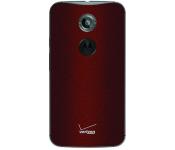
 For all you football fans out there waiting for your pigskin phone, your wait is over. Verizon has added the Football Leather option to the online Moto Maker website. There was already a leather option, but this option looks and feels like a real football.
If you want to show your love of the gridiron, you’ll have to cough up a few extra bucks—twenty-five of them to be exact. However, that will be a small price to pay for true football fans. Head over to Moto Maker and check it out!
Source: Verizon Wireless
Come comment on this article: Verizon Offers Football Leather Moto X
60 seconds with the team that wants to make every car smart

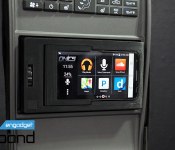
Wouldn’t it be great if you could change your car’s head unit as frequently as you do your smartphone? Enter Onics, a startup that’s crafted a dashboard-mounted module that lets you turn your phone into your car’s nerve center. Essentially, the hardware’s just a double-din unit with a locking clip up front, that’ll accept any Android or iOS smartphone that’s up to six inches in size. Rather than trailing a power wire from the 12V socket, there’s a built-in microUSB or Lightning port, and if your vehicle supports it, you’ll even be able to start the car with your mobile.
Even better, is that the unit connects to your car’s on-board diagnostics port, enabling it to tell you if there’s a problem – for instance, if you’re running low on fuel, it’ll offer directions to the nearest gas station and even tell you the price. For now, we’re looking at prototype hardware that’s been 3D printed, but Aaron Speach, the former Best Buy employee behind the company, is leveraging in-car audio technology from Texas Instruments to ensure that audiophiles are pleased with the sound quality. It’s certainly an idea that deserves more attention, and if we can save money on the price of our next car by ditching the expensive HUD for our phone, then it’s certainly something we’d consider. As for right now, Onics is asking for patronage as part of our Insert Coin: New Challengers competition at Engadget Expand 2014. If you’re curious to learn more, check out the video below and take part in the poll afterward.
#fivemin-widget-blogsmith-image-821719display:none; .cke_show_borders #fivemin-widget-blogsmith-image-821719, #postcontentcontainer #fivemin-widget-blogsmith-image-821719width:570px;display:block;
 trydocument.getElementById(“fivemin-widget-blogsmith-image-821719″).style.display=”none”;catch(e)
Edgar Alvarez contributed to this report.
Filed under: Transportation

60 seconds with a robotic pour-over coffee machine

Coffee enthusiasts know that one of the best ways to brew the caffeinated beverage is via the pour-over method, a meticulous technique that requires a steady hand and precise timing. At coffee shops, baristas have traditionally brewed this style of coffee the old-fashioned way, carefully pouring hot water in a steady spiral stream over multiple filter setups. Not only can it be tiresome, it can also distract them from giving better customer service. Poursteady, however, is a potential solution to that.
Designed by a group of designers and engineers in Brooklyn, New York, Poursteady is essentially a robotic pour-over coffee machine that handles the tedious task of timing and pour control so your friendly neighborhood barista won’t have to. It operates via two motors on two different axes – a shuttle axis that moves the spout back and forth the five-filter rig, and a tilting axis that moves the nozzle forward and backward. The combination of the two moving together results in that spiral pour technique that the pour-over method requires. The water is piped from a hot water heater cleverly concealed underneath the counter.
#fivemin-widget-blogsmith-image-520320display:none; .cke_show_borders #fivemin-widget-blogsmith-image-520320, #postcontentcontainer #fivemin-widget-blogsmith-image-520320width:570px;display:block;
 trydocument.getElementById(“fivemin-widget-blogsmith-image-520320″).style.display=”none”;catch(e)
When you press the button, the machine starts out by rinsing the filter, which also warms the cone and the cup underneath. The light will then blink, indicating that you should load it with the coffee grounds. Press the button again, and it’ll wet the grounds for the initial “bloom,” wait for a pre-set time period and then go ahead with the pour. And no worries if you’re brewing five different cups: the robot is smart enough to not get ahead of itself. Everything, from the amount of water to brew time, is controlled via a smartphone app. Poursteady CEO Stephan von Muehlen tells me that it’s only a HTML5 app for now, but the team hopes to release a native app soon. It works over WiFi for now, but a Bluetooth implementation is possible later on.
So, does it work? Well, the team recently showed off their product at Maker Faire in New York, where they apparently made over 950 cups of coffee in a single day using the machine. They’re also here at Expand New York, partaking in Engadget’s Insert Coin competition. Indeed, Poursteady actually launched its Kickstarter campaign on the Friday of the show, with a goal of $15,000. If you want to get one right now, however, you’ll have to cough up a considerable amount: the Kickstarter introductory offer is $10,000 while the actual final cost will likely be much higher as it has to account for the machine’s industrial-level components. But, hey, if you’re a commercial coffee shop owner, it could be well worth it for a machine that’ll make brewing pour-over coffee that much easier.
PourSteady is something I would…
Edgar Alvarez contributed to this report.
Filed under: Misc
The top 15 smartphones you can buy right now
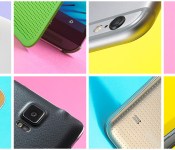
 It’s possible you already purchased one of the smartphones we listed in our buyer’s guide last July, but things tend to move quickly, and with fresh handsets from names like Apple, Samsung and Motorola, some of you may already be itching for an upgrade. To that end, we’ve made some fresh additions to our list of the latest and greatest smartphones out there today. Sure, our official Holiday Gift Guide is just around the corner, but this update will help you make some quick decisions, or at least get a head start on that holiday wish list.
 Filed under: Cellphones, Apple, Samsung, Sony, Microsoft, HTC, Nokia, Google, LG
 AIVAnet