


Primecast app puts Amazon Prime Instant Video content on Chromecast

Are you hooked into the Amazon ecosystem? Then take a look at Primecast. Then take a look at Primecast. No, it is not an official Amazon app; however, it will do something that the company would seemingly never dare to do. Primecast mirrors content from Prime Instant Video on Chromecast.
Amazon’s video streaming service only received Android support within the last two months. Jeff Bezos & Co. are very slow to make its services available on many platforms. Why? So you crack and purchase an Amazon device. We highly doubt Chromecast support will arrive come directly from Amazon due to its direst competitor — the Fire TV Stick. Primecast is an easy go-to solution for just $2.99.
Hit the break for the gallery and download links.


Source: Phandroid
Come comment on this article: Primecast app puts Amazon Prime Instant Video content on Chromecast

Google’s Nexus 6 prepping for release in more countries

It is a familiar refrain from around the globe whenever Google releases something new, whether it be software or hardware, the frustration with the U.S.-centric release schedules. The new Nexus 6 smartphone is no exception as early adopters are just now trying to get their orders in for the device in the U.S. while buyers in other markets merely look on. Hopefully that wait won’t be long as Google has announced availability for several countries and though no dates are indicated, it appears the Nexus 6 will be coming soon.
According to Google, the additional countries where the Nexus 6 will be available include:
- Australia
- Belgium
- Canada
- France
- Germany
- India
- Italy
- Japan
- Netherlands
- Spain
- Sweden
- United Kingdom
Once the devices are available, there is no telling how long the stock will last, but it is some hope for buyers around the globe who want the Nexus 6 in their pockets as quickly as possible.
source: Google
Come comment on this article: Google’s Nexus 6 prepping for release in more countries
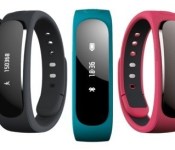
Huawei TalkBand B1 coming to U.S. retailers on Nov. 14th

Huawei has announced the TalkBand B1, a fitness tracker with an integrated Bluetooth earpiece, will be available from GetHuawei.com, Newegg.com, Amazon.com and Fry’s Electronics in the U.S. beginning November 14th. The tracker will initially be available only in true black at a suggested retail price of $129.99 with more colors to be release during the upcoming year.
The TalkBand B1 will work with Android 4.0 or higher devices as well as iOS 5.0+ compatible devices. Huawei says the device can sync through a Bluetooth connection or using NFC. The battery in the TalkBand B1 is projected to last six days on a single charge and the device can be recharged in only 2 hours using an integrated USB connector.
The TalkBand B1′s features are fairly comprehensive. The device can handle the normal activity tracking duties like counting steps, calculating miles covered and calories burned. The device will also monitor sleep quality and duration and a vibrating alarm can be set to wake the user without disturbing others. A timer can also be set to alert the wearer if they have been inactive for too long.
As a Bluetooth headset, users can also use the TalkBand B1 to take or make calls. To help users be ready, the device will vibrate once a user moves more than 10 meters away from their synced device.


source: Huawei (PR Newswire)
Come comment on this article: Huawei TalkBand B1 coming to U.S. retailers on Nov. 14th

Sony Xperia Z3, Z2, and Z3 get AOSP version of Lollipop

In the image above, you are looking at a version of Android 5.0 Lollipop running on select Sony devices. It is the AOSP version of the operating system’s latest version shown on a Xperia Z3, Xperia Z2, and even the Xperia Z1. Owners of those devices (unlocked) can go ahead and check it out.
The Xperia Z Series is scheduled to receive an official version of Android 5.0 Lollipop from Sony in early 2015. In Sweden, though, Sony has the 3Beta program that allows Xperia Z3 and Xperia Z3 Compact owners to test drive Sony’s Lollipop software ahead of everyone else. This allows the company to understand how its software is performing in reality.
Click here to view the embedded video.
Source: Sony
Come comment on this article: Sony Xperia Z3, Z2, and Z3 get AOSP version of Lollipop
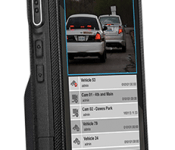
Motorola Solutions making phones for public safety employees

Just because Motorola Solutions is separate from the Motorola we all know all love doesn’t mean they cannot make phones. In fact, Motorola Solutions makes more than one phone. You likely have not seen any of them because they are not for the consumer electronics crowd. These phones are for public safety employees like police officers, firefighters and EMTs. So it is not surprising that the design is… tough. These phones are no Moto X or DROID Turbo in terms of looks. Durability is what is at stake.
The phone up top is the LEX 700. It is big and it is durable. And it runs Android 4.2.2 Jelly Bean with Motorola Solutions’ PremierOne software. A dual-core processor clocked at 1.6GHz runs this beast. Remember, public safety employees are using this. At most, they will be using it to communicate and locate quickly. The LEX 700 and devices like it do not require Snapdragon processors and 3GB of RAM to get things done.
Now aren’t you thankful for the specifications we have today? Or do you still demand more? Let us know in the comments.
Via: The Verge
Come comment on this article: Motorola Solutions making phones for public safety employees
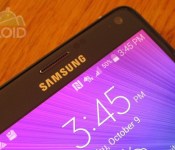
Samsung to launch new phone series after Galaxy A arrival

We all know that Samsung has a lot of devices on the market. In the last few months, the company did start to condense its range of tablets. That is not likely to happen with its phones, but Samsung will take a look at how they are named. On the heels of the Galaxy A arrival, Samsung is going to introduce another series with the single letter approach.
The logical series to assume that this is for would be whatever falls under Project Zero, Samsung’s next flagship.
Source: SamMobile
Come comment on this article: Samsung to launch new phone series after Galaxy A arrival
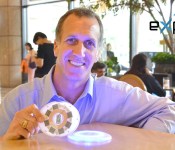
Five questions for the man making contactless wireless power a reality

First came Qi, and now we have Rezence. These are the two big names in the wireless power industry, except the latter is still in its infancy as it’s kicking off with a different type of technology: magnetic resonance. With this, devices are no longer required to sit on a pad while charging, and the idea of contactless wireless power is so alluring that even Qi will be integrating the same technology. But with demos and proposals going as far back as 2006, what’s taking so long? And, most importantly, is it safe? At our Expand conference starting this Friday, November 7th we’ll be addressing these questions with WiTricity CEO Alex Gruzen, who will also share his thoughts on the industry and what’s the latest on his end. For those who are just catching up, we’ve done a quick Q&A with Gruzen to keep you occupied for the time being.
What’s the difference between the existing wireless charging technologies and your technology?
Magnetic resonance allows you to place the object being charged on the charging source without concern about specific position or orientation.
WiTricity holds the foundational patents that enable wireless power over distance, safely and efficiently, using a technique called highly resonant wireless power transfer — also known as magnetic resonance. Our technology is often contrasted with that of “magnetic induction.” However, magnetic induction has limitations and is not user friendly. Unlike induction, magnetic resonance allows you to place the object being charged on the charging source without concern about specific position or orientation, allows multiple objects to be charged simultaneously and can work through materials like wood, glass, plastic and granite.
How is the Rezence standard coming together?
We’re excited about the work we’ve been doing in the Alliance for Wireless Power (A4WP), both as leaders in the resonator technical committee and as part of the board. Rezence is key to driving wide-scale adoption of wireless charging by enabling interoperability across a broad range of products, and it’s great to have key companies like Intel, Qualcomm and Samsung supporting the effort with us. I’m confident that we’ll see many Rezence-based products at CES this [coming] year, and with major powerhouse organizations, like Intel, licensing our technology and implementing it as part of the Rezence specification, we’re excited to see our vision of a wireless world start to become a commercial reality in the next year.
How can we be sure that it’s safe?
Magnetic fields are scientifically regarded to be safe.
WiTricity technology is a non-radiative mode of energy transfer, relying instead on the magnetic near field. Magnetic fields interact very weakly with biological organisms — people and animals — and are scientifically regarded to be safe. WiTricity products are being designed to comply with all applicable safety standards and regulations.
Are there other applications apart from just charging up portable devices?
The applications for our technology are really endless — and what makes our business so interesting is that we get to help companies across a wide variety of industries implement this technology into their products. In addition to the consumer space, which encompasses not only mobile phones, laptops and wearables, but also devices like kitchen blenders, televisions and table lamps, we also have a very strong presence in the automotive space. Toyota is licensing our technology, and has announced that they’ll be rolling out wireless charging in the Prius in the coming years, enabling drivers to simply enter their garage and charge up by driving over a WiTricity-enabled charging source, without even thinking about plugging in. In the future, that same concept could be applied to roadways — charging electric vehicles through the road as we drive.
Beyond consumer and auto, we are also seeing traction in the medical space in the form of implantable devices. Medical leader Thoratec has licensed our technology for their next-generation left ventricular assist device (LVAD), also known as a heart pump. With our technology, a patient with one of these new heart pumps can avoid having to charge it using a cord that exits their body through the skin (an invasive and infection-prone system) and instead simply charge their heart pump through the body with a source built into a bed or chair. Military applications also exist, including using the technology to reduce soldiers’ helmet weight by shifting batteries to their backpack.
When will we finally get commercial products that feature your technology?
In 10 years, children won’t even know why we say “wireless,” because they would have never known a world that had wires.
On the consumer front, we should see commercial products in 2015 — with a few likely to be showcased at CES this January. As for automotive, Toyota has announced that future Prius models will be equipped with WiTricity technology. I think over the course of the next two to three years, this technology will become pervasive and we will finally be able to leave our chargers and cables at home. In 10 years, children won’t even know why we say “wireless,” because they would have never known a world that had wires.
Filed under: Wireless

There’s a new way to report harassment against women on Twitter

While the power of anonymity the internet provides guarantees that everyone can be a target of harassment, women seem to be attacked more on social media. Those attacks have escalated these past months on Twitter, in particular, that’s why non-profit org Women, Action and the Media (WAM) has joined forces with the microblogging site to address the issue. Now, anyone who’s experiencing gendered harassment can use WAM’s new Twitter Harassment Reporting tool to submit a detailed complaint. Through the tool, a complainant can make sure the website knows exactly what kind of abuse she’s experiencing, such as impersonation, racism, sexism, (homophobic/transphobic) hate speech, doxxing, rape/death threats, and revenge porn among other things. And yes, all these happen in real life — just look at these vitriolic tweets Buzzfeed compiled for starters.
Twitter will still be the one to decide what to do in the end, but WAM will escalate validated reports to the service, and monitor Twitter’s responses. The organization chose to act at this point in time, because it believes gendered harassment has reached critical levels on social media — if you recall, a number of female game developers and personalities recently had to flee their own homes after being doxxed or receiving rape and threats. In addition to helping women get their reports heard, WAM will also use the data it collects to understand how harassment against women intersects with other types of harassment, so Twitter can improve their response to specific situations.
Filed under: Misc
Source: Women, Action and the Media, WAM Twitter Harrassment Reporting Tool
Lytro’s light field camera tech to boost night vision and space imaging

Lytro wants other companies to use its light field photo technology to improve their devices, and not just photography wares. In order to do that, the company outed the Lytro Development Kit (LDK) as part of its Platform initiative. At first, you might think this if for other consumer device makers, but it goes way beyond that. In the announcement, the outfit tossed out some examples of more commercial R&D-type scenarios for its imaging know-how. “Since Lytro’s inception, we’ve continually been approached by a number of organizations wanting to collaborate with us on a wide variety of new applications,” said CEO Jason Rosenthal. Things like NASA improving its imaging in space and Army Night Vision projects are already using the kit, and there’s potential for things like a gadget that analyzes soil samples for scientists. There’s a hefty fee to get access to the goods, so this is definitely a B2B move, but it’ll certainly be interesting to see the results.
Filed under: Cameras, Software
Source: Business Wire

HTC to release a premium line of tablets in 2015

Nexus 9 was recently introduced by Google as their flagship Android tablet, and also the first tablet to feature Android 5.0 Lollipop. The Nexus 9 is manufactured by HTC, and this step by the Taiwanese manufacturer also shows that they are ready to step back in the tablet market. According to HTC’s Chief Financial Officer Chang Chia-Lin, HTC is getting ready to release a premium line of tablets next year, but they will come with a hefty price.
Also, HTC’s North Asia President talked about tablets as well. He said that “There is actually a bit more room for growth and product differentiation in the high-end and mid-tier tablet segments “. He further says that HTC is not interested in competing in the low cost tablet market, because the profit margins are really slim, so it means that HTC will be releasing tablets very similar to Nexus 9 in design probably, but maybe better specs in future.
We don’t know much about the details regarding HTC’s plan, but we can expect to hear more about it in coming months. Do you think HTC should focus on tablets? Let us know in the comment box below.
Source: FocusTaiwan


The post HTC to release a premium line of tablets in 2015 appeared first on AndroidGuys.
 AIVAnet