



Five things we learned from robotics expert Mark Setrakian

Mark Setrakian has been working with robotics and animatronics for a while — starting at 19 and working at Industrial Light & Magic. If you’ve seen Men In Black, Hellboy or even Pacific Rim, then you’ve seen some of his creations. He’s also a former heavyweight champion of Robot Wars and the man behind Robot Combat League’s metal fighters. Who better, then, to come onstage at Expand NY (the show starts today!) and explain how robotics make it onto the big screen, how to ensure it all looks the part and what challenges still remain. However, before all that, we’ve asked him to explain what he’s learned from roughly two decades of making inanimate things come to life.
He didn’t set out to be the robot guy
When Setrakian first started working on TV and film, his aim wasn’t to be the robotics guy. “I wanted to do everything,” he says. However, during his interview at George Lucas’ Industrial Light & Magic, he was told that his mechanical designs were standout, and the focus of his career moved into not only mechanical design, but also puppetry. As he put it: “bringing life to inanimate things — exploring and adding new technologies and techniques.”
Nothing quite helps improve your robots like making them fight each other
While designs and ideas may look good in theory, testing robots is often literally make or break. “You quickly learn what works and what doesn’t,” he says. And in short? “The simpler, the better.” Complicated mechanisms and motors will often have a higher propensity to not work just right — or simply break — when put under the stresses of robot battles. “It’s the most educational environment.”
While Setrakian may have started off with low, slightly lumpy robots on wheels, hacking and pummeling each other, Robot Combat League took the fight to humanoid form, scaling the difficulty of pretty much everything. Compared to the two or three motors found in the wheeled variety of drones, humanoid bots would take around 28 motors, with multiple degrees of freedom for movement — he adds there was now a nuance of puppetry to how the humanoid bots moved and were controlled. These robots also had engineering ties to a project that followed after: the Female Figure.
Part of an art installation by Jordan Wolfson, the Female Figure is an animatronic robot that dances in front of a large mirror, with uncannily human fluidity. It also tries to make eye contact with spectators that move around it, freaking everyone out in the process. Both the dancer and gladiator robots use the same six-axis motion base — they just put them to very different uses
Making software for robots has become just as important as the hardware
To ensure a degree of organic dancing, Setrakian wrote the motion controls for the robot almost like a music synthesizer. Every move is like a loop, while the “samples” themselves can be sped up or slowed to match the music of choice. Dance choreographers helped inform the moves used by the robot, but there’s no motion capture here — these are programmed movements honed from a mixtape of dance moves. This ensures that while each move is programmed, how they’re put together depends on the controller. The robot can apparently even be controlled live. “It’s crucial here to write your own [software] tools,” he says.
3D printers have changed how robotics are made — and it’s now easier to be creative
“3D printers are like a quality-of-life machine,” Setrakian exclaims. “If I need a box for a design, it’s there to be made: I just have to design it and send that to a 3D printer … then it’s made. You don’t have to work so hard to do things well, to do things right.” Freeing up that mental bandwidth is a good thing, he adds, because “it helps to focus on the innovative stuff, the creative stuff.”
The dream of a robotic future will arrive when the prices comes down
As he’s continued to create robots and animatronics, Setrakian notes the price hasn’t really declined that much. While simpler tech is cheap, to make complicated movements and complex machines, high-performance motors and other parts remain expensive. Humanoid robots don’t come cheap, and that’s what’s stopping the sci-fi vision of a robot-filled world from happening. He reckons that commercial development, eventually at least, will lead to an entire spectrum of robotics, from the cheapest entry-level models to bleeding-edge, expensive options. He compares the development of robotics to cars. But whereas automobiles were created, the roots of robotics came from fiction before they could even exist, creating some high expectations for robots. While robotic movements get increasingly complicated, a vision of robots everywhere is still likely a while away.

Court demands Google hand over the identity of ‘Avengers 2’ trailer leaker

Today’s dispatch from the department of irony comes courtesy of Marvel Studios. When the trailer for The Avengers: Age of Ultron prematurely appeared online, the studio went into lockdown to find the leaker’s identity. According to documents found by Mashable, the outfit has traced the incident to a Google Drive account in the name of “John Gazelle,” and a federal court has ordered Google to hand over their details by November 18th – presumably in order to make an example of the individual. Still, it seems that while Captain America can battle oppressive computer systems that track the activities of everyone in the world, it’s happy to stick to the status quo in the real world.
Filed under: Internet, HD, Google
Via: Slashgear
Source: Mashable
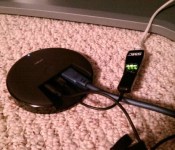
Nexus Player supports Ethernet through USB-OTG

I was seriously disappointed when I found out the Nexus Player lacked an Ethernet port, as well as HDMI pass through, but at the least the Ethernet port is solved. By simply adding a microUSB OTG cable to USB Ethernet adapter, an Ethernet connection will be present in the settings. How easy is that?
Since Android TV also includes Google Cast (Chromecasting), this means that all Chromecasting will also work through the Ethernet. Since the Chromecast itself only works though WiFi, many are suffering with either poor or inconsistent WiFi. By grabbing the Nexus Player, you will essentially be upgrading your Chromecast to a wired connection, as well as gaining all the added benefits of Android TV like gaming, a remote control, and on screen navigation.

On top of the Ethernet connection, you can also browse a USB thumb-drive when using an app called OTG-Disk Explorer Lite. Assuming the Nexus Player gets rooted, you will be able to install StickMount, which will automatically mount and dismount USB sticks.
Come comment on this article: Nexus Player supports Ethernet through USB-OTG
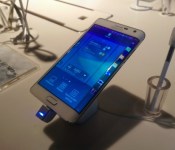
Galaxy S 6 could sport a curved dual-edged display
 Codenamed “Project Zero,” the Galaxy S 6 could have some radical changes in store. Speaking at the IHS Display Analyst Conference, senior analyst Jerry Kang said that the Galaxy S 6 will feature a dual-edge curved display. This means that both the right and left edges of the display will be curved, unlike the Galaxy Note Edge, which only features the right edge.
We’re not sure if this would be a special edition like the Galaxy Note Edge or be present on all models of the Galaxy S 6. I suspect a special edition as I am not sure Samsung will be ready for that kind of mass production. Either way, it appears that Samsung is frantically trying to come up with things to intrigue consumers now that Apple is offering iPhones with larger displays. However is this something that consumers desire?
source: Korea Herald
via: G4Games
Come comment on this article: Galaxy S 6 could sport a curved dual-edged display
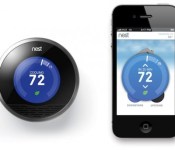
Growing Number of Users Report Crashing Issue with Latest Nest for iOS Update
A growing number of Nest owners are reporting issues with the latest version the Nest Mobile app that was released on Friday. According to reports on Nest forums, the 4.4.0 version of the app crashes immediately on launch for many users who are running iOS 8.x. This glitch reportedly is affecting recent iPhone models including the iPhone 6, iPhone 6 Plus, iPhone 5s and iPhone 5.
I just downloaded the update to the Nest Mobile App for iOS (version 4.4.0) and the App Crashes immediately upon launch. I am running the latest version of iOS (8.1) on my iPhone 5s. I had no issues with the previous version of the Nest app. I tried to delete the app and reinstall it but it still crashes when launched.
Fortunately, I still had the previous version of Nest Mobile in iTunes on my PC and was able to copy it over to my iPhone. -Nest forum member Columbus_George.
The Nest 4.4.0 update included a handful of small improvements, such as expanded weather and time zone support and improved thermometer history. Users who are experiencing the crashing glitch can restore the previous 4.3 version of the app from their iTunes app library.

Founded by former Apple engineers Tony Fadell and Matt Rogers, Nest Labs was acquired by Google in a $3.2 billion deal that closed earlier this year. Under Google’s guidance, Nest acquired video-monitoring and security startup Dropcam and opened its API to third-party products and services.
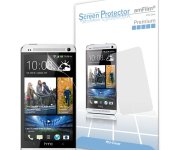
Accessory of the Day: Pack of 3 HTC One screen protectors, $5.95

The HTC One is a beautiful phone worthy of protection and care. There’s nothing like dinging your precious electronics to add that little bit of frustration to your day that throws everything off kilter. Ease your worries and protect your resale value with this pack of 3 screen protectors. They attach smoothly and leave behind no residue. With phenomenal Amazon ratings, these are priced to GO at $5.95 (Prime eligible). Also available for the HTC One M8.
Join Prime and get this deal with FREE two-day shipping!
Also worth checking out:
- Samsung Galaxy SIII [White] (Unlocked) – $157.47
- Motorola Moto G [Black] (Unlocked) – $199.99
- Western Digital 1TB USB 3.0 Hard Drive – $59.99


The post Accessory of the Day: Pack of 3 HTC One screen protectors, $5.95 appeared first on AndroidGuys.
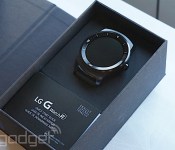
LG’s £225 circular G Watch R goes on sale in the UK

Google’s now selling LG’s G Watch R via the Play Store in the US, but in the UK, fans of the circular Android Wear smartwatch are being made to wait. Luckily, Amazon is one step ahead (not for the first time), and has opened orders for the wearable before its rival has had the chance to do the same. At £225, the G Watch R is £70 more than its predecessor, but with a heart rate monitor, better battery life and a fully circular display, it might be worth those few extra notes.
Filed under: Wearables, Internet, Google, Amazon, LG
Via: Wareable
Source: Amazon UK
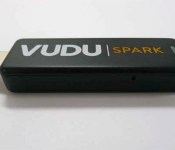
Walmart’s got a Chromecast-like dongle for its Vudu video service

Walmart looks set to launch a new streaming HDMI dongle resembling Google’s Chromecast or Amazon’s Fire TV Stick, but possibly lacking some of the features of those devices. Called the Vudu Spark, it leaked from the FCC’s website, replete with multi-angle photos and a user manual. The document shows how to set up the Spark with your WiFi network, and that it’ll basically do one thing: give you Vudu on your TV. That app is Walmart’s answer to Netflix, serving up streaming movies and TV shows on demand.

The test reports show that it comes with a Zigbee-based RF remote control, though it’s not clear if it’ll also support smartphone-based control à la Google’s dongle. There’s also no sign of screen mirroring or other advanced features, meaning it might just be a no-frills way to get the Vudu app onto a dumb TV, though we’d have to see the device to confirm that. Anyway, if you do need those features plus Vudu, you can just buy a Chromecast, of course — the Vudu app’s been available on it for quite awhile. There’s no word yet from Walmart on pricing and availability.

Filed under: Home Entertainment, HD
Via: GigaOm
Source: FCC
Tiny robotic scallops can swim through blood and eyeball fluid to fix you up

For years now, scientists have been trying to develop microscopic robots that can swim through bodily fluids and repair damaged cells or deliver medicine. Now, a team of scientists from the Max Planck Institute for Intelligent Systems in Germany believe they’ve got the perfect design — in the form of scallops so small, they can barely be seen by the naked eye. These micro-robo-scallops move back and forth to swim through blood, eyeball fluids and other liquids inside our body. The scientists believe mimicking the way a true scallop swims is ideal, due to a number of reasons.
First, moving backward and forward is the best way to swim through Newtonian fluids, or liquids that can grow thicker or thinner, depending on the situation. As you’ve likely guessed, our bodily fluids are good examples (so is oobleck, or the 1:1.5-2 mixture of water and cornstarch — seriously, try it out for yourself), as opposed to water, which can retain its viscosity. Second, the micro-scallops don’t need much power be able to move that way. They don’t require batteries or even motors: just the energy provided by an external magnetic field.
According to the scientists, they don’t have a particular purpose in mind for their minuscule scallop. Instead, they’re hoping it becomes a reference design for other teams and companies that want to develop advance medical technologies. If you’re willing to follow these robots’ example and swim through scientific terminologies, head over to Nature where the team’s paper was recently published.
Filed under: Science
Via: IEEE
Source: Nature

Apple Said to Be Stopping Use of TLC NAND Flash in iPhone 6 and 6 Plus After Reported Issues
Apple will switch from using TLC (triple-level cell) NAND flash to MLC (multi-level cell) NAND flash in the iPhone 6 and iPhone 6 Plus after users have experienced crashing and boot loop issues with the higher capacity versions of both devices, reports BusinessKorea.

Sources have told the paper that flash memory firm Anobit, which Apple acquired in 2011, is to blame for the manufacturing defects. Apple will reportedly switch to MLC NAND flash for the 64GB iPhone 6 and the 128GB iPhone 6 Plus, and will also address crashing and boot loop issues with the release of iOS 8.1.1. Apple previously used MLC NAND flash in previous-generation iPhones.
TLC NAND flash is a type of solid-state NAND flash memory that stores three bits of data per cell. It can store three times as much data as single-level cell (SLC) that stores one bit of data, and 1.5 times as much as multi-level cell (MLC) solid-state flash memory that stores two bits of data. On top of that, TLC flash is more affordable. However, it is also slower than SLC or MLC in reading and writing data.
Apple released its first iOS 8.1.1 beta to developers earlier this week, although the company did not specify whether the included bug fixes addressed boot loop and crashing issues on the iPhone 6 and iPhone 6 Plus. Users who are experiencing an unusual amount of boot loops and crashes with their iPhone 6 or iPhone 6 Plus are recommended to bring their devices back to an Apple Retail Store for a replacement.
 AIVAnet