



‘Halo: The Master Chief Collection’ has a smaller day-one patch than expected

We have some good news and some bad news for your data cap, folks. The Halo: The Master Chief Collection title update that adds multiplayer and a few other things is now available for download. It’s smaller than expected, too! But it’s still pretty sizable; 15GB to be exact. It’s 5GB slimmer than what was initially promised, sure, but depending on your internet speed it could be a time-consuming roadblock standing between you and your first killtrocity on “Sidewinder” — if you’re buying a physical copy, of course. In case you’ve made a digital pre-order, you can grab the patch right now should you have auto-downloads turned on, according to 343 Industries executive producer Dan Ayoub. You have to wait until November 11th to play it, naturally. You still have plenty of Sunset Overdrive on Xbox One to keep you busy until then, right?
Good news gang! Day One TU for MCC is up! If you haven’t enabled auto download, go get it now!! #HaloMCC
– Dan Ayoub (@Danayoub) November 6, 2014
#HaloMCC #DayOne title update is live. Looks like it’s only 15GB instead of the rumored 20GB. Bonus. pic.twitter.com/RtnCwAUiv4
– WorthPlaying (@worthplaying) November 6, 2014
Filed under: Gaming, Home Entertainment, HD, Microsoft
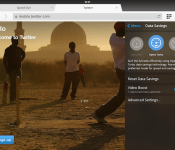
Opera Mini 9 promises smoother video-watching on iOS

Since the beginning, Opera’s focus with its mobile browser has been to save users as much data as possible. Now, with the release of Opera Mini 9 for iOS, the idea is to take that mentality a step further, by better managing a thing people enjoy doing most on their devices: watching video. As such, Opera Mini 9 comes with a feature called Video Boost that optimizes videos to save on bandwidth, which includes the ability to reduce loading times for those with an iPhone and/or iPad. According to Opera, this is the first time video optimization for sites has been built within a browser, and it believes the implementation is so good that it could easily replace a video-focused app — like YouTube or N3twork. But don’t take Opera’s word for it, you can check it out for yourself at the App Store link below.
Filed under: Cellphones, Internet, Software, Mobile
Source: App Store
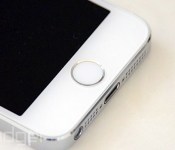
New Apple malware can infect your iPhone or Macbook via USB

China and Apple devices still aren’t getting along super well, it turns out. WireLurker’s a malware that’s been attacking Cupertino’s ecosystems in the region for the past six months, and according to cyber-security firm Palo Alto Networks (which discovered it), it’s the biggest that’s delivered via trojan-horse OS X apps. What’s more, it’s the first that can infect iOS applications like a traditional virus, and even auto-generates infected software. Some 467 apps have been infected and downloaded over 350,000 times, and could have affected “hundreds of thousands” of users. And here’s where the regional issue comes into play: the malware is hosted on Maiyadi, a Chinese, third-party app store.
That isn’t the only way for WIreLurker to attack, though — it can gain access to iOS devices via USB as well, and even through a charger it seems. Oh, and you can infect an OS X device by connecting your iPhone or iPad via USB, too. Sounds fun, right? That isn’t the half of it as once your device is compromised, WireLurker will snag your phonebook and read through any iMessages. The malware’s ultimate goal, however, isn’t clear just yet. Palo Alto Networks says to avoid it, don’t connect to any unfamiliar devices (desktop or otherwise) to one another and avoid any strange chargers too. We can’t imagine that Justin Long is super happy about any of this.
Filed under: Cellphones, Desktops, Laptops, Mobile, Apple
Via: New York Times
Source: Palo Alto Network

Microsoft’s bone-conducting headset guides the blind with audio cues

While nothing can replace the companionship of a guide dog, technology can help make treks through busy cities a lot less stressful and more enjoyable for the visually impaired. Microsoft, for one, is currently testing a new headset (developed with help from UK charity Guide Dogs) that uses 3D soundscape technology to guide its users with audio cues along the way. That bone-conducting headset can’t work alone, though: it needs to be connected to a smartphone, as well as to receive information from Bluetooth and WiFi beacons placed in intervals throughout the roads users take. For its pilot program, Microsoft attached makeshift beacons on neighborhood objects in a London suburb, where its first testers are giving it a spin. When company news writer Jennifer Warnick tried it out while blindfolded, she found herself so efficient in getting around with only sounds to guide her, that she felt like a “dry-land dolphin.”
According to her detailed report on the experiment, the beacons would constantly send audio cues that sound like the galloping coconut noise from Monty Python to ensure her she’s taking the right way. She also reported hearing other sounds, such as sonar pings to warn her if she’s veering too close to curbs, as well as turn-by-turn voice directions, telling her how far she still has to walk to certain establishments, or if the bus she’s waiting for is approaching. It’ll obviously take a ton of effort bringing the headset to market, seeing as more permanent beacons will need to be installed everywhere. Hopefully, the company finds a way to bring the system to other places, for the sake of all the blind folks who’d love to be more independent.
Filed under: Wearables, Microsoft
Source: Independence Day

Jet-fueled electronics are coming

Fuel cells may be a practical reality, but there aren’t many choices for the fuel itself — you usually have to rely on hydrogen, which dictates where and how those cells work. The University of Utah may have a clever alternative in store, however. Its researchers have developed a cell that runs on JP-8, a jet fuel used by American warplanes in harsh climates. The cell uses enzymes to turn propellant into electricity without requiring lots of heat or a perfectly clean mixture; it works at room temperatures even when there’s sulfur in the mix, making it far more useful than previous attempts at JP-8 cells.
The technology should be useful for powering mobile devices of all kinds, including cars. It may not necessarily find its way into the same places as hydrogen cells, mind you. Vehicle makers frequently use hydrogen because they’re trying to avoid petroleum products; jet fuel isn’t exactly going to help. Once scientists refine the cells, you’re more likely to see them in electronics that would benefit from JP-8’s traits, such as rugged laptops that need to survive extreme temperatures. Even so, you shouldn’t be surprised if you’re eventually running your gadgets on the same chemicals that power bombers and fighters.
[Image credit: AP Photo/US Air Force, Shawn Nickel]
Filed under: Cellphones, Laptops, Tablets, Science, Mobile
Via: EurekAlert
Source: University of Utah

Digital liberty advocates want the right to resurrect old online games

The Library has yet to respond to the request, but it may be more open to the idea than you think. The DMCA already includes clauses that allow reverse engineering in the name of preservation, and archivists have already argued that game creators should provide their content in easily readable formats. It’s easy to see the Library allowing homebrew servers for the sake of the historical record, even if game studios aren’t always fond of people messing with their code. You’ll know who to thank if you can still sign on to Destiny a decade or two from now.
[Image credit: Supastarrio, YouTube]
Via: Ars Technica
Source: Electronic Frontier Foundation

TalkAndroid Daily Dose for November 5, 2014

With hectic schedules, it can be hard to keep track of everything in your news feed. That’s why we created the TalkAndroid Daily Dose. This is where we recap the day’s hottest stories so you can get yourself up to speed in quick fashion. Happy reading!! Accessories
Gear Circle is Samsung’s new way for instant hands free communication
Android TV
Nexus Player factory image and binaries now available
NBA Game Time and MLB.TV launch Android TV apps
Apps
Material Design rolling out to Google Maps in coming days
Pushbullet update allows you to send texts from your computer
Carriers
Verizon will play the price-cutting wars conservatively
Chrome
Google Drive can launch desktop programs from Chrome
Chromeboxes
Dell selling Chromebox bundled with keyboard and mouse for only $199
Gaming
NVIDIA Shield Portable update brings latest Hub App, battery improvements and more!
Android Lollipop delayed until November 12 for most Nexus devices
Google and LG enter long-term patent cross-licensing agreement
Google bringing SD card support back to Android in 5.0 Lollipop
Google Fit
RunKeeper gets Google Fit compatibility with latest update
Google Glass
Google Glass being used in hospitals to treat stroke victims
Google Wallet
Google Wallet usage doubles on heels of Apple Pay arrival
Phones
Amazon commits to Fire Phone after acknowledging failure
Android 5.0 Lollipop shows up on a Moto X 2014
Samsung kicks off its Galaxy Gifts package for the Galaxy Note 4 and Note Edge
Smartwatches
Sharp shows off extremely battery-friendly smartwatch
Tablets
HTC is planning their own line of premium tablets to launch in 2015
Legendary developer Chainfire roots Nexus 9 mere hours after the source code is made public
Samsung to launch a 13-inch tablet by year’s end
Updates
Android Lollipop delayed until November 12 for most Nexus devices
Google bringing SD card support back to Android in 5.0 Lollipop
Binaries for the Nexus 9 are being included in factory image build
Nexus Player factory image and binaries now available
NVIDIA Shield Portable update brings latest Hub App, battery improvements and more!
Miscellenous
HTC issues apology for Hot Deal snags
Come comment on this article: TalkAndroid Daily Dose for November 5, 2014

Jimmy Iovine and Dr. Dre Discuss Their New USC Academy Focused on Technology and Liberal Arts
In a new profile of Beats co-founders and new Apple employees Dr. Dre and Jimmy Iovine, The Wall Street Journal interviews the duo about their newly launched undergraduate academy at the University of Southern California called the USC Jimmy Iovine and Andre Young Academy for Arts, Technology and Business of Innovation. The Beats co-founders, who bankrolled the academy with a $70 million gift last year that led to the first students being enrolled this past August, are being profiled as part of the WSJ. Magazine 2014 Innovator Awards.
 Photo courtesy of The Wall Street Journal
Echoing Steve Jobs’ description of the philosophy of Apple, the school is aimed at preparing young people to be able to work in businesses that are at the intersection of technology and liberal arts.
“We wanted to build a school that we feel is what the entertainment industry needs right now,” he says. “There’s a new kid in town, and he’s brought up on an iPad from one and a half years old. But the problem with some of the companies up north [in Silicon Valley] is that they really are culturally inept. I’ve been shocked at the different species in Northern and Southern California—we don’t even speak the same language. The kid who’s going to have an advantage in the entertainment industry today is the kid who speaks both languages: technology and liberal arts. That’s what this school is about.”
Erica Muhl, the school’s first executive director, says that while other schools aim to mix business and technology, none of them add in the arts or culture. Iovine says the school’s goal is to “find kids who can work at Beats or at Apple”.
While Iovine and Dre unsurprisingly haven’t shared what their exact roles at Apple will entail, The Wall Street Journal notes that one of the primary things on their minds is to marry people who create art with those who distribute it.
“I think what you’re seeing more and more are companies that are designed to do multiple things,” Iovine says. “If you look at the Beats model, there’s software and hardware. Look at what Amazon is doing; look at what Google’s trying to do. It’s technology and content in one.”
In recent months, Apple’s music strategy has seen increased cooperation from artists in its distribution channels. In December, Beyoncè launched her newest album exclusively on iTunes with no advance promotion, while iTunes Radio has consistently featured specially curated radio stations from artists like Sam Smith. More recently, Beats Music highlighted on Twitter that its service will still stream Taylor Swift’s music after she decided to pull her content from rival streaming service Spotify. Apple is expected to launch a revamped version of Beats Music in early 2015.
The full profile, which includes anecdotes on the creation of Beats Music and how Iovine had always wanted to work with Apple, as well as examples of what students are doing at the new school, can be found at The Wall Street Journal.

HTC issues apology for Hot Deal snags

Yesterday HTC launched a new program to give people a good reason to visit their web site – nine weeks of hot deals. The first one was a doozy as HTC offered the new Nexus 9 tablet for only $199 for a 16GB model. No doubt this caused a virtual feeding frenzy on the HTC site once the sale opened up. Even with all the extra stress and frustration that goes with events like this, HTC apparently felt some of the problems people experienced went above and beyond what could be reasonably expected for a flash sale. For that, the company has issued an apology.
Through a pop up that appears if you visit the HTC Hot Deal page, HTC America President Jason Mackenzie has posted a message promising to do better in the coming weeks. According to Mackenzie, the “site did not function properly” and failed to meet the company’s goal of offering a “seamless” experience. He goes on to indicate the HTC team is working to correct the system issues so the company can continue to offer an “exciting cadence of offers” during the holiday season.
Anyone out there manage to get in on the deal? Did anyone try and experience problems with the HTC site?
source: HTC
Come comment on this article: HTC issues apology for Hot Deal snags
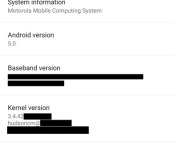
Android 5.0 Lollipop shows up on a Moto X 2014

Motorola made a small splash last year when their update to Android 4.4. KitKat reached the Motorola Moto X even before Google could get the system update out to their own Nexus 4 smartphone. Motorola appears to be on track to duplicating that feat, or at least coming very close, after a copy of Android 5.0 Lollipop was found running on a Moto X 2014.
Confirmation that Motorola has a copy of Android Lollipop already up and running on the Moto X 2014 comes from an anonymous source who supplied screenshots to try to verify the truth of the claim. Sources have redacted information that would reveal the carrier, baseband or kernel information. However, Lollipop build was apparently generated just last week.
Some of the screenshots also reveal some of the tweaks Motorola, or possibly the carrier, made to Lollipop for the Moto X 2014. One thing users will notice is that the device still uses some old icons for the mobile connection instead of the new, solid icons. When the settings shade is pulled down, users will notice that options are available to cast the screen to a Chromecast and a toggle switch has been added for a flashlight function.
Google decided to add in some features to Lollipop that appear to be based off of some Motorola features including a new Ambient Display function and some voice-activated actions. For the Moto X 2014, it appears Motorola has decided to slide in their own software to handle these functions, which may not be a bad thing.
Finally, it looks like the upgrade to Android Lollipop will give camera users a new feature that has been missing from Moto X devices. A new shutter timer has been added to the camera app giving users the opportunity to set a delay of 3 or 10 seconds.
Of course no information about a release date was obtained from the anonymous source, so keep watching for more updates and to see whether Motorola can get the update out before anyone else.


source: Phandroid
Come comment on this article: Android 5.0 Lollipop shows up on a Moto X 2014
 AIVAnet