


Starwood Begins First Phase of Mobile Phone Hotel Room Key Rollout With 10 Properties
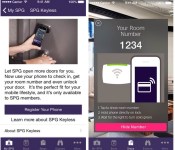
Following an initial pilot program at a pair of its properties, hotel chain Starwood today announced the official launch of its SPG Keyless program that will allow hotel guests to use their iPhones or Android phones to check in for their stays and unlock their doors via Bluetooth. The system will go live this Wednesday in ten hotels around the world under Starwood’s Aloft, Element, and W brands and expand to 150 hotel comprising 30,000 hotel room doors by the end of next year.

SPG Members must register their phone once through the SPG App and allow push notifications. After booking a reservation at a keyless hotel and approximately 24 hours before arrival, SPG members are invited to opt-in to SPG Keyless. Guests will receive a push notification noting that they are checked in and the SPG App will update with his/her room number and Bluetooth key when the room is ready. Upon arrival at the hotel, the guest can completely bypass the front desk (where available) and go directly to his/her room. After ensuring his/her Bluetooth is enabled, the guest simply opens the SPG App, holds the smartphone to the door lock, waits for the solid green light and enters the room.
Starwood’s SPG: Starwood Hotels & Resorts app [Direct Link] has been updated today to support the iPhone check-in program, which is going live at hotels in Beijing, Cancun, Cupertino, Harlem, Doha, Hollywood, Hong Kong, New York City, and Singapore.
Starwood is not the only hotel chain working on phone-based room keys, with Hilton previously announcing its intentions for a similar program including check-in and room selection via app available in 4,000 hotels by the end of this year and and mobile phone room keys rolling out in 2015. And just today Hilton has reiterated those plans, announcing pilot testing of room keys early next year with an initial rollout to its Conrad brand soon after and expansion to additional brands coming in the summer.
Parrot Zik 2.0 review: still the world’s most advanced headphones

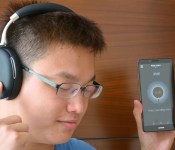
If you’re into drones and wireless audio, then you’ll probably agree that Parrot is the best thing out of France since Daft Punk. Personally, I’ve been most impressed with the company’s wireless headphones, the Zik. In fact, I’ve been a regular user since it came out about two years ago. Even today, no other brands have attempted anything as advanced as these cans. Which makes sense: These are no ordinary Bluetooth headphones. In addition to being wireless, they feature effective noise cancellation and intuitive touchpad input, all tucked inside a quirky Philippe Starck design, no less. More importantly, the audio quality has gotten better over time as Parrot improved device compatibility via firmware updates.
But of course, there’s always room for improvement; the original Zik is on the heavy side, and not everyone’s a fan of its bulky look. Well, that’s pretty much why we now have the Zik 2.0, and fortunately, it offers more than just improved portability. Read on to see if this new model is worth the $399 upgrade.
Hardware

The Zik 2.0 is essentially a lighter, more rounded and thus better-looking version of the first-gen Zik; and don’t forget that it also comes in white, blue, mocha, orange and yellow. Our pre-production unit weighs 274 grams (it’s officially 270 grams), a 17 percent reduction from the 327-gram original (325 grams officially). The difference was immediately noticeable when I first put on the new model. It feels more comfortable and secure thanks to the extra padding on the head rail, as well as the more spacious memory foam cushions. I can now lean backward or forward without the fear of gravity pulling off my headphones. Another notable change is that the oval cups are now covered with soft, faux-leather material instead of hard plastic, which adds some warmth to both the look and feel.
The general feature set and layout remain unchanged. Both cups are pivoted on the signature bone-shaped, extendable aluminum arms, and they each house a 40mm neodymium driver with a frequency response range between 20Hz and 22kHz. The left cup contains the removable 830mAh battery and the NFC coil, whereas the right cup carries the fully disguised touchpad, two bone-conduction microphones, a larger power button (with LED indicator), micro-USB port (for charging and updating firmware) and 3.5mm line-in socket (you can use that with the bundled 1.3m audio cable). I’m not exactly sure where it is, but there’s also a “presence sensor” somewhere inside the right ear cushion that automatically pauses your music when you take the Zik off, which is a thoughtful feature.

What’s new is that there are now six noise-canceling microphones split between the cans instead of four, thus allowing the new Zik to reduce up to 30 dB of ambient noise instead of just 25 dB (more on that later). It’s also worth mentioning that the removable cover on the left cup — with a large “Parrot” logo embossed — has a more secure fit thanks to an extra magnet plus its new shape. So far, I haven’t accidentally brushed it off, something that I often did with my first-gen Zik.
Just like the original, the Zik 2.0 is easy to set up. You can either tap your NFC-enabled Android phone on the left cup for automatic Bluetooth pairing, or search for the headphones from your device’s Bluetooth menu. Unlike some other Bluetooth audio hardware, the Zik doesn’t require you to put it into pairing mode. In fact, it doesn’t have one. What’s more, even if you’ve already paired it with another device, the Zik is always discoverable on boot, so you can pair it with a new device provided the previous is disconnected or powered off.

As for the swipe gestures, it’s again more of the same: Slide from back to front to skip a song, or the other way round to go back; slide up or down to adjust the volume; tap to play or pause, and the same for answering or ending phone calls; tap twice to reject an incoming call; and long-press to toggle your phone’s voice assistant, be it Siri or Google Now.
My only niggle here is that the touchpad is less sensitive than before: If I swipe with the same amount of force I’m used to from the past two years, the new Zik either misses my gesture or mistakes it for a tap, which became annoying after a short while. So I now have to swipe slower and with a little more force applied. Maybe that new faux-leather wrap is getting in the way; or maybe it’s an intentional modification, as my original Zik is also susceptible to accidental swipes due to its greater sensitivity. Still, I’d prefer to swipe with less effort if given the choice.
Software

The Zik 2.0 will work just fine out of the box, but in order to make the most of it, you’ll need to install the free namesake companion app (not to be confused with Parrot Audio Suite) on your Android or iOS device (Windows Phone support coming soon). After all, the software is really where the money is: This is where you can toggle and tweak the headphones’ noise cancellation, concert hall effect, equalizer and audio presets. And for the record, yes, the Zik stores all your settings.
Upon launch, the app detects whether your mobile device is connected to a Zik 2.0, after which it’ll take you to a page showing how much battery is left, which features are active and what song you’re listening to. Swiping horizontally takes you to the pages dedicated to the aforementioned features, and the Settings menu lets you toggle the presence sensor, auto power-off timer, Bluetooth auto connect, caller ID text-to-speech service and firmware update.
There are a couple of interesting improvements here. For instance, you can now adjust the level of noise reduction — from “Street mode,” for safety’s sake, all the way up to 30 dB. Compared to my first-gen Zik (which already aced the noise-cancellation feature on the Sennheiser and Bose headphones from the same generation), that extra 5 dB makes a noticeable difference, and I look forward to taking advantage of this on my next flight.

Another handy addition is the new simplified equalizer. Rather than fiddling with frequency settings in a chart, you can just slide a pointer across “Pop,” “Vocal,” “Cristal,” “Club,” “Punchy” and “Deep” within a circular heat map to suit your taste. Personally, I found my sweet spot to be somewhere on the outer edge between “Punchy” and “Club.”
For those who prefer a higher level of customization, you can still use the classic line chart equalizer (along with the concert hall effect tool) to create your own audio preset. Alternatively, you can also download some presets from artists featured by Parrot within the app (selections include DJ Jazzy Jeff, Andrew Watt, Philippe Cohen-Solal, Richard Dorfmeister and, yes, Conchita Wurst). At some point in the near future, you’ll be able to share your presets with others as well.
Zik 2.0 also has a smart new feature called Smart Audio Tuning, which can automatically apply audio presets to music that matches certain criteria, be it by artist, album, song or genre. So hold this thought for a second: What Parrot’s offering is a platform that lets artists personally tune your headphones to best suit their own songs or albums. Regardless of traction, there’s no arguing that this is a pretty neat idea, so hopefully Parrot can throw in more big names to get the momentum going.
General use and sound quality

With the exception of the touchpad’s sensitivity issue I mentioned earlier, I’m otherwise very pleased with the Zik 2.0. First of all, the 830mAh battery still manages about six to seven hours of continuous playback if you have Bluetooth, noise reduction and concert hall mode enabled. Alternatively, you can get up to a staggering 18 hours with the new flight mode (no Bluetooth, no concert hall; just a wired connection with noise cancellation). Alas, it takes 2.5 hours to recharge the depleted battery, and to make matters worse, Parrot still doesn’t offer a dedicated charger for those who carry a spare battery.
Luckily, the great audio quality almost makes up for it, but that’s not without my own equalizer settings: I prefer just a little more punch and treble on top of the default profile. If I may nitpick for a moment, I’d say that compared to my KEF M200 in-ears, the new Zik is ever so slightly muffled in the high frequencies, though it’s barely discernible when you’re out and about. It should also be noted that you can use the Zik sans battery, aka in passive line-in mode, but the audio quality is nowhere as good without the digital signal processor and noise reduction running.
Many have asked Parrot to add aptX for potentially better streaming quality, but sadly, that still hasn’t happened. In fact, when I spoke to Parrot CEO Henri Seydoux two years ago, he insisted that aptX isn’t needed to achieve good streaming quality. With aptX becoming the norm these days (and more so once Qualcomm’s acquired its maker, CSR), maybe he’ll reconsider? I’ll take whatever to retrieve the missing treble bits.
Last but not least: call quality. The Zik 2.0 actually supports HD Voice which, as you can guess, enables much clearer voice calls, though you do need to have a phone and a carrier that support the standard as well. Alas, I have neither, so call performance is about the same as what we got with the original Zik: My voice is often staticky, especially in noisy environments, and sometimes too quiet on the other end. I tend to just grab my phone out to pick up calls to save the embarrassment, which is a bit ridiculous given how much these headphones cost.
Wrap-up

Parrot is so close to making the perfect Bluetooth headphones. Well, they pretty much are if you ignore the voice-calling feature and just use them for music. Put it this way: The original Zik remained the most advanced Bluetooth headphones for two years straight, and now we have a new version that’s better-looking, more comfortable to wear and even better at noise cancellation, to the point where it’s arguably best in class. As a bonus, the cans come with more tuning options to entertain obsessed audiophiles. They also offer artists a new way of interacting with their fans by letting them share their very own audio presets, which can also be set to target specific songs and albums. This social element might be perceived as a gimmick, but even so, you gotta admire Parrot for thinking out of the box.
Filed under: Portable Audio/Video, Wearables, Wireless

Musician tries to use EU right to be forgotten to hide a bad review

The EU believes that its “right to be forgotten” is about removing outdated or irrelevant information, rather than letting people photoshop their backstories. Unfortunately, the latest in a long line of people to miss that memo is musician Dejan Lazic, who tried to using the ruling to erase a bad review. The Croatian pianist requested that the Washington Post nix a 2010 piece that described his playing as “cartoon-like,” which he described as “defamatory, mean-spirited, opinionated, one-sided, offensive [and] simply irrelevant for the arts” – which also just happened to be on the front page of Google when you searched for his name. Naturally, upon receiving the request, the newspaper reported upon it, providing plenty of fresh attention towards the not-particularly-scathing review. For his part, Lazic believes that he has a right to control his own image, and that reviewer Anna Midgette is holding a grudge against certain acts who are singled out for harsh judgment. Bet the EU sometimes wishes that it could just try and forget this whole thing ever started.
Filed under: Internet
Via: Slashdot
Source: The Washington Post, Dejan Lazic

KnowRoaming sticker SIMs can now help more people avoid roaming charges

Remember KnowRoaming? That seemingly magical sticker SIM supposed to be attached on top of your usual one, so you can avoid expensive roaming charges? It’s finally available for purchase. KnowRoaming works with a GSM Android, iPhone or Windows mobile device and connects you to a local carrier as soon as leave your home country (where it stays dormant) and enter one of its supported locations. We first heard of it in 2013, when the startup was trying to raise money for production through a KickStarter campaign. It started shipping kits to its backers in February this year while it was still in beta, but after 12 months of testing, it’s now ready for a wider release.
You can get one of KnowRoaming’s sticker kits for $30 straight from the company’s website and buy credits through its accompanying Android, iOS or web app when you’re ready to use it. Those credits are used to purchase unlimited data for $7.99 per day, to pay for data as you use it, or to make phone calls over a network to anyone you want. Call rates, on the other hand, vary per country (calling someone in the UK, for instance, will cost 3 cents per minute to a landline or 23 cents per minute to a cellphone), but you can always check them on the website before you dial. Planning to get a kit soon? If you’re going out of the country within the next two weeks, make sure to try the service out to get $15 credited to your account for free.
Filed under: Cellphones, Mobile
Source: KnowRoaming

Starbucks planning to deliver coffee through updated mobile app

The Starbucks app has long provided a way to pay for your coffee with just your phone, but the company has much bigger plans for its mobile counterpart. Starting soon the coffee giant will start testing a new app that allows you to not only order from your mobile device but also get your coffee delivered. There are already numerous delivery service apps, but until now none of them included Starbucks. Details are still hazy but the thought of having Starbucks delivered is tantalizing to say the least. Starbucks founder Charles Shulz says the service could launch to Starbucks Loyalty customers in Portland as soon as next month. Let us know your thoughts in the comments and if you’ll be taking advantage of the upcoming service. This is even cooler than paying for coffee with your smartwatch.
Source: CNBC
Come comment on this article: Starbucks planning to deliver coffee through updated mobile app

Nokia rumored to be designing an Android-powered flagship

Back in July we reported that Microsoft was killing off any Android-powered Nokia smartphones that were in development, but new rumors claim otherwise. According to a couple China-based tech sites, the design team behind the underrated Nokia N9 are back at it, designing a new Android-powered flagship. Due to Microsoft’s acquisition of Nokia, it is unlikely the phone will bare Nokia’s timeless logo, but it will undoubtedly come with a sleek design like the N9′s, if it ever comes to fruition. After the mixed reviews of the Nokia X, does this rumor pique anyone’s interests? Let us know in the comments below.
Source: MyDrivers
Via: Phone Arena
Come comment on this article: Nokia rumored to be designing an Android-powered flagship
Android Wear will soon be a remote control for your Sonos speakers

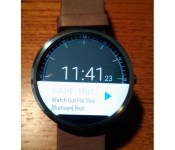
Picture the scene: you’re throwing a house party with guests sipping at your expensive whiskey and a good time is being had by all. Suddenly, unexpectedly, the Hamster Dance pops up on the Sonos – curse your eclectic music tastes – and the atmosphere suddenly turns restless. Never fear, because soon you’ll be able to nudge the track to something more suitable just by banging a finger on your Moto 360. Sonos has revealed that it’s currently beta-testing a control app for Android Wear devices that’ll enable you to play DJ from the comfort of your wrist. iOS users are also apparently getting some love, too, since Zatz Not Funny is reporting that an iPhone lock screen widget is also being hammered out in the company’s secret testing labs. Now you just need to move the Hamster Dance off your number one party playlist and you’ll be sorted.
[Image Credit: Robert / Sonos Forums]
Filed under: Home Entertainment, Wearables
Via: Gizmodo, Zatz Not Funny

Investigators pin Virgin Galactic’s crash on faulty tail deployment

US aviation investigators say they now know how Virgin Galactic’s SpaceshipTwo broke up in mid-flight, but don’t yet know why. The crash tragically killed co-pilot Michael Alsbury, seriously injured pilot Pete Siebold and set back CEO Richard Branson’s space tourism program severely. NTSB acting chairman Christopher Hart said that the tail section on SpaceshipTwo (normally only raised during descent below Mach 1.4) deployed shortly after the rockets fired — even though neither pilot commanded it to. As a result, the ship broke up seconds later from the excessive drag and crashed into the Mojave desert.
Normally, a two-step procedure is required to enable tail deployment: first it has to be unlocked, then a lever is moved by pilots to “feather” it into position.The NTSB said that for some unknown reason, Alsbury unlocked the tail at Mach 1, rather than at Mach 1.4 as is normal procedure during the rocket-powered ascent. Nevertheless, neither pilot touched the feathering lever (as confirmed by video in the cockpit), so the tail shouldn’t have moved anyway.
Investigators said it will take months to figure out exactly why it apparently deployed on its own, and why the pilots may have unlocked it early in the first place. Early speculation on the crash focused on the use of a plastic-based rocket fuel that had never been flight-tested, but that now appears to be unrelated to the crash.
Filed under: Transportation, Science
Via: NBC
Source: http://” target=”_blank”>NTSB (YouTube)

Android Lollipop for the Samsung Galaxy S4 confirmed, coming in early 2015
 Now there’s a face we haven’t seen in awhile. The Samsung Galaxy S4 has fallen somewhat out of the limelight some 19 months after its release, but that doesn’t mean Samsung has forgotten about its highest selling device to date (if the Galaxy S5 has broken any records, Samsung is keeping awfully quiet about it). SamMobile has acquired information that confirms that Android Lollipop for the Samsung Galaxy S4 is definitely coming and will be out sometime early next year, we’d expect around the same time Lollipop drops for the Galaxy S5, once all the carrier bloating has already occured.
The TouchWiz experience on the Galaxy S4 should be quite similar to that which you’ll find on the Galaxy S5, of which we’ve already had multiple sneak peeks at. We’re actually pretty impressed that Samsung is going to update the Galaxy S4, mainly because it’s a bit of a stretch of its 18 month update guarantee and given Samsung’s sometimes spotty reputation with device updates. That said, the Galaxy S4 still ranks pretty high on Samsung’s hierachy of devices despite its age, but Galaxy S4 owners should be expecting Android Lollipop to be their last update unless the smartphone giant changes its policies.
What do you think about Android Lollipop for the Samsung Galaxy S4 being confirmed? Let us know your thoughts in the comments below.
Source: SamMobile
//<![CDATA[
ord = window.ord || Math.floor(Math.random()*1E16);
document.write('‘);
//]]>
The post Android Lollipop for the Samsung Galaxy S4 confirmed, coming in early 2015 appeared first on AndroidSPIN.

Global smartphone market share for Android has peaked, says Strategy Analytics
 We always knew Android was going to conquer the world, but it appears it may have conquered as much of it is possible already in the current business climate. According to the latest report from Strategy Analytics, global smartphone market share for Android has already peaked after it recorded a 84% market share in the third quarter this year, down 1% over its maximum of 85% market share that it held in the second quarter. The reason that Android isn’t able to push further than this 85% mark is because unless Apple disappears, around 12% market share will stay with the iPhones, with the remaining 3-4% divided among the Windows Phones and the BlackBerrys.
Platform wars aside, there are stories to be told within Android’s statistics as well. In the third quarter, devices shipped with forked versions of Android hit 37%, down 2% from the 39% of the second quarter, meaning Google could slowly be gaining more control over what software runs on Android devices. A similarly interesting narrative in the report is Samsung‘s fall from grace – the giant held 35% of Android smartphones one year ago, but has since slumped to 25%. A big reason for this is the impressive performance of Chinese competitor, Xiaomi, who’s low-cost devices are making Samsung pay in markets where high-profit margins are hard to maintain.
What do you think about all this business news? Let us know your thoughts in the comments below.
Source: WSJ via Phone Arena
//<![CDATA[
ord = window.ord || Math.floor(Math.random()*1E16);
document.write('‘);
//]]>
The post Global smartphone market share for Android has peaked, says Strategy Analytics appeared first on AndroidSPIN.
 AIVAnet