


According to Strategy Analytics, Android’s global market share has peaked

According to recent data from Strategy Analytics, Google’s Android OS has peaked, with their market share slipping ever so slightly. The open source OS shipped on 84% of all smartphones sold in Q3. By comparison, Apple’s iOS accounted for 12%, Windows Phone had 3% and Blackberry hung in there with 1%. According to Strategy Analytics executive director Neil Mawston, barring a collapse in iPhone sales, 85% is the most Google can hope to achieve, which it did in Q2.
Despite a 1% drop in market share, Google gained more control over the Android landscape, with only 37% of Android devices shipping with a forked version of Android in Q3 (down from 39% in Q2), meaning more ad and Play Store revenue for the search giant. Interestingly, Samsung saw its market share drop 10% over last year’s Q3 results shipping only 25% of all Android devices this time around. Strategy Analytics names Xiaomi as a big competitor to Samsung in the Chinese market, selling their devices at prices closer to manufacturing costs and making up the profits elsewhere.
Source: Wall Street Journal
Come comment on this article: According to Strategy Analytics, Android’s global market share has peaked
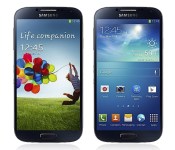
Samsung confirms Android 5.0 Lollipop update for Galaxy S4

Samsung has been teasing the Lollipop update for some of their most recent devices with videos and cryptic tweets, but today users of the Samsung Galaxy S4 can breath a sigh of release as the Korean manufacturer has promised an update for last year’s flagship. The international Exynos-powered variant (GT-I9500) will likely receive the update early next year with the carrier models to follow. Any Galaxy S4 users out there getting excited? Discuss in the comments below!
Source: SamMobile
Come comment on this article: Samsung confirms Android 5.0 Lollipop update for Galaxy S4
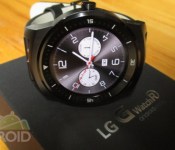
LG G Watch R Review: The best Android Wear smartwatch to date

While the Moto 360 is enjoying a considerable amount of hype due to its good looks and roundness, the G Watch R is looking to steal some thunder with its fully round display. It doesn’t have a flat tire, but there’s more to the story than just bring round. The G Watch R has a better processor, bigger battery, and a P-OLED display. On the downside, the display is a little smaller, the bezel is larger, and many would argue that it isn’t as good looking as the Moto 360.
Unless you’re in love with the square look, The G Watch R and the Moto 360 have to be at the top of your list. So how does the G Watch R measure up? Well hit the break and let’s get started.
Design
The G Watch R is the second Android Wear smartwatch from LG, with the G Watch being the first. Putting the round aspect aside, the G Watch R is miles ahead of the G Watch in terms of quality. The G Watch was cool about 5 months ago because it was one of the only Android Wear offerings, but after the Moto 360 and the G Watch R releases, it looks more like a toy.
While the G Watch is made of plastic, the G Watch R is made of stainless steel, with a plastic bottom. It just feels a lot more substantial on your wrist. Interestingly enough, it’s not any heavier, it’s actually lighter (62 grams vs 63 grams).
Probably the biggest bone of contention has to be the bezel with the G Watch R. The watch itself is nearly identical in size (the round part of the body) as the Moto 360, but the display sizes are different. The G Watch R comes in at 46.4 x 53.6 mm while the Moto 360 comes in at 46 x 46 mm. However the display on the G Watch R is only 1.3-inches vs 1.56-inches on the Moto 360. Why the difference? In Motorola’s case, they decided that a larger screen that isn’t completely round made more sense than the added bezel. LG felt that offering a fully round display made more sense. Motorola used the bottom part of the display for the components giving it a flat tire look. LG was able to utilize the extra bezel for their display components. Instead of leaving this extra bezel blank, they added a “tachymeter look” to it that many feel isn’t classy. I put that in quotes since it’s not a true tachymeter in that you can’t rotate it. Some people will argue that the flat tire look of the 360 is ugly, and others will say the fake tachymeter bezel of the G Watch R is equally ugly. I never had an issue with the flat tire look of the 360, and I don’t necessarily feel the fully round display is the bomb either. As I said in my opening, there’s a lot more to these watches than just being round or roundish.
You might have noticed that the G Watch R’s dimensions aren’t fully round like the Moto 360. That’s because it has a more traditional look in that it extends at the top and bottom for the watch bands connectors. The Moto 360 has the watch band connectors inside the base of the watch itself.
Speaking of watch bands, the included band is made of leather, but it doesn’t feel as soft as the Moto 360. It’s actually so rigid out of the box, you will wonder if it’s really leather. After a week or so, it does soften up though.


If the included band doesn’t suit your fancy, you will be able to swap it out with any other 22 mm watch band. That’s the same size for all Android Wear smartwatches, including the Moto 360. However, you might have more choices with the G Watch R since it’s more of a traditional fit. With the connectors inside the base of the Moto 360, many watch bands won’t fit correctly.
The included charging pad is similar to what comes with the G Watch, except it’s round. It’s magnetic so it “sticks” to the bottom of the watch, and it has a micro USB port for power. It certainly isn’t as elegant as the Moto 360′s wireless dock that becomes a nightstand clock, but you still have to bring either one with you when you travel. The one issue with the G Watch R’s dock is that it’s not really suited for when you are sporting a watch band without a buckle. There is no way for it to lay flat on your desk or nightstand. However, since it’s magnetic, it can certainly sit on its side.


Unlike the G Watch, the G Watch R sports a heart rate sensor at the bottom, but it does sport the same pogo pins that connect to the charging plate. It also has a button on the right side that looks like a traditional winder. It serves as a way to wake or turn off the display as well as provide quicker access to the settings (push and hold). The Moto 360′s button functions the same way, but it’s a bigger button on the G Watch R. Because of that, I find the watch going into the Settings on it’s own when my wrist is bent up towards it. An example would be doing push ups, which causes the top of my wrist to hit the button just enough. Not a big deal, but something worth noting.


The G Watch R comes in at 11.1 mm so it’s slightly thinner than the Moto 360, which is 11.5 mm.
The design and looks of the G Watch R will to come down to personal preference. I will say that I prefer the look of the Moto 360, but the G Watch R is no slouch. I think one of the reasons I like the Moto 360 better is the choice of silver as an option. The G Watch is only available in black, and I would ike to see it in silver. In fact, I would love to see it in some sort of two tone like the bezel in silver and the base in black.
Styling is only one piece of the puzzle, so let’s move on.
Hardware
The G Watch R features a 1.3-inch P-OLED 320 x 320 display at 348 ppi, a 1.2 GHz quad-core Snapdragon 400, 500 MB of RAM, 4 GB of internal storage, accelerometer, digital compass, gyroscope, heart rate sensor, IP67 rating for water and dust, and 410 mAh battery.
Performance
The G Watch R sports the Snapdragon 400, which is a quad-core that is probably tuned down to one-core. It’s very snappy with very little to non-existent lag, as well as great responsiveness to touch. That’s all you can really ask for. It’s not like you’re going to be playing Dead Trigger on this thing. The Moto 360, on the other hand, sports an OMAP processor, which is as ancient as it gets. After a few updates, the Moto 360 is running nearly as smooth, but one has to question the longevity of such an out-of-date processor.
The display is P-OLED, which is probably the best display we’ve seen on an Android Wear smartwatch. It sports 6 levels of brightness, but it doesn’t have an ambient sensor like the Moto 360. However, you can pretty much set it at 3 or 4, and never have to change it. The G Watch R’s display is slightly better than the Moto 360 in that the colors pop a lot more with deeper blacks. The display also performs very well in sunlight. If you’re at the beach on a very bright day, you might have to turn the brightness up to a level of 6 though.
The area where the G Watch R totally outshines the Moto 360 is the Always-On display. With most Android Wear watches, you can set it to show your watch face at all times in a dimmed state. The Moto 360 offers something similar, but they call it an Ambient Screen. The difference is that the display doesn’t stay on all the time. Not only does the G Watch R display stay on all the time, but it’s also a lot brighter. The Moto 360′s Ambient Screen is very dim in order to conserve battery. As you will see in the battery section, the G Watch R doesn’t need to play games because battery isn’t an issue. Now one could argue that the G Watch R’s Always-On display is actually too bright, but I would rather have it than not. If you were to set the main display at a brightness level of 1, you will have a hard time telling the difference between the Always-On and Active display. You will most likely need to turn it off when in darker environments so that you don’t annoy others. What we need is the ability to control the brightness of the Always-on display, and I am sure that will come soon.
I have had a few discussions about the Always-On display with others on Google+. Many Moto 360 owners feel that it’s unnecessary, but what I have found is that the majority of people that feel that way, never owned a smartwatch before. I have been using a smartwatch for the past few years starting with the WiMM One. One of the coolest aspects of smartwatches is customization as in watch faces. You want to see your watch face all time. I can’t stand looking at a “black screen of death” as I call it on the Moto 360. The bottom line is that once you have it, you won’t want to go back to the black screen.
Battery
The G Watch performed very well with battery life so we expected nothing less from the G Watch R. With the Always-On display enabled and using third party watch faces like Facer, it easily lasted 24 hours. Not into the Always-On display? Then you can expect to get about 2 days when it’s disabled. The bottom line is that I have never felt like I was running out of juice. I run the Always-On display and always have at least 35% to 45% battery life left when I put it on the charger at bedtime. The Moto 360 does perform better after updates, but you still can’t use the Ambient Screen and get through an entire day. However, since the Ambient Screen is useless, getting through a day isn’t an issue when it’s disabled. Still, the G Watch R performs better since it can run 24 hours with the display on all the time.
Software
There isn’t a whole lot to say about the software since it’s Android Wear and LG doesn’t offer anything additional. I did get the 4.4W.2 update within minutes of turning the watch on, so I can’t say if it made an impact on performance. What I will say is that the best feature of the update is the ability to hide notification cards from the watch face in both Always-On and waked modes.
Also with the update is the ability to transfer music to your watch giving you the ability to leave your phone at home if you’re going for a jog. You can now connect your Android Wear watch to a Bluetooth headset and listen to the music that is on the watch. There is also a new actionable menu for all music apps (streaming from the phone as well), which gives you ability to skip tracks forward or backwards and adjust the volume.
It should be noted that all of these features are available with all Android Wear watches updated to 4.4W.2.
Closing
The G Watch R trumps the Moto 360 in just about every category. It has a better processor, better display, and a bigger battery. It also sports a proper “Always-On” display, although a little too bright at times. The Moto 360 looks better, but it has an ancient processor and its battery life is questionable. Probably the biggest factor for me is the “Always-On” display. I have no interest in spending close to $300 on a smartwatch and looking at a black screen all day. The better processor, display, and battery life is just icing on the cake. The only reason to buy the Moto 360 over the G Watch R is if you think it looks that much better. It does look better, but as I said before, it’s not like the G Watch R is a slouch. Whatever shortcomings it has in the looks department, it more than makes up for it in every other category.
Pricing for the U.S. hasn’t been announced at the time of this review, but the G Watch R could cost as much as $50 more than the Moto 360. Some people might balk at that, but if you think about it, it should cost more since it has better components.
Both are great watches, but at this point in the game, the G Watch R is the best Android Watch available.
Come comment on this article: LG G Watch R Review: The best Android Wear smartwatch to date
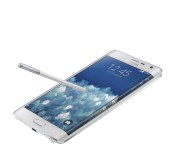
AT&T to have the Note Edge on Nov. 7

AT&T announced earlier this morning that the cousin to the Note 4, the Note Edge, will be available in select retail stores starting Tuesday, Nov. 7. While Samsung is only going to sell a select few Edges, those on AT&T will be happy to know that they’re some of those lucky enough to purchase the concept device.
Like the Note 4, the Edge boasts a QHD SAMOLED that wraps around the edge of the right side of the screen. That edge allows users to view notifications and clears up screen real estate by allowing uses to move their favorite apps to the edge. However, if you’re wanting to purchase the Edge, you’re going to have to pay an even prettier penny than you do with the Note 4.
The Note Edge is a whopping $399 with a two-year agreement or $39.42 and $47.30 on AT&T Next 18 or 12 respectively. This makes the Edge $100 more than the Note 4 on the same network. Of course that should come as no surprise given that it’s more expensive in other markets as well. If contracts or monthly installments aren’t your thing, you can get the Edge for $945.99. Mobile Senior VP Jeff Bradley had this to say about the Edge.
“The Galaxy Note Edge pushes innovation with a second curved screen on the edge which is highly functional, making it a great smartphone for consumers and the perfect addition to AT&T’s leading device portfolio. The customizable edge display provides you easy access to your news, notifications and favorite apps, with the ability to continue your activities on your main screen.”
AT&T isn’t the only one with Edge news. Sprint tells us that with Easy Pay, Well-qualified buyers can purchase the Note Edge with $0 down (plus tax) for 24-monthly payments of $35. But if you have deep pockets or an extra organ to sell on the black market, and you’re on AT&T, you’re eight days away from getting the Note Edge on AT&T.
source: AT&T
Come comment on this article: AT&T to have the Note Edge on Nov. 7

‘Call of Duty Advanced Warfare’: The Joystiq Review

You get just a novel snippet of peace in Call of Duty: Advanced Warfare. In this shooter’s future, technology has trumped terrorism, rooted out the last evil masterminds and flexed its bionic muscles in total defiance of lead-footed politicians who’d rather talk than get things done. “The world is running out of bad guys,” your partner says, hopeful but tragically unaware that he’s basically describing a video game glitch. Call of Duty never runs out of bad guys.
This one gets points for honesty, though, in that there is no pretentious cover-up of why the good guys beat the bad guys (or why the plot finds them easily interchangeable). In Call of Duty: Advanced Warfare, you win because you have better guns, stronger sights, super abilities and superior movement. Whether it’s in the rich and varied multiplayer mode, or the frantic, thrill-a-minute single-player campaign, you’re constantly relying on cool weapons and combat data to make taking lives easier. Advanced Warfare front-loads the benefits of power in a franchise that has always made technology the exalted, almost fetishized solution to every problem. And you know what? It’s more fun when it admits as much.
Click here for more
Filed under: Gaming, Software, HD, Sony, Microsoft
Source: Joystiq

Taylor Swift shakes off Spotify, pulls entire catalog

Just as 1989 looks set to become the first platinum album of the year, it looks as though the world’s biggest pop star and its biggest streaming service have broken up: Taylor Swift’s entire back catalog has disappeared from Spotify. Although neither Swift nor her label have acknowledged the move, Spotify has posted an impassioned, pun-filled appeal on its official blog requesting Swift returns her music to the service.
Swift’s latest album, 1989, has been absent from Spotify since day one. The young singer-songwriter is a staunch proponent of the album as a medium: earlier this year she penned an op-ed for The Wall Street Journal, saying that “piracy, file sharing and streaming have shrunk the numbers of paid album sales drastically… It’s my opinion that music should not be free, and my prediction is that individual artists and their labels will someday decide what an album’s price point is.” The op-ed was controversial, to say the least, with publications like The Washington Post and Vox taking time out from their busy schedules to completely tear it apart. Nonetheless, Swift’s position as one of the most popular artists around has ensured that her album sales remain astronomically high.
Swift isn’t the first artist to fall out of love with streaming services, of course. Radiohead frontman Thom Yorke withdrew his solo tracks from Spotify last year claiming that artists do not receive a large enough cut of revenues. Spotify, for its part, says it pays “nearly 70 percent” of its revenue “back to the music community.” Strangely, Swift’s backcatalog is still available on other streaming services, including Rdio, Pandora and Deezer, but until her label comments on her music’s departure from Spotify, it’s unclear whether the pair are ever getting back together.
[Image credit: Taylor Swift / Instagram]
Source: Spotify Blog
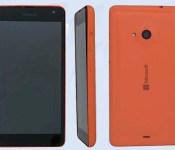
This is what Microsoft’s first Nokia-less Lumia looks like

If we’re honest, Microsoft’s RM-1090 doesn’t look like a device that’s destined to pop up on future trivia quizzes. Yet, when you’re asked “Which smartphone was the first to carry Microsoft’s branding?” it’s this slab that you’ll have to remember. The dual-SIM handset has popped up at both the FCC and its Chinese equivalent, packing a 5-inch qHD display and 3G-only radios, so it’s clearly a low-budget device. Still, the vertical stripe running down the back is just as we’d expected, although it’s still surprising to see the Microsoft logo beneath the earpiece instead of good ol’ Nokia. Since the handset has now popped up at the regulators, we can expect it to hit stores sooner rather than later, if you’re looking for a piece of technology history, at least.
Filed under: Cellphones, Mobile, Microsoft, Nokia
Via: Engadget Chinese
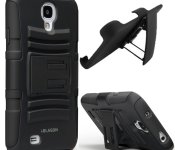
Accessory of the Day: i-Blason dual layer Galaxy S4 case, $12.99

Looking for heavy-duty protection for your Galaxy S4 but don’t want to drop over 50 bucks for comparable cases? This beauty from i-Blason combines a hard shell with an absorbing silicone sleeve and tops it off with a locking swivel belt clip for only $12.99 (Prime eligible).
Join Prime and get this deal with FREE two-day shipping!
Also worth checking out:
- Samsung Galaxy SIII [White] (Unlocked) – $157.47
- Motorola Moto G [Black] (Unlocked) – $199.99
- Western Digital 1TB USB 3.0 Hard Drive – $59.99
The post Accessory of the Day: i-Blason dual layer Galaxy S4 case, $12.99 appeared first on AndroidGuys.
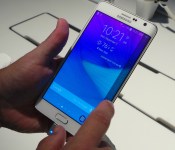
Samsung Galaxy Note Edge due in U.S. November 14

Samsung on Monday announced the upcoming availability of the Galaxy Note Edge. As the first device of its kind, it will be offered with the big five carriers: Verizon, AT&T, Sprint, T-Mobile, and U.S. Cellular. Pricing will be shared by the various wireless providers in short time.
Powered by Android 4.4 KitKat, the Note Edge features a 5.6-inch Quad HD Super AMOLED display that bleeds over the right hand edge. Internally, the phone packs a 2.7GHz quad-core processor, 16-megapixel rear camera with OIS, 32GB internal storage, and 3GB RAM. Toss in a host of Samsung apps and services, a variety of sensors, and some developer-friendly API’s, and the Galaxy Note Edge has the makings of an ongoing series.
Look for the Galaxy Note Edge in Charcoal Black and Frost White at carriers, retailers, and other outlets.
Pricing for various network operators breaks down as so:
- Sprint: $0 down (plus tax) and 24 monthly payments of $35 (SRP: $840; excluding taxes; service plan required).
The post Samsung Galaxy Note Edge due in U.S. November 14 appeared first on AndroidGuys.
Samsung Galaxy S6 has ‘Project Zero’ code name, report says

With the year winding down and the Galaxy Note 4 and Galaxy Note Edge technically “behind” us, it’s time to look ahead. Yes indeed, we’re ready to start tracking rumors for the Samsung Galaxy S5 successor. Presumably named the Galaxy S6, it’s likely six months away.
According to SamMobile, Samsung has adopted quite a unique code name for the upcoming prodcut. Allegedly, the S6 will operate under the code name of Project Zero. Interesting, sure, but don’t know what it implies. Our gut says it’s a “let’s start all over” mentality that could see them pulling out all the stops.
With Samsung’s numbers and luster dipping a bit over the last few years we’re interested in seeing them start anew.
The post Samsung Galaxy S6 has ‘Project Zero’ code name, report says appeared first on AndroidGuys.
 AIVAnet