



Facebook wants the DEA to promise that it won’t create fake accounts

Remember how the DEA got caught impersonating a woman on Facebook in an attempt to catch criminals who contacted her? Yeah, Facebook isn’t at all pleased. It just sent a letter asking the anti-drug agency to promise that it won’t create fake accounts or otherwise stomp all over the social network’s terms of service. As the site argues, the DEA’s moves “threaten the integrity” of its user base — the point of Facebook’s real identity policy is to foster trust, and sting operations violate that trust. Law enforcement isn’t above this rule, the company says. It’s not certain if the letter will have any effect; the Justice Department tells BuzzFeed News that it doesn’t believe this trickery happens frequently. Whether or not that’s true, it’s safe to say that Mark Zuckerberg and crew have set some firm boundaries for future cases.
[Image credit: Tim Sloan/AFP/Getty Images]
Filed under: Internet, Facebook
Via: BuzzFeed News
Source: Associated Press, DocumentCloud

India gets the HTC One (M8 Eye), Desire Eye, RE Camera, and a few more devices

The latest round of devices from HTC have all made their way to a new region. The One (M8) Eye, Desire Eye, and RE Camera are all available in India. The price for the One (M8) Eye and RE Camera converts to about $634 and $162, respectively. Pricing for the Desire Eye has yet to be announced.
Hit the break for more.
In addition the the Eye devices, India is getting more handsets that belong to the Desire line. The Desire 820, 820q, and Desire 516C are all heading to India as well.
The Desire 820 and Desire 820q are pretty much the same device except for the processors used. Both have 5.5-inch displays with 720p resolution, 13/8MP cameras, and 2600mAh batteries. The Desire 820 has a Snapdragon 615 proccessor with 2GB of RAM. The Desire 820q, though, has the Snapdragon 410 with 1GB of RAM based on 64-bit architecture.
Finally, the Desire 516C is a low-end device with a 5-inch display with qHD resolution. Inside is a Snapdragon 200 paired with 1GB of RAM. Internal storage is 4GB with a microSD card slot. The front camera is VGA and the back is 5MP. The battery is 1950mAh and the handset has dual-SIM support.
Via: GSMArena
Come comment on this article: India gets the HTC One (M8 Eye), Desire Eye, RE Camera, and a few more devices

The Nexus 6 is on the Play Store now, but you can only look and only if you’re in the U.S.
 Even if you’ve only been half following Android news, you will know that the biggest news of the year so far has been the announcement of the Nexus 6, Nexus 9, Nexus Player and Android Lollipop. While many of those things are already available for preorder or for preview, the Nexus 6 is still waiting for its “late October” preorder window to open. Still, if you’re a glutton for punishment, and you live in the U.S., you can take a look at the Play Store now and see the Nexus 6 product page already sitting there, teasing you.
As expected, the 32GB version will set you back $649 USD and bumping it up to 64GB will add an additional $50 to make it $699. As we mentioned above, the page is only available to see on the U.S. Play Store, and if the Google support page is anything to go by, the preorders will likely be restricted to the U.S. whenever they open. This is likely so they can get the supply logistics right before expanding to other countries, like what was done for the Nexus 5, but that still doesn’t stop a tear coming to my Australian eye and presumably many of yours too. Hopefully though, it won’t be more than a few weeks wait, and we’ll let you know as soon as that becomes possible.
Source: Google Play Store via Android Police
//<![CDATA[
ord = window.ord || Math.floor(Math.random()*1E16);
document.write('‘);
//]]>
The post The Nexus 6 is on the Play Store now, but you can only look and only if you’re in the U.S. appeared first on AndroidSPIN.

Disney rendered its new animated film on a 55,000-core supercomputer

Disney’s upcoming animated film Big Hero 6, about a boy and his soft robot (and a gang of super-powered friends), is perhaps the largest big-budget mash-up you’ll ever see. Every aspect of the film’s production represents a virtual collision of worlds. The story, something co-director Don Hall calls “one of the more obscure titles in the Marvel universe,” has been completely re-imagined for parent company Disney. Then, there’s the city of San Fransokyo it’s set in — an obvious marriage of two of the most tech-centric cities in the world. And, of course, there’s the real-world technology that not only takes center stage as the basis for characters in the film, but also powered the onscreen visuals. It’s undoubtedly a herculean effort from Walt Disney Animation Studios, and one that’s likely to go unnoticed by audiences.
“We’ve said it many, many times. We made the movie on a beta renderer,” says Hank Driskill, technical supervisor for Big Hero 6. “It was very much in progress.” Driskill is referring to Hyperion, the software Disney created from the ground up to handle the film’s impressive lighting. It’s just one of about three dozen tools the studio used to bring the robotics-friendly world of San Fransokyo to life. Some, like the program Tonic originally created for Rapunzel’s hair in Tangled, are merely improved versions of software built for previous efforts, or “shows” as Disney calls them. Hyperion, however, represents the studio’s greatest and riskiest commitment to R&D in animation technology thus far. And its feasibility wasn’t always a sure thing, something Disney’s Chief Technology Officer Andy Hendrickson underscores when he says, “It’s the analog to building a car while you’re driving it.”
“We’ve said it many, many times. We made the movie on a beta renderer,” says Hank Driskill, technical supervisor for Big Hero 6.
For that reason, Hendrickson instructed his team to embark on two development paths for Big Hero 6: the experimental Hyperion and a Plan B that hinged on a commodity renderer. It took a team of about 10 people over two years to build Hyperion, during which time Driskill says resources were being spread thin: “We were running with a backup plan until around June of last year … [and] we realized we were spending too much energy keeping the backup plan viable. It was detracting in manpower … from pursuing the new idea as fully as we could. So we just said, ‘We’re gonna go for it.’ And we turned off the backup plan.”
Hyperion, as the global-illumination simulator is known, isn’t the kind of technology that would excite the average moviegoer. As Hendrickson explains, it handles incredibly complex calculations to account for how “light gets from its source to the camera as it’s bouncing and picking up colors and illuminating other things.” This software allowed animators to eschew the incredibly time-consuming manual effort to animate single-bounce, indirect lighting in favor of 10 to 20 bounces simulated by the software. It’s responsible for environmental effects — stuff most audiences might take for granted, like when they see Baymax, the soft, vinyl robot featured in the film, illuminated from behind. That seemingly mundane lighting trick is no small feat; it required the use of a 55,000-core supercomputer spread across four geographic locations.

Disney Animation CTO Andy Hendrickson demonstrates Hyperion’s real-world lighting simulation.
“This movie’s so complex that humans couldn’t actually handle the complexity. We have to come up with automated systems,” says Hendrickson. To manage that cluster and the 400,000-plus computations it processes per day (roughly about 1.1 million computational hours), his team created software called Coda, which treats the four render farms like a single supercomputer. If one or more of those thousands of jobs fails, Coda alerts the appropriate staffers via an iPhone app.
To put the enormity of this computational effort into perspective, Hendrickson says that Hyperion “could render Tangled from scratch every 10 days.”
If that doesn’t drive the power of Disney’s proprietary renderer home, then consider this: San Fransokyo contains around 83,000 buildings, 260,000 trees, 215,000 streetlights and 100,000 vehicles (plus thousands of crowd extras generated by a tool called Denizen). What’s more, all of the detail you see in the city is actually based off assessor data for lots and street layouts from the real San Francisco. As Visual Effects Supervisor Kyle Odermatt explains, animating a city that lively and massive simply would not have been possible with previous technology. “You couldn’t zoom all the way out [for a] wide shot down to just a single street level the way we’re able to,” he says.
“This movie’s so complex that humans couldn’t actually handle the complexity. We have to come up with automated systems,” says Hendrickson.
Beyond the supercomputer cluster and software tools devised to make the movie, Big Hero 6 leans heavily on cutting-edge technology for its visual majesty in one other way: its characters. Both Baymax, the aforementioned, lovable robot sidekick and the microbots, swarm-like mini-drones controlled by telepathy, are steeped in some very real scientific research. That decision to ground the world of Big Hero 6 in near-future technologies led Hall and co-director Chris Williams on research trips to MIT, Harvard and Carnegie Mellon in the US and even to Tokyo University in Japan.

A soft robotic arm developed by researchers at Carnegie Mellon University.
“You know, we try to look at, like, five to 10 years down the road at what was coming … It seems counterintuitive because in animation you can do anything, but it still has to be grounded in a believable world,” says Hall.
Indeed, there’s even a moment where supergenius lead character Hiro Hamada uses a 3D printer in his garage to create an outfit for Baymax. In discussing the scene, Roy Conli, the film’s producer, credits the “maker movement that’s going on right now.” He adds, “These kids are makers. So it’s a little bit the celebration of the nerd.”
To put the enormity of this computational effort into perspective, Hendrickson says that Hyperion “could render Tangled from scratch every 10 days.”
It was during a visit to Carnegie Mellon that Hall came across researcher Chris Atkeson, who’d been working in the field of inflatable, soft robotics; robots intended for the health care industry. Hall says Atkeson pleaded with him to “make a movie where the robot is not the villain.” But Atkeson didn’t have to do much convincing — Hall’s vision for Baymax meshed nicely with his research. He’d wanted a robot audiences hadn’t seen on screen before. Hall continues, “The minute I saw this [research], I knew that we had our huggable robot. I knew that we had found Baymax.”
The team also drew inspiration for Baymax from existing compassionate-care tech out of Japan. “They’re a little ahead of the curve,” Hall says. “I mean, [health care robots] are actually in practice in some of the hospitals in Japan. They’re not vinyl; they’re not Baymax. They’re plastic robotics.”

The high-tech city of San Fransokyo represents a mash-up of eastern and western culture.
Robotics research out of Carnegie Mellon also provided the basis for the unwitting pawns of the film: the Lego-like, mind-controlled microbots. Of course, the version we see in the film is a much more fantastical approach to the simple, water-walking bots Hall’s team glimpsed during their visit. That, coupled with a heavy dose of inspiration from swarm-drone tech, led to the insect-like creepiness of the microbots in the final film.
By design, the electromagnetic microbots move as if part of a chain: Each individual “link” travels from front to back to propel the swarm forward in a circuit-board-like pattern. On average, the visual effects team says there are about 20 million microbots onscreen in a given shot, and that level of complexity is where Hyperion once again comes crucially into play. Originally, however, the team didn’t think its full vision of the microbots would even be possible to render.
In a way, Big Hero 6 is a love letter to technology.
“We thought the technology would never actually be able to handle it happening in all of the shots,” explains Head of Effects Michael Kaschalk. “And to do that from shot to shot, that takes artists’ work to just be able to create the [lighting] cheat. But as Hyperion developed, and we actually built the system, we found that it was handling all of this data just fine. So we actually built the real thing.”

Hiro scans Baymax to create 3D-printed armor.
Though tech innovation clearly plays an important role in development at Disney Animation Studios, it’s not the sole guiding force for each film and, for that matter, neither is the story. The studio’s process is entirely collaborative. “We are looking for input from everybody that works here for storytelling … there’s no doubt that those ideas can rise up from anywhere to become a big piece or small piece of the story,” says Odermatt. There’s no one single source of motivation other than a love of research and functional design — key concepts imparted by Chief Creative Officer John Lasseter.
“The movie does celebrate science and technology in a way that we haven’t really done before.”
In a way, Big Hero 6 is a love letter to technology. It’s a fantasy film that gives audiences a knowing wink toward the robot-assisted near-future, as if to say, “This is exactly where you’re headed. And it’s coming soon.” Big Hero 6 also represents a perfect storm for Disney: The subject matter (makers and robotics) and setting (hyper-tech San Fransokyo) dovetailed with the economic feasibility of cutting-edge computational hardware (that massive render farm) and the development of advanced animation techniques (Hyperion). It’s a film for, by and from lovers of technology.
That Big Hero 6 has a technological heart and soul is not lost on Hall. In fact, he’s keenly aware of this. “The movie does celebrate science and technology in a way that we haven’t really done before.”
[Image credit: Walt Disney Animation; Carnegie Mellon University (soft robotic arm)]
Filed under: HD

RedShift electric motocross race bikes will be ready to roll in 2015

BRD Motorcycles originally opened pre-orders for the RedShift electric motorcycles back in 2011, and it’s almost time for them to hit the streets. A lot has changed since then, including the name of the company — now Alta Motors — and a recent $4.5 million investment round of investment. The company simply explains that it likes the new name better, but the changes we’re interested in have to do with those sweet plug-in bikes. We spoke to CEO / co-founder Marc Fenigstein as Alta showed off the 2015 production model RedShift MX and RedShift SM at the 2014 AIMExpo in Orlando, and he explained both bikes have undergone countless changes since they first debuted. The “race bike with lights” MX has a $14,995 price tag, while the road-going supermoto model is $15,495 and features a slightly higher 85mph top speed — check after the break for more details.
The proprietary lithium ion battery packs have been redesigned from scratch, shaving 15 lbs from the 85 lb original and getting shorter by 4 inches. Alta isn’t ready to share how it’s achieved this feat, but Fenigstein says its cells are, along with the ones Tesla Motors uses, the only ones he knows of in the industry that have thermal propagation resistance, aka fire resistance.The 5.2 kWh battery packs (good for about 50 miles on road or 2 hours riding offroad) are swappable, just in case you want to keep going without plugging in to a 110v jack.

Another major change is in the bike’s frame, where the front section has been redesigned to use a new casting design that’s 40 percent stronger and has more control over frame flexibility — without getting any heavier. It’s also switched to a liquid cooled 40hp, 11 lb, 13,750 RPM motor and ditched the radiator featured on prototype models. The bikes are on target to start shipping to dealers next year (no direct to consumer sales, BMW Motorcycles of SF will be among the first dealers), starting in California during Q2 before spreading to the rest of the US later in the year, and Europe in 2016. These electric bikes haven’t been homologated for major racing series like AMA or FIM yet, but the CEO says it’s in talks, and so far has seen a favorable reception at smaller regional racing events.
The final difference from 2011? Fenigstein tells us that after an initially cool response back then, riders have seen electric motorcycles from Zero, Brammo, and even OEMS like Harley-Davidson or KTM. Now there’s “nothing but applause” as they see these bikes are adding to the experience, not taking anything away. Anyone ready to slap down $15k and go from gas to this electric off-road riding next year?
Filed under: Transportation
Via: Autoblog Green
Source: Alta Motors
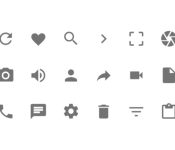
Google updates Material Design guidelines with new resources

With the Android 5.0 SDK being available, Google had to put finishing touches on its design. The Material Design guidelines have been updated with new resources. This what what helps developers ensure their applications follow what Google expects Android to look like today. The most notable inclusion for this update is the sticker sheet. They are available in a few formats so more developers can get a hold of and apply them with ease.
Here is everything included in the update to the Material Design guidelines:
- Updated sticker sheets in PSD, AI and Sketch formats
- A new icon library ZIP download
- Updated color swatch downloads
- Updated whiteframe downloads, including better baseline grid text alignment and other miscellaneous fixes
Source: Google Developers Blog
Come comment on this article: Google updates Material Design guidelines with new resources

Google freezes Nexus Player orders while it waits for US approval

If you were dead set on ordering the Nexus Player this weekend, you’re about to be disappointed. Google has quietly halted pre-orders of its Android TV media hub because it has “not been approved” by the FCC — the company would be in trouble with US regulators if it took your hard-earned dollars for something it can’t ship. There aren’t any hints as to when the Nexus Player will get the all-clear, but you can be sure that we’ll keep our eyes peeled. Hopefully, the approval arrives before November 3rd so that you can get that Android TV set-top box on time.
Filed under: Home Entertainment, Internet, HD, Google
Via: Android Police
Source: Google Play

Google releases video covering speech recognition and how we communicate with technology

Google has been a huge advocate of using speech to communicate with technology. The “Ok Google” command can be found across many platforms with a wealth of information ready to be found. For the technology to be of any use, though, it must understand the user. Google has released a video titled Behind the Mic: The Science of Talking with Computers. It runs for Google describes it as “a short film about speech recognition, language understanding, neural nets, and using our voices to communicate with the technology around us.” A few Google employees provide insights throughout the video.
Click here to view the embedded video.
Come comment on this article: Google releases video covering speech recognition and how we communicate with technology

Google’s Nexus Player delayed by FCC, out of stock in Google Play

Whilst the Nexus 9 went up for pre-order as expected, you may have noticed that the Nexus Player still isn’t available and is showing as out of stock on the Google Play Store.
Many thought the device simply sold out extremely quickly, but as it turns out the device has not been approved yet by the FCC and so is prohibited from being on sale.
This device has not been approved by the Federal Communications Commission.
It is not for sale until approval of the FCC has been obtained.
There’s no indication yet as to when the Nexus Player will be back on sale again, but what this space.
 |
The post Google’s Nexus Player delayed by FCC, out of stock in Google Play appeared first on AndroidGuys.

Download all the Android Lollipop (5.0) Google App APKs [Launcher, Keyboard, Wallpapers]

With material design upon us in the form of Android Lollipop, version 5.0, we can now enjoy a whole bunch of updated apps that utilise the new design.
However, it may be that your carrier or specific device won’t see Android Lollipop for a while, so here is a compiled list of the Launcher, Keyboard, Wallpapers, Fonts, and Boot Animations for you to sideload onto your device. Enjoy!
Google Now Launcher
-> Download
Wallpapers
-> Download
Google Keyboard
-> Download
(Unnistall previous Google Keyboard App is recommended)
Google Play Store
-> Download
Google Play Services
-> Download
Fonts
-> Download
Bootanimation (Exprimental)
-> Download
Media Audio
-> Download
[Via: XDA]
|
The post Download all the Android Lollipop (5.0) Google App APKs [Launcher, Keyboard, Wallpapers] appeared first on AndroidGuys.
 AIVAnet