


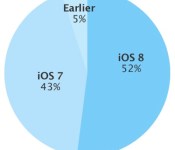
iOS 8 Now Installed on Over Half of Active iOS Devices
After five and a half weeks of availability, Apple’s iOS 8 operating system is now installed on 52 percent of iOS devices, according to new numbers posted on Apple’s App Store support page for developers.
iOS 8’s installation numbers have increased approximately four percent over the course of the two weeks, which means adoption numbers are on the rise after several weeks of stagnation. During Apple’s October 16 iPad-centric event, Apple CEO Tim Cook said that iOS 8 was installed on 48 percent of devices as of October 13, and before that, the OS was installed on 46 percent of devices on September 21.

The jump in iOS 8 installation numbers follows the October 20 release of iOS 8.1, which brought several new features that undoubtedly enticed iOS users to upgrade, including Apple Pay support, SMS Forwarding, Instant Hotspot, iCloud Photo Library beta access, and the return of the Camera Roll.
iOS 8.1 also addressed several notable bugs that had been present in the operating system for several weeks and that were the source of several user complaints about iOS 8. The update fixed Wi-Fi connection issues, Bluetooth problems, screen rotation bugs, and more.
Apple’s own iOS 8 adoption estimates are based on App Store usage and are mirrored closely by data from MixPanel, which puts iOS 8 adoption at just over 54 percent. MixPanel’s numbers suggest installation rates have been trending upwards since the release of iOS 8.1.

iOS 8’s release was plagued with a number of early bugs that may have scared users away from updating. Ahead of launch, all HealthKit-enabled apps were pulled from the App Store due to a major HealthKit bug, and the fix for that issue, iOS 8.0.1, brought its own bugs, disabling cellular service and Touch ID for thousands of iPhone 6 and 6 Plus users.
iOS 8.0.2 fixed the problems introduced with iOS 8.0.1 and brought several other bug fixes, and with iOS 8.1 fixing even more issues with iOS 8, the operating system is far more stable now than it was in the days following its release.

Hulu adds old episodes from Comedy Central, Nickelodeon and more

If you’re like me, you regularly enjoy catching up on favorites from Comedy Central via Hulu. But what about the older stuff? Well, after extending its partnership with Viacom, the streaming service is adding a lot more content for your viewing pleasure. Shows from Nickelodeon will be available for the first time — including popular items like Hey Arnold! and The Ren & Stimpy Show. The library of previous seasons will benefit as well, with a backlog of Key & Peele, Tosh.0, Mob Wives and more being added “over the next few weeks.” Of course, current episodes will continue to be a few clicks away, keeping you up to date on The Daily Show and others.
Filed under: Home Entertainment, Internet, HD
Source: Hulu

Unmanned Orbital Sciences Antares rocket explodes on liftoff

The Orbital Sciences Antares rocket attempted to take off this evening (yesterday’s attempt was scrubbed due to a boat that wandered into a restricted area), but it exploded just six seconds after launching. In a tweet Orbital Sciences confirmed a “vehicle anomaly”, and NASA says the company is evaluating the mission. There was no crew on board as it was intended to be Orbital’s third unmanned resupply mission for the ISS, carrying some 5,000 lbs of food, supplies and science experiments, like the Radiometer Atmospheric CubeSat Experiment (RACE). Orbital Sciences is the second private company — after SpaceX — that runs missions to the ISS, and its Cygnus spacecraft made the first successful delivery about a year ago. NASA’s live stream from the launch pad is embedded after the break, as well as a video replay of the failed launch.
Developing…
The team on the ground has confirmed there are no injuries, although because of “classified crypto equipment” onboard, it is in the process of securing the surrounding area. It’s not clear what caused the explosive failure, but some have already pointed out that Orbital is using AeroJet Rocketdyne AJ-26 engines for its first stage. According to Spaceflight Insider, those rockets were built over 40 years ago in Russia before being imported, refurbished and upgraded for use with Antares. One failed on the test stand earlier this year and another did the same in 2011, apparently due to “stress corrosion cracking.”
There has been a vehicle anomaly. We will update as soon as we are able.
– Orbital Sciences (@OrbitalSciences) October 28, 2014
NASA & @OrbitalSciences are gathering data on the failure of the CRS-3 mission 6 seconds after launch. Updates: http://t.co/6Bo6KBRWnG
– NASA (@NASA) October 28, 2014
Filed under: Science

Playdate: We’re livestreaming ‘Sunset Overdrive’ on Xbox One!

We’ve been singing Sunset Overdrive‘s praises for awhile now and it’s finally time that the rest of the world gets a chance to play it. The Xbox One exclusive isn’t just a killer game, but it’s one of the stand-out releases in this year’s crowded holiday launch season. What makes it so awesome? Well, for starters it places pure fun over everything else, and coming from the folks responsible for the excellent Ratchet and Clank series for PlayStation hardware it really shouldn’t be a surprise. Sunset City is where you’re free to dress up exactly how you want (my character is rocking an orange-and-blue pompadour and a pair of underwear with a stuffed kangaroo head dangling off the front; seriously) and shoot ridiculous weapons at former humans while grinding around on power-lines and bouncing off of cars. Never before have we seen vinyl records used to mow down cartoonish mutants, but hopefully it happens a lot more in the future.
Want a peek at all this madness? Of course you do, and that’s why you should come back here at 7 p.m. ET / 4 p.m. PT and witness it for yourself as we stream live from the Xbox One. But wait, there’s more! We also have Xbox One download codes to give away for Killer Instinct Season Two: Ultimate Edition, Minecraft, Project Spark and D4: Dark Dreams Don’t Die. All you need to do is tune in. If you like what you see, you could even sign up for our Sunset Overdrive Xbox One giveaway, too!
[For the record, I’m playing Sunset Overdrive on an Xbox One, using a retail copy (download) provided by Microsoft. I’m streaming the game over wired internet using the Xbox One Twitch app. All that to say, “This game will likely look prettier and run more smoothly on your home equipment. Streaming conditions vary!”]
Watch live video from Engadget on www.twitch.tv
Filed under: Gaming, Home Entertainment, HD, Microsoft
Source: Twitch

Nexus 6 vs Droid Turbo: Another civil war within Motorola

For weeks we heard rumors and picked up leaks about the DROID Turbo, and now it’s finally here. Like a souped up Moto X (2014), the DROID Turbo has a lot to offer. However, the new Nexus 6 also is a monster of a phone, both in specs and in size. Motorola has been hard at work this year developing its own flagship, and a flagship for Google, and a flagship for Verizon’s DROID line. So, which of these two newest ones are better? Let’s get down to brass tacks.
Motorola Nexus 6 vs Motorola DROID Turbo
Display
Lets start with what users first experience on a device, the display. Both of these phones have a QHD resolution (2560 x 1440), but the Nexus 6 has a 5.96″ screen while the DROID Turbo has a 5.2″ screen, making the pixel density of the former 493 ppi, and the latter a phenomenal 565 ppi, which Motorola says is the most pixel dense smartphone out there. Due to these screen sizes however, they will be very different experiences with the Nexus 6 being a “phablet” while the Droid Turbo might be more comfortable with its smaller screen size. This is a matter of preference though. So while both have very good screens, the DROID Turbo comes out on top with its denser screen.
Battery
The battery is another very interesting part of this spec war. The Nexus 6 has a fairly big 3,220 mAh battery, while the DROID Turbo has a massive 3,900 mAh battery, with Motorola claiming you’ll get 48 hours of mixed usage with this phone. Also, since the Nexus 6 has a larger screen, it will suck more battery. Both of these phones take advantage of Motorola’s will take advantage of the turbo charging technology, where 15 minutes of charging gives you 8 hours of usage. Because the DROID Turbo has a much bigger battery and smaller screen however, the DROID Turbo wins this battle.
Processing
When it comes to processing, these two devices are actually exactly the same. They both have a Qualcomm Snapdragon 805 processor clocked at 2.7 GHz, with an Adreno 420, and 3 GB of RAM. Where the Nexus 6 will have the advantage is in two ways: it will have vanilla Android, which is known to be snappier and more responsive, and will have the latest version of Android, 5.0 Lollipop, when it releases. The DROID Turbo will launch with Android 4.4.4, and likely will upgrade to Android 5 soon, but it still won’t have vanilla Android, with Verizon’s bloatware layered on top. How well they respond won’t be known until some interaction is given, however, so for now I’m giving this one a tie.
Camera
Here is another interesting battle. The Nexus 6 has a 13 MP rear camera with OIS, and the DROID Turbo has a 21 MP rear camera, while both have 2 MP front-facing shooters. The DROID Turbo camera has more pixels, but seemingly no mention of OIS. Also, the newest version of Android will give the camera capabilities a significant boost, allowing RAW formats. Again, the DROID Turbo will likely have Android 5.0 at some point, but won’t at first. These capabilities of Android 5.0 camera processing remains to be seen however, so I’ll give this round to the DROID Turbo.
Storage
What needs to be noted here is that there will be three different versions of the DROID Turbo. A Metallic Red, a metallic black, and a Black Ballistic Nylon. 32 GB will be available among each version, but only the Black Ballistic Nylon will have a 64 GB version. While the Nexus 6 has two colors (midnight blue, cloud white), there will be 32 GB and 64 GB available in both colors. Nevertheless, there are options for 32 GB and 64 GB in both models, so we have another tie.
Verizon’s latest DROID is a beast of a device, with a lot crammed into one package. Its worth mentioning that the DROID Turbo will have the latest Moto suite of services (Moto display, Moto Voice, etc.). However, the Nexus 6 will have Android Lollipop which has a bunch of new goodies, with its own version of Moto display and Moto Voice. The Nexus 6 will be available to all major carriers, while the DROID Turbo will be unique to Verizon. Also, we have yet to see if the Nexus 6′ size will be comfortable and likeable by people. All in all, I think this war goes to DROID Turbo. The collaboration of Motorola and Verizon is intense, and I can’t wait to hear how it runs.
Which do you think is the better device? Do you think the Nexus 6 deserves more recognition here?
The post Nexus 6 vs Droid Turbo: Another civil war within Motorola appeared first on AndroidGuys.
Google files trademark application for “ARA”

A new trademark application with the U.S. Patent & Trademark Office was filed by Google to get protection for the ARA name for their forthcoming modular smartphone. Project ARA is Google’s project to produce a smartphone that has hot-swappable components that plug into a frame. This would allow users to upgrade certain components or add new features without having to purchase a whole new phone. We anticipate Google having a fully functional prototype available at the Ara Developer Conference coming up in December. This will be followed by an expected market launch in 2015.
The application for trademark protection is a strong indication that ARA is the name that Google will use to market the device when it is made available for the general public.
source: USPTO
via: phoneArena
Come comment on this article: Google files trademark application for “ARA”

Mobile pushes Facebook to even greater heights, expect more stand alone apps

…And Facebook’s march towards utter market dominance continues unabated. While Twitter enjoys plenty of success, and we’re sure someone out there still uses Google+, there’s no denying that the king of the social networking hill is Facebook. And during the third quarter of 2014 the company did nothing but extend that lead. In particular the number of mobile users continued to explode at an impressive rate. The average number of monthly mobile users in September was 1.12 billion. (To put that in perspective: Twitter announced just 284 million monthly users across all platforms.) That’s 29 percent more than last year. Most impressively many of those users check in every day. The average daily number of mobile users during the quarter was 703 million. And when you take the desktop into account, usage balloons to 864 million per day — or about 64 percent of its users.
Its no surprise with its continued growth that ad revenue has soared for the company. And that mobile ad dollars made up a majority of its income. A full 64 percent of the money coming into Facebook is from ads, and 66 percent of that ad revenue is from mobile. (You know, just in case you needed any more evidence that the future is on mobile.)
While Mark Zuckerberg spoke at length about how important WhatsApp and Oculus are to the future of the company, he declined to go into to much detail during his prepared statements. He did however provide an update on Instagram which has seen its audience grow by as much as 100 percent in certain markets over the last year as it continues its international expansion. The mobile photo-sharing network also has an impressive grip on the attention span of its users. The average member apparently spends 21 minutes per-day browsing the service. The move to bring ads to the platform hasn’t seemed to hurt usage yet.

There will be a lot of Marvel and DC Comics movies in the next few years

Earlier this month, Warner Bros. announced its roadmap for DC Comics movies through 2020, and today, Marvel Studios revealed its plans as well. Basically, if you’re into superhero/comic book movies, you’re set for the next seven years. Need a quick rundown of all that’s coming? No worries, we’ve got you covered. All of the box office favorites are on the list, including Avengers and Guardians of the Galaxy 2, alongside the debuts of Wonder Woman, Captain Marvel, Doctor Strange, Black Panther and more. In addition to the officially outed titles, DC Comics says that standalone Batman and Superman films will also be released during this timeframe. For the list of upcoming films, jump on past the break.
Of course, in addition to the titles for the big screen, DC Comics has the Arrow, Constantine, Gotham and The Flash TV series with Marvel’s Agents of S.H.I.E.L.D. in its second season on ABC. And the latter outfit has a deal in place with Netflix for “multiple original series” that will chronicle the likes of Daredevil, Jessica Jones, Iron Fist and Luke Cage starting in 2015.
2015:
- Avengers: Age of Ultron (May 1st – Marvel)
- Ant-Man (July 17th – Marvel – starring Paul Rudd)
2016:
- Batman vs. Superman: Dawn of Justice (March 25th – DC Comics – starring Ben Affleck, Henry Cavill, Amy Adams and directed by Zack Snyder)
- Captain America: Civil War (May 6th – Marvel – co-starring Robert Downey, Jr. as Iron Man and Chadwick Boseman as Black Panther)
- Suicide Squad (August 5th – DC Comics)
- Doctor Strange (November 4th – Marvel – rumored to star Benedict Cumberbatch)
2017:
- Guardians of the Galaxy 2 (May 5th – Marvel)
- Wonder Woman (June 23rd – DC Comics – starring Gal Gadot of Fast & Furious series)
- Thor: Ragnarok (July 28th – Marvel)
- Black Panther (November 3rd – Marvel – starring Chadwick Boseman of 42)
- Justice League (November 17th – DC Comics – starring Ben Affleck, Henry Cavill, Amy Adams and directed by Zack Snyder)
2018:
- The Flash (March 23rd – DC Comics)
- Avengers: Infinity War, Part I (May 4th – Marvel)
- Captain Marvel (July 6th – Marvel)
- Aquaman (July 27th – DC Comics – starring Jason Momoa (Khal Drogo) of Game of Thrones)
- Inhumans (November 2nd – Marvel)
2019:
- Shazam (April 5th – DC Comics)
- Avengers: Infinity War, Part II (May 3rd – Marvel)
- Justice League 2 (June 14th – DC Comics)
2020:
- Cyborg (April 3rd – DC Comics – starring Ray Fisher)
- Green Lantern (June 19th – DC Comics)
Filed under: Home Entertainment, HD
Source: Warner Bros., Marvel
YouTube wants Android apps to use its live-streaming tool

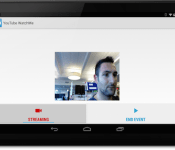
It may seem as if YouTube Live is still a work in progress for Google, and in many ways that continues to be the case. That’s far from being a bad thing, though. Over the course of the past couple of years, YouTube’s live-streaming feature has become available to an increasing number of people on both ends of the camera, by way of different devices and platforms. Soon, with a new open-source project called YouTube WatchMe for Android, the video service is hoping that developers will start integrating its real-time broadcasting capabilities to their apps. Google says the tool is only an experiment right now, but it wouldn’t surprise us to see it become more than that in the not-so-distant future. If you’re interested in digging a little deeper, or contributing your wisdom to the project, be sure to take a gander at the GitHub repository right here.

Filed under: Misc, Home Entertainment, Software, HD, Mobile, Google
Via: TechCrunch
Source: YouTube

Google releases Google Fit SDK for developers

As we reported earlier today, the long-awaited Google Fit app is now available in the Play Store, and as with most Google Services, the SDK is now available to download for developers. Any developer interested can grab the APIs at the source link and start building apps that take full advantage of the exciting new platform. The SDK allows for full access to all information stored inside Google Fit, opening the door for a plethora of fitness based apps.
Google has already partnered up with multiple companies to bring you applications and services that take full advantage of Google’s new service including: Nike+ Running, Withings HealthMate, Runkeeper, Runtastic, Noom Coach, Strava, MapMyRun, LynxFit, LifeSum, FatSecret, and Azumio. Quite a list, and with the new APIs available to developers, the amount of available Google Fit-powered apps will only grow. For those who’ve tried it, let us know what you think of Google’s new service in the comments below.
Source: Google Developers
Come comment on this article: Google releases Google Fit SDK for developers
 AIVAnet