



OnePlus giving away bamboo StyleSwap covers after discontinuing them

Remember the StyleSwap covers that were discontinued last month? They are back… sort of. Apparently, the demand for them was so high that OnePlus feels the need to give away the hundreds of units that did maintain good quality. Putting them up for sale would be unfair and a bidding war is not necessary; therefore, OnePlus’ only option is a giveaway.
OnePlus asks that you complete a form to be entered for a chance to win a bamboo StyleSwap cover. The form is available today and entries will be denied on November 4. Winners will then be notified by OnePlus within the next day of the contest’s end.
Source: OnePlus [Giveaway Form Link]
Come comment on this article: OnePlus giving away bamboo StyleSwap covers after discontinuing them

Does wearing a Moto 360 give you a better chance at getting laid than other smartwatches?

Earlier today, Motorola CEO Rick Osterloh was interviewed at Code/Mobile by Walt Mossberg. The subject came up about the idea that wearing smartwatches (or any digital watch) guarantees you a life of celibacy. So Walt asked Rick if they considered that when designing the Moto 360. Rick had an interesting answer, of which you can see after the break.
http://player.theplatform.com/p/PhfuRC/vNP4WUiQeJFa/embed/select/AM_QnkAYlHTX
source: re/code
Come comment on this article: Does wearing a Moto 360 give you a better chance at getting laid than other smartwatches?

Whisper CEO denies Guardian allegations that it tracks users locations

While on stage at the WSJD Live conference, Whisper CEO Michael Heyward defended his company against the Guardian‘s recent allegations that the anonymous sharing app stores and tracks its users locations. He told Wall Street Journal reporter Evelyn Rusli that not only were all the paper’s accusations wrong and misleading, but that he would fire the employee who supposedly told the Guardian that it would follow a particular Whisper user, who happens to be a lobbyist, for life. The company has already suspended its editorial staff to conduct an internal investigation and find out just who this person is. “This does not reflect our values and what we’re all about,” he said.
Heyward further said that the Guardian, who was one of Whisper’s media partners, came into the Whisper’s office “under false pretenses” and “made a lot of technical inferences from non-technical people.” Particularly, he said that Whisper can’t track GPS locations, though he does admit to collecting IP addresses that it deletes after seven days. “We use them for community safety purposes,” he said, adding that the company’s privacy policy has not changed despite what the Guardian has reported.
As for the accusation that it shares certain Whisper posts with the US Department of Defense, Heyward said a lot of anonymous posts come from military personnel who exhibit post-traumatic stress disorder. The company then collected that data — which are all publicly posted anyway — and compiled them in a study that the company shared with the office of Veteran Affairs. “To take that and misconstrue that as sharing user data for surveillance… it’s just misleading,” said Heyward. Another case in which Whisper does share user posts is any time a minor is at risk. “We’ll always proactively alert child protective services,” said Heyward. Apparently Whisper does this about 20 times per week. It also does this if someone posts a suicidal note or is a danger to themselves and others.
As for whether Whisper would take legal action against the Guardian, Heyward wouldn’t give a concrete answer, but it did as if that was a strong possibility. “The way the Guardian mischaracterized and misled their readers was hugely responsible,” he said. “We have to focus on doing right for our users and our company. I don’t have anymore to add.”

The FBI faked a news website to catch a bomb threat suspect

The DEA isn’t the only US law enforcement agency using impersonation on the web to catch suspects, it seems. The American Civil Liberties Union’s Christopher Soghoian has noticed documents showing that the FBI created a fake, spyware-laden version of the Seattle Times‘ website to catch a teen bomb threat suspect in 2007. When the teen clicked the link to check out an equally fake Associated Press story, the hidden software installed itself and sent both the target computer’s location and its internet address to officers. As you might gather, both civil liberty advocates and media outlets are furious — the FBI effectively conducted a phishing attack, and neither the AP nor the Times appreciate having their names and likenesses used without permission.
The FBI is defending its use of the tactic. It claims that it only resorts to these fake sites in “very rare circumstances” where it’s likely to eliminate a threat, and it notes that the Times trickery ultimately led to a conviction after the culprit pled guilty. However, all it’s saying is that the ends justified the means. This isn’t really a defense of the act itself, which has its share of ethical and legal problems. For any civilian, running a phishing site would be a criminal offense; also, the warrant request only said that the FBI would install the software through “communication,” not that it would imitate others to achieve its goal. There aren’t any signs of an impending investigation into the case, but the revelation certainly won’t improve the FBI’s chances of getting mandatory backdoor access to Americans’ devices.
[Image credit: Stephen Chernin/Getty Images]
Filed under: Internet
Via: Seattle Times, Gizmodo
Source: EFF (PDF), Christopher Soghoian (Twitter)
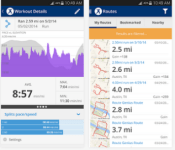
MapMyFitness gets Google Fit integration and an Activity Feed in update

We can expect a slew of fitness-related applications to receive updates in the coming weeks. Why? Because Google Fit is here. The activity tracking platform from Google collects data from outside apps and organizes it into a single profile. MapMyFitness has received an update today that includes this new Google Fit integration behind some other core changes. It has a new Activity Feed. This section takes what you and friends are doing and displays it for everyone to see. From there, you can compare yourself and see how far ahead (or even behind) you are. MapMyFitness also added Gear Tracker, a way for users to monitor their shoes purchased through Zappos.
Hit the break for download links.
Source: MapMyFitness
Come comment on this article: MapMyFitness gets Google Fit integration and an Activity Feed in update

Motorola releases several videos showing off the Droid Turbo’s best features
 The newly announced Droid Turbo has several features that are great selling points, but there’s no better way to convince yourself to buy a new phone than by seeing those features in action. Fortunately, Motorola has released a few videos showcasing just what their latest device can do, including the extremely powerful Snapdragon 805 processor, the 21 megapixel camera, the waterproof housing, and the battery life and quick charge features.
In case you’re not convinced, you can check out the videos below. Is anybody planning on picking up a Turbo on the 30th?
source: BGR
Click here to view the embedded video.
Click here to view the embedded video.
Click here to view the embedded video.
Click here to view the embedded video.
Click here to view the embedded video.
Come comment on this article: Motorola releases several videos showing off the Droid Turbo’s best features

Verizon’s changes to mobile web traffic limit your privacy

Do you work hard to maintain privacy on your smartphone through tools like Do Not Track? If you’re on Verizon, your efforts might not be doing much good. Researchers have discovered that the carrier has been modifying some of its cellular web traffic to insert a Unique Identifier Header (UIDH) that helps create profiles for targeted ads. You can opt out of the associated ad program to avoid the sales pitches, but that doesn’t turn the headers off — a less-than-scrupulous website could still build a unique profile of your activity, whether it’s for simple advertising purposes or customizing phishing attacks.
The tracking isn’t always active, and it doesn’t function when you’re using secure websites, surfing on WiFi or connecting through a virtual private network. As such, it’s not a perfect mirror of what you’re doing; you don’t have to worry that Verizon is aware of your preferred bank or webmail service. However, secure sites aren’t really the problem here. The greater concern is that there’s no easy way to avoid this unique web ID when you’re away from home, which is frequently the case when you’re on your phone. The odds aren’t that high that sites will knowingly abuse Verizon’s altered web traffic, but many would argue that it shouldn’t even be an option.
[Image credit: AP Photo/John Minchillo]
Filed under: Cellphones, Wireless, Internet, Mobile, Verizon
Source: Wired, Jacob Hoffman-Andrews (Twitter)

Engadget Daily: Verizon’s Droid Turbo, YouTube’s music subscription service and more!

What has a whopping battery, metallized glass-fiber backside and beautifully crisp Quad HD display? Verizon’s Droid Turbo, that’s what. Want more? Of course you do — read on for all our news highlights from the last 24 hours, including YouTube’s music subscription service, Google’s fitness app and the PlayStation 2.0 update.

Apple explains its busted iOS 8.0.1 update

Sure, Apple’s already fixed that buggy iOS 8.0.1 update that disconnected devices from their networks and just pretty much broke iPhones for a while. It’s even been a month since then, but you still can’t let it go until you get an explanation, huh? Well, friends, this is probably the closest thing you’ll ever get: apparently, there was nothing wrong with the update itself, and it was Apple’s distribution methods or how the update was “wrapped” that broke devices. At Recode’s Code/Mobile conference earlier, Apple product marketing executive Greg “Joz” Joswiak said the issue resulted from “the way the software was being sent over servers,” though he didn’t go into specifics. He also defended his company, claiming that mistakes are inevitable when you’re pushing software and that Apple always tries to fix them quickly. Since Joz dismissed questions on whether he thinks the company has bigger quality control issues, you’ll just have to speculate about that on your own.
Filed under: Cellphones, Tablets, Mobile, Apple
Source: Recode

Google+ Photos will Halloweenify uploads with spooky or fun looks

With Halloween coming up on Friday, Google wants to make sure you have a way to show some holiday spirit online. Through Google+ Photos, you can Halloweenify your photographs. There are options for “spooky” or “fun” looks. The image above is a sample of what Google can do with the Halloweenify feature. With group photos, it can add the effect to a maximum of four people.
Here is how you can do it:
- Go to photos.google.com
- Select a look
- Select your photo and upload it
Simple enough, right? Now go Halloweenify every selfie you have!
Via: +John Nack
Come comment on this article: Google+ Photos will Halloweenify uploads with spooky or fun looks
 AIVAnet