


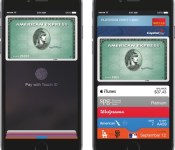
CVS and Rite Aid Officially Disable Apple Pay Support At Stores Nationwide
Last week, multiple reports indicated that pharmacy chains CVS and Rite Aid were disabling near field communications (NFC) payment terminals at some of their locations in order to stop the use of Apple Pay. Now, The New York Times reports that both drug chains have officially disabled Apple Pay from working at their stores nationwide.

A spokeswoman for Rite Aid said that the company “does not currently accept Apple Pay” and that the company was “still in the process of evaluating mobile payment options.” Representatives from CVS did not respond to interview requests from The New York Times. Apple declined to comment on the actions from both stores. However, chief emerging payments officer at MasterCard Ed McLaughlin said that “consumers should have the ability to pay any way they want” and that the company “looks forward to [CVS and Rite Aid] turning on the functionality back on in their stores.”
Many believe that Rite Aid’s and CVS’s moves to disable Apple Pay support is related to their participation in the Merchant Customer Exchange (MCX), which is a group consisting of other retailers like Walmart, Best Buy, and Gap. MCX is developing its own mobile payment system known as CurrentC, which will be available next year according to a claimed internal Rite Aid message.
Apple Pay launched last week and is accepted at over 200,000 locations in the U.S. Rite Aid and CVS competitor Walgreens has been one of the biggest supporters of Apple Pay, as the feature is available at many of its over 8,000 stores around the United States.
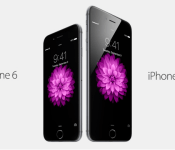
Pre-Orders for iPhone 6 and 6 Plus Top 100,000 in South Korea, Outpace Samsung Galaxy Note 4 [iOS Blog]
Pre-order estimates for Apple’s iPhone 6 and iPhone 6 Plus in South Korea have topped 100,000 in South Korea and have outpaced pre-orders made for the Samsung Galaxy Note 4 last month, reports The Wall Street Journal.

Pre-orders for both devices began last Friday for the country’s three biggest mobile carriers including SK Telecom, KT Corp and LG UPlus. KT Corp said that it received a combined total of 10,000 orders in one minute for both devices, and received 50,000 orders in thirty minutes. LG UPlus, which is controlled by LG Corporation and is selling the iPhone for the first time, said that it received 20,000 orders within 20 minutes. SK Telecom declined to give specific figures, but announced that the first and second batch of pre-orders were already booked by customers with a third round beginning this morning.
The report notes that there were 30,000 pre-orders for the Samsung Galaxy Note 4 before it launched in Korea last month. A spokesperson for LG UPlus shared a similar account, noting that pre-orders for the Galaxy Note 4 did not match the pace of pre-orders for the iPhone 6 and iPhone 6 Plus.
The iPhone 6 and iPhone 6 Plus will launch in South Korea and 22 other countries on October 31st. Apple also expects to launch in the iPhone in 115 countries by the end of the year, totaling to its fastest rollout ever.

FCC fines carriers $10 million for storing customer data in the open

The FCC usually frets over issues like fair network access and next-generation technology, but it’s now concerned about your privacy, too. The agency has just issued its first fines over data security, slapping phone carriers TerraCom and YourTel with a total of $10 million in penalties for storing their customer info in the clear. FCC officials claim that both of the budget-oriented providers stored addresses, Social Security numbers and other vital data not just online, but in a format that just about anyone could read. Moreover, they didn’t even notify all of their 305,000 combined customers after realizing what they’d done wrong — potentially, thieves could have abused this mistake before victims knew they were at risk.
These kinds of fines aren’t likely to be commonplace, but they could go a long way toward helping the FCC clean up its Lifeline program for low-income Americans. Regulators say they want carriers to foster a sense of trust in their subscribers, and that’s particularly important for customers who may not have the luxury of switching networks in protest. There’s no certainty that the fines will persuade other networks to lock down your info, but they might set an important precedent.
[Image credit: Getty Images/Flickr RF]
Filed under: Cellphones, Wireless, Mobile
Via: Network World
Source: FCC
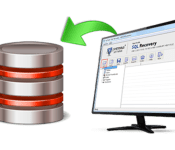
Product Review for SQL Recovery Software
 While transferring database to the SQL Server, I came across an error that took place at the time of attaching MDF files. The error message was categorized as ‘Error 5171’ that might have occurred due to large volume of file incorporated within database or the corruption in the master database file. After spending long hours, searching for the solution I came to know about this SQL Recovery software. Initially, I tried the demo version by downloading it from http://www.sqlrecoverytool.com/
Experience with Demo Version
The demo version displayed the components of the damaged database files within the panel of the tool. Subsequently, I noticed that the data that I deleted recently has also been listed in the panel. My prime requirement was to restore the database components, but the trial version did not allowed me to restore data on machine. Therefore, I decided to purchase its licensed copy as the overall experience with trial version was quite impressive.
Later on, I called upon the sales department and asked for the activation key. After making payment for the product the key was received within few hours.
Experience with Licensed Version
The licensed edition offered to recover data from corrupted MDF and NDF files. It helped me in removing the error 5171 and bringing the database to normal mode. Further, I would like to share my experience working with the tool; along with the features that it offered while recovering data.
The version and size of the product is 6.0 and 3.1 MB respectively. It is a Windows based tool that can be installed upon Windows 8.1 and all lower versions; and supports SQL Server 2012, 2008(R2), 2008, 2005 and 2000. The minimal hardware specifications for the smooth working of the software are: availability of 1 GB RAM and 2.4 GHz system processor. It requires only 5 MB of boot space on hard drive.
Since, the size of the software is very compact, so it does not affect the performance and functionality of other processes and does not make the system bulky.
Requirements of an Ideal User
SQL users are very specific about their requirements; some of these expectations are mentioned herein. As a single corrupted file (with even minor corruption) could bring the overall database to SUSPECT mode, so it is important to resolve the situation before it turns in to critical circumstances. The users expect the availability of these common features within the tool:
- Recovery of corrupted master database files (MDF).
- Recovery of data from corrupted NDF files.
- Recovery of deleted data from database files.
- Removal of errors that takes place due to corruption.
- Data recovery without affecting its original structure.
Analysis of Features against User Requirements
The SQL Recovery tool offers various features that fulfil user’s demands to a greater extent:
- It offers recovery of corrupted MDF files.
- Offers recovery of secondary DB files (NDF).
- Recovers all extractable as well as deleted data from DB files.
- Remove errors that take place due to damage issues.
- Creates new files without affecting the original one.
Additional Features: Apart from these, there are supplementary features offered by the tool:
- Dual Scan modes for recovery of data as per level of corruption.
- Quick Scan: Work towards minimal level corruption.
- Advance Scan: Recovers data from severe corruption issues.
- Generates scan report and provides the option to save report on local disk.
- Provides the option to either adding a single file or folder as well as the provision to remove the selected files.
- Auto detection of MDF file version.
- Auto detects the associated NDF file for selected MDF file.
- Save output into two different formats as per user command:
- SQL Server Database
- SQL Server Compatible SQL Scripts
- Export Data into two different ways:
- With only Schema
- With Schema and Data
- Display Export Report with following details:
- Path of the resultant file.
- Complete steps to restore database.
- Batch execution of files at single instance of time.
Related Information
- There is a provision to select among four different user licenses as per requirements:
- Personal license;
- Corporate license;
- Technician license;
- Enterprise license.
- All the above mentioned licenses are available in demo as well as full versions.
- Technical support for any product related query is available for 24 hours.
- Live video tutorial are available on its official website along with the step by step working guidelines.
Overall Product Analysis
The SQL Recovery software is a complete solution for recovery of MDF and NDF database files. Simple user interface along with trouble-free execution steps makes the tool uncomplicated for even first time users. The tool is well accomplished with all necessary features that deliver accurate output. According to me, the only feature that I found missing is that it does not support recovery of log files i.e. LDF files. Addition of this very requisite will help making tool an absolute database recovery package.

Graphene circuits double as high-tech temporary tattoos

Someday, you might be able to stick a temporary tattoo on your skin that’s wired to light up or act as a display — one that’s made out of hybrid graphene. If you regularly read Engadget, then you’re most likely familiar with graphene: it’s that ultra-thin miracle material companies and researchers are using to develop tough and flexible experimental devices these days. The hybrid graphene used to make these electronic tattoos, however, are lot more stretchable and transparent, so they continue to work even if you fold them or pull them taut. In addition to acting as a tattoo for purely aesthetic purposes, this material developed by Korean scientists from Ulsan National Institute of Science and Technology (UNIST), Korea Advanced Institute of Science and Technology (KAIST) and Electronics and Telecommunications Research Institute (ETRI) have other possible applications. It can also be used as a biosensor to monitor people’s health or to make flexible displays and circuits.
Filed under: Science
Via: Graphene Info
Source: Koreabizwire, Business Korea

App-controlled coffeemaker can automatically mix your perfect blend

You won’t even bother denying it: you’re somewhat of a coffee snob and have a particular bean-to-water ratio of choice. This new coffeemaker called Bruvelo promises to make it a lot faster to mix your perfect cup — you don’t even have to do anything other than to press a few buttons in an app. According to its Kickstarter page, Bruvelo can filter water, weigh and grind beans, dispense the right amount of water and ground coffee, as well as maintain the brew’s temperature at 199 degrees Fahrenheit. (Yes, you can use any bean you want — it’s not going to limit your choices like that one popular high-tech coffee machine.) You merely have to choose among the preconfigured “flavor profiles” (Delicate, Balanced or Robust) or program your own within the app: Bruvelo then receives your commands via WiFi and does the actual work for you. You can get this app-controlled coffeemaker by June 2015 at the earliest if you pledge $300 now, though its campaign must reach its $150,000 goal for production to begin.
Filed under: Household, Mobile
Source: Kickstarter, Bruvelo
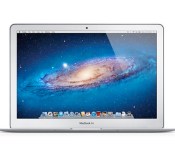
How would you change the 13-inch, mid-2013 MacBook Air?

Meet the new boss, broadly the same as the old boss. Except this variation of Apple’s thin-and-light mobile PC was packing Haswell, Intel’s power-sipping wonder chip, capable of giving the 2013 MBA its 12-plus-hour battery life and nippy speed. When we sat this down in front of Tim Stevens’ hands, his only grip was that the device was lacking a retina display, although we’re probably still a year or two away from that taking place. Still, we imagine plenty of you out there picked up one of these devices, so why not hop on the forum and tell us if you’d have taken a MacBook Air with a four-hour battery life in exchange for some pixel-dense goodness.
Source: Engadget Product Forums

Google is giving non-profits its latest satellite maps

Non-profit groups don’t often have the luxury of using satellite maps to gauge their progress clearing landmines or saving trees. Getting fresh imagery is typically expensive, if it’s an option at all. Google’s recent acquisition Skybox wants to fix that with Skybox for Good, a new program that gives non-profits up-to-date satellite photos to help track their work. It’s just in beta testing at this point, but a handful of partners are already using the data to see how they’re boosting education, protecting the environment and repopulating previously mine-laden areas. The icing on the cake? You can see these maps yourself — Google and Skybox are publishing all the images on Google Maps under a sharing-friendly Creative Commons license, so you’ll know exactly how these noble causes are faring.
Via: TechCrunch
Source: Skybox, Google Maps Engine

Austin’s airport uses WiFi to gauge how long you’ll wait in security lines

If you’re a frequent flyer, you’ve probably panicked after realizing that a long security line could make you miss your flight. You might not have reason to worry at Austin-Bergstrom International Airport, though, since the travel hub is now taking advantage of Passpoint roaming on Boingo’s WiFi networks to estimate security line wait times. The system works by detecting passengers’ WiFi-equipped devices as they swing by security checkpoints, creating a catalog of interval data. With a few months of information, Boingo can almost always predict how long you’ll be stuck in the queue — yes, even during the holiday rush. Austin’s approach doesn’t require that you sign into Boingo (it’s just checking for basic hardware identifiers), and Bluetooth beacons supplement the coverage.
Don’t expect see this everywhere, at least not for a while. The underlying technology is only in testing at three airports, and Austin’s is the first to actually show the predictions. It also doesn’t provide data in real time, so an unruly passenger could throw everything off. The WiFi data could be useful for much more than security if it proves a success, however. Boingo tells ITWorld that the data could help airlines tell you when to leave for the airport, locate the facility’s wheelchairs and even tell you when there’s a line for the washroom. While this won’t help you catch a break if you’re really, truly late, it may help you relax when there’s plenty of time to spare.
[Image credit: Dion Hinchcliffe, Flickr]
Filed under: Transportation, Networking
Source: ITWorld

Material Design showing for mobile web searches

Google has been rolling out changes to many of its apps and services in preparation for the launch of Android 5.0 Lollipop. The latest area to see Material Design is mobile web search. Users of Chrome for Android are reporting that the new Android guidelines are appearing with fresh animations.
Prior to this, Google was said to be running a task through Amazon’s Mechanical Turk service testing the changes. Now, those changes are starting to appear. You do not need Android 5.0 for anything to be activated. It will reflect for everyone, but it is just a matter of when.
Let us know in the comments when you start seeing Material Design for your mobile web searches.
Via: Android Police
Come comment on this article: Material Design showing for mobile web searches
 AIVAnet