



The government insists airlines replace WiFi-allergic cockpit displays

A fleet of 737s and 777s are definitely in line for an upgrade, now that the Federal Aviation Administration has ordered airlines to replace their cockpits’ displays with ones not vulnerable to WiFi signals. Let’s go back a few years to understand what’s going on here. See, back when the use of wireless internet aboard airplanes was only just starting to take off, Boeing conducted a test, which discovered that WiFi signals affected 737 and 777 cockpit displays. These screens, which showed pilots important flight data such as altitude and airspeed, flickered and even blanked out completely in the presence of WiFi. In one particular bad test run, the screen remained blank for a full six minutes.
While that’s obviously not ideal, all the outages happened on the ground and only once during last year’s round of testing. So Honeywell (the displays’ maker) and Boeing just advised airlines to take their planes in and have those screens replaced — an action the FAA was content with back in 2012. (To note, Boeing has started fitting planes built in September 2012 and beyond with updated displays.) Now the FAA is changing its tune, and Honeywell wants to know what has changed since then that has compelled the agency to make the upgrade mandatory.
We’re guessing it’s because airlines are becoming more and more open to the use of WiFi devices onboard, not just by passengers, but also by the flight crew itself, and that has raised safety concerns. After all, six minutes of outage could be fatal when you’re thousands of feet up in the air. It’s unclear how many airplanes will be affected by the mandate at the moment. According to Reuters, though, around 1,300 US planes will have to be refitted with the new screens within the next five years. Since each display costs more than $10,000 each and each plane has several, the upgrade will cost airlines roughly $14 million in total.
[Image credit: Bill Abbott/Flickr]
Filed under: Transportation
Source: The Wall Street Journal, USA Today, Reuters, Federal Register
.CPlase_panel display:none;

iPad, I choose you: ‘Pokémon’ officially hits the App Store

Remember that Pokémon iPad game that was teased not too long ago? Well, if the mere mention of it stoked a fire inside that made you want to abandon Blizzard’s Hearthstone forever, Joystiq has spotted that the pocket monster trading card game is available on the App Store now. Pokémon TCG Online is free to download, but there are a few catches. As the name suggests, it requires an internet connection to play and your Apple-branded slate needs to be of the Retina-display variety — your first- and second-gen iPads won’t cut the mustard, according to iTunes. If you’re already heavily invested in the game on OSX and Windows, Time points out that progress you’ve made in the last three years transfers over to the mobile version as well. Handy! And just like that, a Nintendo property is appearing somewhere other than on one of its own devices. Somewhere, an investor is probably smiling.
[Image Credit: Josh Wittenkeller]
Filed under: Gaming, Home Entertainment, Tablets, Software, HD, Mobile, Apple, Nintendo
Via: Joystiq
Source: iTunes
.CPlase_panel display:none;

iTunes Store Now Accepting Donations for City of Hope Medical Center
Apple has launched a new page on its iTunes Store allowing users to donate to City of Hope, which is a non-profit charity focusing on medical research and treatment. The page can be accessed through the desktop iTunes Store as well as the iTunes and App Store apps on iOS, with options for $5, $10, $25, $50, $100, and $200 donations available.

Apple will transfer 100% of each donation to City of Hope, as all donations will be billed to an iTunes account. With Apple currently holding 800 million iTunes accounts, the company has a large customer base that can take part in the donation program.
Apple has conducted similar donation campaigns throughout the past few years, which include programs for Super Typhoon Haiyan relief efforts in 2013, Superstorm Sandy relief in 2012, Japanese earthquake and tsunami relief in 2011, and Haitian earthquake relief efforts in 2010.
.CPlase_panel display:none;
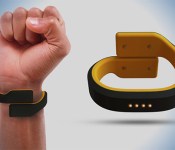
Pavlok needs your money to shock more people into breaking bad habits

There’s no way you’d use a shock collar to train your beloved dog, but you wouldn’t mind using one on yourself if it means breaking your nastiest habits, eh? If that’s the case, then your day has come: Pavlok (a wearable band that can zap you with electricity) is now up on Indiegogo, with its designer hoping to raise $50,000 to develop more features and to begin mass production. In order to train yourself to stay away from bad habits or continue doing good ones, you’ll need to program the Pavlok app — for instance, you can instruct it to zap you awake if you hit snooze twice on your alarm. The good news is that you can set the electricity the wristband zaps you with from 17 to 340 volts, so you can adjust it accordingly and make sure each it’s not strong enough to actually hurt.
According to the device’s Indiegogo page, its creator (Maneesh Sethi, a Stanford alumnus) is working on IFTTT integration and also opening up the Pavlok platform so anyone can make an app to go along with it. It even listed some possible software tie-ups, such as instructing the wristband via IFTTT to zap you if you send a message to an ex, to beep loudly and embarrass you whenever you step into a McD’s with the help of a navigation app, or to remind you to walk more when paired up with an exercise app.
When we saw Pavlok earlier this year, the prototypes cost $250 each, but now you have the opportunity to grab one for $125 via Indiegogo if you can wait until it ships out by April 2015 at the earliest. By the way, Sethi’s no stranger to the idea of receiving pain to break bad habits. Back in 2012, he hired a girl off Craigslist to, erm, slap him every time he went on Facebook — something he claims quadrupled his productivity.
Filed under: Wearables, Mobile
Source: Indiegogo
.CPlase_panel display:none;
iPhone 5 Battery Replacement Program Now Includes Models with Third-Party Displays [iOS Blog]
Apple’s iPhone 5 Battery Replacement Program now covers iPhone 5 models that had their displays replaced with third-party components, according to a new posting on Apple’s GSX site for service providers that was brought to MacRumors’ attention.

Previously, iPhone 5 models that had their displays replaced were barred from receiving a brand new battery replacement from Apple. The company generally did not replace batteries in devices that might have seen damage due to liability issues and required phones with damaged displays to correct that issue before progressing.
Additionally, Apple’s refusal to replace batteries in phones with new displays likely saw some contention amongst those who purchased refurbished iPhone 5 models and had not personally had any work done on the device.
.CPlase_panel display:none;

Stationary bike MMO lets you race against the world without leaving home

Indoor cycling normally isn’t as fun as the outdoor variety, and it certainly isn’t as social. Where’s the thrill of blowing past a rival? That’s what Zwift’s upcoming massively multiplayer cycling game promises to solve. So long as you have a training bike with at least speed and cadence sensors, you can race people around the world in virtual environments — think of it as an online role-playing game that builds up your real abilities. You can chat up other riders if you have a mic, and virtual reality support (through Oculus Rift headsets) might help you forget that you’re still at home.
The game will cost $10 per month to play (much like other online games), and you’ll naturally have to factor in the costs of both the indoor bike and sensors if you don’t have them already. Right now, though, the real catch is simply getting to play. Zwift just launched its beta test with a mere 1,000 open slots, and you’ll have to wait until the winter if you don’t request an invitation in time. Having said this, it might be worth the wait if you’ve ever wanted to compete against other cyclists all year round.
Source: Zwift, Wall Street Journal
.CPlase_panel display:none;

Bloomberg: Apple’s splashing gold paint on the iPad too

The nice thing about living in Apple’s ecosystem is everything is consistent: the app library, the user interface and design motifs echo across all of the company’s devices. Well, unless you have a gold iPhone — then any iPad you could possibly buy just simply wouldn’t match. According to Bloomberg, however, those days might be over: the usual people familiar with Apple’s plans say that the company will launch a 9.7-inch iPad next month with a gold backplate. You know, in case your buying habits are governed more by fashion than new features.
Source: Bloomberg
.CPlase_panel display:none;

Apple Planning to Offer iPad Air 2 with Gold Option
Apple is planning to offer its new 9.7-inch iPad, which has thus far been known as the iPad Air 2 unofficially, in a gold color choice in addition to the already available silver and space gray variations, reports Bloomberg. The new option would bring the iPad up to color parity with its iPhone models, which have been offered in three colors since last year’s iPhone 5s.

New versions of the company’s 9.7-inch iPads, anticipated to be unveiled this month, will include gold as a choice of color for the rear metal cover, adding to the silver and gray available for the lighter iPad Air, the people said, asking not to be identified ahead of an announcement. That brings the color palette into line with the iPhone 5s, which come with silver or gold backs for models with a white faceplate, and space gray for those with a black front.
Bloomberg’s sources indicate that the new color choice may be an attempt to boost iPad sales, which dropped slightly in the past year. CEO Tim Cook previously said the iPad sales dip was a “speed bump“.
In early September, KGI Securities analyst Ming-Chi Kuo predicted that Apple would announce an iPad Air 2 with a gold option amongst other features like an anti-reflective display and the Touch ID Home button.
.CPlase_panel display:none;

Apple Asks Developers to Submit OS X Yosemite Apps to Mac App Store
Hours after Apple released a candidate golden master version of OS X Yosemite to developers and members of the public beta, the Cupertino company has begun asking developers to begin submitting their Yosemite apps to the Mac App Store. Additionally, developers can now submit their apps written in Swift to the Mac App Store as well.

Make sure your apps take advantage of all the great new features in OS X Yosemite, which will be available to millions of customers around the world later this fall.
Add powerful new functionality throughout OS X Yosemite with app extensions, explore the innovative new Swift programming language, and take advantage of advances in game technologies, Safari, iCloud, and more. To prepare your apps for the Mac App Store, download and build with the OS X Yosemite GM candidate and Xcode 6.1 GM seed from the Mac Dev Center. With the latest releases, Swift is now final and you can submit your Mac apps written with Swift to the Mac App Store.
The public release of the new OS is expected in late October and will include a redesigned interface and new features like Continuity, iCloud Drive and more.
Thanks Justin!
.CPlase_panel display:none;

Arduino’s new 3D printer lets you modify just about everything

If you’re a fan of Arduino’s tinker-friendly approach to computing, you’ll be glad to hear that it’s now extending that open philosophy to 3D printers. The company has teamed up with Sharebot to unveil the Materia 101, a small (5.5 inches by 4 inches) printer that’s built to be both friendly to beginners and very accessible. You can modify the code on the underlying Arduino Mega mini-PC, of course, but you also have access to the full schematics of the printer — you can upgrade it or even make your own, if you have the know-how and parts. Arduino hasn’t said when it plans to ship the Materia, but it’ll be available both as a build-it-yourself kit (priced under $800) and fully assembled (under $1,000).
Filed under: Peripherals
Source: Arduino
.CPlase_panel display:none;
 AIVAnet