


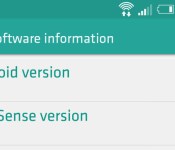
Alleged HTC Sense 7 screenshots highlight Material Design

A few hours ago a couple of screenshots appeared online allegedly showcasing HTC’s upcoming Sense 7 user interface that’s expected to roll out alongside the Taiwanese company’s release of Android 5.0 next month.
According to the unnamed source, these two images were captured on a Developer version of the One (M8) running the latest build of Lollipop — which is still being tried and tested by the Happy Telephone Company to ensure that it runs smoothly on its smartphones.


As you can see in the pictures above, the design of Sense 7 is pretty similar to Google’s newly-established Material Design standard, but it looks as if HTC has implemented one minor, yet extremely effective alteration to the theme: the background of the software keys are now able to change color according to the palette of the application being used.
Obviously, it’s more than possible that these images are not genuine — they’re certainly not hard to fake. They could be concepts of what enthusiasts expect Sense 7 to look like. Or they could just be the real thing.
Nevertheless, we think they look great, and if these do, in fact, turn out to be the real deal, we’ll be seeing a lot more leaked screenshots within the coming weeks — so be sure to check back for more information.
Source: YouMobile
Come comment on this article: Alleged HTC Sense 7 screenshots highlight Material Design
Fitbit Announces ‘Surge’ Fitness ‘Super Watch’, Two New Activity Trackers
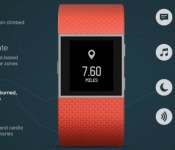
Fitbit today announced three new wearable devices, including the Surge, described as a “fitness super watch,” the Charge, an update to the Fitbit Force activity tracker, and the Charge HR, which tracks a user’s heart rate.
Positioned as Fitbit’s most advanced wearable yet, the Fitbit Surge offers GPS tracking, continuous heart rate monitoring, and the activity tracking that’s been standard in Fitbit’s early wearables, keeping track of steps, distance traveled, calories burned, floors climbed, sleep quality, and various other fitness-based activities like running and cardio workouts.

Available in Tangerine, Black, and Blue, the Surge has a black and white touchscreen display. Aside from tracking various activities, it also allows users to control their music and it includes customizable watch faces able to display incoming smartphone information like call and text notifications. It is not possible to answer phone calls or texts from the device, but its limited capabilities allow it to offer up to five days of battery life on a single charge.
Compared to Apple’s upcoming Apple Watch, the Surge offers many of the same fitness capabilities, but cuts the vivid color display and the deep iPhone integration in favor of extended battery life. The device is also unable to offer many of the cutting edge vibration and pressure technologies built into the Apple Watch, but it is available at a lower price.
Alongside the Surge, Fitbit has also released two simpler wearable devices that are the successors to the Fitbit Force, the wearable activity tracker that Fitbit recalled for skin irritation issues. The Charge and the Charge HR take on the same design as the Fitbit Force, offering the same capabilities like monitoring sleep and tracking steps taken, distance traveled, calories burned, stairs climbed, and more.
Both devices are identical, but the more expensive Fitbit Charge HR includes a heart rate monitor that continuously measures heart rate much like the Surge. The standard Fitbit Charge does not include heart rate monitoring capabilities.
Earlier this month, Apple removed Fitbit’s line of activity tracking devices from its stores and ceased selling the device. While it is unclear why the company pulled the activity trackers from its stores, the move did follow Fitbit’s announcement that it had no plans to integrate with Apple’s HealthKit and it comes ahead of the launch of Apple’s own wearable device, the Apple Watch.
Though it no longer offers the Fitbit line of activity trackers, Apple continues to sell other fitness tracking devices like the Jawbone UP and the Nike Fuelband. It is unclear if Apple will continue to allow these devices to remain in stores or if it will cease selling all competing activity trackers ahead of the early 2015 launch of the Apple Watch.
Fitbit’s standard activity tracker, the Charge, is available for purchase for $129.95. The Charge HR, which includes continuous heart rate tracking, will be available in early 2015 for $149.95, and the Surge, Fitbit’s sensor-laden fitness wearable, will also be available in early 2015 for $249.95.
Lenovo’s me-too Smartband will unlock your PC

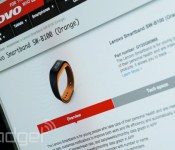
Lenovo may be late to the activity tracker craze with its unannounced Smartband, but it could have an ace up its sleeve. The company has quietly posted the wristwear on its site, and we now know that the device can automatically unlock your PC so long as it’s nearby — handy if you hate entering passwords. While the Smartband otherwise clones what you’ve seen in other trackers, such as heart rate monitoring and basic phone notifications, that proximity-based sign-in could be a nice complement to your Yoga 3 Pro. Just don’t expect to pick up this wearable yet — although Lenovo has a listing for the Smartband, there’s no way to buy it at the moment.
Filed under: Wearables, Lenovo
Source: Lenovo

Apple’s NFC Ambitions Extend Beyond Apple Pay to Building Security, Transit Ticketing
 Apple is pushing NFC in the iPhone 6 and 6 Plus for Apple Pay, but the company may have bigger plans for the wireless technology beyond mobile payments. A report from The Information claims Apple has been in talks with technology providers about using NFC for building security access and public transit ticketing.
The Apple representatives have talked to technology providers like HID Global and Cubic, which enable secure access to buildings and transit fare systems, respectively, said people briefed on the discussions. Spokespeople for the companies declined to comment about any discussions with Apple, but executives there discussed how they could integrate their systems with the iPhone.
Apple debuted NFC in its iPhone 6 and 6 Plus and is using the short-range wireless technology for mobile payments processing.The technology has wide-ranging applications beyond payments, including a replacement for office and hotel security cards, home automation processes and more.
Besides the iPhone 6 and 6 Plus, Apple has also included an NFC chip in the new iPad Air 2 and Retina iPad Mini 3 to provide secure element of Apple Pay information for in-app purposes on those devices. Future iterations of the device, could however, add antennas and other components to enable NFC functionality for a variety of purposes.
Amazon introduces new Fire TV Stick, a HDMI dongle with remote for $39
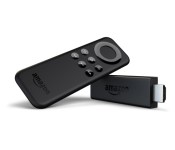
Amazon has made an announcement this morning about a new connected device for your TV, the Fire TV Stick. Just like the name sounds, it is a HDMI dongle similar to the Chromecast and Roku. The Fire TV Stick packs in some hardware with a dual-core processor, 1GB of RAM and 8GB of internal storage. It needs these boosts in hardware over the Chromecast because it has its own UI and ability to install its own apps. It also packs in dual-band, dual-antenna (MIMO) Wi-Fi and an exclusive feature called ASAP (Advanced Streaming and Prediction) that will cut out buffers by predicting what movie and TV episodes you will want to watch and buffers them ahead of time.

Also unlike the Chromecast the Fire TV Stick comes with its own physical remote. There is also a free Fire TV app for your phone which also includes voice search functionality. If you want voice search ability on the remote then you will have to buy a separate remote that supports it. That little voice search enabled remote will set you back $29.99 all on its own. The device also lets you mirror your Kindle Fire tablets and Fire phone, along with Mirror cast capable devices to your TV. Toss in gaming ability with the remote, or separate purchase of a controller, and you a pretty powerful little media stick.

The Fire TV Stick is available for pre-order starting today for $39. If you happen to be a Prime subscriber then you can nab one for $19 for the next two days. You won’t see the price drop for Prime member orders until you check out. Hit the link below to get one pee-ordered.
http://ws-na.amazon-adsystem.com/widgets/q?ServiceVersion=20070822&OneJS=1&Operation=GetAdHtml&MarketPlace=US&source=ss&ref=ss_til&ad_type=product_link&tracking_id=wwwandcom-20&marketplace=amazon®ion=US&placement=B00GDQ0RMG&asins=B00GDQ0RMG&linkId=7QIF54TXG56H5F5U&show_border=true&link_opens_in_new_window=truehttp://ws-na.amazon-adsystem.com/widgets/q?ServiceVersion=20070822&OneJS=1&Operation=GetAdHtml&MarketPlace=US&source=ss&ref=ss_til&ad_type=product_link&tracking_id=wwwandcom-20&marketplace=amazon®ion=US&placement=B00DU0X4WI&asins=B00DU0X4WI&linkId=LCQJTX4MJIOMR6PI&show_border=true&link_opens_in_new_window=true
Press Release:
Powerful hardware—dual-core processor, 2x the memory of Chromecast, dual-band, dual-antenna (MIMO) Wi-Fi, and exclusive features like ASAP for instant streaming
Best of both worlds: included remote control means simple and easy navigation, plus you can use your phone as a remote with the free mobile app that includes voice search
Simple and easy to use—features Amazon Fire TV’s award-winning user interface—just plug it in and you’re ready to stream in minutes
Vast selection of the most popular video and music services, including Netflix, Prime Instant Video, Hulu Plus, WatchESPN, NBA Game Time, Prime Music, Pandora, Spotify, and more for instant access to shows like Transparent, House of Cards, Orange is the New Black, Game of Thrones, and The Wire—plus the largest selection of movies and TV episodes to rent or buy from Amazon Instant Video
Fling or mirror content from your phone or tablet directly to Fire TV Stick
For two days only: as a thank you to new and existing Prime members, Fire TV Stick is just $19
SEATTLE–(BUSINESS WIRE)–Oct. 27, 2014– (NASDAQ: AMZN)—Less than seven months ago, Amazon introduced Amazon Fire TV, and it quickly became the best-selling streaming media box on Amazon. Today, Amazon is bringing the same experience customers love about Amazon Fire TV—ease of use, great performance, and vast selection—to a smaller and even more affordable device. Introducing Fire TV Stick, a small stick that connects to the HDMI port on your HDTV for instant access to movies, TV shows, music, photos, apps, and games. Fire TV Stick is just $39 and is available for pre-order starting today at www.amazon.com/fire-tv-stick and will ship November 19. As a thank you to new and existing Prime members, Fire TV Stick is available for two days only for just $19 onAmazon.com.
“Fire TV Stick is the most powerful streaming media stick available—a dual-core processor, 1 GB of RAM, 8 GB of storage, dual-band and dual-antenna Wi-Fi, included remote control, voice search with our free mobile app, easy set-up, an open ecosystem, and exclusive features like ASAP for instant streaming,” said Jeff Bezos, Amazon.com Founder and CEO. “The team has packed an unbelievable amount of power and selection into an incredible price point—Fire TV Stick is just $39.”
Fire TV Stick delivers instant access to a vast selection of content, including the most popular video and music services such as Netflix, Prime Instant Video, Hulu Plus, WatchESPN, NBA Game Time, Twitch, SHOWTIME ANYTIME, Prime Music, Spotify, Pandora, Vevo, Plex, A&E, PBS, PBS KIDS, WATCH Disney Channel, YouTube.com, and more. The number of video services and games available on Amazon Fire TV has tripled in just seven months, with more services and games being added every week. You can also rent or purchase over 200,000 movies and TV episodes from Amazon Instant Video, which has the world’s largest selection of videos to rent or buy, including new releases and blockbusters.
Amazon Fire TV Stick features:
- The most powerful streaming media stick—Dual-core processor, 1 GB RAM, and 8 GB storage for fast and fluid navigation and instant search results. Fire TV Stick has 50% more processing power and 2x the memory of Chromecast; it has 6x the processing power, 2x the memory, and 32x the storage of Roku Streaming Stick—this results in faster and more fluid navigation, plus more storage for apps and games. It delivers stunning 1080p HD video and immersive audio with Dolby Digital Plus surround sound. All of this power comes in an incredibly small package—Fire TV Stick is the size of a pack of gum.
- Simple to set-up and easy to use—Arrives pre-registered so you can simply plug it in and start streaming in minutes. Features the same fast and fluid user interface as Amazon Fire TV, with big, beautiful images and easy-to-discover content.
- Includes a remote control—Customers have told us they want to use a remote control, not just their phones, to watch TV. Now, everyone in the household can watch movies and TV shows without borrowing your phone—use the included remote to easily navigate and discover movies, TV shows, apps, and games.
- Free Fire TV Remote App (with Voice Search)—If you prefer to navigate using your phone as a remote control, the Fire TV Remote App for Fire phone, Android phones, and coming soon to iPhone, lets you navigate and manage playback from your phone. The app also features voice search that actually works—it is powered by the same voice search engine as Amazon Fire TV, enabling you to simply speak the name of a movie, TV show, actor, director, or genre into your phone, and you’re done.
- Fast, reliable streaming—Fire TV Stick features dual-band, dual-antenna Wi-Fi with MIMO for fast and reliable streaming. Chromecast only has single-band, single-antenna Wi-Fi.
- Instant streaming with ASAP—No more waiting for your movies and TV shows to buffer—ASAP (Advanced Streaming and Prediction) predicts which movies and TV episodes you’ll want to watch and buffers them for playback before you even hit play so videos start instantly.
- Fling movies and TV shows from your phone or tablet—Fling movies and TV shows from your Fire tablet or Fire phone to Fire TV Stick, turning your TV into the primary screen and freeing up your phone or tablet to provide playback controls, a customized display for X-Ray, or simply a place to email, browse the web, and more, while you watch a movie. Fire TV Stick supports standards like DIAL so you can also fling services like YouTube, Spotify, and coming soon, Netflix, from your Android phone or iPhone.
- Mirror your phone or tablet display—Wirelessly mirror your tablet display to your Fire TV Stick from Fire tablets, Fire phone, and Miracast-enabled phones or tablets including devices from Motorola, Samsung, LG, and Google without any additional apps or software.
- X-Ray for movies and TV shows—Using Second Screen on your Fire tablet or Fire phone, you can see X-Ray information as your movie or TV show plays on your TV via Fire TV Stick. See information about cast and crew, the names of songs as they play, as well as a list of music in the movie or TV show, trivia items in context with the action on the screen, and character backstories so you can easily remind yourself of the character’s history. X-Ray is exclusive to Amazon and is powered by IMDb.
- X-Ray for music—Lyrics display and scroll line-by-line automatically as the song plays, so you can follow along with songs.
- Great for casual gaming—Play your favorite casual games like Monsters University, Ski Safari, and Flappy Birds Family.
- Personal photos and videos—Play slide shows and choose your favorite album for the screen-saver on Fire TV Stick. Photos or videos you take on your phone or tablet can be automatically uploaded to Amazon Cloud Drive, so they appear on your Fire TV Stick.
Fire TV Stick is not a gadget—it’s a seamlessly integrated service that brings together the features customers expect from Amazon, including:
- Whispersync—Amazon’s Whispersync technology saves and synchronizes your video and music library across all of your devices. Start watching a movie on your phone or tablet, and when you get home, pick up where you left off on your TV. For games that support Whispersync, your place in the game will also sync across devices so you can always pick up where you left off.
- Watch on hundreds of devices—When you buy a movie or TV show on Amazon, you can watch it on hundreds of devices, including iOS, Android, and Fire OS devices.
- Worry-Free Archive—Automatically backs up your Amazon digital content in the cloud so you never need to worry about losing your collection.
- Top-Rated, World-Class Customer Service—When a customer shops on Amazon, buys a Fire TV Stick, or buys digital content from Amazon, they know that they are also getting Amazon’s world-class customer service. Customers with a Fire HDX tablet or Fire phone can also use the Mayday button to receive 24×7, free, live, on-device tech support for all their Amazon devices.
- Free Month of Amazon Prime—Amazon continues to invest hundreds of millions of dollars to bring Prime members new movies, TV shows, songs, and books to enjoy at no additional cost. Prime members enjoy unlimited, commercial-free, instant streaming of tens of thousands of movies and TV episodes with Prime Instant Video. Eligible customers get a free 30-day trial of Amazon Prime when they purchase Fire TV Stick.
Fire TV Stick is available starting today for just $39—order at www.amazon.com/fire-tv-stick. As a thank you to Prime members, Fire TV Stick is available for two days only for just $19 on Amazon.com. Customers who are new to Prime can sign up for a free trial and also receive this special price.
You can also choose to upgrade to the Amazon Fire TV Voice Remote for $29.99.
Eligible customers get a free 30-day trial of Netflix and Amazon Prime when they purchase Fire TV Stick.
//<![CDATA[
ord = window.ord || Math.floor(Math.random()*1E16);
document.write('‘);
//]]>
The post Amazon introduces new Fire TV Stick, a HDMI dongle with remote for $39 appeared first on AndroidSPIN.

Twitter removes itself from the MyGlass store

It would seem that Twitter has pulled the plug on their support for Google Glass. At least in the fashion that it was implemented. When Twitter launched support back in May of 2013 it came through to your Glass through a mirror API that mirrored your Twitter data to your eye-balls. It wasn’t an actual APK. To set it up you needed to visit the MyGlass store and turn it on. It now appears that Twitter has since pulled the plug on the service that brings your Twitter information.
According to Glass support Twitter is no longer developing their Glass app. This was one of my favorite and most used apps on Glass. If you remove Twitter from your Glass it disappears from Glassware and there is no option to reinstall it. –Reddit user and Glass Explorer pete716
As you can see from Pete’s information, if you remove Twitter from your Google Glass, you won’t be able to get it back. Cruising through the MyGlass app hub you can see that it has also been removed. That isn’t the end for Twitter though, reading through the comments from the Reddit post we get some more details from a Glass Community Member who points out that just last week the Glass Team released Notification Sync that uses Wear API’s and brings your Twitter notifications to Glass.
I am not privy to the Glass world, but I suspect there are a number of other ways to get Twitter to your Glass. If not, there are sure to be a slew of 3rd party apps on the horizon.
Source: Reddit via 9to5Google
//<![CDATA[
ord = window.ord || Math.floor(Math.random()*1E16);
document.write('‘);
//]]>
The post Twitter removes itself from the MyGlass store appeared first on AndroidSPIN.
Samsung Galaxy A7 makes appearance on benchmark site

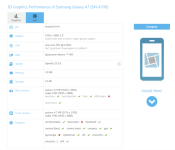
We have seen a few leaks surface for the Samsung Galaxy A7, but the latest appearance on the GFXBench benchmark site may provide some of the best information yet regarding the device. Unfortunately, one datapoint throws some confusion into the mix. Previous leaks showed the Galaxy A7 having a 5.5-inch screen. However, the entry in the GFXBench database lists the device as having a 5.2-inch display. We will have to wait to see what the final size it. Despite that bit of uncertainty, the rest of the specs look to be solid.
The display, whatever size it ultimately ends up being, is listed with a resolution of 1920 x 1080 which is consistent with a previous report that the device would have a full HD display. Powering the device is a new octa-core processor, the Snapdragon 615. This is a step up from the Snapdragon 410 processor that is becoming common in non-flagship devices as well as the Galaxy A3 and the Galaxy A5.
The new database entry with GFXBench also reveals the Galaxy A7 will come with 2GB of RAM, 16GB of internal storage, and will be running Android 4.4.4 KitKat.
We still don’t have pricing or availability information for the forthcoming A-series phones from Samsung.
source: GFXBench
via: SamMobile
Come comment on this article: Samsung Galaxy A7 makes appearance on benchmark site

New contender for world’s thinnest smartphone surfaces from Vivo

Industry watchers who pay attention to super-thin smartphones, and notably the record for world’s thinnest smartphone, know that Gionee has managed to hold the title for a while now. The current record holder is the Gionee Elfie S5.5 that measures only 5.5mm thick. A couple months ago rumors surfaced that Gionee was working on a successor, the G9005, that would bring the thickness down to only 4.9mm. Some new images posted to Weibo suggest Gionee may have some competition from Vivo in the near future.
The images that have surfaced show a device from Vivo that measures a mere 3.8mm in thickness. To help put that in perspective, that is half the size of an iPhone 5/5S which comes in at 7.6mm. Even the new iPhone 6 is still a whopping 3.1mm thicker than this new device, if Vivo manages to bring it to market.


source: Weibo
via: G for Games
Come comment on this article: New contender for world’s thinnest smartphone surfaces from Vivo

What you need to know about the world of online dating

If a smoky, beer-soaked pub is the last place you’d go to find Mr. or Mrs. Right, online dating is a godsend. Ideally, it brings together like-minded couples in a non-threatening virtual space, so they can get to know each other before committing to a physical date. On top of the countless mainstream sites, there are specialized ones to help you find someone with the same religion, interests and sexual preferences — whether you’re seeking a friendly relationship, life partner or a one-night stand. There are serious pitfalls to avoid, of course: dodgy sites, “catfishing” and, worst of all, online predators. But despite the risks, online dating works. Most of us know at least one person who’s met their partner online — if you don’t, I’m one of them. Nice to meet you! All it takes is some common sense and a pinch of savoir-faire.
WHAT IS IT?

Online dating sites are databases that can match you to a partner with the qualities you prefer. The concept of meeting in cyberspace predates the World Wide Web. The oldest dating site that’s still around is Matchmaker, which started as a dial-up BBS in 1985 and ran on a RadioShack TRS-80 with six modems (above). At first, it was a crude listing of mostly computer nerds within the same area code, but it grew to include email exchanges and became one of the largest pre-web email networks.
Eventually that site and others joined the internet, and today, dating sites in the US draw nearly 30 million unique visitors per month. Some of those, including Match.com, offer free trials or crippled features, but require a subscription to make contact. Others, like OKCupid.com let you browse potential mates for free (supported by ads), while offering a paid premium option with more features — advanced searches, message read receipts and so on. Another well-known, mobile-only site is Tinder, which lets you quickly like or reject suitors in your area. There are also specialty sites like Adam4Adam for gay men, or JDate (below) and ChristianMingle, aimed at Jewish and Christian singles, respectively.
Then there are the more controversial sites like Ashley Madison, targeted at people seeking extramarital affairs, or SeekingArrangement.com for “sugar daddies” willing to set up younger women in exchange for sex or companionship. At the bottom rung are risky sites like AdultFriendFinder, aimed mostly at people looking purely for sex.
WHO’S WHO IN ONLINE DATING?
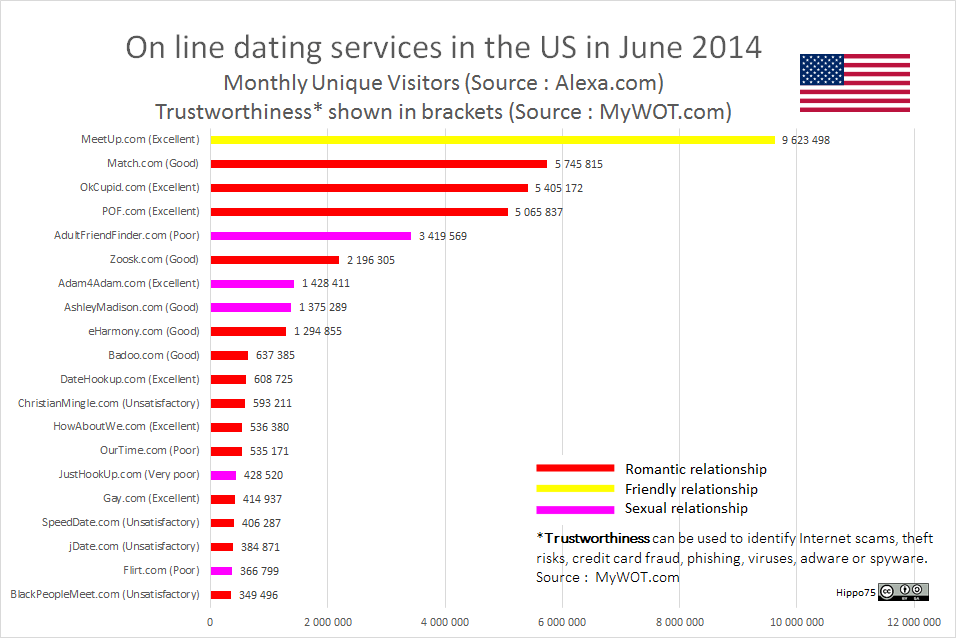
There’s no reason why you can’t play the field with dating sites, but they vary widely in reputation. The top 20 in terms of unique visitors (according to Alexa) are shown above. They’re ranked not only by size and type (romantic, friendly and sexual) but also reputation, as determined by MyWOT.com. The most popular subscription site is Match.com, which carries a “good” rating, while “freemium” sites OKCupid and PlentyOfFish (POF) each have “excellent” user ratings (Meetup.com is mostly targeted at folks looking to join clubs). The main specialty sites aimed at Jewish, Christian and black singles have garnered “unsatisfactory” ratings, while gay sites GayDar.net, Adam4Adam and Gay.com scored “excellent.”
As you might expect, pure hookup sites are fraught with hazard: AdultFriendFinder.com and JustHookUp.com rate “poor” and “very poor” in reputation, respectively. Such sites have been accused of billing customers after they’ve canceled, inflating user figures with numerous fake profiles and rampant prostitution.
WHICH TO PICK?

Though rating individual sites is beyond our scope, we’ve compiled recent rankings from several sites like Marie Claire, PC Mag, Wikipedia, Lifehacker, Mashable and more. Here are the top four, along with the cost for a single month and the typical user.
Match.com, $43, leads in sheer numbers of users. On top of more choice, PC Magazine pointed out that the site has “far more search options than we found in any other dating site,” including physical appearance, exercise frequency and occupation, to name a few. The downsides are the high price and constant requests for more cash to see who visited your page, for example.
POF.com, free, is popular, but it sure ain’t pretty. The site will make design purists go cross-eyed, and it often serves up skeevy banner ads. Given the large number of user profiles, however, it might be a good place for a newbie to start before taking the subscription leap.
eHarmony.com, $20-$40/month, quizzes each of its users exhaustively and employs custom algorithms to make a match. As you’d expect, that scientific approach is best for users looking for a long-term relationship. And it does work: According to eHarmony, 90 of its members get married every day (you can read some of the touching testimonials here). On the downside, the site — which started as a Christian network — targets primarily heterosexual couples. It only started allowing gay and lesbian users in 2010 after it was forced to by a lawsuit.
OKCupid.com, free, is the anti-eHarmony. According to PC Mag, it’s better at filtering out unsuitable partners than making proactive matches. However, it sports 30 million or more active users, with a million logging in every day. That gives you a good chance of finding a date, but according to the Telegraph, also makes it “an absolute hive of polyamorous kinksters, furries and others… at the odd end of the dating pool.”
Our resident dating expert Tim Seppala prefers OKCupid, as do several other Engadget editors. Why? “Well, it’s free, and it doesn’t feel gross — unlike POF.com.” The large number of users and messages is a plus, though Tim added that “the overall user population isn’t the best in my area, and there are a lot of people who are ‘very hesitant’ to meet someone in person.”
WHAT’S THE STRATEGY?

Instead of making a long-term subscription commitment and regretting it, why not start with a free site? That way you can test the waters, figure out what does and doesn’t work and get a nice, tight profile before paying anything. Some sites will give you a free trial with a credit card, but automatically start billing unless you cancel the subscription — which is often difficult to do. If you do decide to go onto a pay site, take a long, hard look at the cancellation policy. One pro tip for trials: Many credit card companies will give you a virtual account number to use, which you can limit in time and value.
Next is that all-important profile. You need clear photos that accurately represent how you look now. Avoid selfies, and if possible, have a friend take a full body shot, preferably outdoors. According to Marie Claire, action photos that show you playing sports or the guitar get the most messages. Meanwhile, your self-description should be free of “long walks on the beach” tropes, and focus concisely on specific things you love, fun facts about yourself and sociable hobbies — not activities you do alone. Avoid negative comments, especially about previous relationships. Finally, ask friends to read your profile, since they might know certain things about you better than you do.

Once you’re ready to contact someone, GQ adds that it’s best to keep messages cool and casual. Coming on too strong, while occasionally amusing, is off-putting. Try to focus on the other person and not talk about yourself too much. Our Managing Editor Dana Wollman recalls meeting several nerdy dates online who, upon learning her job, proceeded to talk all evening about gadgets. Guess what! When you work in tech all day, it’s the last thing you want to discuss. If you actually pay attention to the other person and read the signals, you’ll avoid such faux pas.
Finally, be patient and picky. You might get lucky and meet Mr. or Ms. Charming right off the bat. But more likely? You’ll have to give a lot of frogs the ol’ cheek turn. Here’s an example of a date gone wrong from our own Tim: “I went out with a really cute girl for three weeks, and then she suddenly tried passing me off to her (much less cute) roommate. It was a ploy, and they were both in on it.” Ouch.
DANGER!

The bad news: Online dating (or any dating) has a seamy side, and women especially need to beware. As recounted by Jezebel, certain dates can go sideways, but at least you can laugh about them later. However, there are plenty of deranged individuals out there who look at dating sites and see a trove of potential victims. In some cases, the results can turn out tragically.
The good news: There are steps you can take to ward off such problems. Here are some tips from JDate, Reader’s Digest and others.
Choose sites wisely. It’s best to stick with reputable sites that have at least a “good” trust rating. The Dating Gurus and others can help with full-encounter site reviews. Beware of signing up long-term (even if the price is tempting) and make sure it’s easy to cancel your subscription.
Never give out your private contact information. This should go without saying, but criminals can be very persuasive. If anybody insists on having your phone number or other private info, it’s a strong red flag.
Never send money. Scams abound on dating sites, and con men or women will often string marks along for months before swooping in for the score. A typical scam might be similar to a Nigerian con: Somebody needs money to, say, import a large inheritance, and if you can just help them out, they’ll pay you back, double. Sure.
Speak by telephone a lot. Though it’s tempting to just IM and message all day, you’ll generally get a much better sense of someone over the phone.
Meet in public and tell a friend where you’re going. A restaurant, mall or other public place is great for a first date, but a hotel room or private home is definitely not. Make sure to touch base with a friend or relative to let them know when and where you’ll be for a date. Confirm when you’re back home safely.
Arrange your own ride. Never accept a lift from someone you just met in person, no matter how nice they seem. Have a plan for getting home.
Go with your gut. If a situation doesn’t feel right, back out. A potential partner that seems too good to be true probably is.
WANT EVEN MORE?

On top of the many links you’ve seen so far, there’s more! They say the best education comes from your own mistakes, but do you know what’s even better? Other people’s mistakes! The Awl has a compendium of dating horror stories; read them and weep — and learn. For a deeper dive into the sociology of online dating, check out Vice’s chat with New York Magazine columnist Maureen O’Connor. Meanwhile, check out PCMag’s comprehensive reviews, along with The Dating Gurus (which also has general dating advice) and Wikipedia (which shows traffic, trustworthiness and more). Mashable has a list of the hottest new dating sites; Marie Claire compiled a top list for UK denizens; and LifeHacker has a recent list of the best sites. It’s a very, very deep topic and we’ve left out huge swaths like speed dating, virtual dating, dating assistants and others we haven’t even thought of. Heck, if you’re at a loss for words, you can even hire a ghostwriter.
(Image credits: Getty/AFP [Lede photo]; Wikimedia Commons [Matchmaker.com]; Hippo75/Wikimedia [Online dating chart]; JDate [JDate YouTube ad]; FRED DUFOUR/AFP/GettyImages [Adopteunmec]; AP [Laptop image]; Getty Images [Speed dating]; AFP/Getty Images [Danger image]; Kelley Boone/Wikimedia Commons [Couple])
Filed under: Internet
BeBop’s smart fabric puts sensors in everything you wear

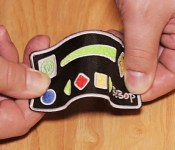
Wearable sensors don’t tend to do much; they’re usually limited to health data like EKG readings or your heart rate. If BeBop Sensors has its way, though, they’ll be useful for just about anything that comes in contact with your body. Its new smart fabric sensor tracks virtually every aspect of physical presence, including bending, location, movement and pressure. As you might imagine, that opens the door to… well, quite a lot. You could have smart insoles that track both your pace and your running style, or baseball gloves that help perfect your swing; BeBop also sees uses in everything from wearable controllers to smart yoga mats that improve your poses. The company is only providing the basic technology, not finished products, so it’ll be a while before you see this smart cloth in something you can buy. Even so, it’s clear that there’s a lot of potential — you may always have a way to measure your activities without resorting to wristbands or other conspicuous gear.
Filed under: Wearables
Source: BeBop Sensors, Thomas PR
 AIVAnet