



Redbox Instant closing its services October 7th, best use up your Kiosk credits
Looks like Redbox Instant just didn’t bring in the bucks that they, or Verizon, thought it would. The service will be shutting down on October 7th, 2014, at 11:59 p.m. PST.

The service is shutting down because it was not as successful as we hoped it would be. We apologize for any inconvenience and we thank you for giving us the opportunity to entertain you.
Redbox will be proactively sending out emails to current customers on October 10th with information on applicable refund options. Those will include partial monthly credits for the month and refunds for on-demand movies that have been paid for, but not yet watched.
There is the other matter of purchased movies that you own in your digital locker. Redbox is looking into solution on how to make sure your purchase is available to you. They don’t seem to have a solution as of yet. Individuals with content in their digital lockers should receive information in their email in boxes in about two weeks with a solution.
If you happen to have an Redbox Kiosk credits available, you will want to get those used before the aforementioned date and time as well.
They gave it a good run, but I think their business is better suited with the Kiosk rentals. The digitally hardened individuals out there have access to so much more that it is hard to convince us to spend $10 a month. “A” for effort guys. Maybe there will be a revamp and relaunch sometime in the future.
Source: Redbox
//<![CDATA[
ord = window.ord || Math.floor(Math.random()*1E16);
document.write('‘);
//]]>
The post Redbox Instant closing its services October 7th, best use up your Kiosk credits appeared first on AndroidSPIN.
.CPlase_panel display:none;
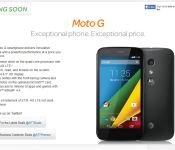
Moto G LTE headed to AT&T October 10th
AT&T has announced a new device, for them, that is headed for their shelves on October 10th. They are officially going to be stocking the Moto G with LTE connectivity this coming Friday.

The Moto G LTE will be offered at just $179.99 outright for those that don’t want a contract or the Next program. Opt for a 1 year contract and get it for $79.99. Roll it on to the Next 12 for $9 a month or $7.50 a month on the Next 18. No matter which way you end up getting the device in your hands, you’ll be gaining a solid product for the price tag. Don’t go getting this one confused with the Moto G 2nd gen that was announced last month. That one doesn’t offer LTE. This is the Moto G LTE which is just a LTE variant of the original Moto G that Motorola put out last year.
The Moto G LTE brings the 4.5-inch 720p LCD screen, Snapdragon 400 processor, and 8GB of storage along with Android 4.4. One could have conceivably purchased it through Amazon for a while now, but at $199.99. So you would save yourself $20 through AT&T so long as you don’t mind being carrier locked. On the Next programs though this is a real win for consumers that can’t or don’t want to, shell out $200 upfront but don’t need an additional $25 a month on their bill.
Any interest?
Source: AT&T
//<![CDATA[
ord = window.ord || Math.floor(Math.random()*1E16);
document.write('‘);
//]]>
The post Moto G LTE headed to AT&T October 10th appeared first on AndroidSPIN.
.CPlase_panel display:none;

New image editing options added to Google Slides online
A few months ago Google added a few little options to Slides through your Google Drive that let you crop and add borders. Today they have announced, and added, the ability to fine tune the image in slides a little more.

With the new editing options you can adjust the transparency, brightness and contrast of your included image. You can also recolor the image to make it better match the Slides as well. One step closer to having all the tools needed in one app for creation and editing. I imagine this editing feature will find its way to other Drive applications in time. Pop into Slides on your desktop or laptop and check it out.
Source: Google Via 9to5Google
//<![CDATA[
ord = window.ord || Math.floor(Math.random()*1E16);
document.write('‘);
//]]>
The post New image editing options added to Google Slides online appeared first on AndroidSPIN.
.CPlase_panel display:none;
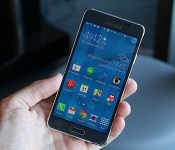
Samsung Galaxy Alpha review: Samsung’s most beautiful phone yet

When a company names one of their products after the first letter of the Greek alphabet, it means business. Take Samsung’s Galaxy Alpha: The name alone exudes confidence. Although the term typically signifies the first in a series, the Alpha obviously isn’t Samsung’s inaugural Android phone; rather, it ushers in a completely new design direction for the company. It’s not a top-of-the-line flagship device on the inside, but what matters is that it actually looks like one on the outside, thanks to its premium aesthetics, metal frame and sleek body. Samsung has every reason to be confident in the Alpha’s design. As always, however, there’s more to a device than meets the eye.
Hardware

The Galaxy Alpha is the most beautiful Samsung device I’ve ever handled. It’s the very first device to take advantage of the company’s brand-new design language, which features polished aluminum sides, chamfered edges, a thin profile and a polycarbonate (plastic) back; the same design is used on the Galaxy Note 4 and Galaxy Note Edge (and arguably, the iPhone 5/5s and last year’s HTC One), but the Alpha is the first to actually make it off the production line. It’s simple, yet elegant; minimal, yet profuse. Featuring a 4.7-inch frame and 6.7mm thickness, the Alpha is more than sufficiently sleek and svelte.
Thanks to its slim, compact frame, I had absolutely no problem hanging onto the Alpha. Not only can I wrap my hand around the whole thing, but also its straight sides offer my fingers plenty of space to grip. It’s also incredibly light, weighing 4.06 ounces (115g); that’s half an ounce lighter than the iPhone 6. In fact, it almost feels like it isn’t substantial enough; in my palms, I’m often reminded of a dummy phone — fake versions of the real thing that manufacturers send to retail stores.
I’d be tempted to think of the Galaxy Alpha as a GS5 mini, if the name weren’t already taken; in many respects, it’s a smaller version of Samsung’s current 5.1-inch flagship smartphone. It packs the same Snapdragon 801 chipset (though an Exynos option is also available in certain markets), so it should be similarly powerful, and it also comes with a fingerprint scanner, heart rate monitor and Samsung’s TouchWiz UI. But while the Alpha easily beats the GS5 in style (while matching it in oomph), the rest of the spec sheet isn’t as impressive. It’s not waterproof; it lacks a microSD slot; the battery is smaller; it uses a lower-res camera; and it doesn’t come with an IR blaster. It also features a lower-res 720p Super AMOLED display.
Since it’s not designed to simply be a miniature GS5, these omissions theoretically shouldn’t be a big issue. It still packs plenty of a punch, after all, and even the 720p display is considered top-of-the-line for similarly sized devices. (Also, with smaller phones, manufacturers don’t have as much space to cram in extra components.) The problem is that you’re paying a premium price for the premium look; you can get the Alpha on AT&T in the US for $200 on-contract, or $613 with no contract attached. This is the same on-contract price as the GS5, and only $37 cheaper at full retail. To be fair, AT&T’s Galaxy S5 only comes with 16GB internal storage, whereas the Alpha gets 32GB, so that explains some of the difference. Even so, the GS5 at least has a microSD slot for expandable memory.

What’s even weirder is that while the Alpha doesn’t come with any waterproofing or water-resistance of any kind, iFixit did a teardown of the phone and discovered that it comes with many of the gaskets and other internal parts necessary for keeping water out. In other words, Samsung didn’t finish what it started.
The bottom edge of the device houses a micro-USB 2.0 connector — Samsung’s moved away from the unsightly 3.0 ports that take up extra room — along with a speaker grille and mic. On the left is a volume rocker, which appears to have received the same amount of attention to design as the rest of the phone. There’s a 3.5mm headphone jack on top and a power button on the right. Additionally, the top and bottom of the phone feature a pair of antenna stripes, which are common on metal phones because they provide a place to send and receive cellular and wireless signals.
The Alpha also comes with a removable back cover with a textured polycarbonate back that’s similar to what you’ll find on the Galaxy S5. On the Alpha, however, the dimples are much tinier and the matte surface doesn’t feel as slick; the Alpha definitely offers more friction. There’s a 12-megapixel camera in the top-center, and since the module is thicker than the phone itself, there’s a hump to make the transition between the camera and back cover seem a bit more gradual. (One of my biggest issues with the iPhone 6’s design is that the camera abruptly sticks out from the rest of the frame.) The LED flash and heart rate monitor are to the camera’s left, arranged in a vertical fashion, and the logos include just the AT&T globe near the top and the phone’s name near the bottom. Underneath the back cover, you’ll find a removable 1,860mAh battery and nano-SIM slot.

The new location of the heart rate monitor works out okay if you hold the phone in your right hand, but it can be troublesome if you prefer your left; the camera hump gets in the way, and I had to keep looking at my finger to make sure it was in the right place. Which brings me to another point: The Galaxy S5’s sensor was placed at the bottom of a cavity, while the Alpha’s version is nearly flush with the rest of the back. This makes it more difficult to find the sensor without peeking around the phone to make sure I’m actually in the right spot.
An aluminum frame comes with trade-offs. Sure, it looks great, feels robust and has an aura of high quality, but as I saw with the iPhone 6, the material isn’t immune to blemishes; after just a few days, I started seeing scratches and even a couple dings along the chamfered edges. This means that how it looks after a year of use will depend on how you treat it. If it’s constantly rubbing up against other hard materials, it’s not going to fare well.
As mentioned earlier, the Alpha has a 4.7-inch 720p Super AMOLED panel. On paper, this doesn’t sound very good since many new flagships have Quad HD displays. For a handset of its size, however, 720p is still acceptable: The first Moto X was of the same quality. Ditto for the Sony Xperia Z3 Compact, which is one-tenth of an inch smaller. The iPhone 6, meanwhile, is slightly better at 1,334 x 750 (326 pixels per inch). With the Alpha, you’ll get a pixel density of 312 ppi, which is still respectable. Of course, the Super AMOLED panel ensures that colors are more saturated than most IPS options, and the viewing angles are simply average and nothing special. If you’re looking for a compact phone, the display will neither make nor break the decision for you — it’s perfectly fine, as long as you don’t mind some slightly inaccurate colors.
| Samsung Galaxy Alpha | Apple iPhone 6 | |
|---|---|---|
| Pricing | $200 (on-contract), $613 (off-contract) | Starts at $200 (on-contract); $650 (off-contract) |
| Dimensions | 132.4 x 65.5 x 6.7 mm (5.21 x 2.58 x 0.26 in) | 138.1 x 67 x 6.9 mm (5.44 x 2.64 x 0.27 in) |
| Weight | 115 g (4.06 oz) | 129 g (4.55 oz) |
| Screen size | 4.7 inches | 4.7 inches |
| Screen resolution | 1,280 x 720 (312 ppi) | 1,334 x 750 (326 ppi) |
| Screen type | Super AMOLED | IPS LCD (Retina HD) |
| Battery | 1,860mAh | 1,810mAh |
| Internal storage | 32GB | 16/64/128GB |
| External storage | None | None |
| Rear camera | 12MP, f/2.2, AF, single LED flash | 8MP, f/2.2, PDAF, dual LED flash |
| Front-facing cam | 2.1MP | 1.2MP |
| Video capture | UHD (2160p) | 1080p |
| NFC | Yes | Yes (with restrictions) |
| Bluetooth | 4.0+LE | 4.0+LE |
| SoC | 2.5GHz quad-core Snapdragon 801, Adreno 330 | 1.4GHz dual-core Apple A8 “Cyclone”, PowerVR GX6450 |
| RAM | 2GB | 1GB |
| Connectivity | NFC, DLNA, WiFi Direct | NFC |
| WiFi | Dual-band 802.11 a/b/g/n/ac | Dual-band 802.11 a/b/g/n/ac |
| Operating system | Android 4.4, TouchWiz UI | iOS 8.0 |
Software
Admittedly, the software section is going to be as small as the device itself, since there’s very little to differentiate it from the Galaxy S5. The variance in screen size doesn’t impact the user experience, nor does it mean you’ll enjoy fewer features. The Alpha uses TouchWiz layered on top of Android 4.4.4 KitKat, which is still technically the latest consumer-facing version of Google’s mobile OS (it’ll soon be replaced by Android L, but Samsung’s lineup should get the new update not too long after it becomes publicly available to the masses).
This version of TouchWiz is what you’d expect: It’s consistent with every other version of TouchWiz. The UI is exactly the same as on the Galaxy S5, with a vast notification panel, bubbly settings menu and suite of preinstalled Google and Samsung apps. There’s also My Magazine, which is a feature that’s been on several Galaxy devices over the last two years. (You can also remove it, if you don’t want to use it.) It’s essentially an extra home screen panel that provides real-time news and social feeds, and looks a lot like Flipboard and HTC’s BlinkFeed. Multi Window is also present, so you can still view two apps at once in a split-screen mode, despite having such a small screen. You’ll also get Air View, which lets you check out extra details about calendar appointments and larger thumbnails for pictures and videos just by hovering your finger over the display.
Lastly, you’ll get other common Samsung features like Easy mode, Blocking mode and Private mode (the latter of which hides and secures sensitive information so your random friends won’t find it), as well as Smart stay and the ever-present toolbox of customized app shortcuts that continuously floats on top of the screen.
Camera

The Alpha is thinner than the GS5, which means the camera module isn’t quite as large. Instead of a 16-megapixel sensor, you’ll get a 12MP shooter on the back with an aperture of f/2.2 and focal length of 4.8mm (the same as on the GS5). So, don’t expect a radically different imaging experience here. The user interface hasn’t changed, either: Separate shutter buttons for stills and video sit alongside the mode-selection button and gallery link, and settings and shortcuts reside on the opposite sidebar. You get the same default modes here as you do on the GS5 — the usual Panorama, Dual Camera, Beauty Face and Shot & more modes — and you can download extra modes, like Animated Photo (add animation to your pictures), Surround Shot (Samsung’s version of Photo Sphere), Sports, and Sound & shot (audio accompanies the image). The GS5 gets an extra mode for sequence shots, while the Alpha lets you choose which modes actually show up in your menu — if you only use one or two, you can get rid of the extra clutter.
The settings here are identical as well. HDR, selective focus (in which you can choose to focus on the foreground, background or both), ISO (up to 800), audio zoom and plenty of effects are featured, although there’s no way to manually change white balance, exposure or shutter speed.
Just like on the GS5, the Alpha has multiple resolution options. Whichever you choose will have an impact on the aspect ratio. If you want the highest resolution possible, you’re going to have to settle for 16:9 (widescreen), while the best standard 4:3 shots you can get will come out at eight megapixels.
The camera sports Samsung’s ISOCELL tech, which I detailed in my GS5 review. In short, it’s designed to improve sharpness and deliver better low-light performance and more accurate colors. On the GS5, I noted that performance was indeed better, albeit slightly, and I got nearly the same kind of results from the Alpha. In fact, aside from the difference in resolution (and thus, fewer details and less leeway for digital zoom), the Alpha’s images were very similar to ones I took with the flagship. It does well in daylight and produces realistic colors, and is overall a reliable camera, but it’s not very good at taking pictures of moving things. I had a difficult time snapping shots of cars or people without blurring.
It’s also not very good in low-light situations, but this is nothing new for Samsung phones — the company’s struggled with this for a long time, and ISOCELL is designed to make it better. Sadly, there’s been no improvement here from the GS5; on the contrary, it’s a bit worse. Even when my night shots turned out (I say “when” since quite a few were hopelessly dark), they were noisy, lacking in sharpness and not worth sharing with friends or family. I’m not saying it’s impossible to get a solid low-light shot, but it’s not as easy as it should be. (Click here for a gallery of all my sample shots.)
Performance and battery life

The US version of the Alpha uses the same Snapdragon 801 chipset as the one found on the GS5, which is comprised of a quad-core 2.5GHz Krait 400 CPU, Adreno 330 GPU and 2GB of RAM. Before I began testing the device, I expected to see the same kind of performance that I’ve enjoyed on its big brother. Sure enough, I wasn’t disappointed: Most apps loaded up quickly, and games like Asphalt 8 and Beach Buggy Racing ran smoothly. I did notice the occasional frame skip, but this was the exception, not the rule. When you look at the benchmarks, it’s clear there’s very little difference between the two in terms of overall performance.
| Galaxy Alpha | Galaxy S5 | Galaxy Note 3 | iPhone 6 | |
|---|---|---|---|---|
| Quadrant 2.0 | 24,235 | 24,714 | 22,828 | N/A |
| Vellamo 3.0 (Multicore) | 1,686 | 1,656 | 1,994 | N/A |
| 3DMark IS Ultimate | 13,697 | 17,954 | 18,933 | 16,689 |
| SunSpider 1.0.2 (ms) | 788 | 820 | 840 | 351 |
| GFXBench 3.0 1080p Offscreen (fps) | 11.8 | 11.5 | 10.1 | 17.4 |
| CF-Bench | 32,150 | 33,351 | 38,020 | N/A |
| SunSpider: Lower scores are better. | ||||
The Alpha also has a small 1,860mAh battery, which was my primary concern going into the review. Could it handle my everyday demands and still get me through the day? After all, if I can’t go a full day without worrying about finding an outlet before I can get home, it’s not worth using as my daily driver — especially when plenty of other devices are up to the task. The Alpha barely makes it to the end of the day with moderate usage; on heavier days when I’m streaming music, reading e-books, taking pictures, staying social and keeping up with nonstop emails, I get around 13 hours.
With the Alpha, Samsung included the same fingerprint sensor that it used on the GS5, and it requires the same swipe-down action. Its performance on the flagship was mediocre at best — it often took me multiple swipes to get the phone to recognize my prints, and was even worse when I tried to do it at an angle. Unfortunately, I only saw minor improvements here, despite the fact that Samsung has had six months to improve the sensor and its integration with software. Admittedly, it’s a little better when I swipe from different angles, but it still takes multiple attempts even when my fingers and thumbs are straight on. There’s certainly some practice involved, and it does get better over time as you learn the sensor’s quirks (you have to do it at a certain speed, and you have to make sure you’ve covered the sensor with the right parts of your finger).
When making phone calls, I had no trouble hearing the other end of the line, but the external speaker didn’t fare well. I pitted the Alpha against BoomSound on the HTC One M8, which produced a much louder and fuller audio performance; I could hear more bass and mids on HTC’s flagship than I could on the Alpha. The GS5 was also slightly louder, though the difference between the two was marginal — the audio just wasn’t impressive on either Galaxy.
Cellular connectivity will vary by market and operator. The AT&T model I reviewed comes with nine-band LTE support (for bands 1, 2, 3, 4, 5, 7, 12, 17 and 29), tri-band HSPA+ (850/1900/2100) and quad-band GSM/EDGE. You’ll also get NFC, DLNA, WiFi Direct, Bluetooth 4.0+LE and dual-band 802.11ac support (along with a/b/g/n as well).
The competition

It wasn’t long ago that most phone makers used 4.7-inch screens on their flagships, but now any top-of-the-line phone going smaller than five inches is just unthinkable — unless, of course, you’re Apple. For that reason, it’s great to see Samsung come out with a premium-looking device whose specs aren’t too far removed from the same-sized iPhone 6, which is available in 16GB for $200 on-contract and $650 off. (If you’re looking for extra storage space, the Alpha tops the iPhone at the same price point.)
But these two phones aren’t the only options in the sub-5-inch space. The Sony Xperia Z3 Compact is a 4.6-inch 720p handset that features many of the same specs as its bigger flagship brother, and actually bests the Alpha in pixel density, battery, camera resolution and external storage capacity. As of this writing, the phone isn’t available in the US, so it’s only an option for our readers in Europe and Asia — that is, unless you choose to go through online importers. You’ll find that the Z3 Compact is a good deal cheaper than the Alpha: On Expansys, the Z3 Compact goes for £420 ($530), while the Alpha is available for £515 ($650). Despite the Alpha’s great looks, it’s difficult to justify it over the Compact.
Wrap-up

As beautiful as the Galaxy Alpha may be, its price leads to its ultimate downfall. The only reason you’d want to pick this over the Galaxy S5, which is available for a similar price, is that you prefer a smaller size or more solid build. But even then, this design isn’t a one-and-done; you’ll be able to get the same fit and finish on the Note 4 and Note Edge (albeit with larger screens). Furthermore, it’s not the best sub-5-inch Android device on the market, thanks to the Sony Z3 Compact, which comes with better battery life, camera and external storage.
More important is what this new design direction means to Samsung’s future. Even though the aluminum build isn’t perfect, Samsung’s latest smartphones are the best-looking handsets the manufacturer has produced in years. For a company suffering from slowing sales and looking for new ways to compete with the iPhone, devices like the Alpha are essential. This makes it all the more unfortunate that the fantastic design is one of few things that helps it stand out from the crowd. On the upside, though, this is just the beginning; more good-looking Samsung phones are on the way.
Filed under: Cellphones, Mobile, Samsung
.CPlase_panel display:none;
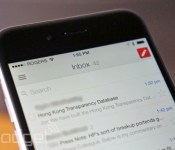
Gmail for iOS now takes full advantage of your iPhone 6

You haven’t had many options for checking Gmail on the iPhone 6 and 6 Plus so far. Unless you’re happy with Apple’s stock email client, you’ve typically had to use blown-up versions of earlier apps. You won’t have to face that dilemma any more, though; Google has released an update to its Gmail app for iOS that does justice to the higher display resolutions on new iPhones. It’s a simple change, but it means that you can see more messages at once (and more of those messages) without sacrificing native Gmail features like labels and stars. Swing by the App Store if you’ve been jonesing for this upgrade over the past few weeks.
Filed under: Cellphones, Mobile, Google
Source: App Store
.CPlase_panel display:none;
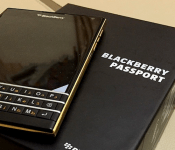
There’s apparently a ‘Gold Edition’ BlackBerry Passport

Which is to say, it’s time for Queen Beyonce to drop that BlackBerry Porsche Design. It’s so 2012.
Filed under: Cellphones, Misc, Mobile, Blackberry
Source: CrackBerry
.CPlase_panel display:none;

Watch the Austin City Limits Festival from the comforts of home this weekend

Can’t make the trip to Texas this weekend to catch the Austin City Limits Festival? No worries, Red Bull TV has you covered. Similar to coverage of Lollapalooza back in August, this weekend’s performances will be streamed over the interwebs for your in-home viewing. Two channels will begin broadcasting acts at 3:15 PM ET (2:15 PM CT) on Friday, showing the on-stage events as they happen through Sunday evening. Scheduled artists include Childish Gambino, Interpol, The Avett Brothers, Spoon, Lorde and many more. To view the action, you’ll need to install the Red Bull TV app that’s available for Apple TV, Xbox 360, Chromecast, Fire TV, Samsung Smart TVs and a range of mobile devices.
[Photo credit: Isaac Brekken/Getty Images for iHeartMedia]
Source: Austin City Limits Festival
.CPlase_panel display:none;

Cycloramic for iPhone 6 Captures 360-Degree Video Using Power Adapter for Support [iOS Blog]
Back in 2012, the first iteration of Cycloramic launched, using the vibration motor in the iPhone 5 to capture hands-free 360 degree video. When balanced on a flat surface, the vibration motor allowed the phone to spin on its own, a capability that also worked for the iPhone 5s, as it shared the same design as the iPhone 5.
The iPhone 6, however, has rounded edges that prevent the Cycloramic app from working in the same way — it’s no longer possible to balance the phone on its edge, allowing it to spin freely. The Cycloramic team has come up with an innovative solution to enable 360 hands-free panoramic video on the iPhone 6, however, utilizing the power adapter that the two phones ship with.
As demonstrated in the above video, when the iPhone 6 is placed between the prongs of the power adapter that it ships with, the vibration motor is strong enough to spin it around, capturing 360 degree panoramic videos in landscape mode.
Just put your iPhone 6 on top of your power adapter on a smooth and level surface (granite, marble or wood desk) and it will automatically rotates 360 degrees using the phone’s internal vibration motor. As it rotates, the phone takes multiple photos, instantaneously stitches them together, and generates a panoramic photo viewable in our immersive viewer.
The hands-free video mode is limited to the iPhone 6, unfortunately, and does not work with the larger-screened iPhone 6 Plus. Other app features, including a guided panorama mode and photo editing tools work with other devices, including the iPhone 6 Plus.
Cycloramic for iPhone 6 can be downloaded from the App Store for $1.99. [Direct Link]
.CPlase_panel display:none;
HTC tweets teaser for October 8 event

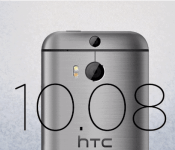
We might not have to wait to see HTC’s GoPro competitor as the company have just tweeted a teaser for an event on October 8th.
Quite possibly focused on the Desire Eye, HTC tweeted out the following:
Don’t adjust your screen. Just focus on the date. #HTCLive http://t.co/vQJrWCrjKG
— HTC (@htc) October 6, 2014
Of course, it could also be the Nexus 9, but I wouldn’t want to speculate…
AndroidGuys will be live on the ground to bring you the latest coverage from the HTC event on the 8th October.
Deals, Discounts, Freebies, and More! Click here to save today!
The post HTC tweets teaser for October 8 event appeared first on AndroidGuys.
.CPlase_panel display:none;
Detailed iPad Air 2 Claims Likely Based on Circulating Rumors, Not Genuine Leaked Information
Apple is expected to hold an event on Thursday, October 16, where it will unveil the second-generation iPad Air, Retina iMacs, and OS X Yosemite. Ahead of that event, The Michael Report claims to have acquired “pictures and illustrations” of the iPad Air 2 from “sources within Apple,” although it has opted not to share such evidence publicly.
While the site goes into significant detail about the iPad Air 2, it appears to be largely aggregating existing rumors about the device, adding little new information. Overall, the site claims the iPad Air 2 will have a slightly thinner body, something that has been claimed in previous reports and perhaps enabled by a new integrated display, as shown in early part leaks from April.
Along with its display prediction, The Michael Report details several minor design changes that have previously been seen in an iPad Air 2 dummy unit, which MacRumors also has had on hand for several months, suggesting the site may be basing much of its information off of a replica device rather than actual information.
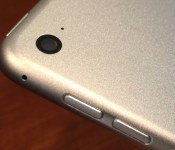
For example, the site suggests that the second-generation iPad Air 2 will do away with the mute switch to “achieve [a] thinner profile,” but that is likely an erroneous conclusion based on the unfinished design of the circulating dummy units rather than a legitimate leak as claimed by the site. On the iPad Air 2 dummy units, there is indeed a hole where the mute switch would normally be located. The Michael Report suggests this may be a microphone, but more likely, it is a pilot hole marking the location for the mute switch. Similar pilot holes have been seen for larger physical features such as SIM card trays in other dummy units and unfinished prototypes.
 Recessed volume buttons and pilot hole for mute switch from MacRumors’ dummy unit
The mute/vibration switch is completely gone in the new redesign, with sources from within Apple telling us that it was a necessary move to achieve the thinner profile of the new tablets. […]
The microphones on the iPad Air 2 have been relocated from the top of the iPad Air (where it currently is; within the antenna band) to next to the back camera modules. One of them is to the right of the camera module, the other is to the left — on the sides of the iPad Air.
Other predictions from The Michael Report include recessed volume buttons, a redesigned speaker grille, and a microphone hole relocated near the rear camera, all design elements that have been previously seen in the iPad Air 2 mockups. When examining the dummy device, MacRumors did notice that the recessed volume buttons and hole for the mute switch had been moved higher on the device than on the original iPad Air, nearly in line with the rear camera. The reason for this design change is unclear.
Echoing other previous rumors, the site’s predictions include an upgraded A8 processor, an 8-megapixel camera, support for Touch ID and Apple Pay, and 2 GB of RAM, which has not been confirmed but is a rumored upgrade to support split-screen multitasking.
Many of The Michael Report‘s predictions are based on previous rumors and are likely to be accurate, but some of the more unsubstantiated claims, like 2 GB of RAM and the lack of a mute switch are somewhat more nebulous.
 Another image of the iPad Air 2 mockup with Touch ID
Ahead of the launch of the iPhone 6, The Michael Report came out with a similar roundup that it claimed was based on contact with Apple employees, but several of the predictions (seemingly based on rumors circulating at the time) turned out to be wrong, including “a waterproof and dust-proof enhanced sapphire glass screen” and an “iPhone 6L” nomenclature, among other things.
Apple is expected to unveil its second-generation iPad Air on October 16, and it is possible the second-generation Retina iPad mini with support for Touch ID will also debut at that event. Apple is also expected to unveil Retina iMacs and provide a final look at OS X Yosemite before its public launch.
.CPlase_panel display:none;
 AIVAnet