


5G: 10 things we know about the next generation of mobile networks

Speculation is flying about 5G, the fifth generation of mobile networks. Will it be accessible anywhere? Will it infinitely expand bandwidth? First the 3G connection, then the 4G revolutionized how we connect on our mobile devices. So what sort of revolution will 5G bring? Amidst milling rumors, here in simple language, are ten things we know for sure.
1. It’s Not Here Yet

It probably won’t be here until 2020, experts say. A new G or “generation” rolls out every ten years or so. Right now, 5G is just a concept.
2. It Is Coming
In ten years, the current network will not be able to support the billions of bandwidth-hungry devices in user’s hands. The 5G connections will, as estimated, be able to download at a rate of more than 1 gigabit per second. That means a user could download a full-length HD video in an impressive two minutes.
3. It Won’t Just be Faster
The 5G connection has a few more tricks up its sleeve. Its design will focus on what the user needs—which might not be insane speeds, but rather the ability to support a hundred devices around the home, such as smart watches, fitness trackers, kitchen devices, and whatever else the tech giants unveil in the next five years.
4. It Will be Visible
That is, its base stations will be. 5G will likely use multiple input, multiple output technology, or MiMo, to achieve its high speeds. Samsung is currently experimenting with this technology.
5. It Will be Pricey
It will cost, both for the big companies and the consumer. In 2012, AT&T spent $14 billion to grow its wireless communication for 300 million users by the end of 2014. That’s just one company over two years. Multiply that by all the big providers, and you have a hefty investment in the U.S. alone. The consumer in turn will be shelling out the big bucks for a new phone; fourth generation devices won’t be able to support a 5G connection.
6. South Korea Is In the Lead

This year South Korea already invested $1.5 billion in the new 5G network to “make 5G services commercially available by the end of 2020,” starting the rollout in 2017, according to the Korea Times. Some speculate that South Korea wants it in time for the 2018 Winter Olympic Games, which they are hosting. They might not be sure what 5G is, but they intend to get there first. The U.S., U.K., China, and the Philippines, however, are not far behind.
7. Battery Life Will be Longer
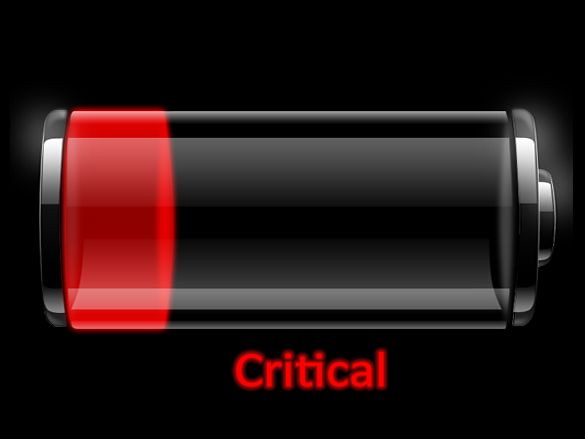
Your phone will last at least as long as your iPad—perhaps even longer. Details are fuzzy, but with universal reception even in rural areas, 5G won’t let your phone run out of battery like it used to.
8. It Will Be Everywhere
Even in this article, “mobile” and “connection” usually connote one device: the smartphone, and with good reason. 58 percent of American adults now own a smartphone, according to Pew Research. But with projected 5G capabilities, incredibly complex devices could now come to market–perhaps even making the smartphone obsolete.
Essentially, with the huge amounts of data that will be available, machines can talk to machines much more easily. Your refrigerator could tell your GPS that you’re out of
milk, for example. Driverless cars, mobile healthcare, or computer-chip-embedded agriculture could be feasible.
9. Efficiency is a Priority
Bigger isn’t always better, as American industry has learned the hard way over and over. As an estimated 50 billion devices connect by 2020, energy efficiency is a top priority for 5G’s designers. Bandwidth standards, infrastructure requirements, and the 5G operational frequency
are all currently topics of discussion.
10. Right Now, 4G is Better
Sure, people are dreaming big about 5G. But 4G’s capabilities are far from exhausted. So go ahead, get excited about 5G. But while you’re at it, don’t forget that 4G still has a lot of love to give.
Image sources: Flickr 1 | 2 | 3
The post 5G: 10 things we know about the next generation of mobile networks appeared first on AndroidGuys.
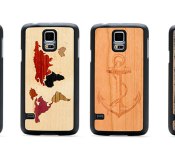
CARVED wood case for Samsung Galaxy S5 review

Samsung Galaxy S5 owners jealous over the Moto X’s new wooden back plates get some of that can also get in on the growing trend. What’s more, it’s possible to do so without breaking the bank.
We recently reviewed a case from Carved designed for the Samsung Galaxy S5. After spending a couple of weeks with the unit we found the product to be solid and more durable than expected. Weighing less than we anticipated, the case was also lighter.
 The Carved case we tested had a dragonfly on the rear; the final product was very consistent with the picture on the website. With even the most minute detail represented on the back, we couldn’t help but want to get our hands on other models. Suffice it to say, it’s very sharp stuff.
In terms of thickness and durability, the Carved is on the opposite end of the spectrum from something from, say, Otterbox. You do get protection for the edges and back of the phone however it’s more aesthetics than durability. We weren’t in any hurry to drop our phone to test whether it would keep our screen from breaking.
If you’re the kind of user who is rather careful with your phones then you’ll have no issues with Carved. On the other hand, accident prone people might opt for something more rugged.
With dozens of designs to choose from and multiple types of wood, Carved has an excellent selection for a variety of smartphones. In addition to the Samsung Galaxy S5 you’ll find Nexus 5, Galaxy S4, and Galaxy S3 cases. And, for those of you with iPhones in the house, there’s a slew of designs for those as well.
Pricing generally shakes out to anywhere from $26-$43 dollars; most we saw were in the $31 range. Swing by Amazon and you might find some of them on sale, particularly for the older smartphones.
The post CARVED wood case for Samsung Galaxy S5 review appeared first on AndroidGuys.
VPN Unlimited Premium: 3 years of safeguarded activity, 70% off [Deal of the Day]

Whether you’re concerned about security domestically or you’re a frequent traveler, transmitting your data over public Wi-Fi and mobile carrier networks isn’t always the safest option. Enter the VPN Unlimited Premium service, providing you with a dedicated server to protect your online activities.
With this 3-year premium plan you’ll have access to worry-free browsing, unlimited bandwidth, and the ability to unlock territory-restricted content by choosing a server from the country of your preference. Some users have found that, through bypassing their ISP’s restrictions, they’ve even increased their transfer speeds.
Normally priced at $65, VPN Unlimited is now offering our readers this 3-year plan for just $19. In addition, this license affords you access across 5 devices (mobile or PC).
Check this deal out, and many others at deals.androidguys.com!
The post VPN Unlimited Premium: 3 years of safeguarded activity, 70% off [Deal of the Day] appeared first on AndroidGuys.
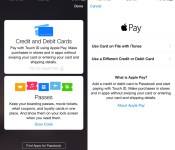
Apple Responds to CVS/Rite Aid Controversy: ‘Overwhelmingly Positive’ Response, Working to Add Merchants
Last week, news surfaced that popular drugstore Rite Aid was disabling support for NFC and Apple Pay in its retail stores and over the weekend, CVS followed in its footsteps. Apple has now commented on the situation, telling Business Insider that it’s working to get as many merchants on board with Apple Pay as it can.
The feedback we are getting from customers and retailers about Apple Pay is overwhelmingly positive and enthusiastic. We are working to get as many merchants as possible to support this convenient, secure and private payment option for consumers. Many retailers have already seen the benefits and are delighting their customers at over 220,000 locations.
Both CVS and Rite Aid are members of Merchant Customer Exchange or MCX, a team of retailers that are designing their own payments system to compete with Apple Pay.

Headed up by Walmart, which has also publicly stated that it won’t be supporting Apple Pay, MCX is composed of several different retail outlets and restaurants, including Best Buy, Lowe’s, Old Navy, Southwest, Target, 7 Eleven, Dunkin Donuts, Hobby Lobby, and more.
MCX’s payment solution, CurrentC, is currently in testing in Minnesota and takes a decidedly different approach to mobile payments. CurrentC does not use NFC, instead basing payments around the scanning of QR codes with a smartphone camera. CurrentC is highly beneficial to merchants, but appears to be of questionable value to customers given that it requires both a social security number and a driver’s license number, along with access to a bank account.
Despite only being available in Minnesota at the time being, MCX’s CurrentC app has received hundreds of negative reviews from Apple Pay supporters. Android and iOS users on reddit have also teamed up to call for a boycott on all MCX partners, as disabling NFC support to prevent Apple Pay purchases also disables Android-based payment solutions like Google Wallet.
Though quite a few big name retailers have opted out of Apple Pay, Apple has signed on with several major partners including Macy’s, Chevron, Disney, McDonald’s, Nike, Petco, Whole Foods, and more. Apple Pay is accepted at the retail stores of any of its partners, and at any store that accepts NFC payments.
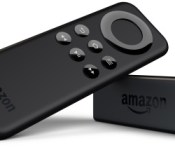
Amazon Launches $39 ‘Fire TV Stick’ to Compete With Chromecast, Apple TV
Amazon today announced the launch of a new Fire TV Stick, designed to compete with Google’s Chromecast and Apple’s Apple TV. The Fire TV Stick is a media streaming stick much like the Chromecast, designed to allow users to plug it in to the HDMI port of a television to access content like TV shows, movies, games, and more.
The Fire TV Stick offers a dual-core processor, 1GB of RAM, 8GB of built-in storage, and dual-band/dual-antenna MIMO Wi-Fi. It can be controlled with a remote control, a smartphone, or voice control through an app. According to Amazon, it offers 50 percent more processing power than the Chromecast, along with 2x the memory and 32 times more storage.

“Fire TV Stick is the most powerful streaming media stick available–a dual-core processor, 1 GB of RAM, 8 GB of storage, dual-band and dual-antenna Wi-Fi, included remote control, voice search with our free mobile app, easy set-up, an open ecosystem, and exclusive features like ASAP for instant streaming,” said Jeff Bezos, Amazon.com Founder and CEO. “The team has packed an unbelievable amount of power and selection into an incredible price point–Fire TV Stick is just $39.”
In addition to allowing users to access Amazon Prime content, the Fire TV Stick also supports third-party apps like Netflix, Hulu Plus, WatchESPN, Spotify, Pandora, and more, delivering much of the content that’s also available on competing products like the Chromecast, the Apple TV, and products from Roku.
The Fire Stick offers “Fling” technology, letting users switch between viewing content on their televisions and Fire Phone or Fire tablet, and it provides wireless mirroring from both compatible Amazon products and those that support Miracast. It also supports various Amazon technologies like X-Ray for looking up movie, music, or TV show information, and it utilizes Whispersync to sync all of a user’s content.
Amazon also has the Fire TV, a set-top media streaming box that’s a closer competitor to the Apple TV than the Fire TV stick, but the slimmed down plug in-based media sticks from Amazon and Google are far cheaper than the Apple TV, which still costs $99.
While Google and Amazon have concentrated on offering a slimmer portable media solution to consumers, Apple is said to be working on a revamped set-top box that might include support for third-party apps and games along with deeper integration with cable TV channels. It is unclear when Apple might launch its revised set top box, as development has reportedly been delayed several times over the course of the last two years.
Amazon’s Fire TV Stick is priced at $39, but for the next two days, Amazon Prime members will be able to purchase the device at a discounted price of $19.

Concept Video Demonstrates Apple Watch-Style Interface on iPhone [iOS Blog]
Apple’s upcoming wearable, the Apple Watch, takes advantage of a unique interface that arranges apps with circular icons in a cluster-based design for quick and easy access with the device’s included Digital Crown, or scroll wheel.
YouTuber Lucas Menge has created a mockup of what the Apple Watch interface might look like when translated to a larger device, like the iPhone. As with the Apple Watch, Menge’s concept lets users zoom in and out on the app landscape, viewing one small cluster of apps or all the apps installed on the device.
The interface incorporates app names, which deviates from the design on the Apple Watch, and simple swipes allow users to scroll through the apps installed on the phone. Tapping when zoomed out will zoom into the area that’s been tapped, and when zoomed in, a tap on an icon launches an app.
Menge, whose design was inspired by a mockup post created by 9to5Mac‘s Michael Steeber, has published his prototype code for the design on GitHub. Apple Watch, with its unique Watch OS operating system, will be available beginning in early 2015.

Tell us how you really feel about the Xbox One and the PlayStation 4

It’s been almost a year since the Xbox One and PlayStation 4 were released in North America, with sales reaching over 15 million units combined worldwide. While we reviewed both consoles, giving the Xbox One an Engadget score of 81 and the PS4 a score of 83, what we reviewed were the systems as they existed at launch, with some great features and a few kinks, but still lots of potential. Since then, plenty has happened for both machines — like Xbox One shedding its mandatory Kinect unit and the release of a few marquee titles like Titanfall and Destiny. To find out where each system stands today, we turn to you, our readers, to let us know about your own experiences with the two consoles. How many games have you bought? Which do you play every day? Do you still make use of options like voice control? Write a detailed review of the Xbox One or PlayStation 4 on their product pages to let us know, and we’ll feature a few of the most insightful comments in our roundup posts next month.
Image credit: Javier Domínguez Ferreiro/Flickr
Filed under: Announcements, Gaming, Sony, Microsoft

HTC Sense 7 screens show what it is shaping up to look like with Lillipop
Androids latest installment of Android treat, Lillipop, is all the rage right now. With Android 5.0 it is readily apparent that manufacturers are finally being forced to up their game a little bit and bring in more of the Google design elements to their own skins. This is a win for Google, the OEMs, and the consumers really. While we don’t get much of a look at everything that HTC has been working on, a couple of leaked screens do show some pretty fantastic Material Design elements at play.

It might be a bit of an adjustment for many, while others coming into Android for the first time will more than likely be in awe of the bold coloring. It will be interesting to see the various manufacturers approaches to the new Android version. Google is expected to release the final Android 5.0 Lollipop code on November 3rd when the Nexus 9 officially becomes available. HTC has said that they will have the Lollipop update available 90 days from Google release, at least for the HTC One M8. The One M7 and others should be in the mix too. That would put it out just after the New Year. How long it takes to get certified and pushed through the various carries is a totally different story.
Source: HTCSource
//<![CDATA[
ord = window.ord || Math.floor(Math.random()*1E16);
document.write('‘);
//]]>
The post HTC Sense 7 screens show what it is shaping up to look like with Lillipop appeared first on AndroidSPIN.

LG G Watch R confirmed for AT&T retail locations
LG recently announced the global availability of the LG G watch R. That would be the other round Android wear watch. The device is slated to start hitting digital and physical shelves all over the globe in November. We know it will launch in the Play Store for sure, but now we also know that AT&T will carry the device in-store as well.

They don’t offer up any more detail than that though. Pricing and availability will announced at a later date.
A quick recap: The LG G Watch R carries the Snapdragon 400 processor, 512 RAM, 4GB internal storage, 410 mAh battery, a 1.3-inch full circle P-OLED screen and various sensors. It is also IP67 dust and waterproof rated. It measures in at 46.4 x 53.6 x 9.7 mm and weighs 62 g.
As far as round Android Wear devices, this is looking like a good option. I am hearing some distaste for the ll black housing though without any other immediate option. Where does your Android Wear heart lay? Did you already pick up one that you love, or are you waiting for the G Watch R, or perhaps the ASUS ZenWatch or Sony SmartWatch 3.
Source: AT&T
//<![CDATA[
ord = window.ord || Math.floor(Math.random()*1E16);
document.write('‘);
//]]>
The post LG G Watch R confirmed for AT&T retail locations appeared first on AndroidSPIN.

T-Mobile rolls out Wideband LTE Coverage to the Greater Bay Area

Living in the Greater Bay Area of California and flying high and proud flags of Magenta for T-mobile as your carrier? Well good. Then you will be happy to know that throughout Alameda, Contra-Costa, Marin, Napa, San Francisco, San Mateo, Santa Clara, Solano and Sonoma counties in the Bay Area all have Wideband LTE depoyed and up and running. This means you should see a dramatic increase in your LTE speeds on your mobile devices.
“We know Bay Area T-Mobile customers are going to notice and take advantage of the faster LTE speeds Wideband LTE provides,” said Neville Ray, Chief Technology Officer, T-Mobile. “Just because we’ve made an upgrade to the network in these areas, don’t think we are done yet. We are continually working to enhance and expand LTE coverage for our customers every day.”
According to T-Mobile Bay Area customers that are using an average of 2.5GB per month of data are clocking speeds faster than Verizon, and AT&T as well as reporting nearly twice the speeds of Sprint. All of this was done trough a 3rd party crowd-source speed test. Many are reporting 21Mbps and some have seen speeds as high as 90Mbps. Not to shabby T-Mobile.
If you are in the Great Bay Area hit the speed tests and see what you are pulling now. Let us know if you are seeing a boost or if things are still hovering.
Source: T-Mobile
//<![CDATA[
ord = window.ord || Math.floor(Math.random()*1E16);
document.write('‘);
//]]>
The post T-Mobile rolls out Wideband LTE Coverage to the Greater Bay Area appeared first on AndroidSPIN.
 AIVAnet