


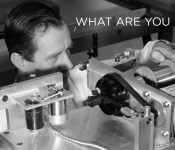
CERN hopes you know what these things are, cause it has no idea

Scientists, we’re told, need to be very good at record keeping in order to make sure that others can follow their logic. It’s just a shame that whoever was running the photography archive at CERN wasn’t paying attention during that lesson. The European research outfit is digitizing its archive of around 120,000 photos taken between 1955 and 1985. Unfortunately, some of the images aren’t labelled, which makes it hard to identify the scientists in the pictures, or the equipment that they’re using. That’s why CERN is asking that if anyone does know the people or hardware, that they email in and help get the database up to date. In order to help, we’ve had a go ourselves, although we’re sure that you out there can do a much better job.
[Image Credit: CERN]
Filed under: Science
Via: NBC News
Source: CERN

Movie laser guns have nothing on the real thing

Ray guns are high on the list of “physics gone wrong” movie tropes. Unlike the real thing, the blasts are much slower than light, visible in clear air and (depending on who’s firing) highly inaccurate. However, laser physicists in Poland have just shown what a powerful laser really looks like. Though no camcorder can follow a light beam, the team used a high-speed camera timed with rapid pulses to simulate a beam traveling through the air. They also added water vapor jets midway to show the plasma ionization (we have no idea what the ghost-like people were doing, though). While the laser fired infrared light, the white beams are actually plasma filaments that formed alongside the pulse. The interaction between the pulse and plasma makes it possible to have a “self-focusing” laser that can be fired far into the atmosphere to detect pollution, for instance. Anyway, you don’t need to justify your work to us, Polish scientists — you had us at “laser videos.”
Filed under: Science
Via: Gizmag
Source: IPC PAS and FUW (YouTube) (1), (2)

Christian Bale Hired for Steve Jobs Role in Sorkin Biopic Without Auditioning
Screenwriter Aaron Sorkin has confirmed in a Bloomberg interview that actor Christian Bale will indeed star as Steve Jobs in Sorkin’s upcoming biopic based on Walter Isaacson’s 2011 biography of the Apple co-founder. Bale, who was said last week to be in talks for the role, met with Sorkin but did not have to audition for the part.
“We needed the best actor on the board in a certain age range and that’s Chris Bale,” Sorkin told Bloomberg Television’s Emily Chang on a coming edition of “Studio 1.0.” “He didn’t have to audition. Well, there was a meeting.”
Shooting for the film will begin in the coming months in what will be a challenging role for the established actor. Bale reportedly will appear in every frame of the movie with speaking parts that exceed three movies combined. The movie will focus on three 30-minute scenes that detail three different product launches.
The movie will be released by Sony, with Oscar-winning director Danny Boyle of Slumdog Millionaire fame associated with the project.

Amazon’s £79 Fire TV set-top box now available in the UK

Amazon announced the impending arrival of its Fire TV set-top box in the UK last month, and right on cue, it’s now available for £79 through the company’s online store. It’s Amazon’s attempt to steal market share from the likes of Apple, Google and Roku, though the only thing that really differentiates it from competitor products is its second job as an Android mini-console. And for that, you need one or more of the Fire game controllers, which go for £35 a pop. Fire TV also enables you to push content from smartphones and tablets to the big screen, and its remote has a built-in microphone for shouting search criteria into. Otherwise, the set-top box is merely a window to various content streaming apps, with Amazon’s services obviously taking pride of place, potentially making it the best option for loyal patrons of the Prime ecosystem.
Filed under: Home Entertainment, HD, Amazon
Source: Amazon

Watch an episode of ‘MST3k,’ with or without the jokes explained

Ordinarily, people talking during a movie is our idea of hell, but in Mystery Science Theater 3000‘s case, we’re more than happy to allow it. The thing is, unless you’ve got a pop culture brain that’d make Tarantino blush, you’re not going to know enough to get the joke. That’s why a group calling themselves The Annotated MST have been painstakingly researching and explaining every single gag from the show so you don’t feel left out. Thankfully, the group has teamed up with Shout! Factory, MST3k’s DVD label, to release a fully-amended and legitimate copy of Mitchell onto YouTube (after the break) that you can switch on and off depending on if you need a joke explained. Just be glad they don’t have this sort of thing in real life, or else no-one would go to the cinema ever again.
Via: The AV Club

Google is partnering with Oxford University to improve its A.I.

Google is assembling a team comprising some of the world’s most renowned artificial intelligence researchers to create… something? Back in January, Google bought A.I. company DeepMind for a reported $400 million, and no one really knew why. Now, it’s announcing a partnership with the Oxford University to further its research into image and language recognition. As part of the partnership, Google has acqui-hired two companies born from the renowned university. They are Dark Blue Labs, a startup focused on natural language understanding, and Vision Factory, which describes itself as offering “world-class, scientifically-proven object recognition and text recognition systems.” All seven founders of the two companies will be joining Google, which is hoping the move will accelerate efforts to improve speech and image recognition through “deep learning,” a type of artificial intelligence that mirrors biological neural networks.
DeepMind was founded by Demis Hassabis, a British scientist who, among other things, co-designed and lead programmed Theme Park at age 17. After releasing a pair of games under his own studio, Hassabis left the video game industry to undertake research in cognitive neuroscience, and has since taken that knowledge to work on developing the next generation of artificial intelligence. There was much speculation as to why Google had purchased DeepMind, but although the true aim of the acquisition remains unknown, one thing is clear: Google is serious about improving its artificial intelligence.
Filed under: Google
Source: Google

Some Xbox One users can already add custom backgrounds to the console

The folks in Microsoft’s Xbox One update preview program are a pretty privileged bunch. Hot on the heels of this week’s announcement that the next patch for its new console will bring custom backgrounds, Redmond’s giving that access to the testers starting today. This is in addition to the ability to use a custom color or achievement image for your backdrop, and comes as an update to the system’s media player app. Sounds pretty simple to use, too: just open the JPEG or PNG file of choice from a USB drive, hit the controller’s menu button and choose to set the image as a background. What’s more, the outfit has even posted a Photoshop template for calculating just what in your picture will and won’t be obscured by the Xbox One’s tile-filled dashboard. Voila, now you’ll have something other than the infinite blackness of eternal night to occupy the system’s UI.
Filed under: Gaming, Home Entertainment, HD, Microsoft
Source: Major Nelson

Google Now wants to help protect your eyes from eclipses

Google Now has just added more cards to its ever-increasing arsenal, and this time, they’ll help you prepare for eclipses and possibly dangerous situations. The new eclipse card lists almost everything you need to know about the phenomenon, including what it is, how to make a pinhole projector to view it and how to photograph it safely. If you can see the card right now, then you’re most likely somewhere in North America, and the partial solar eclipse tomorrow will be visible where you live, weather permitting. The second card, on the other hand, shows you any police activity happening in your area and nearby places, though an Android Police commenter suggests the card isn’t exactly new, just rare. Sure, getting one of these cards might be a bit stressful, since nobody wants to hear that there are bad guys prowling around their neighborhood. But at least it can let you know when to be extra careful or to avoid places where there’s trouble.
[Image credit: Zhan Tian/Getty]
Source: Android Police, Jonathan Berry (Google+)

Apple to Open 25 New Stores in China Over Next Two Years, Says CEO Tim Cook [Mac Blog]
Apple will open 25 new Apple Stores in China over the next two years, according to CEO Tim Cook who spoke to Chinese news outlet Sina (via Reuters). The news comes as Cook was reported yesterday to be meeting with China’s Vice Minister Ma Kai to discuss the security of user data. The CEO also tweeted a picture of himself in Zhengzhou, where he visited a Foxconn assembly factory.
 The Apple Store at the Hong Kong Plaza in Shanghai
Apple opened its first location in China in 2008 with a store in Beijing, and has since built a number of other stores in other major areas like Shanghai, Shenzhen, and Chongqing. The company has also greatly expanded its presence in the region throughout the past few years, striking a deal with the country’s biggest carrier China Mobile and meeting with government officials to discuss market growth.
Later this week, Cook will reportedly attend meetings at Beijing’s Tsinghua University, where he is a part of the advisory board to the university’s School of Economics and Management. The CEO is said also to be meeting with Chinese firms Baidu and Alibaba over the next week to discuss collaboration.
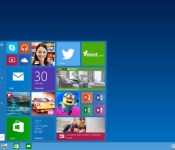
Windows 10 has new ways to protect you against internet data breaches

There are plenty of online services that use two-factor authentication to reduce the chances of someone hijacking your account after a data breach, but what about the operating system on your PC or phone? You’ll get that safeguard if you use Windows 10, according to a Microsoft security brief. The new OS will optionally treat a device (including something nearby, like your phone) as one authentication factor when signing into a local or internet account, and a PIN code or biometric reader as the second. If hackers find your login data sitting on a server, they won’t get to use it unless they also have your gear — and in some cases, they may need a fake fingerprint as well.
Not that Microsoft is leaning solely on this to guard your digital goods. The new platform will store user access tokens in a secure “container” that can’t be exposed, even if an intruder messes with the Windows kernel’s code. It’ll also keep your home and work data separate (like Android for Work or BlackBerry Balance), give you finer-grained control over virtual private networks and let companies prevent staff from installing anything but digitally signed apps. This doesn’t mean that you can stop worrying about control of your info as soon as you install Windows 10, but it could reduce the chances of a full-fledged security disaster.
Filed under: Internet, Software, Microsoft
Source: Windows For Your Business, The Fire Hose
 AIVAnet