
Finally, an open-source smart toothbrush with a subscription plan

But what if you really want to know exactly what you’re doing with that fancy toothbrush via the web or your smart device? That option (which includes a 3-axis motion tracker plus stats via an app), will set you back $150. To be fair, that also grants software access to the accelerometer and built-in microcontroller to do with what you will. The whole shebang is open source, so the hope is the development community will build even more apps to take advantage of the hardware. Of course, none of this will be possible unless the $12,500 crowdfunding goal is reached. But you do want Oral B to have some competition, don’t you?
Filed under: Household, Mobile
Source: CrowdSupply
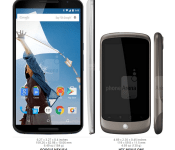
A Nexus 6 vs HTC Nexus One size comparison shows us exactly how far the Nexus line has come
 I think it would be a pretty fair statement to say that the new Nexus 6 polarizes the Android community. Some love it for the performance beast it is, while others find it hard to overlook the gigantic 5.96-inch display. One thing is certain, however, and that is the Nexus 6 is a spectacular culmination of the Nexus devices that came before it, some of which it physically dwarfs. To picture by how much the Nexus 6 dwarfs its predecessors, Phone Arena has constructed some mockups, of which the Nexus 6 vs HTC Nexus One size comparison is the most pronounced. The front surface of the Nexus 6 appears to almost equally about double of the Nexus One’s front face, remarkable to think that 3.7-inches might have been enough for us at some point.
 A more traditional size comparison of the Nexus 6 and Nexus 5 is perhaps less spectacular, but no less distinct – even the Nexus 5 looks tiny compared to its new big brother. I very much doubt that nigh on 5 years ago we would have imagined that the phones that we would eventually own could eventually measure 6-inches, but then again it’s hard to fathom just how far hardware and software developments have come in that identical period. Some days, you just have to love technology.
What to you think about how far the Nexus line of devices has come? Let us know your thoughts in the comments below.
Source: Phone Arena
//<![CDATA[
ord = window.ord || Math.floor(Math.random()*1E16);
document.write('‘);
//]]>
The post A Nexus 6 vs HTC Nexus One size comparison shows us exactly how far the Nexus line has come appeared first on AndroidSPIN.

Samsung teases the Samsung Galaxy Note 4 Android Lollipop update with a sweet tweet
 With the official release of Android Lollipop, all eyes are on the manufacturers to see which of them can get their updates out the fastest. It’s no surprise then that Samsung has tweeted the above picture to presumably confirm that the Samsung Galaxy Note 4 Android Lollipop update is on its way. Hopefully the update comes a little faster than this year’s update to the Note 3 which really only started in late February, and while that was certainly faster than some other manufacturers, we expect better from Android’s most prolific OEM to date. Perhaps they will be a little faster this time if they don’t put TouchWiz over everything that Google has painstakingly redesigned with Material Design…
The Samsung Galaxy Note 4 is Samsung’s most attractive package yet in 2014, with a 5.7-inch Super AMOLED Quad HD display powered by the Snapdragon 805, it’s one of the few phones out at the moment which even holds a torch to the size and functionality of the Nexus 6 – and yes, in this particular instance, size is a good thing. Samsung’s track record of updates certainly isn’t without tarnish, because although its flagship devices usually get updates sooner or later, plenty of its mid to low range devices never see an update, something we’ll be keeping an eye on this time around with Android Lollipop.
Are you leaning towards getting a Samsung Galaxy Note 4? Let us know your opinions in the comments below.
Source: Twitter via TalkAndroid
//<![CDATA[
ord = window.ord || Math.floor(Math.random()*1E16);
document.write('‘);
//]]>
The post Samsung teases the Samsung Galaxy Note 4 Android Lollipop update with a sweet tweet appeared first on AndroidSPIN.
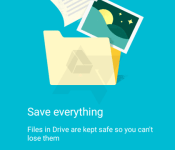
Google adds Material Design to Google Drive App
 Most of Google’s apps will be receiving a design update within the next month to match up with Lollipop’s general look and feel called material design.
The first thing you’ll notice upon opening the new app will be new images to represent the functions of the app. You’ll also notice some of the new material style, much like the other app design updates. One of the biggest updates is the removal of the bar formerly at the bottom of the app and the replacement with a red FAB that controls the document creation process.
All in all, not too much has changed in the way of usability, so there shouldn’t be a learning curve to the new update. After you’ve tried out the new design, leave a comment below and let us know what you think.
Source: Android Police
Come comment on this article: Google adds Material Design to Google Drive App
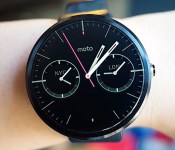
Update brings mood lighting, better battery life to your Moto 360

When the Moto 360 last got an update, the painfully handsome smartwatch seemed to get a noticeable boost in battery life. Now, with a new bit of software, Motorola’s itching to improve its battery life just a little more… as well as stamp out a few bugs for good measure. Perhaps the most notable addition is the 360’s newfound ability to shut off Ambient Mode (which leaves the screen on, albeit at a lower brightness) automatically once its battery level hits 15 percent. Also on deck this time are some minor UI changes (you can temporarily dismiss a notification without leaving the watch face), the addition of mood lighting when you plop the thing in its dock, and some behind-the-scenes Bluetooth improvements. All of the above will be hitting your wrist sooner or later — Motorola says the update is rolling out in waves, so be patient if your smartwatch doesn’t get a little smarter as quickly as you’d like.
Filed under: Mobile
Source: Official Motorola Blog
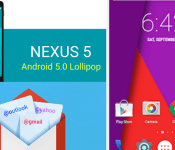
Android Lollipop Nexus 5 Goodness and Material Designed Wallpapers! – ManDroid Daily

The ManDroid Daily is here, and so is that Android Lollipop. The new developer preview hit the Nexus 5, and I hope you guys are running it. I just flashed it on my N5 yesterday, and expect a video soon. The great thing about these new builds is the fact that developers out there strip it and pull all the goodies out of it. The crowd pleaser is always the wallpapers, and you can get all those wallpapers by hitting the link below. Enjoy them and enjoy the Daily.
Android News
Get Android Lollipop on your Nexus 5 without a computer
Gmail 5.0 brings multiple email accounts
Android Wear update for the Moto 360
Android Lollipop wallpapers
//<![CDATA[
ord = window.ord || Math.floor(Math.random()*1E16);
document.write('‘);
//]]>
The post Android Lollipop Nexus 5 Goodness and Material Designed Wallpapers! – ManDroid Daily appeared first on AndroidSPIN.

BBC filmed baby geese gliding down a cliffside in 4K for its latest nature doc

In the early days of HDTV, BBC’s nature docs were the go-to showpieces for your new home theater gear. Some time has passed since then, though, and Planet Earth on Blu-ray doesn’t look quite as good as it used to. With Life Story, however, the outfit’s jumped into the world of UHD 4K filming for the first time. How’s it look? Terrifying. Not for the reason you might expect, though! The teaser clip is of the death-defying journey that Greenland’s barnacle geese chicks take to leave their nests. Because they can’t fly, the adorable goslings have to glide some 400 feet down a sheer cliffside to their parents and the feeding ground below. And by glide, we mean enter a controlled fall for a bit and then miraculously survive after tumbling violently along the rock wall. If the streaming clip over at the source isn’t enough for you, the full episode debuts on BBC One at 9 p.m. this Thursday and we’ve embedded the series’ trailer just below.
[Image credit: BBC]
Filed under: Home Entertainment, HD
Source: BBC
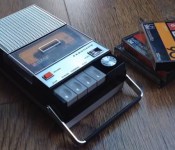
Someone put Spotify inside this old cassette recorder

The above contraption may look like the kind of cassette player bygone teens used to use to create mix tapes, but it’s not — it’s a Raspberry Pi-powered Spotify speaker with NFC-based playlists. Its creator, a British builder named Matt Brailsford, said he came up with the idea after being introduced to the iRecorder, a novelty speaker designed to look like a traditional cassette recorder. Brailsford’s project is more than a glorified iPod dock, however: it uses those NFC playlists are embedded inside cassette tapes to dictate which of his Spotify jams is active, and the entire experience (volume, play, next and stop) can be controlled with the ancient recorder’s analog buttons below. The NFC-tapes are even double sided. Sadly, Brailsford’s modern technology couldn’t update all of the cassette player’s features: that record button doesn’t do anything anymore.
Via: CNET
Source: YouTube

Carnegie Mellon University wants to bring the moon home with virtual reality

Google’s Lunar Xprize is still alive and well, and researchers at Carnegie Mellon University think they have the $30 million answer to beaming video from the moon: a telepresence robot. Naturally. Instead of simply broadcasting footage of the moon’s surface, however, the scientists want to, as they say, “bring the Moon back” according to the BBC. How? By mating the spacefaring robot with Oculus Rift headsets here on Earth; turn your head on the Third Rock From the Sun and the robot on the moon will supposedly turn in tandem via head-tracking. There are a few caveats that had to be overcome, however. Namely, the Rift needs a pair of simultaneous video feeds to properly achieve a convincing virtual reality experience, and, by design it can’t accept two streams.
The team says that it overcame this and a few other hurdles (hopefully lag is one of them) with a nonstop hackathon. The team’s goals are lofty, but we can’t help but admire them nonetheless. Ultimately CMU wants hundreds of its robots on the moon and a Rift headset in every room — allowing practically anyone to see what Apollo 11’s crew saw 45 years ago.
[Image credit: Getty Images]
Filed under: Science, Alt, Google
Source: BBC

Drop it like it’s hot with Illumibowl’s disco toilet light

Does your lack of cat-like night vision mean you make messes when hitting the bathroom at 2 a.m.? Thanks to Kickstarter, that could become a thing of the past. The Illumibowl is an LED light that sticks onto the outside of your toilet and casts a beam of colored light into the commode. No, not a yellow one. The gizmo’s motion sensor activates the light when you walk into your powder room and turns off after about a minute of inactivity. Why would you even need one of these? Because temporary blindness to empty your bladder isn’t ideal.
The project is seems pretty far along, too. Should Illumibowl hit its funding target (it’s currently sitting at $12,437 of its $20,000 target with 36 days remaining), devices will ship out this coming January; fairly fast turnaround compared to some crowdfunding campaigns. Perhaps best of all, getting on board only costs $15 — a small price to pay for hopefully never falling in to the toilet again. For video proof of how it all works, check out the the pledge page and the video embedded below.
Filed under: Household
Source: Kickstarter
 AIVAnet