



Researcher finds a way to mimic curves in space-time

Here on Earth, it’s rather difficult to replicate curved space-time — to get that kind of effect in nature, you’d have to get uncomfortably close to black holes and other distant space objects. However, researcher Nikodem Szpak may have found a way to simulate that bend without facing oblivion. His proposed technique puts supercooled atoms in an optical lattice created by a laser field; so long as the laws of quantum mechanics and thermodynamics hold true, the atoms should behave like they’re experiencing curved space-time. You can even change the lattice’s pattern to mimic different circumstances, whether it’s a moment right after the Big Bang or the surface of a star.
Scientists will want to confirm that the technique works in practice, which could take a long time. You’d be freezing atoms to near absolute zero, for one thing. If the technique pans out, though, it could be very helpful for understanding the universe. You could verify complex space-time theories in the lab instead of simply trusting that your math is on the ball, or test advanced spaceflight concepts without having to build a ship. This is just a stepping stone toward bigger ideas and technologies, but it’s potentially a huge one.
[Image credit: Getty Images/Science Photo Library RF]
Filed under: Science
Via: ExtremeTech
Source: Cornell University Library

Dropbox for iOS Updated with Touch ID Integration, iPhone 6 and 6 Plus Support [iOS Blog]
File-sharing service Dropbox has updated its official iOS app with a number of new features, including full optimization for the iPhone 6 and 6 Plus as well integration with Touch ID for more convenient unlocking. The app also includes a fix for previewing rich text format format files and general stability and performance improvements.

Dropbox saw its last major update last month after the release of iOS 8 which brought a new Notification Center widget, a new Share extension that allows files from other apps to be opened and saved, and the ability to manage shared folders in the app. A number of other apps have also included support for Touch ID since the release of iOS 8 last month.
Dropbox is a free app for the iPhone and iPad and can be downloaded from the App Store. [Direct Link]

Apple Expecting In-App Purchases to Make Up Most of Early Apple Pay Activity
Ahead of the launch of Apple Pay tomorrow, The Wall Street Journal has posted an overview of the mobile payments service with some insight from Apple about what it expects from it over the coming months.
Apple’s Senior Vice President of Internet Software and Services Eddy Cue stated that he expects the biggest share of early Apple Pay transactions to be in-app purchases. Currently, in-app purchases require users to sign into their iTunes account and set up a new card if one isn’t registered already. Apple Pay will allow users to simply use the Touch ID fingerprint sensor on a device to complete an in-app purchase.

Cue also spoke on how the company sees its roll-out of the service:
“We’re trying to do something that I think is a game changer and it requires a lot of people to play together,” said Eddy Cue , Apple’s senior vice president in charge of Internet software and services, in an interview. “There’s a lot to do here and we have a lot of work to do, but it should be huge.”
While the company’s mobile payments solution will also allow shoppers to physically buy items in-store using their iPhones, many of Apple’s partners have yet to receive the payment terminals needed to process transactions. However, Apple expects many merchants to upgrade their terminals in the next year which will help the service. Apple Pay will not be compatible with corporate credit cards, prepaid cards, or even store cards like Macy’s popular credit card offering. Macy’s spokesman Jim Sluzewski stated that he expects Apple to add support for the Macy’s card eventually.
The article also notes that Apple Pay on the iPad Air 2 and iPad mini 3 will only be compatible with in-app purchases and cannot be used to purchase items in-store. This is likely due to their lack of an near-field communication (NFC) antenna, which is what the iPhone 6 and iPhone 6 Plus use to interact with compatible payment terminals. The Apple Watch will have an NFC chip when it launches early next year and will allow users to make in-store Apple Pay transactions.

A report from Digiday also claims that Apple will integrate Apple Pay with its iAd business, citing sources familiar with the matter. The move would allow advertisers to embed a “tap-to-buy” button in their mobile ads, and would be similar to what Facebook and Twitter did for their services earlier this year. Apple is also said to be working in iAd’s new retargeting feature with Apple Pay, which would allow retailers to push targeted ads with buy buttons to users. Apple is expected to integrate Apple Pay with iAd by the end of this year.
Apple Pay will be launching tomorrow, October 20 alongside iOS 8.1 and will be compatible with credit cards and debit cards from major payment networks including American Express, MasterCard, and Visa. Several banks including Wells Fargo, Bank of America, Capital One and more are also listed as partners.
In-store payments will Apple Pay will require the iPhone 6 or iPhone 6 Plus, and will also be supported by the Apple Watch when it launches later this year. All three aforementioned devices plus the iPhone 5s, iPad Air 2, and iPad mini 3 will be able to make online purchases with Apple Pay.

NASA records Falcon 9 rocket’s descent as research for Mars landings

NASA wants to refine the ability of future spacecraft to land on Mars, since they’ll have to ferry humans and other large payloads to the red planet. To that end, the agency has teamed up with SpaceX to record thermal camera footage of the Falcon 9 rocket as its first stage detaches and burns through the atmosphere. The first stage of a rocket is typically its largest part and what’s ignited at launch — once it runs out of propellant, it separates from the upper stages, usually as the rocket nears the boundary between our planet and outer space. Its descent back to Earth presents Mars-like conditions, which means data collected from the footage could, in NASA’s words “provide critical engineering information for future missions to the surface of Mars.”
To make it happen, the agency outfitted two planes with long-range infrared cameras and had them film the controlled flight in September from 50 miles away. What these cameras managed to capture, and what you’ll see in the video below, is the thermal energy given off by the rocket as it descends at supersonic speeds. NASA says it has saved millions of dollars by doing this, as it would have developed test rockets and performed practice flights if the option wasn’t available.
Infrared video of Falcon rocket reentry captured by @NASA tracking cameras http://t.co/GQLCFLlrUC
– Elon Musk (@elonmusk) October 18, 2014
Filed under: Science
Source: NASA
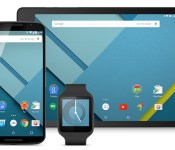
Google gives you the tools to build apps for Android 5.0 Lollipop

The official Android 5.0 Lollipop upgrade for your phone may be weeks away, but Google has delivered all the ingredients for you to make Lollipop-ready apps. The search firm has released both the finished Lollipop developer kit and a fresh batch of stripped-down Android test releases for Nexus 5 and 7 devices. There’s also a new round of Material Design guidelines and assets to make sure apps look at home in Google’s flatter aesthetic. This won’t help much if you just want to try all the whiz-bang features, but you’ll definitely want to hit the source links if you’re a software creator.
Filed under: Cellphones, Tablets, Software, Mobile, Google
Source: Android Developers Blog

Dyson tackles the humidifier, kills water-based bacteria with UV light

In a launch presentation in Tokyo, Japan (apparently the company’s favorite place for new product launches), Dyson tackled the surprisingly sketchy hygiene issues that come with more typical humidifiers. To prove how gosh-darn better Dyson’s Hygienic Mist humidifier is, the company’s microbiology team (which of course it has) incubated water with bacteria to see how a typical humidifier transmits that to a room. A selection of agar jelly plates grossly demonstrated how that bacteria spreads around a room. However, in an early comparison, with the same concentration of bacteria in the water, Dyson’s test humidifier, with UV light cleansing the water, knocked out 99.9 percent of the bacteria — the current model manages this in three minutes. The device launches in Japan in early November, priced at 60,000 yen (roughly a hefty $560) and we’ve got the rest of the engineering details after the break.
Dyson’s folded in its air multiplier technology too (making the design pretty similar to its fan), expanding the range compared to rival humidifiers. The air is measured by an intelligent thermostat, keeping the air “comfortable”, according to Dyson’s Tom Bennett, and consistently adjusting humidity. There’s a three-liter tank, which can apparently ensure 18 hours of air-based moisture. It’s also qualified for a “quiet mark”, benefited from Dyson’s acoustic know-how — meaning there’s barely a hiss.
Developing…
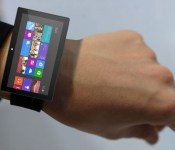
A Microsoft smartwatch could appear in weeks

Do you remember Spot? Well, that was Microsoft’s very early smartwatch effort, lost in the mists of bygone technology. Finally, a long time coming, a more modern effort from the company is apparently on its way– and coming soon. According to Forbes’ anonymous sources, Microsoft’s next smartwatch will be able to passively track your heart-rate (meaning less stress on the battery) and work across several mobile platforms. Both points make a lot of sense, but the latter could be especially important if Microsoft wants a hit: Windows Phone is still a very distant third to both Android devices and the iPhone. The rumored product could also explain why the heck Microsoft developed a smartwatch keyboard in the first place. We’ll let you know more when we hear it.
Filed under: Wearables, Microsoft
Source: Forbes
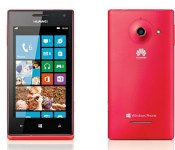
How would you change Huawei’s Ascend W1?

When I reviewed Huawei’s Ascend W1 last summer, I was surprised at how much I liked it, considering its bargain-basement price. Microsoft clearly deserves plaudits for getting Windows Phone 8 to work on such low-power hardware, and Huawei made a real effort to produce a solid feeling, well-made device. Unfortunately, the inclusion of a forward-facing camera couldn’t make up for a paltry 1.88GB of storage, and I couldn’t recommend that you all buy the W1. Instead, I pointed people to the slightly more expensive Lumia 620 – but if you pressed ahead and snapped one of these up instead, what did you think of it? Hop into the forum and share your feels.
Filed under: Cellphones, Mobile, Microsoft
Source: Engadget Product Forums
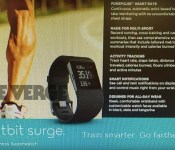
Fitbit’s new wearable looks like a watch, crams in GPS and a heart rate monitor

It’s been a while since we’ve seen a new Fitbit product, but according to a leak obtained at The Verge, that’s because the company’s been working on something a little special. The Fitbit Surge is a “fitness superwatch” that houses two must-haves for serious running types: GPS tracking and a heart-rate monitor. Crucially this would mean the wearable can monitor your activity without having to haul around your smartphone. (The likes of the Galaxy Note 4 or iPhone 6 Plus aren’t all that well-suited to a jog in the park). The leaked marketing materials also suggest it will priced at $249 and will still be able to monitor all the less intense calorie burning done on stairs and your commute to work. Borrowing from the smartwatch category, the Surge is also promising smart notifications for calls and texts, as well as music controls. According to The Verge, the watch is rumored to launch in three colors (black, slate and tangerine) in the next few weeks, likely alongside the pair of more lightweight Charge fitness trackers – also leaked in marketing materials. C’mon guys, tighten up that security. We’ve reached out to Fitbit for more.
Filed under: Wearables
Source: The Verge

Leak gives a clearer look at Motorola’s upcoming Droid Turbo

So far, the pictures we’ve seen of Motorola’s soon-to-launch Droid Turbo have been… incomplete. You won’t have to wonder exactly what this Verizon-only smartphone looks like any longer, though. Evan Blass (@evleaks) has posted a press image (available through Verizon’s web code) which provides a good look at the phone, including its frequently elusive front. In short, this is a hybrid between last year’s Kevlar-laden Droid Maxx and the styling cues of 2014 Motorola flagships like the new Moto X and Nexus 6. The biggest upgrades over the Maxx are likely to be in the guts, such as the 21-megapixel camera, the rumored Quad HD screen and a speedy Snapdragon 805 chip. Whether or not the Turbo is as tough as it looks, you’ll know the full story when the phone launches in nine days.
Filed under: Cellphones, Mobile, Verizon
Via: The Verge
Source: Evan Blass (Twitter)
 AIVAnet