


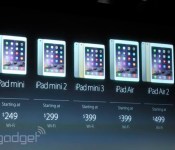
Apple drops iPad Air, iPad mini and iPad mini 2 prices by $100

Now that Apple has introduced the iPad Air 2 and iPad Mini 3, it’s time for some of the older models to get a price cut. After announcing the new tablets, the on-stage Phil Schiller, Apple’s senior VP of worldwide marketing, also revealed that the original iPad Air, iPad mini and iPad mini with Retina Display, will be sticking around once the newer versions start to ship at “the end of next week.” As a result, the iPad mini, iPad mini 2 and iPad Air now start off at $249, $299 and $399, respectively, for the 16GB, WiFi versions. On the other hand, the newly unveiled iPad mini 3 will cost $399, while the iPad Air 2 is going to be $499 — both with 16GB of storage and WiFi-only. Like always, if you want to add a 4G/LTE to that, you’ll have to shell out $130 extra per iPad.
You’ve got $2,500. Tax aside, what do you buy?
Filed under: Apple
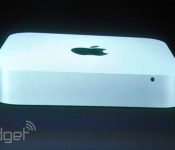
Apple finally updates the Mac Mini, lowers the price to $499

It wasn’t too long ago that we were seeing Apple unveil its new set of iPhones, but now the Cupertino company is back for another round. Just now, at its routine iPad event, Apple has taken the time to introduce new Mac Minis too, which it hadn’t done since late 2012. For starters, the starting price has dropped to $499 on the base model, compared to $599 from previous years. Internally, Apple will be offering customization options that include 4th-generation Intel Core processors, also known as Haswell, and Intel Iris and HD Graphics 5000. In addition to that, the 2014 Mac Mini is set to offer PCle-based solid-state drive options, support for 802.11ac WiFi connectivity and a pair of Thunderbolt 2 ports. Those are all the details Apple was willing to share during the presentation, but we’ll be adding any additional info to this post as soon as we have it. The new Mac Minis will begin shipping today — and yes, that means you’ll have OS X Yosemite to boot.

Here’s your first look at Apple’s new 5K iMac

We had a feeling Apple would announce a new iMac today, and indeed, the company didn’t disappoint. Here in Cupertino, we just saw Tim Cook and co. unveil a refreshed model that has basically the same slim design as the last version, except this time it packs a 5K display. I’d be lying if I said I got to spend much time with it — the demo area here is extremely crowded — but I did want to give you some early hands-on photos to look at. Have a gander at the gallery below, and keep your eyes peeled for a full review — something tells us we’ll be taking one of these bad boys for a spin very soon.
Developing…

A first look at the iPad Air 2 and iPad mini 3

Unlike last month’s Apple event, today’s shindig was held in a tiny auditorium on the company’s campus, nary a single gigantic white box in sight. Arguably, the size of the venue matched the importance of the products being announced — minor iPad and iMac refreshes don’t exactly command the same kind of attention as revamped iPhones and Apple’s introduction into the wearables market. This doesn’t mean the latest version of the iPad Air and iPad mini aren’t worth a closer look, of course; it may be just another iteration of the series, but it’s got its share of new features — and thinness — to go along with it. I’m currently getting some up close and personal time with the new devices, but here are a selection of images as I collect more thoughts.
Developing…

Google to eventually back off on control of Android on devices

When Google announced Android 5.0 Lollipop yesterday, one of the points that they tried to really drive home was the fact that Android is an open architecture and system. That statement is a bit of a contrast with developments over the past year that have shown Google seemingly exerting more control over Android and how it is deployed rather than really opening things up. Google vice president of engineering, Hiroshi Lockheimer, indicates in a new interview that we should see Google back off moving forward and that the company had a good reason for the approach they took this past year.
The first signs of an issue for Google seemed to really surface early in 2014 when feathers were ruffled over Samsung’s Magazine UI that was slated for a new crop of tablet devices. That incident was smoothed over and Samsung eventually backed off on deployment of the Magazine UI.
Google’s restrictions resurfaced over the summer with the introduction of Android Wear smartwatches. Many people noticed that Google severely limited the ability of manufacturers to do any major customization to the operating system running on these devices. Primarily, users could change watch faces, but that was about it. The lack of flexibility is also extending to Android Auto and Android TV.
Lockheimer says the perception is wrong though and that “it’s not some Google-way-or-the-highway kind of thing.” According to Lockheimer, Google wanted some extra time and experience to make sure the basics were right and the new devices would function as intended. This was necessary because Android is being pushed out to a wide variety of platforms and not just the traditional smartphone and tablet devices.
As experience is gained with the new form factors and how Android can be used to power them, Lockheimer says Google will be backing off some of the restrictions currently in place. One of the first examples of this could be the forthcoming Asus Zen Watch. Lockheimer indicated in the interview that Google is “trying to find the right balance of differentiation and customization.”
In the interview, Lockheimer also shared a little bit about Google’s worldview on development of an operating system. One of the key components for the company is that development is done in parallel with hardware development because “you can’t build an OS in the abstract.” Thus, Google will continue with the Nexus line of devices into the foreseeable future despite concern earlier this year that Google may be abandoning Nexus for the now defunct Android Silver program.
source: <re/code>
Come comment on this article: Google to eventually back off on control of Android on devices
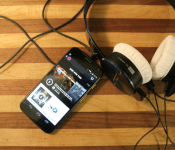
Special Beats Music offer from AT&T comes to an end

When Beats Music finally launched their own streaming music service, playing off the name recognition of their line of headphones, AT&T managed to strike a special deal for their customers. AT&T subscribers were able to get the Beats Music service for a 90-day free trial, much longer than the standard 2-week trial period. In addition, AT&T subscribers could buy a Beats Music subscription for $14.99 per month, $5 more than the normal price, but could share their subscription with other users and devices. This special package is no longer available to AT&T customers although they can still order the standard $9.99 per month Beats Music service.
According to AT&T spokesman Mark Siegel, “There haven’t been any changes for AT&T customers who currently have the Beats Music family plan or who are within the free trial period. New subscribers can still get Beats Music through their app store or at beatsmusic.com.”
Since the original launch of Beats Music and the special deal with AT&T, the service was acquired by Apple for $3 billion. Apple has still not provided any indication as to what their plans are for the service and whether it will continue as a standalone offering available to platforms outside the Apple ecosystem. When the deal closed, Beats Music had about 250,000 subscribers.
source: FierceWireless
Come comment on this article: Special Beats Music offer from AT&T comes to an end
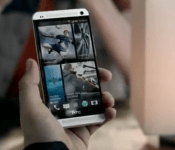
Sprint’s HTC One (M7) update fixes Miracast

Sprint is busy pushing out a relatively minor over-the-air stability update to all its carrier-branded variants of HTC’s former flagship smartphone, the One (M7). Sadly, this upgrade doesn’t bring any major software modifications, such as Android 4.4.4, but it does transport a fix for a rather annoying problem that many users have been complaining about for a while now.
After update software version 5.05.651.2 has been installed, users will notice that they once again have the ability to mirror both local content and cloud-stored media to a Sony Bravia Smart TV via Miracast – a feature they’d lost due to a flaw in Sprint’s version of the KitKat operating system for its variant of the One (M7).
To initiate the upgrade manually, make sure you’re connected to a Wi-Fi network. Then, from the home screen, press the Menu key, followed by Settings. Scroll to the bottom and tap ‘About Device’, then ‘Software Update’ and ‘Update Now’. Follow the prompts on the display of your device and your phone will start to download and install this 15.4 MB stability update.
Source: Sprint
Come comment on this article: Sprint’s HTC One (M7) update fixes Miracast

Android 5.0 Lollipop Upgrade Watch

Wednesday was a big day in the Android world, as Google announced the biggest update to Android ever: Android 5.0 Lollipop.
While this is great news for Android enthusiasts, the bad news is this update still has to go through all the phone manufacturers, and even then the carriers before it gets to the user. While this can make one groan, the bright side is we seem to be in a time where more manufacturers realize the importance of timely updates.
We have this page that we will update whenever we get news of an update schedule from manufacturers. This is quite the task with as many manufacturers and then carriers there are, but we will do our best to be timely.
What I can tell you (at least about the major manufacturers) is this: Motorola is easily the quickest (except for Google, naturally) with updates, as last year’s Moto X got KitKat within weeks of its release. HTC has not had a great track record, but in June they announced they will bring Android Lollipop to all their HTC One (M8) and HTC One (M7) within 90 days of receiving the software from Google. Samsung, LG, and Sony all are very obscure and do not communicate regarding their updates.
Without further ado, here are all the newest details regarding Android 5.0 Lollipop upgrade:
Motorola announced not long after Google that they will be updating many of their devices released in the past year (and even past). We reported on this yesterday, but here is the link to their blog announcement here, and the page they will update with all update info here.
Below is what is confirmed by Motorola:
- Moto X (1st Gen)
- Moto X (2nd Gen)
- Moto G (1st Gen)
- Moto G (2nd Gen)
- Moto G with 4G LTE
- Moto E
- Droid Ultra
- Droid Maxx
- Droid Mini
We will update as soon as we have dates for these devices.
HTC has announced that they will follow-up on their promise, and that their last two flagships will get the update within 90 days of receiving final software from Google. After that, the update will reach “other One family members and select devices”. Here is their update page here.
Below is what is confirmed by HTC, with our estimated time of upgrade:
- HTC One (M8) – (ETA) middle of January
- HTC One (M7) – (ETA) middle of January
- Other One family members – (ETA) sometime 2015
- Select devices – (ETA) sometime 2015
We will update as soon as we have dates for these devices.
That’s all we have for now. Again, this will be updated as soon as we hear!
 |
The post Android 5.0 Lollipop Upgrade Watch appeared first on AndroidGuys.
We’re liveblogging Apple’s iPad event!

OK, folks, who’s ready for new iPads? Apple’s just about to begin its big keynote, and we’re pretty sure we’re going to see some fresh tablets. Maybe iMacs too, and a final version of OS X Yosemite to go with them. But who needs speculation at this point? Follow along as we report live from Apple’s press event in Cupertino. Then, when we’re done with that, you might want to stick around even longer: There’s a chance we’ll be getting hands-on with all the new stuff.


Filed under: Apple
Apple to roll out WatchKit for developers in November

Apple wants developers to start tinkering and creating apps for its new smartwatch ASAP. So, the company’s launching WatchKit in November, a few months before the device’s launch next year.
 AIVAnet