



Android 5.0 Lollipop is official, includes full Material Design overhaul and tons of new features
 We’ve been eagerly waiting for Google to make Android L official, and it’s finally here. The OS is version 5.0 and will be called Lollipop, so Google is sticking with their dessert naming conventions. The update includes Google’s new Material Design language throughout the operating system, and there are plenty of new features that look like they’ll make Android significantly better to use. This is the biggest update Android has seen in years, and there’s a lot to get excited about.
Material Design is the most obvious change with Android 5.0. While navigating around a device, content is more reactive (like what we’ve seen in some newer Google app updates) and transitions are fluid and actually enjoyable to watch. Up until now, Google has put functionality ahead of design and polish, and Material Design looks like a step towards putting the user experience in the front seat.
Under the hood, Lollipop comes with a slew of enhancements, too. Content is seamlessly synced between devices, including things like photos, music, and search history. The notification system is getting a major overhaul like what we saw at Google I/O earlier this year, so you’ll be able to answer notifications directly from the lock screen, plus set up a “do not disturb” mode so you won’t get bugged by people in the middle of the night. Getting a phone call or other notification won’t interrupt whatever you’re currently doing, either. You can simply ignore or answer calls while remaining in another app.
Android 5.0 also implements its own power-saving mode. Other manufacturers add this in to their devices in their own ways, but now it will be a standard Android feature. The battery usage stats will also be more detailed, and you’ll get estimations on how much longer your device will last as well as how long it’ll take to fully charge up your device.
Quick Settings, a very popular feature of Android, are getting some new tweaks and improvements. You’ll still be able to swipe down with two fingers to get to your Quick Settings, and from here you can toggle things like a flashlight, mobile hotspot, or turn quick casting on or off. Adjusting settings like WiFi and Bluetooth is also easier.
Security is also a major focus with Lollipop. Device encryption will be turned on by default for all devices, and there are new ways to lock and secure your device. The trusted device method of security actually keeps your phone locked unless it’s near another trusted Bluetooth device like your Android Wear watch.
As far as performance goes, Lollipop uses ART for its runtime, which has come a long way since it was introduced in previous Android versions. It features a pretty significant bump in performance, especially within the UI. 64-bit processing is also included natively in Android 5.0 which will be great for memory-intensive applications. Smaller tweaks like better audio and visual processing have also been added, so everything from listening to music to playing simple games should also perform better and more efficiently.
Of course, Android 5.0 wasn’t just designed for phones and tablets. Google plans on making this the underlying software for all of their devices going forward, including Android TV players. Native support for different devices is built right into the operating system, which you obviously won’t see on a Nexus 9. It does make it much easier for devices to communicate and share information, though, and that’s the goal Google is aiming for with Lollipop.
Now the big question is if your particular device will get the update to Android 5.0. Motorola has already announced plans to bring many of its devices up to speed, and Google is planning on bringing the update to the Nexus 4, Nexus 5, Nexus 7, and Nexus 10. We should hear a little more about update availability in the next few days.
Google has updated their Android page, so if you want to look over the full changelog, you can find it at the link below.
source: Android
Come comment on this article: Android 5.0 Lollipop is official, includes full Material Design overhaul and tons of new features

Developers will be able to grab the Android 5.0 SDK on October 17

Google has just officially announced the latest major update of its mobile operating system as Android 5.0 Lollipop. Unfortunately, the general public will have to wait a little while longer before they can get their hands on this new release, but developers will be able to access the final SDK this Friday, October 17.
The file will be uploaded to the Google Developer Dashboard along with the latest factory images so that developers can flash the “finished” build of Android 5.0 onto their Nexus devices for testing. Receiving the final SDK is the first step to ensuring that applications are ready to run on bonafide Lollipop-powered devices.
If you missed our ‘Android 5.0 added features’ round-up post and want to find out more about what’s included in this latest version, please click here.
Source: Android Developer Dashboard
Come comment on this article: Developers will be able to grab the Android 5.0 SDK on October 17

Amazon UK launches free same-day collection for Prime members

In a bid to deal another blow to bricks-and-mortar stores in the UK, Amazon is branching out into same-day deliveries. It’s teamed up with newspaper distributor Connect Group to launch “Pass My Parcel,” which will ensure packages are sent free to local shops and high street stores across Britain within 12 hours until the end of the year, if you have a Prime subscription (£4.99 for non-members). If you’ve previously used the online retail giant’s “Click & Collect” service, you’ll be familiar with how Pass My Parcel works, but your package will now arrive a whole lot quicker.
Same-day orders made by 7:45pm will be available to collect from your chosen pick-up point by 6:30am the following morning. Order before the daytime cut-off point at 11:45am and your item(s) be ready for you by 4pm. Sundays are included too, but Amazon will only make one delivery on that day. Same-day deliveries initially be available in more than 500 newsagents and other local stores before Christmas, but the company intends to increase the number of pick-up points over the course of the next year. The option is not yet showing in our Amazon checkout, but expect a new same-day delivery selector to appear in due course.
Filed under: Amazon
Source: Amazon

Vodafone launches faster 4G and expands LTE roaming to 23 countries

Are you a Vodafone 4G customer? Good news, your downloads could soon get that much quicker. As part of a billion pound investment into its network, the carrier has begun rolling out the UK’s first widely accessible LTE Advanced network. LTE-A, as it’s known, will go live in Birmingham, Manchester or London in the coming weeks, promising to boost signal and improve 4G speeds thanks to increased network capacity. LTE-A is actually capable of blistering maximum download speeds of 300Mbps, but that requires a Cat 6 LTE smartphone, which aren’t sold in the UK currently (though you can import a compatible device from somewhere like Korea if you’re so inclined). Faster 4G will come to more cities by the end of the year, allowing Vodafone to increase its lead over EE, which is currently conducting closed testing of its own LTE-A service.
That isn’t all Vodafone has to share, though. Looking beyond the UK, the operator has added a further 19 countries to its 4G roaming roster (taking it up to 23), including the USA, Hong Kong and Brazil (see the full list below). If you visit a country that falls within the “Europe Zone,” you can use your UK minutes, texts and 4G data for £3 a day. If you’re travelling a further afield, you will enjoy the same perks in WorldTraveller Zones, but you’ll be charged £5 a day. Vodafone’s also imposed a new monthly data spending limit of £41.29 to ensure you don’t return from your holiday to a multi-page breakdown of your Instagram selfie data usage.
Full list of countries covered by Vodafone’s 4G network: Austria, Belgium, Brazil, Canada, Czech Republic, France, Germany, Greece, Hong Kong, Ireland, Italy, Netherlands, New Zealand, Norway, Portugal, Romania, Russia, Singapore, South Korea, Spain, Switzerland, Taiwan and USA.
Via: ISP Review

Fairphone’s £250 ‘ethical’ smartphone comes to the UK

While big smartphone makers, like Apple, are actively trying to reduce the amount of conflict materials used in their devices, others pride themselves on being 100 percent ethical. Fairphone is a prime example. After a successful crowdfunding campaign allowed it to develop a new smartphone that meets both ethical and environmental standards, the company is bringing the device to the UK. It’ll be exclusively offered by The Phone Co-op, the UK’s only consumer-owned mobile carrier, starting at £22 per month with no upfront cost or £250 to buy outright. The Fairphone itself features a quad-core Mediatek 6589 chipset, Android 4.2 (with a custom Fairphone launcher), 8-megapixel rear and 1.3-megapixel front cameras, 16GB internal storage, and a 4.3-inch qHD display protected by scratch-resistant Dragontrail glass. While it’s not going to win awards for the best smartphone, it’ll meet the requirements of most users. Although it might be impossible to be totally conflict-free, Fairphone works with manufacturers to ensure better working conditions and fairer wages. It also donates three euros from each phone sold to a program that attempts to reduce electronic waste in Ghana.
[Image credit: Fairphone]
Filed under: Cellphones, Mobile
Source: The Phone Co-op
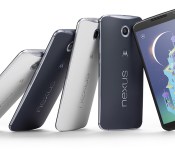
Google reveals the $649 Nexus 6, pre-orders begin on October 29th

Forget the pomp and circumstance that comes with a formal launch event — Google just outed the new Nexus 6 on its official Android blog, and it’s just about everything the rumor mill said the Motorola-made device would be. The Nexus 6 is the first phone to run Android 5.0 Lollipop, and while it might look like a super-sized version of this year’s Moto X — down to the dual speaker grilles and the lock button/volume rocker placement along the phone’s edge — it packs plenty of notable improvements over its smaller, non-Nexus cousin.
A 5.9-inch Quad HD screen? Check? A more powerful Qualcomm Snapdragon 805 chipset, clocked at 2.7GHz? You betcha. Hefty 3,220mAh battery? Of course. It’s as if Motorola addressed nearly every issue we had with the Moto X, and capped things off with a big ol’ Nexus logo on the back. In fact, the only components that don’t seem to have been upgraded are the 13-megapixel camera and dual-LED flash on the Nexus 6’s back (and that’s sort of a shame). What’s a bit curious is that the Nexus 6 seems to come with at least one Motorola-conceived feature that isn’t part of stock Android: Ambient Display debuted on the Moto 360, and fires up the screen when it can tell the user wants to check the time or their notifications.
That’s great and all, but what about the really juicy tidbits? Well, the Nexus 6 will be available with either 32 or 64GB of internal memory (no word on a microSD slot, alas) and you’ve got your choice of Cloud White and Midnight Blue color schemes. Pre-orders for the Nexus 6 will kick off on October 29th with a full retail launch to follow some time in November, but expect to shell out more than a few pretty pennies for it. You’ll be able to nab your own 32GB Nexus 6 sans contract for a whopping $649, making it the most expensive Nexus phone to date (though the decidedly non-Nexus Sony Z Ultra came in at the same price). Itching to pick it up with a little carrier discount? Not to worry: AT&T, T-Mobile, Sprint, US Cellular and Verizon Wireless will all be getting the Nexus at some point, and if a recent slip-up is any indication, it could be damn cheap. An error on AT&T’s site suggested that the 6 could go for as little as $49.99 with a two-year contract — if true, that’d make the Nexus half the price of the Moto X.
Filed under: Mobile
Source: Google Nexus

Google’s Nexus 9 available early next month with Android 5.0, starts at $399

Today’s the day Google fans have been waiting for: the announcement of this fall’s Nexus lineup. It’s essentially an annual tradition at this point, since the last few Nexus devices have arrived at the same time of year. Along with a 6-inch smartphone and a media streamer called the Nexus Player, Google’s introduced an 8.9-inch 2,048 x 1,536 tablet built by HTC aptly called the Nexus 9. This slate, which is available for pre-order this Friday and in stores on November 9th, starts at $399 for the base 16GB WiFi model; $479 for the 32GB WiFi; and $599 for a 32GB LTE variant that comes packed with penta-band HSPA+, quad-band GSM/EDGE and CDMA. As is often the case with brand-new Nexus phones and tablets, the 9 is among the first to get the latest version of Android — in this case, it’s Android 5.0 Lollipop.
The Nexus 9 will be the first in the lineup to come with 64-bit support, thanks to the dual-core 2.3GHz NVIDIA K1 chipset inside. You’ll also get 2GB of RAM; an 8MP rear-facing camera with autofocus, BSI and f/2.4 aperture; a 1.6MP selfie camera; dual-band WiFi 802.11a/b/g/n/ac; and a 6,700mAh battery. HTC was also able to slide in its signature BoomSound stereo speakers, which have been impressive on its flagship devices. The 7.9mm-thick slate will be available in black and white and weighs in at 425g (436g for LTE).
As for the external appearance, it actually looks a bit like an enlarged version of the Nexus 5, but with brushed-metal sides. The display, covered by a slab of Gorilla Glass 3, also takes advantage of a 4:3 aspect ratio, rather than 16:9, and features a double tap to wake option. When it comes to productivity, Google and HTC have designed a keyboard folio case that attaches to the Nexus 9 magnetically.
Filed under: Tablets, Wireless, Mobile, HTC, Google
Source: Google

Google’s Android 5.0 is called Lollipop

Google has just revealed that the next major version of Android, 5.0, will be known as Lollipop. After months of teasing the OS, the search giant is finally taking what was previously known as Android “L” into the mainstream, with the first set of the devices expected to arrive early next month. Speaking of which, Android Lollipop will make its debut on the new Nexus 6, a big-screen smartphone from Motorola; the Nexus 9, an 8.9-inch tablet made by HTC; and the Nexus Player, a $99 media-streaming box with Android TV, the first one with Google’s novel home entertainment platform. What’s more, the company confirmed that Lollipop is coming to the Nexus 5, Nexus 7 and Nexus 10, as well as Google Play edition devices, in the coming weeks.
To make things better, Android 5.0 is also headed to a number of Motorola smartphones, such as both generations of the Moto X and Moto G (including the LTE model), Moto E, Droid Maxx, Droid Mini and Droid Ultra. Motorola didn’t say when exactly the upgrade would be available for those devices, but at least it has confirmed its plans to do so. Now that Google’s let the Lollipop out of the bag, we’re sure more manufacturers are due to start coming forward with their own announcement.
The Android 5.0 SDK is going to be available on Friday, October 17th, which means everything is slowly, and sweetly falling into place ahead of next month. In the meantime, stay tuned, because we’ll be updating this post if any additional details come in.
Filed under: Cellphones, Tablets, Mobile, Google
Source: Google

Google’s Nexus Player offers streaming and gaming for $99

Remember the Nexus Q? Yeah, we’d rather forget it, too. Google regained its streaming cred with the Chromecast, and now it’s looking to offer up another set-top box. The compact Nexus Player will handle streaming, games and run Android apps. An included remote wrangles navigation with voice controls for finding the content you’re after on the ASUS-made gadget. For those gaming sessions, a $39 controller can be tacked on as an additional purchase.
The Nexus Player will offer much of the same functionality as Mountain View’s diminutive dongle, adding the ability to leverage those mobile apps as well. It’s also the first device to run Android TV, an effort detailed back at I/O and promised to arrive alongside Android L, er… Lollipop. And yes, you’ll be able to “cast” stuffs from other devices to your TV. In terms of content options, you can expect Netflix, Hulu, Food Network, Travel Channel and more for now — but there’s no mention of either WatchESPN or HBO Go. Inside, the unit packs a 1.8GHz quad-core Intel Atom processor, 1GB RAM, 8GB of storage and Imagination PowerVR Series 6 graphics. Intel tells us that 64-bit chip is capable of “console-like graphics” alongside 1080p video streaming. As you might expect, the Player will connect to your TV via HDMI with WiFi for grabbing content and Bluetooth for the included remote.
If all of that sounds somewhat familiar, Amazon’s Fire TV touts a similar set of entertainment abilities for the same price. Of course, one taps into Prime Instant Video while the other leverages the Google Play repository. Speaking of cost, the $99 unit will be available on November 3rd, however if you’re anxious to lock one down, you can pre-order the Nexus Player on October 17th.
Filed under: Gaming, Home Entertainment, Google
Source: Google

Apple’s iPad event is happening tomorrow, get your liveblog here!

Apple’s holding one of its big keynotes tomorrow, and you know what that means, right? Damn straight you do: We’ll be there, liveblogging the whole thing, with up-to-the-minute news updates and (Tim Cook willing) hands-on impressions of all the new stuff. So will we see new iPads? Almost certainly. iMacs? Yeah, maybe. Whatever it is, we only have a day until Apple sets the record straight. Bookmark our liveblog and meet us back there in t-minus 24 hours to watch it all unfold.
Filed under: Announcements, Tablets, Apple
 AIVAnet