


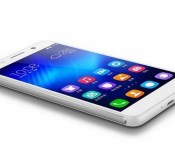
Huawei announce limited edition Glory 6 Extreme Edition with pre-orders launching October 21st

Huawei launched their high-end Honor 6 (also known as the Glory 6) back in June and are still rolling it out to other markets, but that hasn’t stopped them from announcing a successor in the form of the Glory 6 Extreme Edition. The main difference is the superior Huawei Kirin 928 octa-core processor clocked at 2GHz, trumping the original’s Kirin 920. This model also ships with a minimum of 32GB of internal storage, besting the original’s default 16GB, though both are expandable.

The Extreme Edition also features NFC, a 5-inch 1080p IPS display, 3GB of RAM, a 3100mAh and runs Android 4.4 with Huawei’s Emotion UI 3.0. These specs differ from some models of the original Glory 6 as there were variations of that device released. As for the camera, you’ll find a 13-megapixel rear camera and a solid 5-megapixel front-facing camera. If the rock-solid specs don’t do it for you, Huawei has also packed a ton of extras into the box including headphones, a screen protector, protective shell and 2 NFC tags. Pre-orders launch in China on the 21st of this month and at launch there will be 9999 limited edition sets.
Source: Android Headlines
Come comment on this article: Huawei announce limited edition Glory 6 Extreme Edition with pre-orders launching October 21st
.CPlase_panel display:none;

Sony offering student discount on Xperia Z3 Compact

Since Sony announced the Xperia Z3 Compact, a smaller but equally powerful companion to their current flagship (the Xperia Z3), consumers have been patiently waiting for the device to become available in the US. Finally, the Z3 Compact is available to order from Sony’s website, though it is currently backordered. Though its no surprise that it finally made its way to the US, what is surprising is customers with a working .edu email address will recieve a substantial discount on the devices full price of $529, instead paying only $477.
The Z3 Compact features a 4.6-inch 720p IPS display, a Snapdragon 801 processor, 2GB of RAM, 16GB of expandable storage and a 2600mAh battery. It also includes Sony’s in-house 20.7-megapixel rear camera and a 2.2-megapixel offering on the front. The Xperia Z3 Compact should be officially available (ie not backordered) in the coming weeks. Will any of our readers be taking advantage of the student discount? Let us know in the comments below!
Source: Sony
Via: Android Headlines
Come comment on this article: Sony offering student discount on Xperia Z3 Compact
.CPlase_panel display:none;

Dutch police arrest four Uber drivers in Amsterdam

Despite working with authorities to legally launch its private and luxury car services in Amsterdam, Uber’s regular taxi service, uberPOP, hasn’t enjoyed a very warm welcome. Bloomberg reports that Dutch police yesterday arrested four drivers for using the Uber app to provide taxi services in the city, leaving them with a possible fine of €4,200 euros ($5,300) each. To bring them down, a Ministry of Environment & Infrastructure spokesperson said that four inspection officials posed as passengers and found they were not operating with the correct permits. The company, of course, isn’t new to all of this, having been targeted in London, Brussels and numerous German cities in recent months. While Uber believes the action is “unjustified and disproportional,” Dutch authorities certainly aren’t willing to hang around — those first four arrests came just four days after uberPOP officially launched in the city.
Filed under: Transportation, Internet
Source: Bloomberg
.CPlase_panel display:none;
Fast-charging batteries will power your gadgets for 20 years

Fast-charging batteries are all nice and good, but the lifespan matters, too — why should you have to replace power packs (or entire devices) every couple of years ? You may not have to give up performance or longevity if researchers at Nanyang Technology University have their way. They’ve developed new lithium ion batteries that can reach a 70 percent charge in two minutes, but should also last for over 20 years — several times longer than the cells in your current laptop or smartphone. The trick is using titanium dioxide nanotubes for the anode (the negative pole) instead of graphite; they both speed up the battery’s chemical reactions while offering 10,000 charging cycles instead of the usual 500.
There’s no definite timetable for when upgraded batteries could reach shipping products, but the mini titanium tubes are both easy to make and relatively inexpensive. They could make a big impact on the technology world when they arrive, though. On a basic level, they could eliminate forced obsolescence for some devices — you might only replace them when they no longer meet your needs, not because they can’t hold a charge. They could have a particularly large impact on electric cars — you could top up your battery in minutes, not hours, and avoid replacing a very expensive component before you’re ready to replace the vehicle itself.
Filed under: Science
Source: Nanyang Technological University
.CPlase_panel display:none;

Easyjet now lets you check in using a photo of your passport

Despite being known for low-cost flights, Easyjet often leads the pack when it comes to taking the hassle out of travel. While you can already book a flight using its apps, the airline today announced a new upgrade that will let you check-in by simply taking a photo of your passport. Where before you’d need to manually enter your passport number into the Easyjet website, the new iOS and Android apps (with backing from validation specialist Jumio) now let you automate the process up to 2 hours before you take off from one of 110 Easyjet airports. That means you can now book, check-in and board your flight all via your phone — helpful if you’re itching to get some sun now that autumn is well and truly here.
[Image credit: irishflyguy, Flickr]
Filed under: Cellphones, Transportation, Internet, Software
Via: The Next Web
Source: Easyjet, (App Store), (Google Play)
.CPlase_panel display:none;

T-Mobile to offer Sony Xperia Z3 on October 29

T-Mobile on Monday kicked off the week by announcing the upcoming arrival of the Sony Xperia Z3. Well, we knew it was coming, but now we know when and for how much.
Slated to arrive on October 29, the Xperia Z3 features a 5.2-inch display, 20.7-megapixel rear camera, and a 3100mAh battery. Waterproof, thin, and sexy as all get out, the phone is among the first to feature PS4 Remote Play capabilities.
T-Mobile will sell the Xperia Z3 for $0 down and 24 payments of $26.25 for an all-in cost of $630. Pre-orders begin October 15 with shipments expected to begin in the days leading up to the October 29 availability.
Deals, Discounts, Freebies, and More! Click here to save today! |
The post T-Mobile to offer Sony Xperia Z3 on October 29 appeared first on AndroidGuys.
.CPlase_panel display:none;

How Your Devices Learn to Talk to You
We may still be a few dozen years away from everyone having their own personal robot, but in a lot of ways, the future has arrived – especially in the realms of automatic speech recognition (ASR) and interactive voice response (IVR). After all, where would we be today without having Siri tell us whether or not it’s raining outside? You were probably caught in the rain without an umbrella, at the very least.
Automatic Speech Recognition Is a Process
Automatic speech recognition is any sort of technology that allows a computer to convert spoken language into text in real time. While the technology has been in government and military research since the 1950s, it’s only been used by the general public since the 1980s, when it was introduced as a way to help people with musculoskeletal disabilities.
To use ASR technology, you start by speaking into your device’s microphone. Your device then creates a wave form from the sound and background noise is filtered out while volume is normalized to a constant level. Then, the filtered wave form is broken down into individual phonemes (the sounds used to build words that are the most basic units of language, like the hard “k” sound in the word “kit”). Based on the first phoneme of a word, the computer uses a combination of statistical probability (usually the hidden Markov model) and context to narrow down options and figure out which word was spoken.
Talk to Me
Some ASR systems are so advanced that they ca n engage in “conversations” with you, a technology called natural language programming (NLP). NLP works through the process of machine learning and statistical inference, in which software searches through a programmed body of real-world examples to recognize and respond to speech. And some other methods of speech recognition search a hard-coded vocabulary.
NLP works best in fairly simple “conversations” that rely mostly on yes or no answers, or have few major possible answers. Instead of searching its entire vocabulary for each word in a question and processing them separately, NLP systems react to certain “tagged” words and phrases to respond appropriately – things like “weather forecast” or “pay my bill.”
Improving the Conversations
Over time, voice recognition software gets better by “learning” from each experience. In fact, speech recognition has been the main focus of machine learning research over the last few decades. ASR systems can either be tuned by humans, or they can engage in a process called active learning.
In tuning, programmers can review logs to identify and fix common problems. With linguists’ help, programmers can add words, pronunciations and grammatical structures that the system is failing to understand. Software is hand-coded with a variety of real-world examples for the software to search and draw from.
Active learning, meanwhile, is still currently limited in its capabilities; think about how often your phone autocorrects “top” to “too,” and you’ll have an idea. Data is stored from past interactions as the program gets to know the words and combinations of words that you most often use. Another example of active learning in speech recognition software is in homes or medical transcription when the software calibrates itself to the voice of its user, taking in certain words and phrases and then reacting with programmed examples to allow the program to work more easily with accents, speech impediments, and more.
While ASR technology is fascinating and fun to experiment with, it currently faces a few limitations. While average accuracy is 96 percent, this is usually accompanied by the caveat “in ideal conditions,” meaning with little background noise, no one else speaking nearby, distinct speech and more. Too much background noise, loud ambient noise, and/or low-quality input hardware can muddle the wave forms and lead to inaccurate output.
Computers and software also have problems distinguishing overlapping speech (two voices speaking at the same time), and the extensive statistical and contextual analysis from these programs often requires a large amount of processing power, taxing a computer’s processors and batteries. Finally, the always-tricky homonyms (words that have the same spelling but different meanings) are difficult for computers to process correctly, even as the ability of ASR programs to distinguish between words based on context improves.
As technology continues to progress, the future of speech recognition software looks to focus on making translation services more accurate and further developing computers’ ability to understand the words they’re taking in.
From Luke Skywalker communicating with R2D2 and C3PO to today’s helpful yet sometimes snarky Siri, ASR has evolved to have more functionality than ever, and as the software is tuned and perfected, the scope of artificial intelligence will only continue to grow. And we will no longer have to worry about being caught in the rain.

.CPlase_panel display:none;
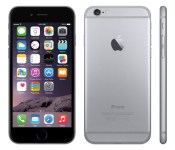
Engadget UK giveaway: win an iPhone 6 courtesy of Mobilefun.co.uk

Wet weather, plummeting temperatures and pitch-black mornings are just a few of the things us Brits have to look forward to as we plunge further into the abyss known as “autumn.” We could all use a little pick-me-up as SAD begins to take hold, so how does a free, 16GB space gray iPhone 6 sound? That’s exactly what we’re offering one lucky reader, thanks to the generous souls at smartphone and mobile accessory e-tailer Mobilefun.co.uk. And if you already have one of Apple’s latest handsets, Mobilefun.co.uk has plenty of iPhone goodies for you to peruse, too. Any Brits wanting to throw their hat into the giveaway ring have until Saturday to enter up to three times using the Rafflecopter widget below — and give the rules a read while you’re down there, would ya?
- Entries are handled through the Rafflecopter widget above. Comments are no longer accepted as valid methods of entry. You may enter without any obligation to social media accounts, though we may offer them as opportunities for extra entries. Your email address is required so we can get in touch with you if you win, but it will not be given to third parties.
- Contest is open to all residents of the UK, 18 or older! Sorry, we don’t make this rule (we hate excluding anyone), so direct your anger at our lawyers and contest laws if you have to be mad.
- Winners will be chosen randomly. One (1) winner will receive one (1) Apple iPhone 6.
- If you are chosen, you will be notified by email. Winners must respond within three days of being contacted. If you do not respond within that period, another winner will be chosen. Make sure that the account you use to enter the contest includes your real name and a contact email or Facebook login. We do not track any of this information for marketing or third-party purposes.
- This unit is purely for promotional giveaway. Apple, Mobilefun.co.uk and Engadget / AOL are not held liable to honor warranties, exchanges or customer service.
- The full list of rules, in all its legalese glory, can be found here.
- Entries can be submitted until October 17th at 11:59PM BST. Good luck!
Filed under: Cellphones, Mobile, Apple
Source: Mobilefun.co.uk
.CPlase_panel display:none;

Amputees can now control artificial limbs with their minds

Artificial limbs controlled by muscle movement are already a thing, but what if someone developed a way to wire a prosthetic directly into someone’s nervous system? That’s what a team at Chalmers University have achieved with an implantable prosthetic system that relies entirely upon neural control. Where the existing tech requires surface sensors, this osseointegrated implant is akin to having a USB port wired into your nervous system, offering a much greater level of control. Even better, the device isn’t vulnerable to electromagnetic interference from outside sources, enabling the test subject, a lorry driver who lost his arm a decade ago, to use a power drill without worry. The team is already working on treating more patients, and is even researching a way for the limb to send stimulus back to its wearer, enabling them to once again feel the things that they’re touching.
[Image Credit: Linda Bränvall and Martin Carlsson / Chalmers University]
[Video Credit: Videos: David Berggren, Simon Dybeck / mkmedia produktion ab]
Filed under: Science
Via: Re/code
Source: Chalmers
.CPlase_panel display:none;

Samsung readying crazy fast next-gen WiFi devices

Samsung has revealed that by 2015 it may be selling WiFi devices that use unlicensed, 60GHz spectrum to transfer data at 575MB/s — five times faster than current tech. If that sounds familiar, it’s also the WiGig Alliance‘s 802.11ad WiFi standard, which has a moderately faster theoretical speed of 875MB/s. However, “theoretical” is the operational word — in practice, WiGig bounces off walls rather than penetrating them, so speeds drop rapidly without line-of-sight transmission. In addition, WiGig’s short wavelengths are susceptible to interference by other devices. Samsung claims it’s solved those problems by using beam-forming antennas that adapt to changing conditions in less than 0.33 milliseconds. It plans to put the tech in a variety of devices, including its Smart Home and mobile products as early as next year. We’re not sure if those devices will conform to the WiGig standard or fork it, so we’ve reached out to Samsung for more info.
[Image credit: JOSEP LAGO/AFP/Getty Images]
Filed under: Wireless, Samsung
Source: Samsung
.CPlase_panel display:none;
 AIVAnet