



Tado adds physical controls to its second-gen smart thermostat

Smart thermostat maker Tado landed itself a new retail partner in the UK a little over a month ago, but with so much competition in the market, you need to keep on kicking if you want to stay above water. In an effort to do just that, Tado’s ready to show off its second-generation connected thermostat, which adds physical controls to the main unit. Previously, the company’s hardware has simply been about connecting heating and hot water systems to the internet, thus allowing users to issue commands from web-based and mobile apps. With this next iteration, however, the box that replaces your existing thermostat is no longer just a conduit. The addition of physical controls means you can now check the temperature, adjust it, and cycle through various operational modes on the unit itself — making it more like, you know, an actual thermostat. You can control hot water from the new thermostat, too, should you have a compatible boiler setup.
You need to see what settings you’re changing directly on the thermostat, of course, which is why this new model has also been outfitted with a simple, LED-matrix display. Tado wanted to keep its second-gen hardware as inconspicuous as its first, however, so you won’t be aware the thing even has a screen unless you’re fiddling with its controls. The only other time it’ll be active is when you’re tinkering inside one of the apps, at which point it’ll flash a quick status update should you change the temperature or mode. Another benefit of Tado’s newest model is increased compatibility, as it now works with “nearly all” heating setups. And if you don’t have an external thermostat already (i.e. you control everything on the boiler itself), Tado’s existing extension kit (sold separately) plugs straight into the boiler to open that communication channel up.

In terms of its feature set, the new thermostat is no different from its predecessor, and Tado admits there’s little incentive for existing customers to upgrade unless they’re desperate for the physical interface. Anything that gets added on the software side will roll out to everyone, regardless of which iteration of the thermostat they’ve bought. Tado’s platform is hardly lacking in features at this point, though. While the new physical controls are a bonus, you still access deeper functions from within the web, Android and iOS apps (a Windows Phone app is due any day now, too). In addition to adjusting temperature manually (and remotely), the apps let you set up heating schedules and manage the geolocation feature, which automatically adjusts temperature based on your proximity from home. They also serve up usage reports and predict the cost of your heating bill. Tado’s software incorporates weather forecasts and information it’s gathered about how quickly (or slowly) your house heats up, too, so it reaches the desired temperature at the right time without wasting energy.

Tado’s second-generation smart thermostat is due to launch imminently, and you’ll be able to pick one up for £199, or rent a unit for £5 per month. Tado also intends to add zoning capabilities in the next few weeks, too, meaning you can purchase multiple thermostats to control different areas of your home if you have the right heating system. Despite it being newer hardware, it works out cheaper than the first model, which retails for £249 currently. Also, if you happen to be renting a first-gen unit for £7 per month right now, then don’t worry, Tado’s told us pricing will be adjusted accordingly just as soon as the new version is up for sale.
Filed under: Household
.CPlase_panel display:none;

Apple Withheld $139 Million Payment from GT Advanced Ahead of Bankruptcy Filing [iOS Blog]
 Apple withheld a final $139 million payment that it was due to make to GT Advanced, reports The Wall Street Journal, which may have contributed to the company’s decision to file for Chapter 11 bankruptcy. GT also reportedly burned through cash, spending $248 million in one quarter.
That may have led to the company’s filing, since its cash, at $85 million, was below a $125 million trigger point that would allow Apple to demand repayment of about $440 million in loans it had advanced. Apple had agreed to lend GT a total of $578 million to help get a large sapphire factory in Arizona up and running. The tech giant reportedly withheld the last $139 million payment it was due to make, although it isn’t clear why.
What is obvious is that GT effectively bet the house on a new technology with a new business model and made itself dependent on a single customer–Apple.
Though it is not known why Apple withheld the final $139 million payment, Apple’s $578 million loan to GT Advanced was subjected to certain capacity requirements that the sapphire company may not have been able to meet. According to GT Advanced’s own filings, it may have had issues with poor sapphire yield rates.
Apple and GT Advanced first struck a deal in late 2013, and along with a $578 million loan for purchasing equipment, Apple also constructed a 700-employee manufacturing facility in Mesa, Arizona, which is run by GT Advanced.
While Apple was widely expected to include sapphire display covers from GT Advanced on some iPhone 6 models, that did not end up happening. Despite purchasing a facility for GT and lending it money to buy equipment, Apple was under no obligation to purchase GT’s sapphire. GT was, however, subjected to “exclusivity provisions” that limited what it could sell to other companies.
Though GT Advanced has filed for Chapter 11 bankruptcy, GT Advanced’s CEO promised the company would continue operations as it went though a transitional phase to reorganize its business.
GT Advanced will have its first Chapter 11 bankruptcy court hearing on Thursday, October 9 in New Hampshire, where it is expected to explain what caused its bankruptcy filing.
(Image: GT sapphire furnace)
.CPlase_panel display:none;

The flying car gets another shot at reality this October

Outside of goofy newscasters referencing The Jetsons and Back to the Future 2, flying cars don’t get much airtime these days. The concept is far from dead, but similarly distant from viable reality: simply put, it’s too expensive of an idea to exist as a consumer product with modern technology. Slovakian company AeroMobil disagrees, and its third prototype is ready to be shown to the world this October 29th at the Pioneers Festival in Austria. The device is still in prototype form, but the folks at AeroMobil previously demonstrated their ability to achieve flight with a car (a video of AeroMobil 2.5 is below).
It’s far from elegant — the wings fold into the backseat behind the driver, and the car itself (at least the prototype) isn’t much of a looker — but it does work. The prototype holds two people, and allegedly flies up to 430 miles (540 if you’re driving); it also reportedly runs on standard gasoline (the Rotax engine inside takes 91 octane — the fancy stuff). No word on pricing or availability just yet, but it looks like AeroMobil is another major step closer to its bizarre, bizarre dream becoming reality. Seriously, watch the video below and you’ll understand.
Filed under: Transportation, Alt
.CPlase_panel display:none;

HTC still plans to tackle wearables, wants to ‘get it right’

We told you last month that HTC had shelved plans for its upcoming smartwatch. And with good reason; as a spokesperson told Re/code, it doesn’t seem that “anyone has gotten it right.” The wearable that HTC was working on was originally supposed to debut right around now, but it simply wasn’t ready for primetime. That doesn’t mean that the Taiwanese manufacturer is going to stay above of the fray for good, though. The company still has plans to build a wearable, it just wants to make sure it has a clear winner on its hands first. (And considering the state of battery technology that might be quite a while.) It will probably be sometime before we see a smartwatch stamped with the HTC name, but the company says its working on a strategy. What that strategy is, isn’t exactly clear. We’re just going to have to wait until the company is ready to reveal more. Though, that might not be until next year.
Filed under: Wearables, Mobile, HTC
Source: Re/code
.CPlase_panel display:none;

Kindle for Android updates: Audiobooks can be started before download is done
There are plenty of ways to read, or listen, to a book. The Kindle app for Android is one of them. Today Amazon has pushed out an update to the book reading, audiobook listening, app that moves it to version 4.7. The update isn’t monumental, but it does add two very cool and useful features.

On the audiobook front you will finally be able to start listening to the book prior to it finishing its download. This is almost a no brainer feature that should have been around much sooner. If the torrent world can start watching a movie before it finishes, why did it take so long for spoken words in an Audio file?
The other feature that will be a nice addition for those users who use books for study, reference or possibly book clubs, is the ability to tap on highlights and change things. Things that are simple like the color, what is hightlighted and editing notes.
Te remainder of the update includes localized support for Dutch and the usual “several bug fixes” listing. The update is live on the Play Store for those who want to pick it up. You can also head straight to the app via the link below.
//<![CDATA[
ord = window.ord || Math.floor(Math.random()*1E16);
document.write('‘);
//]]>
The post Kindle for Android updates: Audiobooks can be started before download is done appeared first on AndroidSPIN.
.CPlase_panel display:none;

Google promises a fix to the Nexus 5 ‘mm-qcamera-daemon’ CPU bug

If you own a Nexus 5 then you may have run into a very strange bug that involves the ‘mm-qcamera-daemon’ bug which takes up CPU and consequently drains the battery.
According to the Google issue tracker, the particular bug that tracks this issue as just been marked as resolved in a future release, indicating it should be fixed when Android L comes out.
This only affects the Nexus 5 AOSP so if you’re seeing this issue on other devices then it won’t be fixed by this particular bug and needs raising with the developer in question.
Deals, Discounts, Freebies, and More! Click here to save today!
The post Google promises a fix to the Nexus 5 ‘mm-qcamera-daemon’ CPU bug appeared first on AndroidGuys.
.CPlase_panel display:none;

OnePlus OTA update for CM 11S (38R) is out!

For the lucky OnePlus One owners that managed to grab the limited device, an OTA update has just been released for the device running Cyanogenmod 11S dubbed 38R.
The new 38R update is aimed at improving the responsiveness of the touchscreen, introduces a new lockscreen, as well as the ability to take RAW photos. ANT+ is now supported, as well as a ton of bug fixes. Here’s the full list of changes in the update:
- Added method for users to report bugs directly to Cyanogen.
- Added pause button during video recording.
- Improved battery life.
- Fixed issues with camera exposure compensation stuck in ‘auto’.
- Fixed issues with ‘4G Preferred’ option not connecting to 3G data.
- Fixed issues with delay in torch activation.
- Fixed issues with unresponsive screen requiring reboot.
- Fixed issues with static in speaker when changing volume while headset plugged in.
- Fixed issues with rotation not triggering when rotated slowly.
- Fixed issues with Quiet Hours / system UI causing battery drain on last day of month.
- Fixed issues with camera not starting when LED torch is already on.
- Fixed issues with Bluetooth volume low on connection.
So if it took you this long to hit the update button on your OnePlus One, and the RAW compatibility wasn’t enough to convince you, then what are you waiting for? Hit that update button now and let us know what you think of the performance of the device following this update in the comments below.
Deals, Discounts, Freebies, and More! Click here to save today!
The post OnePlus OTA update for CM 11S (38R) is out! appeared first on AndroidGuys.
.CPlase_panel display:none;
GT Advanced CEO Sold Off Stock Ahead of iPhone 6 Announcement
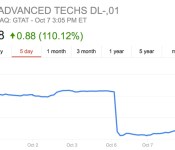
GT Advanced CEO Thomas Gutierrez sold over 9,000 shares of GT Advanced stock just a day before Apple announced the iPhone 6, reports The Wall Street Journal. The September 8 sale netted him approximately $160,000 at an average price of $17.38, before the company’s stock dropped 13 percent to $14.94 on September 9 after it became clear the iPhone 6 and iPhone 6 Plus did not include sapphire screens.
Along with the $160,000 he earned on September 8, Gutierrez sold shares on several other occasions throughout 2014, earning him more than 10 million dollars as GT stock rose on rumors that Apple would use its sapphire for the new iPhones.
In a filing, GT said Gutierrez’s share sale was part of a pre-arranged plan put in place on March 14, 2014. But there was no obvious pattern to his sales.
In May, June and July, Gutierrez sold shares within the first three days of the month. But then he didn’t sell additional shares until Sept. 8, two days after he received 15,902 previously restricted shares. (Gutierrez forfeited the remaining 6,670 shares to cover tax obligations.)
GT Advanced filed for Chapter 11 bankruptcy protection on Monday, promising to continue operations as it goes through a transitional phase to reorganize its business. “Today’s filing does not mean we are going out of business,” said Gutierrez. “Rather, it provides us with the opportunity to continue to execute our business plan on stronger footing, maintain operations of our diversified business, and improve our balance sheet.”

Apple and GT Advanced first partnered in late 2013, with Apple building a 700-employee manufacturing facility in Mesa, Arizona that’s run by GT Advanced. The deal also saw Apple funding GT’s purchase of furnaces and other sapphire-making equipment through a $578 million loan, doled out over several months and subjected to certain capacity requirements.
Under the terms of the agreement between Apple and GT Advanced, GT Advanced is required to pay back the $578 million loan over the course of five years. If the loan is not paid back, Apple is entitled to the equipment that GT Advanced purchased. When a deal was struck between the two companies, GT Advanced noted that sapphire production for Apple would result in substantially lower gross margins, but was confident that a recurring revenue stream would be beneficial for growth in the long run.
Apple was widely expected to include sapphire display covers from GT Advanced on some iPhone 6 models, and it is unclear why sapphire was not used at all. GT filings did, however, suggest that the company saw poor sapphire yield rates, which may have impacted Apple’s decision to stick with alternate materials. Apple is not subjected to any type of commitment to purchase sapphire from GT Advanced, and though the Apple Watch does indeed include a sapphire cover, it is unclear whether the sapphire being used is sourced from GT.
GT’s stock dropped approximately 90 percent after the company’s bankruptcy announcement and has seen little gain since then.
.CPlase_panel display:none;

Apple Releases Second OS X Yosemite Golden Master Candidate to Developers
Apple today released a second golden master candidate of OS X Yosemite to developers, a week after releasing the first candidate golden master and the fourth public beta.
The latest Yosemite update can be downloaded from the Mac App Store and through Apple’s Mac Dev Center.

OS X Yosemite brings a flatter, more modern look to OS X, with an emphasis on translucency and redesigned dock, windows, and more. It also includes a multitude of new features, such as improved integration with iOS 8 through Continuity, a new “Today” view in Notification Center that offers integration with third-party apps, a retooled Spotlight search with new data sources, and several new features for apps like Mail, Safari, and Messages.
Over the course of the beta testing period, each Developer Preview has added new features and refined the look and performance of OS X Yosemite, although changes have become less obvious in more recent builds as Apple begins finalizing Yosemite ahead of its public release, which is expected in late October.
.CPlase_panel display:none;
 AIVAnet