


The BBC can now tell you when your favourite artists are playing live

While Songkick’s live event listings are already featured in some of the most popular music services on the planet, none are as illustrious as the BBC. To help the Beeb with the giant task of cataloging and listing every artist that appears on one of its TV or radio programmes, Songkick has been brought in to do what it does best: supply BBC Music’s new performer pages with every upcoming concert across the UK. The good news is that the startup doesn’t just catalog A-list events, meaning you’ll be able to follow upcoming artists as they perform their first gigs. To access the BBC’s new Songkick-powered concert listings, head on over to the new BBC Music and simply select the artist you want to see (or just download the official Songkick app).
Filed under: Home Entertainment, Internet
Via: Songkick Blog
Source: BBC Music
.CPlase_panel display:none;
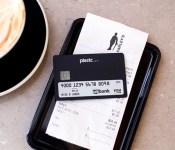
Plastc wants to be the only credit card you’ll ever need

There’s plastic, and then there’s Plastc — an electronic card, which its manufacturers claim can store several credit/gift/loyalty card details and assume the form of each one. The device pairs up with an app via low-energy Bluetooth, which serves as unlimited storage for all your cards (Plastc itself can only store up to 20) and can also show your transaction history. Does this sound so familiar that it feels like reading old news? That’s because you’re probably recalling a similar device called Coin launched back in 2013.Just like Plastc, it can store various card details that you can switch up, depending on which one you want to use. The bad news is that Coin, which promised to ship the first units this year, moved its ETA to spring 2015 (though there’s a beta test going on), something pre-order customers obviously weren’t happy with. So, one has to wonder if an unknown company will be able to do what Coin couldn’t and release such an ambitious product on time.
See, in addition to being able to switch up card details through the e-ink touchscreen panel, Plastc can also show loyalty or gift cards’ barcodes and remotely wipe your data in case it gets lost or stolen. The panel displays your name, picture and signature along with your card number as a form of identification, and it even flashes a message to return the card back to you if you lose it. Its accompanying app, on the other hand, is supposed to come with a security pin and facial authentication.
If both Plastc and Coin do make it to market, though, the former might have the upper hand, as it’ll come embedded with a computer chip that makes it difficult to clone. The US will start encouraging retailers to only accept cards with those chips by 2015, making Coin obsolete almost as soon as it’s out. Plastc’s now available for pre-order from its website for $155 each — $55 more expensive than the $100 Coin — and might be out as soon as the summer of 2015.
Source: Plastc
.CPlase_panel display:none;

Kinect for Windows can track individual finger movements

Microsoft’s new Kinect sensor is a lot of things, but absurdly accurate isn’t one of them. To that end, Redmond’ Research division is showing off some recent advancements its made with Handpose — a way to fully track finger movement with its do-all gizmo in a variety of conditions. The video we’ve embedded below shows off the $150 PC peripheral analyzing and capturing intricate finger and hand movements seemingly pretty easily both from close-range and further back. Changes in lighting don’t affect the fidelity either, as the tracking is all performed by the Kinect’s depth sensor, not its camera. As Kotaku notes, however, this looks very much like something that’ll be used for applications outside of gaming, rather than as a boost for your Dance Central skills. We’d like to imagine that its extra accuracy would probably come in handy in the operating room.
Filed under: Desktops, Cameras, Gaming, Home Entertainment, Peripherals, HD, Microsoft
Via: Kotaku
Source: Microsoft Research (YouTube)
.CPlase_panel display:none;
New Apple Pay Setup Screens Unearthed in iOS 8.1 Beta 2
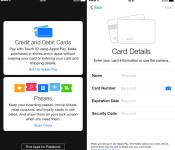
Hours after Apple seeded the second iOS 8.1 beta to developers, developer Hamza Sood has located the Apple Pay setup screen in the Passbook app, the Apple Pay setup screen in the initial iOS 8.1 setup and Apple Pay setup on the iPad. Previously, Sood had found the Apple Pay setup screen within the Settings app.

The setup prompt within Passbook is similar to the setup prompt to add passes, educating potential users on what the service is before providing a link to where users can input and scan their credit cards for use. Potential users have the choice to either input their credit card numbers via the keyboard or to take a photo of their card and have it inputted automatically.
The iPad gets the same setup screen as the iPhone version, but does not mention the ability to use Apple Pay in a retail store as no current iPads contain the NFC technology required to use the feature and it is uncertain whether it could be included in future iPads.
iOS 8.1 is likely to be the update to include Apple Pay, although Apple has not yet flipped the switch within the betas seeded to developers. Instead, the company seems to have been preparing the features behind-the-scenes. Alongside Apple Pay, iOS 8.1 is expected to include a host of bug fixes for issues in iOS 8, including a fix for Bluetooth connectivity problems.
.CPlase_panel display:none;

Warner Bros is building a holographic Batcave for the Oculus Rift

Like comic books? Then you’re probably familiar with the style of Bruce Timm, the father of the DC animated universe — a specific era (and style) of DC Comics animation projects that started with the 1992 Batman: The Animated Series. If you missed it, it was a fantastic series: Batman had an incredible voice, Robin didn’t deal in cheesy catch phrases and Mark Hamill was the Joker. Seriously. Now, Warner Bros. and DC Entertainment is bringing Timm’s vision of Batman back as an interactive holographic video designed for virtual reality displays: they’re building an animated Batcave for the Oculus Rift.
Although Warner Bros’ announcement focuses largely on the Batcave experience, the announcement is more than your run-of-the-mill VR demo – it’s a testing ground for OTOY’s holographic video technology. The technology was announced at SIGGRAPH earlier this year as a next-generation entertainment solution. The format is designed to allow 3D rendered spaces with dynamic lighting to be streamed through the internet, loaded on local machines or viewed through HTML5-capable web browsers. Particularly large demos will leverage cloud processing, too. It’s still early for the technology, but the company hopes that it will be ready for the mass market in 2015, after there are more commercial VR headsets available to consumers.
In any case, the group is hard at work at recreating the Batcave, circa 1992 — and has apparently conscripted Timm to ensure that every detail of the dark knight’s underground lair is accurate to his original vision. Warner Bros. hasn’t announced when the Batcave will be open for tours, but it should be available to users of the Oculus Rift and Samsung GALAXY VR. It’s too early to say if OTOY’s vision for holographic video will be a long term success, but at least its first commercial project sounds like fun.
Filed under: Misc
Source: OTOY
.CPlase_panel display:none;

San Francisco creates a new legal framework for Airbnb-style home rentals

If you’re wondering how many cities will eventually grapple with the legal issues surrounding Airbnb and other internet-based home rentals, you may not have to look much further than San Francisco. Its Board of Supervisors has passed a law that lets these services run, but regulates them to both prevent abuse and give the municipality its due. Hosts not only have to limit whole-home rentals to 90 days per year, but register with the city’s Planning Department (which costs $50), pay hotel tax and keep records that prove they’re respecting the time restriction. There should also be companion legislation in the future that prevents landlords from evicting tenants to turn their buildings into makeshift hotels. If implemented, it’ll let housing non-profits sue to stop these turnovers rather than wait for officials to respond.
Airbnb is fine with the new rules, and it will start collecting the hotel tax this month. The new regulation won’t satisfy everyone; no matter how well it prevents excessively long rentals and evictions, it won’t do much to protect neighbors from shady guests. However, it suggests that local governments can strike a reasonably happy balance between controlling rental rates and letting tenants earn some cash while they’re not using their homes.
Filed under: Household, Internet
Source: SFGate
.CPlase_panel display:none;

GT Advanced Bankruptcy Unlikely to Affect Apple Watch, But Sapphire for Future iPhones in Doubt
A new report from KGI Securities’ Ming-Chi Kuo suggests that Apple’s sapphire partner GT Advanced Technologies’ recent filing for Chapter 11 bankruptcy protection will not affect its upcoming Apple Watch. However, he cautions that it does raise concerns about the possibility of future iPhones using sapphire displays.

Bankruptcy has no impact on Apple Watch. As the Apple Watch sapphire cover lens uses an ingot of less than 6-inches, and as drop-test requirements aren’t so stringent as those of iPhone, general ingot manufacturing processes such as KY suffice for Apple Watch. This is why there are abundant sapphire ingot suppliers to choose from for Apple Watch. According to our survey, aside from GTAT, other Apple Watch sapphire ingot suppliers are Hansol (KR) and Harbin Aurora Optoelectronics (CN). We therefore don’t think GTAT’s bankruptcy will affect sapphire ingot supply to Apple Watch.
… but it raises uncertainties on iPhone touch panel use of sapphire cover lens.
Kuo suggests that GT Advanced’s ASF sapphire ingot isn’t the only one it’s considering to use for iPhone displays, though it is the company’s preference due to the superior drop-test performance of GT Advanced’s sapphire. And while Kuo believes that Apple still wants to use sapphire displays for iPhones, the bankruptcy of GT Advanced will likely result in bottlenecks in ASF sapphire production. Other sapphire ingot suppliers are unlikely to benefit, as they do not measure up to Apple’s higher drop-test standards.
Apple had been widely expected to include sapphire display covers on some iPhone 6 models, but that development did not arrive. As Kuo notes, Apple still plans to use sapphire displays for Apple Watch, as it uses an ingot less than 6-inches and Apple’s standards for drop-tests on the Watch are not as stringent as those for iPhone.
.CPlase_panel display:none;

Google Play lets you pre-order movies before they leave theaters

A number of internet video stores (including iTunes) have let you pre-order movies for a while, but not Google Play — you’ve had to mark the release on your calendar to get a hot flick ASAP. Don’t worry about being so dutiful in the future, though. Google has switched on movie pre-orders for Google Play users in the US; you now just have to find the title you want to see and click a button to reserve it. Other countries will get the feature “soon,” Google says. It’s a pretty straightforward addition, but it could be very helpful if you’re determined to score a copy of Gone Girl while you’re still in the theater parking lot.
Excited about a film that’s still in theaters? Pre-order @GoneGirlMovie, @Guardians, and more! http://t.co/24go5ka6ye pic.twitter.com/3zppNUXwb0
– Google Play (@GooglePlay) October 7, 2014
Filed under: Internet, HD, Google
Via: Google Play (Twitter), (Google+)
Source: Google Play
.CPlase_panel display:none;

Point-and-click classic ‘Myst’ is getting a TV show and a new tie-in game

Need a shot of early-’90s nostalgia? The classic PC adventure game Myst is getting a TV adaptation. The game’s creators at Cyan Worlds have signed a deal with Legendary TV and Digital Media (a branch of the film production company) and the show will apparently bring a tie-in game to go along with it, according to Deadline. The companion game sounds very much like it’d be appearing on tablets, considering Legendary cites a statistic that 70 percent of slate owners use their device while watching TV “at least several times” per week, something Cyan sees as a way to expand its interactive narrative. Variety points out that Legendary has yet to decide whether the show will be a traditional broadcast program or if it’ll be a digital project (its movie based on the Dead Rising series is a Crackle exclusive).
This won’t be the production house’s first dalliance with gaming either: it’s been working on movies based on Mass Effect and Warcraft for awhile. It’s worth noting that neither of those have actually seen the light of day yet despite being in the works for what seems like forever — when the Myst project could actually surface is any Stranger’s guess.
Filed under: Gaming, Home Entertainment, Tablets, HD
.CPlase_panel display:none;

Google Voice just got real

Google Voice was such a cool idea when it first came on the scene. You could make calls, and send text messages from your computer back when most people were still working off desktop machines. Immediately, questions arose about whether Google was going to make a go at the mobile market. How was Google Voice going to disrupt the big carriers (before the word ‘disrupt’ was cliche)? If Google got into mobile, would that mean phones would be free? Free voice calls? Free texting? Free data?!?
Well, it didn’t really happen that way. The powers that be wouldn’t allow Google to have control over all that, and internet advertising, and search (add email, maps, mobile OS, and RSS to that list – R.I.P. Google Reader).
But unlike Google Wave, Google Reader, and Orkut, Google Voice stuck around. It’s been chugging along for years, slowly building up steam and a loyal following.
Flash-forward to about a month ago when Google updated their Hangouts app and Google Voice was the main attraction.
Google Hangouts was integrated with Google Voice. You could finally make and receive calls with your Google Voice number from the Hangouts app using megabytes from your data plan instead of minutes from your voice plan. You could also use your Google Voice account to send and receive SMS messages from inside Hangouts.
So cool!
But, noticeably missing was MMS. Poor, lonely MMS was left out. We knew it wasn’t a Hangouts issue, so it must have been a Google Voice issue, or perhaps a carrier issue.
Well now the wait is over. In a recent post on Google+, Alex Wiesen, Tech Lead Manager for Google Voice, shared the following news,
We’ve been working with nearly 100 different North American carriers to enable this feature — including AT&T, Sprint, T-Mobile, Bell Canada, Rogers, Telus, and many more — and starting today all these integrations are live. So enjoy those incoming pics, say goodbye to fomo (fear of missing out), and stay tuned for more Google Voice messaging improvements!
That’s right, MMS is alive and well on Google Voice inside in the Hangouts app for nearly 100 different carriers, but not Verizon. What’s up with that, Big V?
It will be interesting to see what else Google has in store for Hangout and Google Voice. Will they continue to improve separately, or will they be so integrated that they become one in the same? Time will tell.
Source [Google+]
Deals, Discounts, Freebies, and More! Click here to save today!
The post Google Voice just got real appeared first on AndroidGuys.
.CPlase_panel display:none;
 AIVAnet