


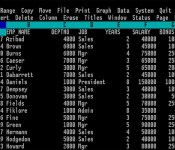
Lotus 1-2-3 moves into that great recycle bin in the sky

The name Lotus 1-2-3 may not mean much to you now, but mention it in front of geeks of a certain age and they’ll be transported back to an era when IBM ruled supreme and people could aspire to own hard drives without selling their firstborn. IBM acquired the creator of that venerable spreadsheet software back in ’95, and pulled the plug on sales last year when it became painfully clear that 1-2-3 was never going to come out on top again. Now, with the support window officially closed, let’s just take a moment to remember an old stalwart that just passed into that digital ether that awaits all abandoned software. Lotus 1-2-3 first came to be some thirty years ago where it filled a niche left open by unambitious competitors like Visicalc (from whence Lotus founder Mitch Kapor came) and soon became one of the reasons to own an IBM PC. Alas, when you’re on top, there’s only one place to go. After defending its crown from a slew of eager competitors for years, Lotus 1-2-3 eventually became a footnote in the annals of computer history after Microsoft’s Office came along and dominated the late ’80s and beyond.
Source: ZDNet
.CPlase_panel display:none;

Apple’s upcoming iPad event may take place on October 16th

It’s no secret that Apple tends to reveal its new iPads in October — at least, that’s been the company’s tradition for the past few years — so the big question has been exactly when in October we can expect to see these upcoming tablets. According to Re/code, which has a history of predicting such event dates with a high degree of accuracy, we should mark October 16th on our calendars. The report indicates that the launch will take place at Apple’s Town Hall auditorium, so it’ll be a smaller affair than last month’s spectacle. While we haven’t seen as many rumors of the new devices as we did with, say, the iPhone 6, there’s been a lot of buzz about a new 12-inch model making the rounds in addition to the usual 9.7-inch Air and 7.9-inch mini. There’s also a chance we’ll see new options on the iMac side; and with OS X Yosemite and Apple Pay due very soon, you can count on some fanfare about those as well.
[Image credit: AP]
Filed under: Tablets, Wireless, Apple
.CPlase_panel display:none;

UI/UX Designer Bundle: Learn how to WOW users through app design $34 [Deal of the Day]

Are you a developer looking for that final piece to your product that will give you the push you’ve been waiting for? I can’t tell you how many requests for reviews we get from developers that have great ideas but the ugliest and most unfriendly interface you’ve ever seen. If your GUI is weak, you’ve immediately told your users that you don’t care enough about them to be bothered with optimizing their experience. What do you imagine that will do to your word-of-mouth experience?
Luckily, The UI/UX Designer Bundle is packed over 34 hours of top-notch user experience training that will show you the ins and outs of developing for customer delight. You’ll learn the nuances of spacing, typography, and how to work with templates. You’ll also learn how to beta-test your creations and get the insights necessary to make your app or game truly “habit-forming”. At just $34, this may be the wisest investment you’ll make for your latest project.
Check this deal out, and many others at deals.androidguys.com!
Deals, Discounts, Freebies, and More! Click here to save today!
The post UI/UX Designer Bundle: Learn how to WOW users through app design $34 [Deal of the Day] appeared first on AndroidGuys.
.CPlase_panel display:none;

New Moto X finds its way to US Cellular with a $99 starting price tag
Fancy yourself a shiny new Moto X? If so, your options are a bit limited on the in-store carrier front. However, US Cellular is on the list of carriers that will offer the device for your contracted discount pleasure.

The new Moto X 2nd gen is $99.99 on a new two-year contract or $480 outright. Currently only the black version of the device is available, but a black leather and bamboo variant will be making its way to the carrier for $149.99 later this month. Unfortunately there doesn’t seem to be any plans at this time for US Cellular inclusion into the Moto Maker customization site which limits your deep customization abilities.
Any US Cellular customers eye-balling this bad boy, or are you waiting for the Note 4?
Source: US Cellular Via Android Police
//<![CDATA[
ord = window.ord || Math.floor(Math.random()*1E16);
document.write('‘);
//]]>
The post New Moto X finds its way to US Cellular with a $99 starting price tag appeared first on AndroidSPIN.
.CPlase_panel display:none;
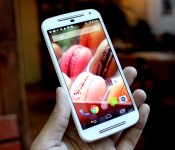
Moto G review (2014): still the best budget smartphone

Last year’s Moto G took us all by surprise. Sure, we knew Motorola wanted to reinvent the cheap smartphone experience, but the very first device in the company’s cost crusade was even better than we expected. Let’s be honest, though: The G’s greatest asset was its small, small price tag. For $180 off-contract, it became awfully easy to forgive the thing for not being the quickest, the prettiest or the smartest. Still, it was one of those gadgets that wound up being more than just “good enough”; between the price and performance, the Moto G was one of the best cheap smartphones you could own, period.
Here we are less than a year later, and we’ve got a sequel to play with (one with the same name, no less). If you took a quick peek at what it brings to the table, you’d be forgiven for thinking that Motorola wanted to play it safe the second time around — the new Moto G isn’t a game changer, and it doesn’t have to be. Does this year’s model clear the “good enough” bar once again? And just how far will $180 take you this year?
Hardware

I don’t mean to sound cynical here, but if you’ve seen one modern Motorola smartphone, you’ve just seen them all. Seriously. Motorola is still enamored with those curved backs, clean faces and dimpled logos. Other details of the design are carryovers too, including the headphone jack centered along the phone’s top edge, and the faintest hints of color circling the 8-megapixel rear camera. All of that taken together means this year’s Moto G looks an awful lot like last year’s batch of Motorola handsets with just a few notable differences.
For one, a more expansive, 5-inch 720p display fills the front — it’s barely bounded by bezels on the left and right, while a shiny pair of front-facing speaker grilles above and below the screen helps the G pull off a convincing Moto E impersonation. You won’t notice the tiny, white notification light next to the pinprick of a front-facing camera until someone shoots you an email or writes on your Facebook wall, though your eye will occasionally dart to the proximity sensor sitting below the topmost speaker (especially if your phone is white, like mine was). That’s about it in terms of visual flair — the G in its default state is as subtle as ever, but you can trick it out with any number of Motorola’s colorful backplates and cases.

As it turns out, that bigger screen winds up being a blessing and a curse. Your apps and emails have more room to stretch out and breathe, but this year’s Moto G is also a little less comfortable to hold because of it. That’s a shame since Motorola did an outstanding job making the new Moto X feel slimmer than it is by tapering the sides. Here, those edges are flat and substantial, and while they don’t make the phone feel small, they do give your hands more surface area to grip — not a bad deal for any butterfingers reading this. You might also notice a hint of slack between the removable back plate and the rest of the phone, but that’s just me being nitpicky.
If you thought the Moto G’s looks were more of the same, just wait until you see what’s lurking inside. This year’s model has the same quad-core 1.2GHz Qualcomm Snapdragon 400 as its predecessor, along with the same 1GB of RAM. That both generations of the G basically share a brain isn’t necessarily a bad thing — we quite enjoyed the horsepower we squeezed out of it last year — but I couldn’t help but hope Motorola would use a more powerful configuration this year.
The similarities don’t end there either: Both versions of the G run with the same non-removable 2,070mAh battery, which, at first blush, seems a silly choice. Why would anyone stick the same ol’ battery in a new device with a bigger screen to light up? It’s another one of those price-performance balancing acts Motorola had to cope with, and since this thing has the same brain and the same lack of LTE support (HSPA all the way) as the original G, I guess popping in a more powerful cell wasn’t deemed crucial. If it makes you feel any better, though, there’s now a microSD card slot behind the back cover to supplement the meager 8GB of storage, and an alternate version of the phone sports two SIM card slots instead of one.
Display and sound

Of all the surprises that first Moto G brought to the table, its 4.5-inch, 720p screen was one of the most pleasant. Impressive clarity? Accurate colors? Solid viewing angles? The original G had them all, and the sequel’s 5-inch display fares almost as well. Yes, almost. There are a few bummers at play here, but the most notable is the slight dip in sharpness since the screen uses the same number of pixels to fill even more space. If you’ve got a spare moment, you can peer very intently and pick out those individual pixels; you’re ultimately left with a screen that looks softer and less crisp than the one that came before it. The bigger question, though, is how much that actually matters. My answer? Hardly at all. It’s not going to be a dealbreaker for anyone but the most persnickety screen hounds.
More importantly, the Gorilla Glass 3-clad display is spacious, bright and plenty vivid, though colors didn’t seem quite as poppy and saturated as they did on the original Moto G. Personally, I prefer it when colors border on lurid (gotta love those AMOLED screens), so the screen feels just a little lifeless to me. Of course, though, your mileage will vary on that one. Alas, things take a turn when you start looking at dark pages or videos: My review unit has some pretty noticeable backlight bleeding at four discrete spots near the center of the screen. Those stray photons shouldn’t be terribly bothersome for most, but my eyes couldn’t help but gravitate toward them while poking through a dark app or sitting in dimly lit rooms.
On the plus side, the silver-trimmed speakers bounding that screen are a damned sight better than the single, wimpy driver that sat low on the original G’s rear end. The difference is dramatic — they get louder than you’d expect without getting too muddy or distorted — but don’t expect any HTC One-style auditory revelations when you crank things up.
Software

Hate bloatware? Love the buttery smoothness of unfettered Android? You’ll find plenty to like here. We can actually keep this bit short and sweet: The Moto G’s build of Android 4.4.4 is just about untouched, a feat that (for better or worse) wasn’t replicated by its big brother. Sadly, this also means that the thoughtful tricks the Moto X could pull off are nowhere to be found. This shouldn’t come as a shock: The G still lacks the additional processing cores that made those tricks possible, but they’re hard to give up if you’ve used them (or have seen them in action) on a Moto X.
With the exception of Motorola’s Migrate, Assist and Alert apps, there’s just about nothing non-Googly in origin here. Thankfully, those apps occasionally come in pretty handy. As the name implies, Motorola Migrate lets you transfer messages, contacts and calendar events (whatever doesn’t come through when you set up the phone with your Google account, really) from another Android phone or straight from Apple’s iCloud. Assist pitches in when it can tell you’re in a meeting or when it’s your bedtime by automatically silencing itself.
Alert, on the other hand, is a sort of a location-based, catchall app where you can broadcast your location to friends (à la Glympse), as well as set up notifications for preset contacts and emergency services if you ever feel you’re in danger. Setting up that list of important contacts doesn’t take more than a few moments, and triggering the emergency mode is just as simple — a single tap of a button initiates a 5-second countdown before your phone starts reaching out to everyone on the list. All told, it’s a largely dummy-proof lifeline should your situation go south in a heartbeat. Here’s hoping you won’t ever need to use it as one.
Camera

None of the smartphones that Motorola pieced together over the last 12 months have had cameras that have blown us away — care to take a guess at how the Moto G fared? Bingo! Welcome back to the middle of the road, at least compared to the current crop of smartphones floating around the market. That might sound like I’m damning the G with faint praise, but believe me: The 8-megapixel sensor Motorola’s got in there is a big, big improvement over the 5-megapixel camera in last year’s model.
As usual, photons are your friends and you’re going to want as many of them around as possible if you want to coax your Moto G into performing its best. Under those conditions, expect to see lively colors and a bountiful amount of detail (the fact that HDR is set to “Auto” by default usually helps with that). It actually does pretty well once the light starts to fade, too — graininess becomes a problem after a while, but the sensor is more than capable of coping when the sun dips behind clouds or starts to inch closer to the horizon.
Up front, the tiny 2-megapixel, front-facing camera performs about as well as you’d expect. It’ll do in a pinch when it’s time for a video Hangout, but I’ve noticed the same sort of ghostly delay when trying to frame up a shot that I did on the Moto X. Strangely, the issue isn’t as prominent here as it was on the higher-end X, so you won’t get too frustrated trying to snap a decent selfie or eight. Meanwhile, flipping into video mode is a quick process but the results definitely won’t wow: video resolution tops out at 720p and footage is all too often soft and unsatisfying.
I’ve praised Motorola’s dead-simple camera interface in the past, and I’ll do it again: The one-touch process of snapping a photo is impossible to screw up, and the settings offer enough depth to enable some handsome shots without overwhelming you with options. That said, it does take some getting used to. Tapping anywhere on the screen to snap a photo seems awfully smart until you realize that lots of other camera apps have you tap on the screen to focus or control exposure; if that sounds like what your current phone does, prepare to fight your muscle memory for a while. The fact that you’ve also got to drag a reticle around to change focus and then tap means it’ll sometimes take longer to capture a scene than Motorola would like you to think.
Performance and battery life

The Moto G’s spec list doesn’t do it many favors. Here’s the thing to remember, though: While it uses a year-old chipset, the 2014 Moto G runs lean. The lack of an obnoxious, overwrought user interface means it can dedicate that available horsepower to more important things, and it shows. I spent my days testing the G as I usually do: sending off messages, jumping into Hangouts, scrolling through long web pages, firing up apps, flipping among those apps as they run and generally being a fidgety brat trying to stymie those long-in-the-tooth internals. The verdict? Once again, the Moto G handled just about everything I threw at it with grace and gusto. Jumping out of Asphalt 8 (which ran more than admirably even at the highest settings) into The Battle Cats for a spot of feline world domination made the phone seize up for a few moments while it tried to cope, but it was almost always snappy and responsive, even while I did my best to break it.
| Moto G (2014) | Moto X (2014) | Moto G | |
|---|---|---|---|
| Quadrant 2.0 | 8,846 | 22,721 | 8,723 |
| Vellamo 3.0 | 1,669 | 2,093 | 1,575 |
| 3DMark IS Unlimited | 4,679 | 19,568 | 4,621 |
| SunSpider 1.0.2 (ms) | 1,534 | 787 | 1,377 |
| GFXBench 3.0 Manhattan Offscreen (fps) | N/A | 11.9 | 1.7 |
| CF-Bench | 14,470 | 39,018 | 15,030 |
| SunSpider: Lower scores are better; results compiled on Chrome. | |||
Meanwhile, the tale of the tape tells a familiar story. The results above are in line with what we squeezed out of the first Moto G, but for some reason, I had a hell of time trying to complete the GFXBench test; it kept returning an “Out Of Memory” error when attempting to render 1080p footage offscreen. Ill omen? Perhaps, but the G didn’t disappoint when it came to running graphically intensive apps (and it isn’t the first Moto handset that balked at that particular test, so I wouldn’t worry about it too much).
And now, we return to the elephant in the room: battery life. Remember, Motorola hasn’t touched the battery, so we’re looking at the same 2,070mAh cell from last year’s model powering a phone with a bigger screen. Sounds like a recipe for disaster, no? Thankfully, the situation isn’t nearly as dire as it could’ve been: In our video-looping test (with screen brightness set to 50 percent) the G stuck it out for seven hours and 38 minutes. For those of you keeping track, that’s only a hair less than the 7:48 the original Moto G was able to manage. Not too shabby, especially when you factor in how it handles when you’re not looping a video for hours on end. The Moto G became my daily driver for a week, and it always managed to keep me texting, tweeting, calling and playing the odd game for full work days (and then some) at a time. For me, that worked out to just shy of 13 hours of active usage, though it goes without saying that your experience will probably differ somewhat from mine.
The competition

There’s no shortage of phones that stack up the Moto G based on pure power, but it’s a whole other ball game when we factor in that cheapo price tag. Consider the HTC One Mini 2 — you’ll get the same quad-core Snapdragon chipset as the Moto G, albeit wrapped in a chic aluminum shell and paired with a (lackluster) 13-megapixel camera. Doesn’t sound like a bad package… until you notice that it’s staggeringly more expensive than Motorola’s latest.
The Desire 510, meanwhile, is a slightly more worthy competitor with its LTE radio and its newer 1.2GHz Snapdragon 410 chip, though its 4.7-inch screen is even less pixel dense than the G. It doesn’t yet have an official release date here in the States (where it’ll be available for free or $149 on Sprint and Cricket, respectively), but in Canada, the 510 will only set you back $200. If good, ol’ fashioned HSPA+ isn’t enough for you, there’s always the LTE-enabled version of the original Moto G to lean on. The camera’s much less impressive, but it’s a bit easier to wrap your hands around and you’re looking at much snappier data speeds if your provider is wired up to offer those sweet, sweet LTE signals. Just be prepared to pony up a little extra come checkout time: The Moto G 4G LTE (who comes up with these names?) costs $219, a full $40 more than the new edition.
Of course, if you’re not married to the prospect of owning an Android phone, there’s the iPhone 5c — these days it’s free with a contract, while going without will cost a cool $450. It’s only wallet-friendly under the right circumstances, though; you’re the only one who can decide if pledging allegiance to Cupertino is worth it.
Wrap-up

This won’t be a phone that you fall hard and fast for. It won’t sweep you off your feet, nor will it dazzle you with a slew of whizbang features. That’s just fine, though. Because none of that changes the fact that the Moto G is still one of the best budget smartphones you can buy today. Using the thing isn’t as revelatory an experience as firing up the new Moto X was, but Motorola’s long list of seemingly modest improvements collectively add up to a device that’s worth your attention — and the $180 asking price.
Filed under: Cellphones, Mobile
.CPlase_panel display:none;
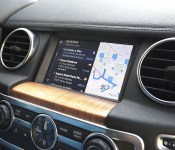
Nokia’s Here Auto tries to predict your driving needs (hands-on)

Okay, let’s get this out of the way: it’s not Nokia Here anymore, just plain old “Here.” Nokia’s VP of Connected Driving, Floris van de Klashorst, told me that Here no longer uses the Nokia name and is fully independent (though it’s still 100 percent owned by Nokia). That settled, Here Auto was launched last year as Nokia’s connected car solution for automakers, competing with Apple’s CarPlay and Android Auto. Nokia beat both of those giants to the punch, however, and it definitely shows. The latest version of Here Auto, launched at the Paris Auto Show, has fewer rough edges than its competitors. It’s also designed to think ahead of you, learn your habits, work with other devices and present information and options in the least distracting way possible. That’s the goal, anyway — to see if it succeeded, I took a tour around Paris in the company’s Range Rover demonstrator.
Before jumping in the car, I had a look at the latest version of Here Auto and talked to Mr. van de Kashorst about the features. First off, the engineers took me through a typical trip planning session. After entering the destination — which can be done from the vehicle’s console or a tablet (more on that later) — the system queued up several route choices. Thanks to the vehicle’s fuel sensor input, part of the route showed up as red, meaning you wouldn’t make the whole trip with the amount of gas in your car. From there, a sidebar menu appeared, showing filling stations in the area, and even the price of fuel (the availability of prices depends on your location). You could then add the pit stop to your itinerary, and the whole trip is replotted.

The system also works with your tablet or smartphone, allowing you (or a passenger) to preselect your destination. The destination will then be added to your favorites list on the console display, where it’ll stay until you delete it. On top of eliminating the cumbersome console entry chore, the tablet also lets drivers change destinations or add pits stops on the fly.

That done, we launched in the company’s demonstrator for a quick trip around the convention center. The system immediately brings up street level imagery to let you picture the destination before you arrive. It’ll then bring up several, traffic-optimized route options, since most manufacturers will likely include traffic data for free with the nav systems. Once navigating, the system allows touchscreen control, but also indirect control via a dial/joystick to the right of the driver (if included). In addition, the route can be displayed on the car’s dash so that you just have to glance down to see if you’re still on track. Nokia said together, those are key safety features that let you “focus on the task at hand, which is driving the car.”
In the event you need input a new destination mid-drive, the maps will still work offline — a feature also available on the apps. You’ll also get tourism information from Lonely Planet, Trip Adviser or local sources, if available.
Once you near your endpoint, the system kicks into approach mode. It brings up the street level view again, and also brings up a mode called “one-touch parking nearby.” It then lets you send an SMS or email with one touch to inform your party that you’ve arrived. Meanwhile, the companion app located on your tablet has kept up with the program, and can walk you back to your car if you forget where you parked it.

Mr. van de Klashorst told me that on of the main goals of the new update was to make it easier to improvise and adjust on the fly during a trip. By opening up the interface to external devices (iOS, Android and, of course, Windows) passengers can also join in the fun by finding interesting spots to explore.
With a new SDK, Nokia is giving car manufacturers access to all its features, while letting them custom design the look of interface to suit their own vehicle styles. The company also has its tendrils into self-driving vehicles, helping manufacturers make self-driving vehicles more friendly. For instance, Here has recently started providing lidar-generated 3D mapping data for better efficiency and trip planning.
Despite a few tablet syncing glitches, the whole demo was incredibly smooth — and all the Nokia-less work seems to be paying off. Here said yesterday that it was used as the primary mapping service in 50 out of 62 new vehicles that just launched at the Paris Auto Show.
Filed under: Transportation, Nokia
.CPlase_panel display:none;

Amazon green lights ‘Hand of God’ and ‘Red Oaks’ for full series

After earning positive reviews during Amazon’s Pilot Season, Hand of God and Red Oaks will become full series. If you’ll recall, the online retailer offered the masses the opportunity to watch a smattering of pilot episodes and offer feedback on which ones should be given an entire season on Prime Instant Video. Hand of God stars Ron Perlman (Sons of Anarchy) as a corrupt judge who believes God is sending him messages through his son (being kept alive by a ventilator), offering clues in his quest for vigilante justice. With executive producer Steven Soderbergh (Ocean’s Eleven) on the roster, Red Oaks chronicles a teenage assistant tennis pro and his last summer before college in 1985. The pair joins Alpha House, Betas, Transparent and others on the Amazon Originals roster.
Filed under: Home Entertainment, HD, Amazon
Source: Amazon
.CPlase_panel display:none;
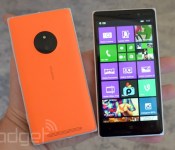
Microsoft’s Lumia 830 is now available in the UK

Well, that didn’t take long. Just a day after it let Brits begin ordering the Lumia 735, Microsoft’s now making it’s more powerful sibling, the Lumia 830, available too. Billed as an “affordable flagship,” the Lumia 830 delivers PureView imaging thanks to its 10-megapixel camera, a 5-inch 720p display, a 1.2GHz quad-core Snapdragon 400 and a 2,200mAh battery. Oh, and it’s also running Windows Phone 8.1, which brings with it Cortana and lots of camera improvements. Microsoft says that EE, Vodafone, Dixons Carphone, Amazon and Tesco will range the device from today, although only Amazon (£327) is showing pricing for the handset. However, we’re told the device will be available from £24.99 on contract, once carriers begin adding it to their stores.
Filed under: Mobile, Microsoft
Source: Amazon
.CPlase_panel display:none;
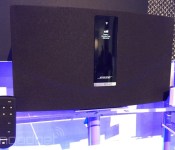
Bose continues to take on Sonos with new SoundTouch speakers

Bose took to New York City to celebrate its 50th birthday in style. Not only did the audio company introduce a new partnership with streaming service Deezer, but it also introduced its Series II set of WiFi speakers. The revamped SoundTouch 20 and new flagship SoundTouch 30 (pictured above) are a follow up to last year’s home systems, as Bose looks to better compete with the likes of Sonos. The SoundTouch 20 and SoundTouch 30 are both capable of syncing across your WiFi network and can be controlled via Bose’s controller app, available for iOS and Android — the flagship model, however, is obviously the most powerful of the two from the inside out. The SoundTouch 30, as does its sibling, features the company’s Waveguide technology, which Bose says allows for the system to create a great amount of bass output from a very small enclosure, alongside a 9 lb subwoofer. And trust us, the thing is beautifully loud.
Content-wise, Deezer wasn’t the only new service that SoundTouch users can expect to have access to now, as Bose managed to get iHeartRadio and Spotify Connect, making the new (and older) systems that much better for potential buyers. Bose’s SoundTouch 20 and SoundTouch 30 are available now for $399 and $699, respectively. Sound off in the comments below and let us know if you’re into them.
Filed under: Misc, Peripherals, Portable Audio/Video
.CPlase_panel display:none;
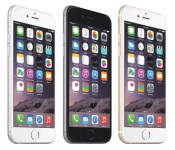
iPhone 6 Reservations in China Top Four Million [iOS Blog]
Demand for the iPhone in China is strong, with reservations for the iPhone 6 reaching four million in just one day, reports Chinese media outlet Tencent. This figure tops the two million in six hours reported yesterday and is based on information provided directly by the companies processing reservations on China.

According to reservation company Jingdong, reservations are almost evenly split between the iPhone 6 and 6 Plus. The iPhone 6 Plus has accounted for 1,189,083 reservations, edging out the iPhone 6 with 1,106,379 reservations. Apple announced earlier this week that the iPhone 6 and 6 Plus will go on sale in China starting October 17.
A recent report from Digitimes claims the iPhone 6 Plus may account for 60 percent of Apple’s total iPhone 6 device shipments, although usage numbers so far have been skewing heavily in favor of the smaller iPhone 6. Demand for the 5.5-inch model has, however, exceeded supply so far, with the device quickly going out of stock shortly after launch. Shipping estimates for the iPhone 6 Plus are still showing a delay of 3-4 weeks, while the iPhone 6 is available in 7-10 business days in the US and a number of European countries.

.CPlase_panel display:none;
 AIVAnet