



New spyware targets Hong Kong protesters’ phones

Hong Kong’s pro-democracy protesters have more to worry about than they thought — someone is gunning after their phones, too. Lacoon Mobile Security says it has detected new spyware, Xsser, that tries to trick WhatsApp users on Android and iOS by posing as a coordination tool for the Occupy Central movement. Anyone who falls for the ploy grants access to virtually all of their sensitive info, including contacts, call logs and instant messaging archives. The code is unusually sophisticated, to boot; it’s a rare instance of a cross-platform mobile attack, and it updates itself over time.
Just who’s responsible (beyond a Chinese-speaking entity) isn’t clear, since the culprits have gone out of their way to hide their tracks. Lacoon suspects that the Chinese government may have crafted Xsser to snoop on protesters, but there’s also a chance that criminals are using the hostile code to look for accounts they can steal. The malware isn’t likely to be all that effective no matter who’s at fault, especially among cautious types who’ve already switched to secure messaging software. Still, it’s not exactly comforting for activists who already have plenty of reasons to be suspicious.
[Image credit: Chris McGrath/Getty Images]
Filed under: Cellphones, Internet, Mobile
Via: New York Times
Source: Lacoon Mobile Security
.CPlase_panel display:none;

A video game museum is rebuilding an MMO designed for the Commodore 64

Thought you were old-school for playing Everquest and Ultima Online? Step back, son: those games are spring chickens next to 1986’s premier virtual world: LucasFilm’s Habitat. Don’t fret if you haven’t heard of it — the Commodore 64-powered online world only lasted for two years and was exclusive to Quantum Link, an ISP that would eventually evolve into America Online. Habitat seems fairly basic by today’s standards, but it was a breakthrough in its own era, featuring support for thousands of simultaneous players in a self-governed virtual world. It’s gaming history, and Alex Handy, founder and director of the Museum of Art and Digital Entertainment in Oakland, is trying to revive it.
The project almost came about by accident — Handy was working on a retrospective of Lucasfilm titles, and reached out to Habitat co-creator Chip Morningstar to see if he had any of the game’s old source code. Turns out he had all of it, but that itself isn’t enough to rebuild the game. Not only is Habitat limited by its exclusive service provider and ancient console, but the game’s servers ran on the obscure and defunct Stratus Nimbus. Luckily, an old Stratus employee was willing to donate an old Nimbus to the cause, giving the museum the hardware it needs to try and relaunch one of the world’s oldest online games.
Now Handy is in the last stretches of his project. This past weekend, he assembled a team of folks from Commodore, AOL (Engadget’s parent company), Q-Link and even the game’s original creators: Randy Farmer and the aforementioned Chip Morningstar. Over 12-hours the group sifted through old code and reverse engineered the Q-Link server code that ran Habitat in the old days. The game still isn’t up and running, but by the end of the day they had their proof of concept: a single Habitat room with just one active player in it. The player avatar doesn’t have a head, and it can’t actually do anything, but it means that the team can now communicate with the server from an emulated Commodore 64 client.
It’s only a matter of time before Handy is able to get the game back up and running, something he says will happen much faster if he can manage to find the server source code for the old Q-Link service. Know where to find it? Hit up the source link below — the museum would love to hear from you.
.CPlase_panel display:none;

Aquarium of Boise gives the internet control of a tank-dwelling submarine

Maybe you like swimming. Maybe you like going to the aquarium. Maybe you’d like to do both without leaving your house. Now, you can: a new exhibit at the Aquarium of Boise allows anyone with an internet connection to take a virtual tour of one of its largest fish habitats using a remote controlled submarine. The telepresence sub can be controlled from the aquarium’s webpage using either a computer keyboard or clicking on-screen controls. It works okay, but there’s a noticeable delay: we had a hard time getting the LiveDiver sub to look at much else besides a wall. Part of this could be the tank’s regular inhabitants: the aquarium says that Letterman, a gap-toothed mappa puffer fish, has taken to chewing the submarine’s tether, disrupting service several times. Still, it’s a neat exhibit and (provided Letterman hasn’t fouled things up recently) you can try it out for yourself at the source link below.
Filed under: Transportation, Internet
Source: Aquarium of Boise, PhysOrg
.CPlase_panel display:none;

Algae-based thread will keep your clothes odor-free

If you’re worried that the silver ions in antibacterial and anti-odor clothing might also pose serious health risks, like destroying genetic material, you’ll be glad to hear that there should soon be a safer alternative. The KTH Royal Institute of Technology has developed an antibacterial thread that uses a mix of bio-compatible plastics and lanosol, a bacteria-fighting compound that you normally find in red algae. The material should not only be a less contentious germ-killer than silver, but more effective. Because it’s woven into super-thin fibers through electrospinning (which uses electrical charges to draw thread from liquid), the antiseptic element doesn’t clump up and leave some areas unprotected.
KTH’s discovery could make antibacterial clothing commonplace, which would undoubtedly be welcome to anyone who hates dealing with smelly laundry. However, that’s just the start of its potential uses. The researchers believe that it could be used for air filters, bandages and other fabrics where the presence of microbes would be unpleasant or outright dangerous. Don’t be surprised if you eventually see a lot of companies, not just fashion brands, touting algae-based safeguards.
[Image credits: Shutterstock / Ljupco Smokovski, KTH Royal Institute of Technology]

Filed under: Wearables, Science
Via: Phys.org
Source: KTH
.CPlase_panel display:none;

Formula E to let teams build their own batteries and motors

Now that the first major race is out of the way, which took place in Beijing a couple of weeks ago, it’s time for Formula E to look toward the future. Accordingly, CEO Alejandro Agag has revealed some interesting details ahead of the EV racing league’s sophomore season, namely its plans to allow teams to build batteries and motors of their own by then. As great and exciting as Formula E is, currently all cars are using hardware from the same manufacturer, so allowing others to take part will bring it more in line with Formula 1, in which there are engines from the likes of Ferrari, Mercedes and Red Bull. “They could build their own whole car if they wanted. But the regulations are quite strict and they don’t allow a lot of development in aerodynamics, but they do allow development in motor and battery,” Agag stated. He said the idea is for Formula 1 to have “three or four” different companies working on motors and batteries, something that would definitely make the competition even more interesting.
Filed under: Misc, Transportation
Source: Autoblog
.CPlase_panel display:none;

Verizon Reverses Course on Plan to Throttle Unlimited LTE Customers [iOS Blog]
Verizon today released a statement letting customers know that it no longer plans to throttle users who still have a grandfathered unlimited data plan that allows for unlimited LTE data usage.

Verizon is committed to providing its customers with an unparalleled mobile network experience. At a time of ever-increasing mobile broadband data usage, we not only take pride in the way we manage our network resources, but also take seriously our responsibility to deliver exceptional mobile service to every customer. We’ve greatly valued the ongoing dialogue over the past several months concerning network optimization and we’ve decided not to move forward with the planned implementation of network optimization for 4G LTE customers on unlimited plans. Exceptional network service will always be our priority and we remain committed to working closely with industry stakeholders to manage broadband issues so that American consumers get the world-class mobile service they expect and value.
Verizon’s LTE data throttling, first announced in July, was set to go into effect today. It would have seen the top five percent of unlimited data users throttled at times of peak usage, which Verizon referred to as “Network Optimization.”
Verizon’s plan to throttle its customers sparked quite a bit of interest from the FCC, with FCC Chairman Tom Wheeler sending the carrier a letter saying he was “deeply troubled” by the decision. Wheeler also questioned the legality of Verizon’s throttling plans and though Verizon responded and its usage restrictions were permitted under current law, it appears the carrier has decided not to go through with its plans due to the response from both the FCC and its own customers.
While Verizon won’t be throttling high-usage LTE customers, it has long restricted 3G data usage for unlimited users. Other carriers, such as AT&T, have also implemented LTE usage restrictions for grandfathered unlimited plans, and while the FCC is now questioning all carriers on their network management policies, no other changes have been announced.
.CPlase_panel display:none;

2013 LTE Nexus 7 sees its Android 4.4.4 factory image finally
The year old 2013 LTE enabled Nexus 7 tablet already has Android 4.4.4 via an update that Google pushed out earlier this year. So don’t go getting all crazy over “it already had it.” In all actuality the 2013 LTE Nexus 7 didn’t have a stock factory image available. Yes, an OTA and a factory image are different. The factory image is the entire software package for the device and is usually used in instances where you flashed a bad ROM and borked your device. The factory image would ring it back to life, like magic. It is also very handy if you have gone so far down the rabbit hole that your best option is to start over from scratch.

Google is generally pretty fast to upload factory images of the Nexus line shortly after launch or after an OTA starts rolling out. In the case of the N7 LTE device, it took a number of months longer than usual. I assume it was related tot he device being LTE enabled. Licensing agreements and all that legal stuff. Bounce on over to the Google Developers Nexus Image page to get the file at your leisure.
Via 9to5Google
//<![CDATA[
ord = window.ord || Math.floor(Math.random()*1E16);
document.write('‘);
//]]>
The post 2013 LTE Nexus 7 sees its Android 4.4.4 factory image finally appeared first on AndroidSPIN.
.CPlase_panel display:none;

Vuzix’s smart glasses now talk to your iPhone

Vuxix’s M100 Smart Glasses may be Android-powered, but that doesn’t mean you have to use its hands-free features with other Android devices. The company has rolled out an OS 2.0 update that lets you use the wearable with most iOS gear. So long as you have the companion app (due very shortly), you can take full advantage of the M100’s augmented reality apps, hands-free calling and other features that keep your hands free. If you’ve been looking for a head-mounted computer that will play nicely with your iPhone (and isn’t as pricey as Google Glass), your search might be over.
Filed under: Wearables
Source: Vuzix (Digital Journal)
.CPlase_panel display:none;
Sprint and Verizon are doubling data on shared plans too

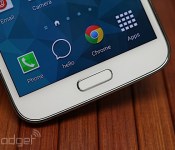
Not to be outdone by AT&T, Sprint and Verizon have now announced they are also going to double the data for users on shared mobile plans, at no extra cost. What’s more, both carriers are bringing the promotion to family and business customers alike, making the news all the better. With Sprint, for example, you can get 120GB maximum for $225 per month on a family plan, while business accounts will receive up to 200GB for $330 — on the former, there’s also the $130 option, which lets you share 60GB between lines. Similarly, Verizon is set to double the data amount on its 20GB, 30GB, 40GB and 50GB More Everything plans; the 12GB and 16GB are making the jump as well, but only to 15GB and 30GB, respectively. Verizon’s promo is kicking off tomorrow, with Sprint following suit the day after. But be sure to act fast, since the networks will only be offering this through the end of October.
Filed under: Cellphones, Wireless, Mobile, Verizon, Sprint, AT&T
.CPlase_panel display:none;
Scared of needles? Try swallowing them

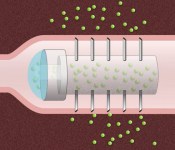
If you’re one of the many who fear needles, you might be in luck. Researchers at MIT and Massachusetts General Hospital are working on an oral alternative to injections, and it involves the use of a capsule. On the pill’s surface, tiny needles inject drugs directly into the lining of the stomach once it’s swallowed. During trials, insulin was delivered more efficiently, and the capsule didn’t cause any issues as it passed through the digestive system. While insulin was used in tests, the delivery system is said to be most helpful for antibodies to treat cancer and autoimmune disorders. At any rate, those of us who prefer to avoid shots entirely may soon have one less source of anxiety during doctor’s visits.
[Image credit: Christine Daniloff/MIT]
Filed under: Science
Source: MIT
.CPlase_panel display:none;
 AIVAnet