


NVIDIA hints at an HTC Nexus 9 tablet coming within weeks

Remember those hints of HTC returning to tablets? Yeah, the cat’s out of the bag. As part of its patent lawsuit against Qualcomm and Samsung, NVIDIA has revealed that it expects a Tegra K1-powered “HTC Nexus 9″ sometime within the third calendar quarter of the year. That would theoretically put the launch sometime before the end of September. However, don’t get your hopes up for a release that soon. HTC just sent out invitations for a “double exposure” media event on October 8th, and there’s still no guarantee that the Nexus 9 will surface at that gathering. Given that the slate is supposed to be running Android L, any unveiling will likely hinge as much on Google’s progress as it does HTC’s.

Filed under: Tablets, HTC, Google, NVIDIA
Via: Bright Side of News, Droid-Life
Source: NVIDIA (PDF)
.CPlase_panel display:none;
Those new iPhones are facing delays in China

With introduction of two iPhones last year, Apple looked to gain ground in overseas markets like China. Now, hours after the announcement of its next round of phones, the folks in Cupertino are facing issues getting the new wares to parts of Asia. In fact, it has already told three of mainland China’s largest phone companies that it won’t be able to stock shelves with the iPhone 6 and 6 Plus on the September 19th launch day. The New York Times reports that the devices have yet to receive regulatory approval needed for the release, but Apple didn’t give a specific reason for the hold up. Back in July, state-run Chinese Central Television expressed concerns that iOS location-tracking logs could be used to nab classified info, and were a threat to its national security — a claim which Tim Cook and Co. were quick to reject.
Filed under: Cellphones, Mobile, Apple
Source: The New York Times
.CPlase_panel display:none;

T-Mobile Launches ‘Wi-Fi Unleashed’ Campaign, Pledges Support for Wi-Fi Calling on All New Smartphones
T-Mobile today hosted its 7th Un-carrier event where it announced plans for a “Wi-Fi Unleashed” campaign. According to the company, all smartphones going forward will be able to take advantage of the network’s Wi-Fi calling and texting, including Apple’s iPhone 6 and iPhone 6 Plus.
Wi-Fi calling and texting allow users to send and receive calls/texts over a Wi-Fi network, which is useful in areas where there are poor cellular connections. Apple announced Wi-Fi calling support for the iPhone 6 and the iPhone 6 Plus yesterday.
T-Mobile plans to offer Wi-Fi calling and texting at no additional cost. The company has also deployed a new product for customers who have bad cellular reception in their homes. The T-Mobile Personal CellSpot is a Wi-Fi router that can be used as a primary router or alongside an existing router, prioritizing voice calls and offering HD audio quality for calls. It has 802.11ac support, USB 3.0 ports, and covers up to 3,000 square feet.

T-Mobile plans to begin selling the Personal CellSpot on September 17. It is available to be leased for free with a $25 refundable deposit, but customers can also purchase it outright for $99. T-Mobile will also be allowing one time upgrades for customers to get a Wi-Fi enabled phone, even those who are not signed up for the JUMP program.
Along with support for Wi-Fi calling and the introduction of the CellSpot, T-Mobile announced that it’s entered into a partnership with in-flight wireless provider Gogo, allowing T-Mobile customers to send and receive texts and picture messages on their phones on any flight that includes Gogo wireless service. Gogo in-flight wireless for T-Mobile customers is also free, and will begin on September 17 for compatible devices.
On stage, Legere announced that T-Mobile had 2.75 million gross adds in August of 2014, and 1 million postpaid adds, which represents its biggest postpaid net add in the history of the company. Legere also noted that T-Mobile is gaining subscribers from other carriers at a rapid pace thanks to its Un-carrier initiatives.
T-Mobile’s Un-carrier initiatives are an effort to disrupt traditional mobile service. The company began with uncoupling device costs from service costs in 2013, and then went on to offer several additional incentives to encourage customers to switch to the carrier, including paying early termination fees, offering a JUMP! upgrade plan, unlimited texting and 2G data in 100 countries, free streaming music from Spotify, Rdio, iTunes Radio, and Pandora, and one week free trials to test the T-Mobile service.
.CPlase_panel display:none;

T-Mobile debuts Un-carrier 7.0 with Wi-Fi Unleashed

T-Mobile, on Wednesday added millions of cell phone towers to its network. Okay, not literally, but it certainly did so in figurative manner. The Un-Carrier just announced its 7.0 phase of the initiative which harnesses Wi-Fi connectivity both here on the ground and in the air.
T-Mobile customers with Wi-Fi calling and texting capabilities (pretty much all of them) can make free Wi-Fi calls to the United States inside or outside of the country. For those who don’t have a device capable of Wi-Fi calls can enroll in a special, limited time JUMP! upgrade to pick one up.
Slated to take effect on September 17, the Wi-Fi Unleashed program will see all Simple Choice customers with high speed internet and scoop up a free T-Mobile Personal CellSpot with a $25 refundable deposit. The best part in this announcement is that there are no extra apps to install or crazy configurations; simply make the calls as per normal. In essence, everyone of these CellSpots becomes a tower that gives subscribers full bars of service.
As if that we’re good enough, T-Mobile has partnered with Gogo to allow for free, unlimited texts, picture message, and visual voicemail. With roughly 75% of flights using GoGo this keeps T-Mobile customers connected in the sky, too.
Wi-Fi calling and texting for 100% of T-Mobile customers and business customers
- 100% of new smartphones in T-Mobile stores are Wi-Fi calling and texting capable.
- An exclusive enrollment window in JUMP! – T-Mobile’s revolutionary upgrade program – so 100% of customers can immediately upgrade to a new Wi-Fi calling ready smartphone.
Next-generation Wi-Fi calling and texting on its network
- Designed to deliver high-quality HD voice, fast call setup times, fewer dropped calls and seamless voice coverage between T-Mobile’s nationwide Voice over LTE (VoLTE) network and Wi-Fi with compatible smartphones.
Full-bars personal coverage wherever you choose
- The T-Mobile Personal CellSpot – a new device that enables everyone to put the capabilities of a personal T-Mobile tower in their house, delivering a full-bars T-Mobile experience ANYWHERE you have broadband, and equipped with a unique patent-pending technology that prioritizes voice calls for crystal clear HD Voice.
Coverage at 30,000 feet
- An exclusive, new partnership with Gogo – the world’s leading in-flight connectivity service – enabling T-Mobile customers to send and receive unlimited text and picture messages, and even get visual voicemail, on any Gogo-equipped flight on U.S.-based airlines.
The post T-Mobile debuts Un-carrier 7.0 with Wi-Fi Unleashed appeared first on AndroidGuys.
.CPlase_panel display:none;

Apple Watch First Impressions From Watch Experts, Fashion Sites
Following yesterday’s media event where Apple introduced the iPhone 6, the iPhone 6 Plus, and its much-anticipated wearable device, members of the media were invited to go hands-on with the devices.
Yesterday, we published hands-on impressions of the Apple Watch from various tech-related sites, but this year’s event also had top fashion editors and bloggers in attendance, who also published their initial thoughts on the Watch. We’ve gathered up some of their perspectives below, giving an overall picture of how the device was received in the fashion world.
Fashion magazine and blog InStyle said the Apple Watch was “well worth the wait,” and published a list of “5 Reasons Why Fashionistas Will Swoon Over Apple Watch.” The piece pointed towards the device’s multitude of styles, its customization options, and its ability to send emojis, drawings, and heartbeats.

Most Apple Watch faces are extremely customizable. Meaning, you can change colors, choose design elements, and add functionality. You can have a traditional analog or a modern digitized face–plus you can choose the screen image.
Well-known fashion magazine Vogue was also impressed with the Apple Watch, highlighting its design and the “extra magic” of the Digital Crown control. The magazine said the Apple Watch is “a watch that looks like a watch” and that its “visual appeal is almost retrofitted to the traditional language of the analog Swiss-made timepiece.”
British Vogue editor Alexandra Shulman also told Reuters in an interview that the Watch is “immaculate in terms of how fashion meets function,” and said “The issue is really about how much people want to wear something so clear, essentially an amazing gadget.”
Roseanne Morrison, fashion director for The Doneger Group, told Reuters that the Apple Watch was unimpressive. “It’s not pretty. It’s very future techno as opposed to feminine sexy.” Meanwhile, fashion-oriented site Cool Hunting disagreed, calling it “lovely and clever,” and saying it “marries fashion and technology, wellness and data, and beautifully integrates the humanity of touch.”

The tactile touches of the watch extend beyond the device itself–the Leather Loop strap option, for example, has magnets in each of its ribs so that the act of securing the strap feels like a luxurious zipper and consequently has an extremely secure closure. And the link bracelet has a butterfly closure that seamlessly folds into itself unlike anything we’ve seen on a watch band before.
Beyond fashion, leading wristwatch site Hodinkee had an opportunity to go hands-on with the Apple Watch, giving an in-depth look at the device from a design perspective, and the resulting overview is well worth a read. The site believes the Watch could pose a threat to existing brands, as “Apple got more details right on their watch than the vast majority of Swiss and Asian brands do with similarly priced watches.”
The overall level of design in the Apple Watch simply blows away anything — digital or analog — in the watch space at $350. There is nothing that comes close to the fluidity, attention to detail, or simple build quality found on the Apple Watch in this price bracket.
Hodinkee also focuses on an aspect of the Apple Watch that many sites overlooked — the bands — which it says Apple “NAILED.”
 Apple Watch with Milanese band, courtesy of Hodinkee
…the attention to detail on the straps and bracelets themselves is downright incredible, and when I mentioned above that nothing comes close in this price range, it is very visible when talking about straps.
According to the site, the closure of the Sports watch strap is impressive, and the leather of the leather strap is “super soft, super high quality.”The metal link bracelet is “sizable with just your own hands,” the “loop” style bracelet is “just fantastic” and the Milanese bracelet is said to be comfortable. “I promise you not a single other tech company in the world would’ve spent the time to make this admittedly outdated looking option,” reads the overview.
Hodinkee also points out a few flaws with the device, including the fact that it doesn’t fit under a shirt cuff because of its bulk, and that it is “not as cool as a mechanical watch, to real people.”
Introduced yesterday, Apple’s Watch is available in two separate sizes with an array of different bands and casing options. Pricing on the device will start at $349, and it will be available to the public in early 2015.
.CPlase_panel display:none;
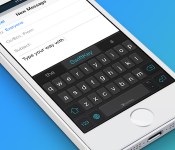
SwiftKey’s iOS 8 app will come with swipe gestures and cloud access

Of the list of features that will be available in iOS 8, the ability to add third-party keyboards certainly stands out. And while Apple didn’t mention any of these keyboards at length in yesterday’s iPhone event, that doesn’t mean these third parties aren’t getting closer to having a working model. SwiftKey is one such keyboard; it was one of the most popular apps in the Play Store for months, and it’s also one of our favorites to use on Android. Fortunately, the company’s nearly ready for beta testing. There’s no word yet on how long these tests will take, nor how many people will get to try it out initially, but the company at least provided us with some details on what the keyboard will be capable of.

As you can see above, one of the shining features of the new SwiftKey for iOS app is its swipe gestures. Just like SwiftKey on Android, as well as other ‘boards like Swype, Sense and so on, it gives you the ability to glide your finger across the screen from one letter in the word to another. It also can learn from your typing, so it’s able to predict what you’re going to say more accurately as you continue to use it more. And thanks to SwiftKey’s Cloud service, if you want it to learn your style even faster, just hook up your Gmail or Facebook account and it’ll analyze what you type the most so the prediction engine continues to improve.
SwiftKey isn’t ready to discuss when it’ll be available to the public yet — nor how much it’ll cost in the Apple Store — or if the beta test will be open or closed. (The latter is most likely.) Still, this is a good sign that third parties are getting closer and closer to having finished iOS 8 keyboards ready to go, and hopefully many of them will be ready to go by the time iOS 8 hits general availability. The app, when it’s ready, will come in several different languages: English, French, German, Italian and Spanish. We’ll keep you posted as more boards are coming out in fully functional mode.
Filed under: Cellphones, Software, Mobile, Apple
.CPlase_panel display:none;

If the internet had slow lanes, you’d still be waiting to read this article

Today is the internet’s “Day of Action,” an organized protest aimed at the Comcasts and Time Warners of the world from internet denizens, organizations, and companies. And some of the internet’s biggies are on board: Netflix, Twitter, Dropbox, Reddit, Tumblr and more. Perhaps you noticed a widget on Netflix today (seen above)? That’s part of the protest: not actually slowing down websites (which would no doubt frustrate users), but helping to enlighten users who might not know what net neutrality is.
Wait — are you one of those people? That’s totally possible! Here’s a quick summary: net neutrality is the internet as it exists today. All websites are created equal — there are no websites that load noticeably faster or slower than others due to internet providers signing financial contracts with website owners/service providers. Today’s protest is about keeping things that way.
Okay okay, that “all websites are created equal” bit is only partially true: Netflix signed deals with several major internet service providers (ISPs) just this year. Netflix did as much because it provides a service that’s dependent upon fast, consistent internet speeds. As Netflix provided data shows (seen below), some ISPs began “throttling” the bandwidth Netflix required to maintain its service. After Netflix ponied up cash, those connections were mysteriously fixed.

But it’s not a mystery, right? Internet providers have monopolies in much of the United States. If Netflix wants to fix connection issues its users are having in various regions of the US, it has one option: work out a deal with the company that dominates that region to provide a “fast pipe.”
Rather, Netflix pays X Internet Company for a separate, dedicated line of bandwidth — what is known as “paid prioritization.” This sets a dangerous precedent and threatens the basis of an open internet: if Netflix has to pay for that kind of pipe, who’s next? Will Netflix pay for that access with each ISP? And since Netflix can afford that option, it freezes out competition: if Netflix competitors can’t afford to pay for a dedicated fast pipe, Netflix has a competitive advantage that can’t be matched. The argument goes that companies like Facebook and Netflix wouldn’t exist today if the open internet didn’t exist.
It’s kind of a huge mess, right?

That’s exactly why today’s Day of Action exists. It’s an effort to remind the millions of internet users in the US to get in touch with Federal Communications Commission head Tom Wheeler ahead of a major legislative decision this year that sets standards for how the internet operates. Day of Action’s official website gets even more specific: the coalition seeks to reclassify internet providers under Title II of the 1934 Communications Act (the whole thing is here in PDF if you’re so inclined).
Put more simply, the reclassification would disallow the concept of paid prioritization.
Wheeler and co. specifically asked for feedback following a vote earlier this year in favor of new, very open regulation governing how the internet works; the period for comment submissions ends on September 15th. The proposal, which passed 3-2, still has another hurdle to pass before becoming law: yet another vote.
So! If the proposal sounds bunk to you — read it right here — today is your day to tell the FCC how you feel. And maybe tell a friend! Just imagine if, say, pieces like this one were intentionally throttled by ISPs because it doesn’t present the ISPs in a positive light. We think that sucks, and we’re betting you do too.
[Image credit: Netflix, HBO (“Last Week Tonight with John Oliver”), Netflix, Battle for the Net, Tumblr]
Filed under: Internet, Software
.CPlase_panel display:none;
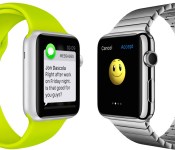
Apple’s Watch can’t cure all of our wearable ills

After months of speculation, Apple finally announced its long-awaited wearable — Apple Watch. What now? Well, if history has anything to teach us, it should do pretty well. The iPod, iPhone and iPad have all been success stories. What’s more, all of them took an existing product category, and gave it a good shake up. Despite this, there are still some who doubt the public’s appetite for a smartwatch. Is Apple Watch the shot in the arm that wearables need? Or is it that rarest of things: a “me too” Apple device?
No one knew what the long-rumored Apple wearable would look like (or even what it would do), but CEO Tim Cook ended the mystery today announcing the Apple Watch on stage at the company’s Cupertino event. As suspected, Apple Watch isn’t just a fitness tracker, a phone notifier or a payment device — but it does do all of those things (and more). Despite all the hyperbole though, let’s not forget that the Apple Watch isn’t Cupertino’s first dalliance with wearables.
It already sells a host of health trackers via its online store, not to mention a fitness tracker of its own (well, at least 50 percent) and a media player that got close to our bodies, long before Gear or Glass showed up. But, the collaboration with Nike and the iPod nano strap were accessories. Apple Watch is Cook-and-co’s first flagship product in a category that many feel has yet to endear itself to consumers — hoping that Apple might be the company to change that. Currently, US wearable device sales estimates vary wildly from the conservative “1 percent of equivalent mobile sales” to the hopeful (and unsourced) “$8 billion,” through to the more grounded, optimistic outlook. It’s a confusing situation, one that’s ripe for some Apple pragmatism.

If we’ve learned anything over the last few years, it’s that there’s an, ahem, healthy interest in fitness trackers (why else would there be so many?). Smartwatches have had their moments, too. But, no matter what the wearable, the same pain points keep coming up again and again: bad/utilitarian design, limited standalone functionality (aka requires a phone for much of the time) and poor battery life. That’s disregarding the more nuanced issues of user interface and practical features. Pebble has shown us that battery life and a wealth of (good) apps can get you a long way. Nike showed us that a marketing budget, good design and a promise of better abs health would also help open wallets. As for a phone companion/notifier? That was the basis of so many smartwatches, for so long, that it was amazing it took as long as it did for a company like Google to come along with something more imaginative with Android Wear.
Apple’s approach? Well, if you were hoping it would slay all the wearable dragons, sadly that’s not the case. For starters, the design will be divisive. While it very much is in keeping with the new iPhones, and Apple’s usual Jony Ive touches, it’s hard not to be a little disappointed that it really doesn’t give cause for any Swiss watchmakers to be worried. Sure, there are probably more customization options than any other smartwatch out there right now, but ultimately, if you imagined what an “iWatch” would look like before today’s event, you probably wouldn’t have been far off. So, what about the other pain points?

Standalone functionality
Perhaps the Apple Watch’s most limiting factor is its dependence on the iPhone — it’s another companion device à la Android Wear. If you have an iPhone 5 or newer, you’re good, but it still means you’re fully tied into Apple’s universe. Completely. It’s not that surprising, but there was always hope Apple would break the mold and blow our minds with an unexpected “third way.” There will of course be dedicated, third-party apps. But, many of these will lean on your phone for some of the muscle just like every other smartwatch. On stage, the Apple Watch was shown off working with maps… yet there’s no GPS in the device; it uses the location data from your phone. No problem you say, but then why has no other watch that does this caught on? I’m sure there will be some creative dedicated apps that will make Apple Watch useful beyond the handset, but it’s a shame that it’s essentially another tethered device.
Fitness tracking
“More than 10 sensors” was the word on the street (or, in this case, The Wall Street Journal). The reality is less generous — or, at least, open to interpretation. We do know there is a heart rate monitor (that uses infrared and visible-light LEDs and photodiodes), and an accelerometer, but GPS and WiFi from your phone are needed for accurate distance (and mapping). This hobbles any real sporting potential, as lugging a phone on a run is a burden we need to move away from, not entrench ourselves in further. Given Apple’s long-running relationship with Nike, and the recent unveiling of its own HealthKit platform, there was little doubt that an Apple wearable would have fitness credentials. But, if you were hoping it would be usable as an independent running device, that’s not the case.
Battery life
If the current wearable situation could be distilled into one problem, battery life would be a good contender. It was rumored that Apple would have a wireless-charging option, which turns out to be mostly true. The Apple Watch uses a MagSafe with inductive charging. So there’s no Lightning port to contend with at least. Sadly, there was no reference to specific battery life, apart from the telling, yet throwaway, comment regarding daily charging. This could turn out to be Apple Watch’s Achilles’ heel (along with almost every other smartwatch, just so we’re clear).

Original features
NFC and Apple have been like oil and water for so long that when the whispers about the tech finally coming to the iPhone started, it seemed almost as unlikely as the company buying Beats. The addition of NFC is potentially Apple Watch’s secret weapon. One of the big announcements at the event was Apple Pay, a wireless NFC payment system for the new iPhones. The good news is: It’s also coming to Apple Watch. This means you can pay for coffee, food and basically anything else with the timepiece. Apparently, NFC in the wearable will be put to other uses too: W hotels will let you use Apple Watch as your room key. It’s here that the device has the biggest chance to prove more useful than the rest (thanks in part to the strong developer support that Apple enjoys).
So, the Apple Watch, at first glance, doesn’t appear to have addressed many of the basic challenges that other wearables have struggled with. This truly is a shame. If any company had the creative team, and resources to take a step back, and create something that cuts through the nonsense, it’s Apple. If there was a hope that all those ongoing hires would pay off, then it looks like it’s going to be further down the line, hopefully between now and the device’s release next year. Perhaps LG’s Sung Jin Lee summed up Apple’s real impact best when he said, “If Apple offers its own product, it will expand the market.” It’s not the technology in this first-generation device that will change how we see wearables; it’s the developer interest, and increased public awareness that comes with it.

There’s a common, well-worn idea that new mobile technology won’t get mass adoption until Apple incorporates it in its products. But, in the case of wearables, it could very well turn out to be true. Apple Watch will no doubt introduce high-street shoppers, not just to the idea of technology you can wear, but also to the idea of connected lifestyle services such as wireless payments and fitness logging. Apple Watch will bring health tracking, touch-based payments and (who knows) maybe even home automation out of the marketing presentations and into the mainstream. Something that stands to benefit makers of all wearables. With Google announcing similar features in Android L, and the corresponding support in Android Wear, you can bet 2015 is the year we finally see the smart-i-verse truly come together. It’s just a shame we didn’t see the “so this is how it’s done” product that the iPod has come to symbolize.
Apple Watch isn’t the cure for all of the problems that wearables face, it’s not really even a bandaid. Ultimately, Apple released a product that looks too much like everything else on the market for it to create a change in the zeitgeist, but it’s not entirely without merit. It’s no longer about if wearables will catch on (there seems to be little choice on that anymore); it’s how soon we can get past seeing them as an accessory, something separate from our inevitable technological future. Through public awareness alone, Apple Watch will be the biggest step toward that future yet, but it looks like we’ll have to wait for Apple Watch 2 for stronger pain relief.
Filed under: Cellphones, Wearables, Mobile, Apple
.CPlase_panel display:none;

Facebook test lets users schedule when a post will be deleted

It’s certainly nothing new for Facebook to test new features amongst a limited number of users before a widespread rollout, or killing them entirely (it did ask for willing participants, after all). With its latest trial, the social network is trying out an option in its iOS app that allows you to schedule when a post will delete. Taking a cue from its own ephemeral offering Slingshot, the feature will sort the erasing after a period ranging from one hour up to a week. As The Next Web points out, it’s likely that deleted posts will remain on Facebook servers rather than being permanently deleted, but that’s a point we’ll be looking to clarify if the tool gets officially added in the future.
Filed under: Internet, Software, Facebook
Source: The Next Web
.CPlase_panel display:none;

SimCity BuildIt announced for Android

EA has just announced that they are planning on releasing a new SimCity game on Android called SimCity BuildIt. Whilst details are vague, the video below shows that the graphics of the game seem to be on par with the current PC game.
Forbes has an analysis video which looks at what is known currently about the game.
SimCity BuildIt will be available on the Google Play Store soon, and you can follow @SimCityBuildIt to stay up to day with progress of the release.
The post SimCity BuildIt announced for Android appeared first on AndroidGuys.
.CPlase_panel display:none;
 AIVAnet