


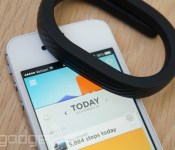
Jawbone Up24 review: wireless syncing makes this Jawbone’s best fitness tracker yet

Late last year, Jawbone faced a herculean task: regaining consumers’ trust after widespread reports of brickage on the original Up fitness tracker. The outfit was able to right many of the wrongs that plagued the first edition, but there was still room for improvement. You still had to plug the Up into a smartphone to sync your collected data; sleep tracking left a lot to be desired; and the iOS app needed more usable functionality beyond tallying steps and monitoring dietary habits. However, the 2012 model did offer more than seven days of battery life and, you know, kept working even after a week of use.
This time around, the company has finally opted to go wireless. Thanks to a Bluetooth Low Energy radio, the new Up24 can sync wirelessly and only needs to be plugged in when it’s time to recharge. The convenience of wireless comes at a cost, however. The 2013 version got a $20 price increase to $150. So is the ability to sync wirelessly worth the extra coin? Are the software improvements impressive enough to make folks trust Jawbone above rival companies? I spent a few weeks tracking my every move to determine just that.
Hardware

You’re not alone if you confuse the Up24 with either of the previous Up bands. The new offering comes in two colors (black and orange) and sports the same rubber-coated exterior as before. Upon closer inspection, the unit now features a swirly textured pattern around its outer shell — a change from the zigzag design on the 2012 model. The lone physical button, used for toggling between Sleep Mode, Power Nap and other functions, now has a slightly different texture as well. Opposite the button is the removable nickel-plated cap that hides the 3.5mm plug for charging. Recharging still happens over USB, with the help of an adapter. In some places, the new unit may be a hair thinner, but there are otherwise no significant changes to report there.
The simplicity of the Yves Béhar-designed original remains, and that’s a good thing. Jawbone decided not to add a display à la the Fitbit Force; instead it’s relying on its companion software to serve up your fitness stats (more on that in a moment). There are still two LEDs, though, and they’re still situated around back by the band’s button, indicating when the unit is awake (that’s the sun icon) or snoozing (that’d be the moon).
One change you’ll notice pretty quickly on the Up24 is the reduced battery life.
As with the previous models, you can use the physical button to activate a number of modes. Pressing once still shows whether you’re in active or Sleep Mode; just press and hold to toggle between the two. When the band is awake (for lack of a better term), you can turn on the stopwatch by pressing once and then pressing and holding until the sun icon flashes and the band vibrates. Similarly, pressing the button followed by pressing and holding until the indicator flashes and Up24 vibrates in Sleep Mode triggers Power Nap.
Last year’s model also brought improved flexibility and water resistance, and indeed, those features are still in play. I was sure to get the unit good and wet each time I washed my hands or did the dishes. Several weeks later, I still haven’t had any issues. The Up24 is also just as flexible as the previous model. From time to time, though, the band would snag when I put on a jacket, sliding it about halfway down my arm, at which point I had to adjust it.
One change you’ll notice pretty quickly on the Up24 is the reduced battery life. The ability to wirelessly sync your data means the runtime now hovers around seven days. That’s the figure Jawbone has claimed, and so my experience was right in line with what the company is advertising. Of course, the band itself will remind you when it’s low on juice using both vibrations and a push notification to your iPhone so you can plug it in for the requisite 90-minute recharge. I say iPhone because while there is an Android version of the Up application, the Up24 is only iOS compatible at this time.
Software

The Up24 arrives with version 3.0 of the Up app, which brings a smattering of new features and improvements. Otherwise, it largely looks like the software we familiarized ourselves with last year. First, there are notifications that get pushed to your iPhone when you’re about to reach your goal. You might also receive alerts updating you on your progress. For example, after waking up in the morning and switching Sleep Mode off, I got a message letting me know how much shut-eye I got. These updates all arrive automatically without the need to plug in the device if you’re using the Up24. There’s also a sleep-recovery tool that allows you to manually enter your estimated hours should you forget to enter Sleep Mode before dozing off. Owners of the previous Up bands can enjoy all of these improvements — everything aside from push notifications, that is.
Still, the app’s main function is gathering your activity and sharing it among your “Team” of friends. Whether this provides adequate motivation or ongoing humiliation depends entirely on how active you are. As a way of keeping morale up, Jawbone’s added two new progress features. “Today I Will” allows you to take things one day at time by setting goals like drinking eight glasses of water or packing in seven hours of sleep. Then there are Milestones. These are longer-term achievements like walking a million steps or hitting a certain goal two weeks in a row. In addition, you can still use the Trends view to keep tabs on your activity over the past few days, weeks and months. Meanwhile, the Recent Activities and Lifeline views organize your data into handy visual lists and graphs.
Like the previous build of the app, version 3.0 can still be used in tandem with a number of other applications if you’re into the Internet of Things as a way of life. During the course of this review, I tied my account to RunKeeper, MyFitnessPal and If This Then That (IFTTT). As you might expect, integration with IFTTT opens up a whole new world of possibilities. Have a set of Philips Hue lights? You can program those to come on when you take the Up24 out of Sleep Mode or after you’ve been asleep for eight hours. The band can also trigger events with SmartThings and Belkin’s WeMo power outlets (like turning on a coffee pot). And now those apps can all be activated wirelessly at the touch of a button, making the Up24 a part of your automated setup as well.
Food Tracking is back with a built-in barcode scanner. As ever, too, you can add images of your own choosing. Unfortunately, the food catalog isn’t the most comprehensive and you’ll have to manually add any items that aren’t on the list. Once you log your food (Frosted Flakes, for example), it shows up in your activity feed for all of your friends to see. For both of those reasons, I found it easier and much less incriminating to log my meals via MyFitnessPal, a competing food tracker. Chances are, if you’re already using MyFitnessPal to monitor your diet, you’ve already added items you consume regularly, and you’re used to a much more robust database. Ditto if you’re on Weight Watchers.
Sleep tracking and alarms

Sleep tracking on the original Up was pretty hit or miss. If you were hoping that the situation would be remedied with the Up24, that’s unfortunately not the case… for the most part, anyway. If you’re a so-called active sleeper like I am, go ahead and prepare yourself for sleep reports in the morning that are split into multiple segments. A couple of nights a week, my sleep pattern showed that I slept for three hours and then four hours or some such, even though I never actually woke up. This nocturnal tracking system still distinguishes between deep and light sleep, so perhaps my thrashing around was mistaken for a 2 AM trip to the restroom. Who knows?
With the Up24, you can now set Smart Alarms via the app, thanks to that newfangled wireless connection. Each time I set one, it went off as promised within that 30-minute light-sleep window, using vibrations to ensure I didn’t wake up my wife as well. Power Nap, meanwhile, will activate the same vibrating alarm after you’ve snagged about 26 minutes of shut-eye. The Idle Alarm is also back to remind you to get up from your desk after a certain amount of time (these intervals are customizable). Finally, as mentioned a few times already, all three of these can be programmed via the app without the need to ever plug in the band.
The competition

As far as we’re concerned, the Up24′s inclusion of Bluetooth connectivity makes it a no-brainer over the previous Up — even if it is $20 more expensive. For $50 less, the Fitbit Flex offers wireless syncing, a sleek design and an LED display allowing you to keep an eye on your stats, but its sleep tracker doesn’t work reliably. The outfit also offers the $130 Force with similar features and a slightly larger OLED panel and especially long battery life: 11 days, according to our tests. Unfortunately, the software experience for Fitbit’s devices is cumbersome to use, and also lacking in certain areas. Then again, food tracking — the area where Fitbit is particularly weak — is not a strong suit for Jawbone either.
Then there’s Nike’s $150 FuelBand SE. Though it has a similarly sleek design as its predecessor, and also works the same way, it houses a larger battery that only needs charging once a week. It also brings improved social networking integration, if you find that helpful for keeping your workouts on track. Still, we found the new software features like Sessions to be rather hit or miss. Oh, and there’s still no Android app, with no sign of one arriving anytime soon.
Wrap-up

After some quality time with the Up24, I can definitely say that this is Jawbone’s best activity tracker yet. Sure, the software still needs some polish, and the sleep-tracking feature can still be imprecise, but we’re excited about the possibility for even more integration with third-party apps. It is worth noting that the Up24 is also the company’s most expensive fitness device to date and sits just on the upper end of what we’d be willing to pay for such a device. And don’t forget that last year’s Up is still available for $130. Even so, we’d recommend shelling out the extra 20 bucks for the convenience of Bluetooth connectivity. Because let’s face it: Taking the unit off to sync every day means you might not be using it at all a few months down the road.
Filed under: Wearables

Cablevision: Case against Aereo could destroy cloud computing (and our cloud DVR)

Cable operator Cablevision agrees with its competitors that streaming startup Aereo is illegal, but warns that the legal approach taken by the other cable and broadcasting giants could render services like Apple’s iCloud, Amazon’s Cloud Player — and, of course, Cablevision’s own remote DVR service — illegal. In a white paper released today, Cablevision expanded on earlier arguments it made against both Aereo and the rest of the indusry, saying that the approach taken against Aereo “would imperil consumers’ rights to use innovative technologies, such as popular digital locker services like the Apple iCloud, Amazon Cloud Player and Google Play Music.”
Cablevision, like the rest of the industry, considers Aereo illegal, saying the service “violates the copyright laws because it retransmits broadcast content without a license.” However, Cablevision calls its competitors’ claims that Aereo’s service creates illegal “public peformances” of broadcasts a “radical” interpretation of the law, which, if upheld by the courts, could “attack the legal underpinning of all cloud-based services, everything from the Apple iCloud to Cablevision’s own remote storage DVR service. In short, the broadcasters are asking the Court to throw the baby out with the bathwater – a move that could cripple cloud-based innovation in the U.S.”
At the core of the argument is the 2008 case in which the courts rejected the argument that Cablevision’s remote DVR service was engaged in illegally rebroadcasting programming. The case against Aereo, according to Cablevision, not only goes against that decision, but also threatens cloud-storage services like Amazon Cloud Player, since those services, like Aereo, create “public” performances by allowing consumers to play back cloud-stored versions of music they own.
Cablevision previously sided with the rest of the industry against Aereo, and argued that its cloud-based services, unlike Aereo’s, were legal. It switched tactics, adopting its current champion-of-emerging-technology approach after the rest of the industry decided to take the case to the Supreme Court. Of course, as of now, all arguments against Aereo are moot, since the courts have so far rejected industry claims, and the Supreme Court has yet to decide whether it will take the case.
Source: Cablevision (PDF)

Latest Gmail tweak lets images display in your email automatically

There are bad people out there in the world; bad people that look for backdoors in email image attachments to load up with malware. Google knows this and Google wants you to know it has your back. So with the company’s latest Gmail update, it’s re-routing images served from external servers to its own “secure proxy servers” for automatic display in your email. The benefit of which means you won’t have to click to accept image downloads anymore — they’ll just be there as soon as you open your email. If you’re a privacy nut (and why shouldn’t you be?), you can still set Gmail to ask before downloading images. And if you’ve previously set that as default in settings, the good news is that preference will still remain default. This Gmail update’s initially targeted for roll out to the desktop, but Google plans to implement the image server change across mobile sometime next year.
Source: Official Gmail Blog

Microsoft uses eye tracking to argue that Google distorts search results

Google has already made a few concessions to please European antitrust regulators worried about fair placements in web search results. However, Microsoft doesn’t feel those sacrifices are good enough — and it claims to have scientific proof that more changes are necessary. One of the company’s astroturfing outfits, Initiative for a Competitive Online Marketplace, has commissioned an eye-tracking study which suggests that Google’s lower-profile sponsored links and map results still draw too much visual attention. “Organic” search results and alternative services get just a fraction of the eyeballs, the Initiative argues. While the data may be of some use to officials, we’d advise taking it with a giant grain of salt — company-backed studies are rarely objective sources of information.
Filed under: Internet, Microsoft, Google
Via: GigaOM
Source: ICOMP
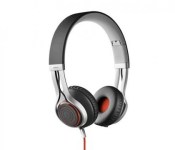
12 Days of Giveaways: Win Jabra REVO Corded stereo headphones
Today marks the first day of our 12 Days of Giveaways promotion which sees us giving out all sorts of wonderful Android-related stuff. Okay, so there are some general smartphone-related things in the mix as well. Let’s get to it!

Prize #1 Jabra REVO Corded
First prize out of the gate is a brand new pair of Jabro REVO Corded headphones. These guys are some of the most comfortable headphones we’ve ever worn and sound downright awesome. In fact, the Bluetooth model is among the first pair we grab when heading out of the office for the day. Learn more about Jabra or follow them on Facebook and Twitter!


Prize #2 Bundled Goodies
We’re also giving away a ChargeCard MicroUSB which comes from the fine folks over at Nomad. This credit card-sized device fits inside of your wallet or purse and can be used as a MicroUS charger for your on-the-go time. Don’t worry about carrying around a full cable when you can break this thing out! Learn more about Nomad or follow them on Facebook and Twitter!
And, as if that weren’t enough, we’re tossing in a red Kensington Aluminum Case for Samsung Galaxy S4. This stylish case is as strong as it is bold and will protect your beloved Android. Learn more about Kensington or follow them on Facebook and Twitter!
Daily Prizes
Oh… and we’re also going to be giving out Google Play credits over the remainder of the month. On some days we’ll randomly pick someone to win $10, others will be $25 and higher!
How to Enter
We’re going to keep this short and simple. To enter today’s contest all you need to do is leave a comment below! We’ll let this run for 24 hours and then randomly select the winner(s).
Win Google Play Credits!
To enter to win one of the Google Play credits all you need to do is share the following on your social media platform of choice: “I want to win Google Play Credits, AndroidGuys! http://goo.gl/dGQhG6 #12DaysAndroid”
Yes, you can share over Facebook, Instagram, Twitter, and Google+. Yes, you can enter as often as you like.
Finer details
This post will be updated with the name(s) and we’ll reach out via the comments as well. Also, be sure to keep an eye on the 12 Days of Giveaways page where we’ll keep a running tally of prizes and winners.
Note that we’ll give each winner a 14 hour window to respond. Should the winner not reply in time, we’ll re-draw and announce a new name. Be sure to check back!
Here’s the rub: We’re limiting this contest to U.S. residents only. Yes, we know it sucks – we hate doing it. Also, you can only win one prize per household. If you happen to win a Google Play Credit as well, then so be it!
The post 12 Days of Giveaways: Win Jabra REVO Corded stereo headphones appeared first on AndroidGuys.

Dial up your inner Zack Morris with bluetooth accessory, The Brick
If the cell phones of today are getting too light and thin for your liking, Binatone has just the device for you so you can relive the mobile glory days.

The UK-based electronics company, which was founded 55 years ago, just announced a new accessory called “The Brick” that connects to your smartphone through Bluetooth and lets you use it like one from the 1980s.
As for the design of this accessory, think Motorola DnyaTAC except with large speakers, a micro SD slot, FM radio and LED flashlight. Probably one of its most 80s worthy features of all, is that it also comes with the classic mobile phone game Snake. Need we say more?
The Brick offers up to one month of standby battery life and 14 hours talk time. That is, if your phone doesn’t die before that.
if you’re ready to look like an 80′s dork once again or you think it would be the perfect holiday gift for a friend or family member, it’s available now for $69.99.
The post Dial up your inner Zack Morris with bluetooth accessory, The Brick appeared first on AndroidGuys.
New SwiftKey beta brings number key row and emoji
SwiftKey, probably the most popular third-party keyboard for Android, has released a new beta. The new beta version 4.5 includes two major add-ons that have been being clamored for for a long time: emoji, and a dedicated number row.
Emoji, the picture-based emoticon replacement that is hugely popular for mobile users, comes by way of both dedicated tab auto-predict in this new beta. For example, typing the word “pizza” will bring up a pizza emoji that you can insert into your text. Also, there’s a full-fledged popup panel with tabs of categories that allow you to browse and choose the right emoji. All in all, SwiftKey has brought over 500 images. Swiftkey does warn, however, that “The appearance of emoji can differ between different versions of Android and different apps. Emoji are only supported on Android Jellybean and KitKat (4.1 and later).”
Also, there’s now an optional dedicated number row, something that this editor has personally hoped to see for a very long time. To turn it on in the beta, just press and hold the 123 key, select Settings, then Theme & Layout, you can then tick or untick the Number Row option.
If you want to download this beta for free, be sure to download it here. Also, if you’re not using the standard version of SwiftKey (which just about everyone should, in my opinion), you can pick it up at the download link below.
via swiftkey
The post New SwiftKey beta brings number key row and emoji appeared first on AndroidGuys.
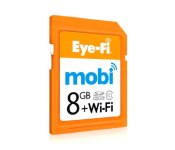
Eye-Fi’s Windows desktop receiver means you can say goodbye to the SD-card reader

We’ve always been fans of Eye-Fi’s wireless cards, but the fact that we still used an SD-card reader to pull the files to our desktops always rankled. Thankfully, the company is addressing that gripe with the Windows Desktop Receiver for the Eye-Fi Mobi, which launched earlier in the year. The new app will give users a choice between pushing pictures to their smartphone or desktop, presumably with far more ease than on the previous Class 10 X2. All you need to do here, we’re told, is enter a 10-digit activation code and watch your devices wirelessly pair, pushing images right where you want ‘em. The software will remain free so long as it’s in beta, with an OS X version currently in the works — so if you fancy giving it a try, head on to the download link and see what your experience is like.
Filed under: Cameras, Peripherals, Wireless
Source: Eye-Fi

Instagram debuts Direct, letting users share photos and videos with select friends

Invite blocks in hand, we’ve braved the cold New York weather to pop by Instagram’s big event. Naturally, the photo sharing service kicked off with some bullish numbers, noting that it has grown from 80 million to 150 million users this year. But the company’s CEO, Kevin Systrom, noted that today was all about looking forward to 2014. The big news was the announcement of Instagram Direct, a way of limiting specific photos and videos to select groups of up to 15 friends (a number the CEO noted serendipitously, is the same as the number of seconds you can shoot in Instgraam video) . The feature exists as a module in the Share To section of the app, showing a drop down of your friends. From there you can select who you want to receive a specific image or video, so if you want to, say, take a picture of your brunch, not every single follower has to look at your scrambled eggs.
All of the “moments” shared through the feature live in an inbox, so you can check out all of those photos in a private feed. Only people you follow can send you images and photos through direct and vice versa. If someone you don’t follow attempts to send you something, you’ll see a request from them. If you know the person but aren’t interested in following them (too many scrambled eggs photos, no doubt), you can chose to receive direct moments from them without following them — and you can always take them off that list at any time. When the user is still in pending mode, you wont be able to see the image they’re sending, making it easier to ignore them.
You can send photos and videos with text, but not text alone, naturally. Images and videos, Systrom added, is what the new feature is all about. According to Systrom, the new feature is all about “connecting people around moments.” Once a friend looks at the image, you’ll see a check mark next to it. If they like it, you’ll see a heart. It’s not quite the ephemeral Snapchat-inspired update a number of outlets were predicted, but it’ll likely push Instagram usage up even further, as users become less selective about what they send through the service. The update is available in the 5.0 versions of the iOS and Android apps today, by way of the Apple App Store and Google Play, just in time for selective holiday image sending. More info can be found in the source link below.
Filed under: Software
Source: Instagram

Blockbuster to shutter all of its remaining UK stores

Blockbuster’s fate may already be sealed in the US, but there was hope that its UK brand might lead itself out of the darkness. Today, administrators in control of the movie rental chain dealt it a killer blow, announcing the closure of its remaining 91 UK stores by December 16th, resulting in the loss of 808 jobs. Having already shuttered its online business following increased competition from streaming services like Netflix and Amazon’s Lovefilm, Blockbuster’s UK administrators hoped to find a buyer before reaching the decision to close the remaining stores. Remaining stock will be reduced by up to 90 percent in an attempt to sell it all before December 15th, so do head to your nearest (open) store, indulge in a bit of nostalgia and grab yourself a bargain before Blockbuster closes its doors for the final time.
[Image Credit: alwyn_ladell, Flickr]
Filed under: Home Entertainment, Internet
Source: Moorfields
 AIVAnet