



New 12-Core Mac Pro Once Again Shows Up in Benchmarks
 Back in June, just days after Apple teased the new Mac Pro at its Worldwide Developers Conference, a Geekbench result appeared for a version of the machine using Intel’s 12-core Xeon E5-2697 v2 Ivy Bridge-E processor running at 2.7 GHz. Entries for 8-core and 6-core models followed in September and November respectively, but with those benchmarks coming under Geekbench 3 and the original 12-core model having been tested under Geekbench 2, the results were not directly comparable.
Still, John Poole of Primate Labs, the company behind Geekbench, outlined the likely processor performance options under Geekbench 3 for the new Mac Pro based on the tested Mac Pro machines where available and filling in the gaps with data from Windows machines running the same processors destined for the Mac Pro.
Now, with the Mac Pro launch likely very near, new sets of benchmarks from the 12-core Mac Pro running Geekbench 3 have surfaced, offering a better look at the performance of the high-end custom configuration. MacRumors and Poole both believe the results to be legitimate.
Three sets of Geekbench results have been posted, two run in 32-bit mode and a third in 64-bit mode. Averages for the two 32-bit runs (1, 2) yield scores of 2909 for single-core testing and 29721 for multi-core testing, fairly close to Poole’s predictions based on results from Windows machines running the same chip.
As predicted, the single-core score for the high-end Mac Pro is actually lower than seen with the other new Mac Pro models due to the lower maximum clock speed of the 12-core chip, but multi-core testing obviously shows a significant boost in performance compared to the Mac Pro model carrying the 8-core processor. The new 12-core Mac Pro unsurprisingly also compares favorably to the 12-core Mid 2012 Mac Pro and high-end models of the current iMac and Retina MacBook Pro.
 Comparison of high-end models using 32-bit multi-core Geekbench 3 scores
The third Geekbench result for this machine uses the 64-bit version of the testing suite, which yields scores roughly 10-11% higher than their 32-bit counterparts for both single-core and multi-core testing.

As with previous Mac Pro benchmarks believed to be legitimate, this latest 12-core Mac Pro is running a custom build of OS X Mavericks, the same 13A4023 build seen on the 6-core model last month.
Apple has announced that it will be launching the new Mac Pro sometime this month, but has yet to offer a more specific launch date or publicly outline full pricing details beyond the $2999/$3999 stock configurations. According to a price quote provided to one business customer, maxing out the new Mac Pro with the 12-core CPU, 64 GB of RAM, 1 TB of internal flash storage, and high-end dual AMD FirePro D700 graphics chips could bring pricing to roughly $10,000.
     |

Netflix for Android update brings support for individual profiles and queues, better search

Netflix rolled out support for multiple individual streaming profiles within a single account a few months ago, but until now its Android app has been among the platforms that still didn’t recognize them. The new version 3.1.0 update rolling out tonight changes that, finally letting people filter out queues and suggestions from others using the same account like family members, significant others or annoying roommates. In our use it doesn’t pop up the profile switcher by default, but it’s accessible after selecting the current profile under the slide-out menu from the left (shown after the break). According to the changelog this new version also brings an enhanced search, with support for people and related titles. The latest version of the app should be available on Google Play now, but you’ll still have to hit YouTube for the latest House of Cards trailer.

Filed under: Home Entertainment, HD, Mobile
Source: Netflix (Google Play)
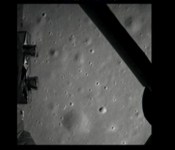
China’s Jade Rabbit rover lands on the Moon

China has just entered a very exclusive club — it’s now the third country to have soft-landed vehicles on the Moon. Its Chang’e 3 lander and accompanying Jade Rabbit rover successfully reached our celestial neighbor’s Bay of Rainbows on Saturday. Jade Rabbit will now spend months studying the lunar surface, while its host will watch Earth and other objects in space. The mission should provide fresh scientific data to both China and other space agencies, but it’s most useful in the short term as a revival of exploration efforts. There hasn’t been a soft landing on the Moon since 1976 — China is kicking off a new phase of lunar science that will hopefully lead to a long-term human presence.
Source: Space.com, People’s Daily

Alt-week 12.14.13: who cares if intelligent life is out there, when everything’s just a hologram
Alt-week takes a look at the best science and alternative tech stories from the last seven days.

There are big questions, and then there are big questions. Pastrami or ham? That’s a big question. Solid universe or hologram? That’s a big question. New research has made some headway toward one of those. Spoiler alert, it’s not the one about sandwich-meat. This is alt-week.

This feature is no stranger to stories that seek to answer the question of whether we’re alone in this universe or not. This week, however, has been unusually ripe with them. Firstly, there was the report that suggests that the same asteroid believed to have called time on the dinosaurs’ reign, might also have sent life to Mars. The theory is, that the impact of Chicxulub (said asteroid) might have been strong enough to send life-sheltering chunks of Earth as far as Europa (one of Jupiter’s moons, getting its own water-based headlines this week), making Mars well within the unwilling hitchhiker’s reach. But what would it do when it got there without any water?

Well, if new reports are to be believed, theoretically this might not have been too much of an issue, either. As for life beyond our solar system, there’s fresh talk suggesting that complex life could have been possible much earlier in the Universe’s history than initially thought, even as early as within the first billion years. The research suggests Population III stars (a hypothetical star that had no surface metals), could have produced supernovae capable of seeding the juvenile cosmos. The last news on celestial matters is a bit more relevant to the present. The famous goldilocks zone, that determines the likelihood of a planet bearing water (and thus life), is now believed to be bigger than, again, first thought. Unsurprisingly, this means there’s suddenly a whole lot more astronomic real estate that suddenly needs a second look.

Intelligent life “out there” might still be something we’re yet to confirm, but what if we’re fundamentally looking for the wrong thing? New support for an old idea might suggest that, indeed, we’ve got bigger fish to fry. String theory has been around for some time now, and loosely put, suggests that gravity comes from a universe made of “strings” that span 10 dimensions. The theory chimes with the notion that the universe, as we know it, is effectively a hologram. It also — more importantly — allows quantum physics to sit better with Einstein’s theory of relativity. Two newly published papers have provided mathematical results that support the concept. Led by Yoshifumi Hyakutake, a team at Japan’s Ibaraki University studied the internal energy of a black hole in relation to its event horizon and its entropy, and found that simulations based on string theory provided evidence to support the idea that the universe could well be a projection. If true, this means the real action is taking place on a flatter universe, where gravity no longer applies. A big idea indeed.
Seen any other far-out articles that you’d like considered for Alt-week? Working on a project or research that’s too cool to keep to yourself? Drop us a line at alt [at] engadget [dot] com.
[Image credits: BBC, Mars Hand Lens Imager,CBS]
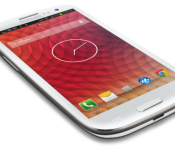
Android 4.4.2 For Samsung Galaxy S4 Google Play Edition Available Now For Download
 With the surprise release of Android 4.4.2 on all of Google’s Nexus devices last week, it was only natural that the Google Play Edition devices would also be updated to Android 4.4.2, albeit slightly later. Android 4.4.2 for Samsung Galaxy S4 Google Play Edition has been made available today and updates the device to the KOT49H build which we have heard so much about. The update should be doing the rounds as an OTA update, but if you can’t wait till it takes its sweet time to get to you, you can download the files from the Google servers; links below:
Android 4.4.2 for Samsung Galaxy S4 Google Play Edition
 Specifically for the S4 GPe, there appears to be a fix for the H symbol being replaced with the 3G symbol even if you are connected to HSPA+. Along with that, like all the other Android 4.4.2 updates, the update squashes a lot of bugs and security vulnerabilities, in particular the SMS DOS bug that was causing waves recently.
If you download the update, be sure to let us know how you find it in the comments.
Source: Android Police

Android 4.4.2 For HTC One Google Play Edition Now Available For Download

Like the Nexus devices which were updated to Android 4.4.2 last week, the HTC One Google Play Edition is receive its update to the KOT49H build today. Android 4.4.2 for HTC One Google Play Edition brings in all the expected updates and for anyone keeping track, the HTC One update was actually released first. The OTA update should be appearing soon, or if you can’t wait, you can download it from the Google servers at the link below:
Android 4.4.2 for HTC One Google Play Edition
 There doesn’t seem to be any fixes that are specifically for the HTC One Google Play Edition but as with the other devices that received Android 4.4.2, the update addresses quite a lot of bugs and security vulnerabilities that have been brought up since Android KitKat‘s release, most notably a fix for the SMS DOS bug that caused quite a lot of anxiety when it was discovered.
If you download the update, be sure to let us know how you find it in the comments.
Source: Android Police

Recommended Reading: inside a sexcam studio, the death of a content farm
Recommended Reading highlights the best long-form writing on technology in print and on the web. Some weeks, you’ll also find short reviews of books dealing with the subject of technology that we think are worth your time. We hope you enjoy the read.

I spent a month living in a Romanian sexcam studio (3,434 words)
by Jack Davies, VICE
When it comes to sexy cam shows, Romania is pretty much the undisputed capital of the world, with an estimated 2,000 studios. VICE’s Jack Davies spent a month inside one such complex on a backstreet in Bucharest, where up to 11 “models” can stream themselves simultaneously to lonely viewers around the globe (but mostly in the US). While there is certainly some stigma still attached to the idea of taking your clothes off for money in America, in this Eastern European nation it’s widely accepted. In fact, one of the two owners of this particular studio claims this is as an opportunity to better himself as a person, not just make a boat-load of money.
|
Epic Fail: The Rise and Fall of Demand Media At the height of the second dot-com boom, the web was flooded with so-called content farms — companies whose sole purpose was to churn out articles carefully crafted to rise to the top of search engine results. One of the largest, Demand Media, is splitting up and may be headed for a fire sale. Pocket!function(d,i){if(!d.getElementById(i)){var j=d.createElement(“script”);j.id=i;j.src=”https://widgets.getpocket.com/v1/j/btn.js?v=1″;var w=d.getElementById(i);d.body.appendChild(j);}}(document,”pocket-btn-js”); |
The Mystery of the Creepiest Television Hack In 1987 Chicago TV watchers were interrupted not once, but twice by a mysterious hacker mimicking the pop culture sensation Max Headroom. A local news broadcast and an episode of Dr. Who were hijacked by chaotic and downright creepy clips. Who was behind the incidents, however, remains a mystery. Pocket!function(d,i){if(!d.getElementById(i)){var j=d.createElement(“script”);j.id=i;j.src=”https://widgets.getpocket.com/v1/j/btn.js?v=1″;var w=d.getElementById(i);d.body.appendChild(j);}}(document,”pocket-btn-js”); |
|
Why We Can’t Let American Tech Take Over the World (1,428 words) The design of products inherently has a cultural bias. Basically the iPad is exporting American ideals, as much as its spreading Apple’s ecosystem. But Sean Madden argues that’s not necessarily a good thing, and future designers will have to learn to identify and weed out their own biases. That is, if we want to uphold the ideals of technology improving freedom and simply staying “out of the way.” Pocket!function(d,i){if(!d.getElementById(i)){var j=d.createElement(“script”);j.id=i;j.src=”https://widgets.getpocket.com/v1/j/btn.js?v=1″;var w=d.getElementById(i);d.body.appendChild(j);}}(document,”pocket-btn-js”); |
Reverse-Engineering a Genius (Has a Vermeer Mystery Been Solved?) (2,762 words) How Dutch painter Vermeer achieved his photo-realistic effects in the mid-1600s has long been a mystery. Some have speculated that he could have used a room-sized camera obscura, but there’s been no experimental evidence to back it up. That is until Texas inventor Tim Jenison decided to take a stab at recreating the theoretical set up, and began painting photo-realistic scene’s without an ounce of training. Pocket!function(d,i){if(!d.getElementById(i)){var j=d.createElement(“script”);j.id=i;j.src=”https://widgets.getpocket.com/v1/j/btn.js?v=1″;var w=d.getElementById(i);d.body.appendChild(j);}}(document,”pocket-btn-js”); |

NASA underwater testing slimmer suits for spacewalking on asteroids (video)

In a tank of water in Texas, NASA’s busily testing its wardrobe for a future Armageddon-esque mission. The space agency has been taking advantage of its Neutral Buoyancy Lab near the Johnson Space Center in Houston to run a some new space suits through the wringer. The suits are a modified version of the pumpkin-colored launch and reentry Advanced Crew Escape System (ACES) that NASA started employing back in 1994. The tweaked versions are said to be less bulky to better fit within the spacial constraints of the Orion spacecraft and more flexible for walks on deep space missions, including journeys to relocated asteroids. Check out some of the fun in a video below.
Filed under: Science
Via: The Verge
Source: NASA
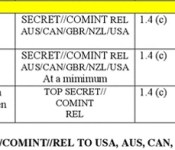
NSA can decode many GSM cellphone calls

The NSA may say that its phone surveillance efforts focus on metadata rather than the associated calls, but we now know that the agency can listen to many of those conversations whenever it wants. Documents leaked to the Washington Post by Edward Snowden confirm that the NSA can decode GSM-based cellphone calls without obtaining the encryption keys. The ability isn’t surprising when GSM has known weaknesses, but the document suggests that the NSA (and potentially other US agencies) can easily process cellphone calls worldwide. Not surprisingly, the intelligence branch argues that such cracking is necessary — folks on both sides of the law use encryption to hide information, after all. The NSA may not have such an easy time in the future, however. AT&T, T-Mobile Germany and other carriers worldwide are moving to tougher encryption methods for their GSM service, and 3G calls are typically more secure as a matter of course. These measures don’t prevent eavesdropping, but they do complicate any attempts to snoop on cellular chats.
Filed under: Cellphones, Mobile, AT&T
Source: Washington Post

As Google slowly preps the Chromecast ecosystem, waves of new apps are on the way

HBO Go, Songza and Pandora are about to get more company on Chromecast, according to a Gigaom interview with Google’s VP of product management Mario Queiroz where he stated additional waves of apps are coming soon. A public release for the Chromecast SDK — which should allow developers to build and release their own apps at will — won’t happen until next year, but this week the team gave over 40 developers access to a preview version just to get their feedback. To ensure its elegantly simple user experience remains intact across all applications, the company also recently released a 14-page design guide that details the basic expectations for the development community. An impending international release next year is also encouraging publishers to make compatible apps — moves that should benefit everyone, regardless of where they call home. Quieroz’s “broader” goal is to establish Cast tech as a standard embedded into other hardware, but until that happens there’s still time to gift-wrap a few of Google’s HDMI dongles and look like a hero all year as their capabilities continue to expand.
Filed under: Cellphones, Home Entertainment, HD, Mobile, Google
Via: Android Police
Source: Google Developers, Gigaom
 AIVAnet