


Why T-Mobile wants to give you a wireless router for free

If you’re a T-Mobile customer, your company just gave you a very unexpected gift at yesterday’s UnCarrier event: a wireless router. Yes, a fully functioning, magenta-branded, ASUS-built router, which can do essentially everything your current router can do — and if yours is old, this will likely do even more. The device, which would cost roughly $200 if you purchased it on Amazon without T-Mobile’s tweaks, only requires a $25 deposit, which gets returned to you once you’re done using it. The company is going all-in on its commitment to providing every subscriber and every carrier-branded smartphone with free WiFi calling, and the router — called the T-Mobile Personal CellSpot — is the icing on the cake. But, you may ask, why is this a thing that’s happening in the year 2014, especially when most of us already have access to a router (and thus, WiFi calling) nearly everywhere we go?
It’s a very good question, because the CellSpot isn’t a necessity if you want to take advantage of WiFi calling at home, work or the local Starbucks. Chances are you already have a router that can handle that, but CMO Mike Sievert believes customers will enjoy it because it’s a portable device that’s easy to set up wherever you go. “Your office, home, man cave, cabin, any place you get broadband, you can now get T-Mobile coverage,” he said. More importantly — especially for those who still use their phones as, y’know, phones – it also prioritizes your HD-quality calls over any other activity on the network; on most routers, your call might get dropped when your significant other starts binge-watching Breaking Bad, whereas the CellSpot ensures that your call gets saved at the expense of your family’s Netflix marathon.

Of course, there are enough benefits on T-Mobile’s side to justify the new program. At yesterday’s event, CTO Neville Ray mentioned that the carrier’s traffic has grown by more than 10 times from three years ago, and given the company’s recent growth (it added nearly 3 million new subscribers in August alone, which is a record for T-Mobile), it makes sense to find alternative methods of alleviating the additional burden that comes with it. Thus, when you use the CellSpot (or any WiFi calling, for that matter), everybody wins: The network is less saturated for customers who aren’t in the vicinity of a WiFi hotspot, and subscribers get themselves a brand-new router and full bars of service.
The idea of loaning out equipment to help subscribers improve their coverage isn’t new. Microsites (also known as femtocells) have been around for a while; AT&T, Verizon and Sprint have all offered the tech as the 3G MicroCell, Verizon 3G Network Extender and AiRave, respectively. These devices used your home’s landline or broadband service to offer more bars of coverage in your home or office, which came in especially handy if your abode or workspace fell smack-dab in the middle of a network dead zone. However, these could only be used as peripherals to your WiFi router, instead of replacements. T-Mobile’s new option hits two birds with one stone, providing you with a fresh ASUS 802.11ac router that also happens to boost your signal.

That said, there’s one tiny misnomer in T-Mobile’s marketing efforts: Throughout yesterday’s event and on the company’s website, the company said that the CellSpot program is “like adding millions of towers to your network every single day.” That may technically be accurate, but it’s misleading because you don’t have open access to all of those towers; T-Mobile customers won’t be able to use everyone else’s CellSpots for service as they walk down the sidewalk. CEO John Legere says that such a concept isn’t completely out of the question in the future, but it just wasn’t feasible for UnCarrier 7.
“Do those CellSpots become T-Mobile-ubiquitous sites? Not yet, but we’re going to try to solve that as the industry moves,” he said. “That’s the start of WiFi being a tied-in component to the network. At some point, I wouldn’t rule out every personal CellSpot becoming a tower, but we couldn’t get there yet.” It’s certainly food for thought for upcoming UnCarrier moves (though Legere says there are plenty of ideas in the funnels for 8.0, 9.0 and 10.0 already, and this item likely isn’t on the agenda), as long as T-Mobile can find a way to do it without jeopardizing the privacy of its CellSpot owners. If any John Doe can come along and hook up to your network, it would raise a whole new set of concerns.
Sure, handing out routers seems like a random move for even T-Mobile, but it’s a solid one. And if you’re a customer (or are thinking of making the switch), it’s hard to say no to a free wireless router. It’ll be available in stores beginning September 17th.
[Image credits: Associated Press (router, Neville Ray), T-Mobile (last image)]
Filed under: Cellphones, Wireless, Mobile, ASUS, T-Mobile
.CPlase_panel display:none;
Verizon and AT&T want your old iPhones now that new ones are here

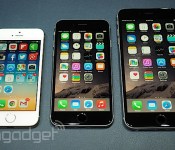
Sprint and T-Mobile have already promised to match and even top each others’ (and other carriers’) trade-in prices before the new iPhone debuted. But would you like to hear what Verizon and AT&T have to offer first before deciding which carrier to sell your soul to? Yes? Then let’s start with Verizon, which will give you gift cards worth $300 for an iPhone 5S and worth $200 for an iPhone 5, 5c, 4 and 4s from any carrier if you get an iPhone 6 or 6 Plus with a two-year contract. AT&T, on the other hand, will up its minimum trade-in value for the iPhone 5S to $300, and for the iPhone 5, 5c, 4 and 4s to $200 starting this Friday. Also, you can get $100 off any iPhone if you’re a new subscriber and $200 off any iPad when you sign up for an iPhone with a Next plan. You can see how much Apple’s new devices will cost you under the carrier’s Next pricing schemes after the break.
Of course, you can still trade in other devices through the company’s respective buyback websites, but you may want to take advantage of these deals soon, because some of ‘em won’t be around forever. You can send in your old iPhones to Verizon in exchange for the fixed gift card values just until November 15, while T-Mobile’s promo (as we’ve mentioned before) will have limited availability.

Filed under: Cellphones, Tablets, Mobile, Verizon, Sprint, AT&T, T-Mobile
.CPlase_panel display:none;

T-Mobile’s next UnCarrier move: WiFi calling and texting for everyone

It seems as though T-Mobile is speeding up on this whole UnCarrier thing. Speaking in San Francisco — not in Vegas, where the other carriers are hanging out at CTIA — CEO John Legere and Friends announced its latest move: Free WiFi calling and texting to all customers and corporate accounts. From here on out, every smartphone the carrier sells will come with the capability, and if you don’t have one already, you’re eligible to get one through T-Mobile’s Jump early upgrade program. A nice benefit of this feature is a seamless transition from the network’s Voice-over-LTE (VoLTE) coverage to your WiFi network.
On top of this, T-Mobile is announcing a special partnership with Gogo which lets customers send in-flight messages — text, picture and video — using the plane’s WiFi network. You can also access your visual voicemail as well, which means you can at least reply to the sender of that message via text and let them know you’ll get back to them after your flight. Granted, you still don’t have the ability to get free data through Gogo, but it’ll still be a fantastic chance to stay in constant communication with the ground below you.
Filed under: Cellphones, Wireless, Mobile, T-Mobile
Source: T-Mobile
.CPlase_panel display:none;
T-Mobile Launches ‘Wi-Fi Unleashed’ Campaign, Pledges Support for Wi-Fi Calling on All New Smartphones
T-Mobile today hosted its 7th Un-carrier event where it announced plans for a “Wi-Fi Unleashed” campaign. According to the company, all smartphones going forward will be able to take advantage of the network’s Wi-Fi calling and texting, including Apple’s iPhone 6 and iPhone 6 Plus.
Wi-Fi calling and texting allow users to send and receive calls/texts over a Wi-Fi network, which is useful in areas where there are poor cellular connections. Apple announced Wi-Fi calling support for the iPhone 6 and the iPhone 6 Plus yesterday.
T-Mobile plans to offer Wi-Fi calling and texting at no additional cost. The company has also deployed a new product for customers who have bad cellular reception in their homes. The T-Mobile Personal CellSpot is a Wi-Fi router that can be used as a primary router or alongside an existing router, prioritizing voice calls and offering HD audio quality for calls. It has 802.11ac support, USB 3.0 ports, and covers up to 3,000 square feet.

T-Mobile plans to begin selling the Personal CellSpot on September 17. It is available to be leased for free with a $25 refundable deposit, but customers can also purchase it outright for $99. T-Mobile will also be allowing one time upgrades for customers to get a Wi-Fi enabled phone, even those who are not signed up for the JUMP program.
Along with support for Wi-Fi calling and the introduction of the CellSpot, T-Mobile announced that it’s entered into a partnership with in-flight wireless provider Gogo, allowing T-Mobile customers to send and receive texts and picture messages on their phones on any flight that includes Gogo wireless service. Gogo in-flight wireless for T-Mobile customers is also free, and will begin on September 17 for compatible devices.
On stage, Legere announced that T-Mobile had 2.75 million gross adds in August of 2014, and 1 million postpaid adds, which represents its biggest postpaid net add in the history of the company. Legere also noted that T-Mobile is gaining subscribers from other carriers at a rapid pace thanks to its Un-carrier initiatives.
T-Mobile’s Un-carrier initiatives are an effort to disrupt traditional mobile service. The company began with uncoupling device costs from service costs in 2013, and then went on to offer several additional incentives to encourage customers to switch to the carrier, including paying early termination fees, offering a JUMP! upgrade plan, unlimited texting and 2G data in 100 countries, free streaming music from Spotify, Rdio, iTunes Radio, and Pandora, and one week free trials to test the T-Mobile service.
.CPlase_panel display:none;

T-Mobile debuts Un-carrier 7.0 with Wi-Fi Unleashed

T-Mobile, on Wednesday added millions of cell phone towers to its network. Okay, not literally, but it certainly did so in figurative manner. The Un-Carrier just announced its 7.0 phase of the initiative which harnesses Wi-Fi connectivity both here on the ground and in the air.
T-Mobile customers with Wi-Fi calling and texting capabilities (pretty much all of them) can make free Wi-Fi calls to the United States inside or outside of the country. For those who don’t have a device capable of Wi-Fi calls can enroll in a special, limited time JUMP! upgrade to pick one up.
Slated to take effect on September 17, the Wi-Fi Unleashed program will see all Simple Choice customers with high speed internet and scoop up a free T-Mobile Personal CellSpot with a $25 refundable deposit. The best part in this announcement is that there are no extra apps to install or crazy configurations; simply make the calls as per normal. In essence, everyone of these CellSpots becomes a tower that gives subscribers full bars of service.
As if that we’re good enough, T-Mobile has partnered with Gogo to allow for free, unlimited texts, picture message, and visual voicemail. With roughly 75% of flights using GoGo this keeps T-Mobile customers connected in the sky, too.
Wi-Fi calling and texting for 100% of T-Mobile customers and business customers
- 100% of new smartphones in T-Mobile stores are Wi-Fi calling and texting capable.
- An exclusive enrollment window in JUMP! – T-Mobile’s revolutionary upgrade program – so 100% of customers can immediately upgrade to a new Wi-Fi calling ready smartphone.
Next-generation Wi-Fi calling and texting on its network
- Designed to deliver high-quality HD voice, fast call setup times, fewer dropped calls and seamless voice coverage between T-Mobile’s nationwide Voice over LTE (VoLTE) network and Wi-Fi with compatible smartphones.
Full-bars personal coverage wherever you choose
- The T-Mobile Personal CellSpot – a new device that enables everyone to put the capabilities of a personal T-Mobile tower in their house, delivering a full-bars T-Mobile experience ANYWHERE you have broadband, and equipped with a unique patent-pending technology that prioritizes voice calls for crystal clear HD Voice.
Coverage at 30,000 feet
- An exclusive, new partnership with Gogo – the world’s leading in-flight connectivity service – enabling T-Mobile customers to send and receive unlimited text and picture messages, and even get visual voicemail, on any Gogo-equipped flight on U.S.-based airlines.
The post T-Mobile debuts Un-carrier 7.0 with Wi-Fi Unleashed appeared first on AndroidGuys.
.CPlase_panel display:none;
US carriers are bringing their tap-to-pay wallet to the iPhone 6

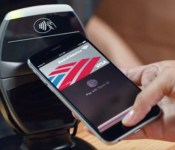
Don’t worry that Apple Pay will be the only game in town for tap-to-pay shopping on your iPhone 6. The carriers behind Softcard (aka Isis) have revealed that they’re working with Apple to bring their NFC-based payment system to newer iPhones sometime in 2015. While you’ll need a Softcard-aware SIM card in your phone for this to work, you hopefully won’t have to slap a bulky case on your device this time around. It’s doubtful that this solution will work as elegantly as Apple Pay, which doesn’t even require that you launch an app, but it should let you purchase with your iPhone in considerably more places.
Filed under: Cellphones, Mobile, Apple, Verizon, AT&T, T-Mobile
Source: Isis
.CPlase_panel display:none;
Alcatel’s Fierce 2 and Evolve 2 are now available on T-Mobile

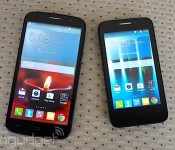
Alcatel may have displayed a number of new devices last week at IFA, but it turns out the company is not quite done showing off its goods just yet. Here at CTIA, Alcatel showed us two more handsets — the Fierce 2 and the Evolve 2 — both of which were actually announced a couple of weeks ago but are only just going on sale today. The Fierce 2 is the slightly nicer mid-level model while the Evolve 2 is meant to be a budget entry-level smartphone.
As we mentioned, the Fierce 2 is the higher end of the two, sporting a sizable 5-inch qHD display which I found pleasantly bright and colorful during a brief hands-on. It’s not the sharpest screen around obviously, but for a mid-level phone, it’s not bad. The screen goes nearly edge-to-edge, leaving a little bit of bezel on the sides and a bit more on the top and bottom. Though it has a plastic shell, the Fierce 2 feels pretty solid and I like the curved corners and slim 9.9mm build. Other features include a 5-megapixel rear camera plus a VGA front-facing shooter, 1GB of RAM, 4GB of storage along with a microSD card slot for up to 32GB of expandable memory and a 2,000 mAh battery. On the inside, it has a 1.2GHz quad-core Qualcomm Snapdragon processor and it’ll ship with Android 4.4 KitKat. I didn’t notice any lag when swiping through the menus, plus I’m glad to see that it appears to be mostly stock Android. Though, as you can see in the pictures, it does have a slightly customized user interface.
Next up is the Evolve 2, which looks and feels like a cheaper handset. Not only does it have a smaller 4-inch WVGA display, it simply feels more plasticky and toy-like. It’s also chunky and quite a bit thicker at 12.05mm. There’s quite a bit more bezel surrounding the screen too. Of course, the screen resolution is definitely not as good as the Fierce 2’s, but I don’t think the display looks that bad for what is obviously an entry-level handset. Text is still pretty legible and colors looked good enough to me. Features include a 5-megapixel rear camera, a VGA front-facing cam, 512MB of RAM, 4GB of storage plus it supports up to 32GB microSD cards. On the inside, it has a 1.3GHZ dual-core processor, which means it’s not the fastest phone in the world, and it only has a 1,400 mAh battery. It also ships with Android 4.4 KitKat
As you might have guessed, these phones aren’t expensive, and that’s a good thing. The Evolve 2 is only $80 while the Fierce 2 is slightly more at $126. Both are available from T-Mobile right now.
Filed under: Cellphones, Mobile
Source: T-Mobile
.CPlase_panel display:none;
Sprint and T-Mobile fight to buy back your old devices

With the new iPhone making its debut later and other phones coming out in the next few months, you’re probably already looking for the best way to trade in your old device for a new one. Sprint and T-Mobile both want your business really badly, it seems, so now they’re trying to one-up each others’ — and everyone else’s — buyback programs. While the Now Network has long paid up to $300 for old gadgets, the company will now start matching any higher trade-in price you get from the other three major carriers, in an effort to offer the best deal possible. But Big Magenta won’t go down without a fight: in case you get a better buyback pricing from another carrier, the company will not only match it, but also add $50 on top of the total amount to make the deal sweeter.
As Sprint pointed out in is press release, though, T-Mobile only lets you trade in one device per line and only when you’re buying a new one, whereas its buyback program accepts up to three eligible devices at once. Choosing between the two then depends on how many devices you’re trading in, which one will pay you the most and when you’re turning in your old devices: Sprint’s new policy starts immediately, but T-Mobile’s will start on September 17th and is only available for a limited time. Your move, AT&T and Verizon.
[Image credit: Getty Images]
Filed under: Cellphones, Tablets, Mobile, Sprint, T-Mobile
.CPlase_panel display:none;

T-Mobile: We have the best trade-in prices around, guaranteed

T-Mobile on Monday announced a new guarantee for prospective customers looking to trade in their old devices. According to the Un-carrier, they will offer the best trade-in value for used devices. So confident are they that they’ll give you $50 if you find a better deal elsewhere.
When that new superphone’s price is the same everywhere you go, the difference in your final cost comes down to the trade-in value of your old phone,” said Mike Sievert, chief marketing officer for T-Mobile. “Now when you’re ready to upgrade – it’s a no brainer where to find the best value– the Un-carrier. Guaranteed.
How does it work? Easy, you trade in your old phone or tablet and get your credit from T-Mobile. If you find something better from another wireless provider in the next seven days you can call T-Mobile or visit their website to tell them what you found and where. If it’s lower, T-Mobile will give refund the difference and give you a $50 credit. The money is applied as a bill credit within 2-3 bill cycles.
This guarantee, unfortunately, is only for a limited time. Set to take effect on September 17, it’s not immediately clear how long it will last.
The post T-Mobile: We have the best trade-in prices around, guaranteed appeared first on AndroidGuys.
.CPlase_panel display:none;
T-Mobile sues Huawei for stealing parts from its phone testing robots

Cellular providers and phone makers don’t always have the best relationships, but things are getting particularly sour between T-Mobile USA and Huawei. The UnCarrier is suing Huawei for trying not just to copy its phone testing robot technology, but to steal it. The phone maker’s staffers reportedly took illegal photos of the testing gear, and then swiped components; they even tried to break in when banned from the premises. T-Mobile insists that it spent “tens of millions” of dollars to switch to other phones as part of the breaches, and that Huawei may have earned “hundreds of millions” in ill-gotten profit.
You would expect many companies to fight such allegations tooth and nail, but Huawei isn’t. It agrees that there’s at least some merit to claims that its workers were “acting inappropriately,” and notes that the employees involved were fired. While it’s planning to protect itself in court, it “respects” T-Mobile’s right to sue over the thefts and plans to cooperate. Those kind words probably aren’t going to placate Magenta’s lawyers, but they suggest that the two telecom giants won’t be fighting to the bitter end.
Filed under: Cellphones, Robots, Wireless, Mobile, T-Mobile
Via: TmoNews
Source: Seattle Times
.CPlase_panel display:none;
 AIVAnet