



Sony mulls selling mobile business as losses continue

Kazuo Hirai, CEO of Sony, and other leaders of the Japanese company are planning to either sell or prepare joint ventures for its TV and mobile phone divisions, which are not producing profit.
Sony expects to lose 230 billion yen ($1.9 billion) for the current business year to March. Additionally, it plans to halt dividend payments for the first time due to mediocre smartphone sales.
This process is not foreign to the company. Last year, it sold its Vaio PC line and downsized its TV division, leading to a loss of 5,000 jobs. Since Hirai became CEO, Sony has lost 15,000 employees.
The CEO added that Sony’s image sensors for cameras and PlayStation 4, which has sold 18.5 million units, are a success. However, it’s clearly not enough as he prepares to make tough decisions that may cost more workers their jobs.
Reuters quoted Hirai stating, “The mobile and TV businesses both require a drastic overhaul. Without drastic reforms such as join ventures or alliances, they will both be in the red three years from now.”
Sony is probably suffering financially because it has too many product categories. In a sense, it’s like a jack of all trades but a master of almost none.
Panasonic CEO Kazuhiro Tsuga may have put it best after looking at the booths of his rivals at CES, “Anyone can make TVs these days. But you see this in smartphones too. not just TV.”
FEATURED POSTS


The post Sony mulls selling mobile business as losses continue appeared first on AndroidGuys.

Our top picks from CES 2015!
<!–
–>
<!–
By use of this code snippet, I agree to the Brightcove Publisher T and C
found at http://corp.brightcove.com/legal/terms_publisher.cfm.
–>
Following the slow down in news that comes during the holiday season, every January CES arrives on cue, ready to kick off the new year and give us a small taste of what to except in the weeks, months and, sometimes, even years to come. While this year’s CES was arguably a bit mild for Android fans, there were actually several noteworthy products shown off last week, including LG’s new flagship-level G Flex 2.
For those who regularly follow Android Authority, you know that we typically give out top pick awards at all major tech shows, recognizing the devices and technologies that most impressed us. This year is no exception, and so let’s jump right in and take a look at our Android Authority CES 2015 top picks!
LG G Flex 2
We’re sure no one is surprised to see that the LG G Flex 2 made the cut. Easily one of the biggest announcements of CES, if not the biggest, the G Flex 2 builds upon the solid foundation of its predecessor, though this time LG listened to some of the biggest gripes most of us had with the original G Flex: namely the oversized 6-inch display with a less than flattering 720p resolution. The G Flex 2 not only features a smaller 5.5-inch 1080p curved display, LG has also greatly improved the build quality, enhanced special features like quick healing (which is now even faster), and will be the first globally available handset to market that ships with a Snapdragon 810 processor.
While the G Flex was a solid device with reasonably higher-end specs, the G Flex 2 is a great step forward and so picking it as a top pick was sort of a no-brainer.


Learn more about G Flex 2:
Asus Zenfone 2
Asus unveiled the first-generation ZenFone line back at CES 2014, coming in 4, 5 and 6-inch variants. A year later, they’ve now refreshed the series at CES 2015 with the ZenFone 2 and the ZenFone Zoom. While both of these devices are quite solid, we want to give special attention to the ZenFone 2. The ZenFone 2 is interesting for a number of reasons: it’s ergonomically-curved design and slim edges, its pricing begins at just $199, and there’s a model available that comes with a massive 4GB of RAM.
Bottom-line, the ZenFone 2 takes everything we liked about the original ZenFone series and upgrades it with improved Intel-powered internals and a better overall design. Aggressive pricing is what really sells this series, though we still don’t know exactly how much the higher-end 4GB variant will set consumers back.
Learn more about ZenFone 2:
HTC Desire 826
While HTC doesn’t break the mold with the Desire 826, we applaud the work HTC has done in the mid-range sector, creating handsets that look and feel so premium you’d be forgiven if you thought they were actually flagship products. As far as looks are concerned, the Desire 826 seems a bit like a cross between the Desire 820 and the Desire Eye, both of which were released last fall.
The Desire 826 might follow a similar design as found on 2014’s Desire family, but the 826 is noteworthy for a few reasons. First, the handset is the first HTC device to ship with Android 5.0 Lollipop right out of the box, with Sense on top of it. Second, the Snapdragon 615-powered handset experiments with the somewhat controversial HTC UltraPixel cam in a new way, bringing it to the front. On the back, is the same 13MP shooter we’ve seen on several recent HTC mid-range products.
Like most of this year’s CES winners, the Desire 826 may be derivative, but it’s still a step forward and is a great starting point for HTC as it heads into 2015.
Learn more about Desire 826:
Qualcomm Snapdragon 810

Okay, while we’ve known about the Snapdragon 810 for a while now, Qualcomm officially “launched” the chipset at CES 2015, and the LG G Flex, the first globally available device running the chipset, was also announced during this same timeframe. Up until now, the latest Snapdragon 800-series processor was the 805, and while the 810 isn’t worlds apart from its predecessor, it should still provide a modest step up in performance, a move to 64-bit, and the Adreno 430 is a gamer’s dream.
While the Snapdragon 810 wasn’t the only major new mobile chipset announced at CES, the big difference is that Qualcomm actually showcased the technology in a traditional mobile product, something we’ve yet to see from the much-hyped Nvidia Tegra X1.
Learn more about Snapdragon 810:
- Qualcomm demos Snapdragon 810 features in video
- Qualcomm Snapdragon 810 vs 805
- LG G Flex 2 officially announced with Snapdragon 810
YotaPhone 2
<!–
–>
<!–
By use of this code snippet, I agree to the Brightcove Publisher T and C
found at http://corp.brightcove.com/legal/terms_publisher.cfm.
–>
The YotaPhone 2 was released a couple of months ago, but its presence at CES 2015 was a great way for the company to showcase this unique smartphone to the US market. Yota has certainly come a long way with their signature smartphone, from the more experimental first iteration to the YotaPhone 2, which includes an even better implementation of its unique rear display setup.
The YotaPhone 2 packs decent hardware, but of course, the big story with this smartphone is the E-Ink display that is found on the back. With a slew of software features, such as YotaMirror and YotaSnap, to take advantage of this rear screen, the YotaPhone 2 certainly has a very different take when addressing a common issue with most current smartphones, battery life.
This device may not feature the latest and greatest in terms of specifications, but the rear display is far from just a gimmick, and can actually prove to be quite useful to a lot of users. Being able to stand out in an overcrowded smartphone market is one of the many reasons the YotaPhone 2 is certainly deserving of our Best of CES 2015 top pick title!
Learn more about YotaPhone 2:
Saygus V2
While the Saygus V2 may not be as unique as the LG G Flex 2 or the YotaPhone 2, what really caught our eye was everything it manages to pack into a single device. A beautiful display, front-facing Harman Kardon speakers, and a storage capacity more than what you may know what to do with, the V2 is certainly worthy of its title as a true multimedia smartphone.
That is just the tip of the iceberg when it comes to the V2, which also features a 21 MP rear shooter, a 13 MP front-facing camera, and a fingerprint scanner, all in a premium looking Kevlar and metal body. Of course, the marquee feature of the Saygus V2 is its storage capabilities, with 64 GB of on-board storage enhanced by two 128 GB microSD card slots, for a total of potentially 320 GB of memory. The V2 also comes with an unlocked bootloader and it is easy to gain root access, making this a dream device for developers as well.
Giving an unknown company like Saygus a “top pick” award might seem a little strange, but we were really impressed by what we saw from this startup. As long as pricing is at least somewhat aggressive, we could see this being a great device for spec-hounds that like the idea of tons of storage, a durable waterproof design, a fingerprint reader and aren’t turned off by the fact that this is a relatively unheard of brand. By ticking all the right boxes and offering above and beyond what we get from even the most expensive of flagships, the Saygus V2 is very much worthy of one of our Best of CES 2015 awards.
Learn more about Saygus V2:
ZTE SPro 2
As we’ve seen quite often recently with TVs, watches and automobiles, Android isn’t just limited to smartphones and tablets, but one of the more unique implementations we’ve seen is with the ZTE SPro 2, a projector and 4G LTE Hotspot device, that brings with it almost all the capabilities of Android.
The pico projector is capable of outputting a 720p image up to 120-inches in size, with a brightness of 200 lumens, doubling what was available with its predecessor. As was the case with the first iteration, the SPro 2 also works as a 4G LTE Hotspot, allowing for up to 8 devices to be connected simultaneously. USB 3.0, HDMI, and audio connections are all available, along with a potential storage capacity of up to 2 TB. The battery has also seen a bump to 6,300 mAh, which means that the SPro 2 can run for 3 hours while used a projector, and up to 10 hours when functioning as a hotspot.
A skinned version of Android 4.4 Kitkat is available on-board, packed with useful media-centric features, with navigation made possible easily on the 5-inch touchscreen. A Qualcomm Snapdragon 800 processor and Adreno 330 GPU found under the hood also make some portable projector-based gaming possible. The metal construction also gives it a more premium look.
The ZTE SPro 2 improves on its predecessor in a number of ways, and should allow for an even better experience this time around.
Learn more about ZTE SPro 2:
Sony Bravia Android TV
<!–
–>
<!–
By use of this code snippet, I agree to the Brightcove Publisher T and C
found at http://corp.brightcove.com/legal/terms_publisher.cfm.
–>
A pleasant surprise during CES 2015 was from Sony, and it had nothing to do with their next flagship smartphone or tablet. Instead, it was the announcement that the upcoming line of Sony Bravia Smart TVs would come with Android TV on-board.
With Android TV, users now have access to movies, TV shows, games, and music, all through Google Play. The TV sets ship with a remote for navigating around the OS, and for using Google Now through voice dictation. Gaming is also possible using any Android-compatible controller, or even a Playstation 4 controller, connected to the TV via Bluetooth.
While we focused mostly on the 4K model during our CES coverage, what truly makes Sony’s Android TV partnership significant is that it applies to all smart TVs made by Sony, meaning no more custom interfaces for Sony smart TVs. Sony’s commitment to Google’s TV platform is a huge boost for Android TV, and adds a whole other aspect to the television viewing experience, which we can’t help but be excited about.
Learn more about Sony Bravia Android TV:
Fugoo XL

Fugoo took the wraps off its latest lineup of wireless Bluetooth speakers at CES 2015, and as the XL in the name suggests, it is not an understatement to say that these speakers have been super-sized, by almost 4 times, when compared to its predecessors.
In terms of design, things remain largely the same though, just in a much bigger iteration, with the latest series also coming in Style XL, Sport XL, and the Tough XL versions. The Tough XL is of course the most rugged of the lot, said to be nearly indestructible, but the good news is that all Fugoo Bluetooth speakers come with a IP67 certification for protection against dust and water, with the Style XL and Sport XL versions also coming with the ability to float.
It’s not just the size that has been given a boost, with each of the speakers now coming with eight acoustic drivers, compared to the six of the original, adding two more neodynium tweeters for a total of four, along with two neodymium aluminum domed mid-woofers, and two passive radiators. Of course, the battery has been super-sized as well, now offering up to 35 hours of continuous playback at moderate volume levels.
In a world where wireless Bluetooth speakers, good and bad, are a dime a dozen, the Fugoo XL certainly manages to stand out in a crowd.
UE MEGABOOM

Joining the Fugoo XL in the supersized wireless bluetooth speaker department is the UE MEGABOOM, that was also unveiled last week during CES 2015. A follow up to the successful BOOM speakers by Ultimate Ears, a subsidiary of Logitech, the MEGABOOM brings with it the same great cylindrical design, in a bigger, and more powerful avatar.
Even though this latest speaker is larger, it’s easy to hold in one hand and weighs about the same as its smaller sibling, making it just as portable. It boasts a Bluetooth connectivity range of a 100 feet, with a larger battery allowing for audio playback of up to 20 hours, playtime up to 20 hours, and like the original, can be paired with another MEGABOOM speaker for a stereo sound.
For those audiophiles looking for a high-quality bluetooth speaker experience, the UE Megaboom is hard to beat, and that’s why we felt it was worthy of one of our Best of CES 2015 awards!
Wrap Up
At least from a mobile-focused perspective, this year’s CES was less about innovation and more about making improvements to existing technologies. Of course, this isn’t necessarily a bad thing, as the G Flex 2, ZenFone 2 and even the S Pro 2 are all great examples of how to take an existing product and make it even more desirable. What do you think of this year’s Best of CES top picks winners? Agree with them, feel we let something out? Let us know what you think in the comments.
As for what’s next? CES may now be behind us, but Mobile World Congress will be here before we know it and 2015 is already shaping up to be a pretty exciting year. Be sure to stay tuned to Android Authority as we strive to deliver the very best in all things Android and mobile technology!
Sony considering all options amid struggling divisions

Things have not been going well for Sony. Even aside from the disaster that it faced with The Interview, the company has seen its mobile and television divisions struggle. Both of them are losing money and CEO Kazuo Hirai is tasked with composing a strategy to stimulate growth for Sony. Thousands of jobs were slashed in the last year and the computer division (Vaio) was sold. Still, more changes are in order for the giant. Sony is reportedly considering joint ventures and selling divisions to improve. The company is heavily leaning on its film and gaming divisions to carry it; however, that can only go on for so long.
Hirai made it clear last week in Las Vegas to reporters that electronics, entertainment, and finance are all important to Sony. However, he added that “within that there are some operations that will need to be run with caution – and that might be TV or mobile, for example.” Sony recently put a focus on high-end mobile devices but we have yet to see favoring momentum. Plus, the company fails make a push for key markets such as the United States. Sony is company with respectable brand recognition in the U.S.; it just needs to actually use it. A different approach is likely coming to the mobile division, but do not be surprised by a sale if no improvement is made.
Source: Reuters
Come comment on this article: Sony considering all options amid struggling divisions
Sony reportedly looking into new ventures, partnerships and sales for their mobile division

Sony’s mobile division has been suffering over the past few years, and the company may be looking into a new venture to turn their business around. In a recent report, Sony is said to be exploring other options including new business partnerships and even a sale when it comes to the company’s mobile division. The report from Reuters doesn’t name any specific deals or avenues Sony is looking towards, but we do know that the electronics giant is looking for new ventures to save their dying mobile branch. Sony CEO, Kazuo Hirai, explains that “the mobile and TV businesses both require a drastic overhaul.” He goes on to say, “Without drastic reforms such as joint ventures or alliances, they will both be in the red three years from now.”
Sony has been largely focusing on high-end mobile phones and cost cutting over the past few years, and it’s apparent that these attempts to save money aren’t warranting any results. At CES 2015, Hirai elaborated on the company’s status to a group of reporters:
Electronics in general, along with entertainment and finance, will continue to be an important business. But within that there are some operations that will need to be run with caution – and that might be TV or mobile, for example.
All of these alternate business ventures haven’t spawned completely out of the blue, though. In late 2012, Sony moved its headquarters to Japan and vowed to cut 1,000 jobs by the year 2014. The effort didn’t produce many results because Sony later reported a $1.7 billion loss due to poor smartphone sales in late 2014. If that didn’t make a big difference, Sony has also recently planned to slim their smartphone line down to hopefully return some sort of profit.
Sony looking into other business opportunities seems to be a last-ditch effort on Hirai’s part to turn the company’s mobile division around. For now, only time will tell what the company will do to increase profits.
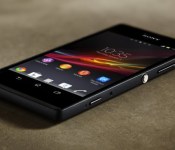
Your Smartphone may Help Make the Next Big Scientific Breakthrough
 We all want to do our part to help those who are less fortunate healthwise, but not all of us are brilliant researchers and scientists. However, we all have at least one extremely capable tool for making progress in the world of fighting disease: a smartphone. Once Dr. Vijay Pande and Sony have their Folding@Home app pass Beta testing, all you’ll have to do is download the app from the Google Play Store and have it run on your phone whenever you want, doing calculations and folding proteins in order to aid laboratories Stanford in finding a cure for Alzheimer’s or cancer.
The app is still in testing phase right now, which means it will only work on a Sony Xperia device, but if you own a Sony smartphone, by all means download the app and try it out. The general idea behind using smartphones to run calculations is that using modest processor power from hundreds of thousands of smartphones and tablets is much more powerful and cost efficient than using supercomputers. The idea has been done successfully in 2012 with PS3 gaming systems, but since smartphones have much more market saturation, Sony and Stanford have had their eyes set on your pockets for a while.
The app will be free for everyone and will pass through beta testing in early 2015, so keep checking back to see if it Folding@Home has been released yet!
Excited about the chance to help out a little in the world of disease research? Skeptical about the difference a few smartphones can make? Either way, leave a comment below and get the conversation started!
Source: Sony Blog
Come comment on this article: Your Smartphone may Help Make the Next Big Scientific Breakthrough
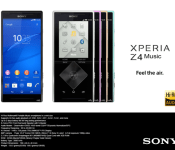
The next Sony Xperia Z4 could be a Walkman ‘with a phone’

We all saw the Sony Walkman unveiled at CES, and with it also the rather steep pricing, because at over $1000, this thing is more expensive than most laptops. But could the device simply be a refresher of the Walkman name and not intended at all to be a device consumers purchase, but simply a memory jogger of a brand that holds its own in the music industry, in prep for a more affordable consumer device that bears the name Walkman.
This is exactly what the Sony Xperia Z4 may be marketed as – that expensive Walkman device we saw at CES 2015, but more affordable, and with a phone attached.
According to sources, the Xperia Z4 Walkman could feature a 4 inch display with a resolution of 720 x 1440. The handset is also rumoured to have the Snapdragon 801 SoC, 3GB of RAM, 32 or 128GB storage, an 8-megapixel camera on the back and possibly Android 5.0 Lollipop.
Whilst this doesn’t sound like the specs that you’d associate with a flagship device such as the Xperia Z4, it could be very reminiscent of a Xperia Z4 music variant of the device aimed at music lovers.
Mobile World Congress in Barcelona is just around the corner, where Sony are expected to make some big announcements, so keep your ears peeled for MWC.

The post The next Sony Xperia Z4 could be a Walkman ‘with a phone’ appeared first on AndroidGuys.
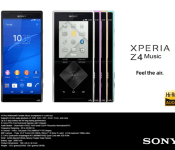
Sony could launch Walkman based phone called Xperia Z4 Music

According to a new rumor, Sony could launch a new music oriented smartphone known as the Xperia Z4 Music by March. The device will apparently bear the company’s Walkman branding as well, striking a chord with music enthusiasts.
So how exactly will this smartphone tell itself apart from the competition? Well the report says that this handset will support a wide range of audio codecs out of the box, including the likes of flac, aiff and wav. There’s also going to be front facing surround speakers made by S-Force Pro according to the report.
Hardware wise, we’re told to expect a 4 inch display with an odd resolution of 720 x 1440. The handset is also rumored to be sporting the Snapdragon 801 SoC, 3GB of RAM, 32 or 128GB storage variants, an 8-megapixel camera on the back and possibly Android 5.0 Lollipop. If this handset does in fact exist, then the MWC in Barcelona is the perfect stage for its launch.
We’ll keep our ear to the ground for more word on this new music oriented smartphone from Sony.
Come comment on this article: Sony could launch Walkman based phone called Xperia Z4 Music
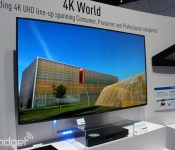
4K movies are coming to Blu-ray discs and hard drives

Sure, there are plenty of Ultra HD televisions floating around the Las Vegas Convention Center, but how will you find anything suitably super high-res to play on them? Netflix, Amazon and a few others have started 4K internet delivery while DirecTV and Comcast also have limited approaches, but sometimes you prefer media you can hold onto. Physical media fans have help on the way in two forms, but the bad news is neither one is ready to launch right now. The Blu-ray Disc Association has confirmed the name of its 4K format (Ultra HD Blu-ray) and many of its capabilities, while the Secure Content Storage Association has its own demo for Ultra HD movies you can download and transfer (almost) at will, with backing from Fox, Warner Bros., Samsung and others.

Panasonic is showing off a prototype Ultra HD Blu-ray player in its booth here, and shockingly — it’s a Blu-ray player. The demo unit has a hole cut in the top, but we didn’t spot any extra pixels leaking out anywhere. According to statements from various board members, licensing is on track to happen this summer and we could see discs by the end of this year. It’s expected that Ultra HD Blu-ray will upgrade the format to handle 33GB layers (up from the 25GB per layer of current discs) and discs that hold as much 100GB of data. You’ll need a new player to read the new discs, but the new players will be backwards compatible with existing Blu-ray movies. In our discussions with studio execs, we’ve heard that most movies encoded with HEVC (h.265, the new compression format for 4K video) should fit on dual-layer discs comfortably.

There’s room for 60fps video, HDR / Dolby Vision support, at least 10-bit color gradation and wide color gamut (read: better and more colors). Panasonic’s prototype player spec says it can push video at up to 100Mbps — far higher than the 15Mbps profiles we saw demonstrated by Netflix last year. Of course, there’s a lot of work to be done before the spec is final, and we still haven’t heard much about improvements to audio.
But what about those who have moved on to a discless lifestyle, or are just interested in a version of digital copies that can be carried around? The Secure Content Storage Association has stepped up and, like the BDA, says finalization of its spec is “coming soon.” We got a preview of what it’s working on this week, when Samsung announced that its new TVs would support 4K downloads from M-Go, by using the SCSA’s standards. We got a quick demo of what the consortium has planned and it most reminds us of what we’ve seen from internet stores for videogames like Steam, Xbox and PlayStation.

We’ll still need to wait and see exactly how Hollywood studios implement the DRM, but it’s set up so users can download copies of movies, store and watch them without hassle. There’s an ability to copy, move or share the stored files, and access various profiles for different devices like TVs, phones or tablets. In mocked-up player, users had the option make a licensed copy, registered to them and playable on any device, or an unlicensed copy. That copy of the movie can be shared, but if someone else wanted to play it they’d need to buy it from a store in order to unlock it for viewing.
Also built-in is support for finding any compatible files across a network, so if the movie is stored on your NAS, a PC, a phone or tethered hard drive it will pop up in the menu for playback. For better and/or worse, it all struck as as a sort of movie studio-designed variant of XBMC (oops, Kodi) or Plex.

The SCSA is also talking about quality, with support for Ultra HD, HDR and potentially things like high frame rate video. It’s also considering that customers might be able to upgrade their copies to a new version, so if for example a remastered HDR version of a movie comes out, it will be in your library. Our remaining questions cover things like studio / store support — you can count in the usual names from Ultraviolet plus some newcomers, but we’ll have to wait and see if Disney jumps in or goes its own way again. It appears that finding compatible devices won’t be difficult, and Qualcomm is on board to make sure its chips (probably inside your phones / tablets already) are compatible.
Formerly known as Project Phenix the SCSA is several years in the making, we’ll see if that long gestation was enough to strike a balance between the desires of studios and the customers it hopes will want to pay for downloadable movies.
Filed under: Home Entertainment, HD, Samsung, Sony, LG
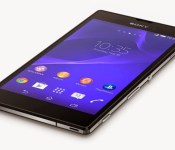
Sony Xperia T3 gets updated to Android 4.4.4

While many people are tapping the “Check for updates” button on their phones in the hope of seeing Android 5.0 Lollipop, Sony Xperia T3 owners can at least enjoy a minor update to their smartphones.
Sony has recently released Android 4.4.4 KitKat for the Xperia T3. There are a couple of different builds being deployed. Build 18.1.A.2.25 has been released in various regions for the T3 LTE models D5103 and D5106. For the 3G model, D5102, Sony has released build 18.1.A.2.32. Both builds upgrade the T3 from Android 4.4.2 KitKat to Android 4.4.4 KitKat.
As a reminder the Xperia T3 is a mid-range device from Sony. At its release it was dubbed the “world’s thinnest 5.3-inch smartphone.” The handset is just 7mm thick and features a 5.3-inch HD display with Triluminos technology for vibrant colors, and the Bravia Engine 2, for enhanced video and image quality. It is powered by a quad-core Qualcomm Snapdragon processor and comes with 1GB of RAM. There is 8GB of internal storage, which is expandable to 32GB via microSD, and a 8MP Exmor RS camera. The device also includes NFC which is a nice addition for a mid-range device.
iHeartRadio to now support upcoming Google Cast for audio, Sony PlayStation
The music streaming service, iHeartRadio, has announced a host of new partnerships at CES 2015 that will enable it to bring its services to Sony’s PlayStation 3 and PlayStation 4 consoles among other devices. The other high-profile brands that iHeartRadio will be joining hands with include TiVo, DISH, Google and LG etc.
It will become one of the first apps that are ready for Google’s new Cast for audio system, launching next month. Google Cast for Audio uses a similar technology to that of Chromecast to remotely connect with sound bars, speakers and A/V receivers. Just like Chromecast, users can listen to music on a Google Cast Ready speaker by tapping the cast button on the iHeartRadio app.
iHeartRadio will find its way to in-home entertainment domain by partnering with DISH and TiVo. The service will expand to in-dashboard multimedia systems by BlackBerry’s QNX subsidiary and Clarion.
“These multiple integrations are setting the tone for 2015, which will be another banner year where iHeartRadio focuses on a consumers-first approach – from launching its app on all meaningful devices to continuing to leverage its live radio and entertainment events to provide the best music experience for its listeners,” said Darren Davis, President of iHeartRadio and iHeartMedia Networks.
The all-in-one streaming music and live radio service, which already has 60 million registered users, will come preloaded with at least a dozen devices to be launched by its partners.
These latest integrations add to iHeartRadio’s growing list of device platforms across web, mobile phones, tablets, automotive, smart TVs, gaming consoles and more.
Via: CNET
The post iHeartRadio to now support upcoming Google Cast for audio, Sony PlayStation appeared first on AndroidGuys.
 AIVAnet