


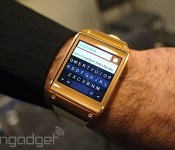
Fleksy keyboard brings predictive touch typing to the Galaxy Gear (video)

Fleksy has already shown that you could use its intuitive touch keyboard on a smartwatch with the Omate TrueSmart, so it only makes sense that someone saw fit to put it on Samsung’s Galaxy Gear. By default, the only way to enter text into the Gear is through voice dictation, which might not be your thing, especially in a crowded environment. As it turns out however, you can choose to sideload software keyboards like Fleksy, which is available through the regular Google Play store, into the Gear. Fleksy COO Ioannis Verdelis found out about this a few weeks ago from the XDA Developer forums, so he installed Fleksy on his Gear and brought it here to CES for us to see. From a brief hands-on, it seems very similar to the version we used on the TrueSmart. Simply tap in your desired words as best you can, and the tiny predictive keyboard will turn your mangled letters into coherent sentences. We took a brief video of it in action, which you can check out below.

Microsoft and CES: it’s complicated (not really)

CES: It’s a big deal in the tech world. You know who else is a big deal? Microsoft. So when the tech giant decided to hand over the baton of hosting the event’s opening keynote, ending a 12-year streak, people took notice. Not only that, the software giant also pulled its entire presence on the show floor, causing speculation that Microsoft’s relations with the CEA had degraded over the years, or (more likely) that it had decided the show just wasn’t offering it the kind of airtime it needed for its services and products.
At CES 2014, a Microsoft stand is nowhere to be seen on the show floor. In the build-up to the event, however, a report from the BBC claimed the firm would be “returning” to the show, including an almost polemic quote from the event’s head honcho Gary Shapiro stating that “Microsoft is officially back in the International CES.” This, in turn, was picked up by others, dutifully pointing out that, technically it never left — instead, conducting business away from the show floor. This much is definitely true, as we were part of one such meeting, in which we took the time to find out a little more about the real story behind Microsoft’s sudden departure from the biggest show in tech.
“The keynote and the booth, we haven’t done the last couple of years, but at the same time, the behind-the-scenes meetings with partners, hardware manufacturers, mobile operators and developers are all happening, and that part has actually increased,” Greg Sullivan, director of Windows Phone at Microsoft told us. Clearly, with almost every relevant business partner in town, it’s a great time to talk. Sullivan did go on to say that Microsoft isn’t ruling out a return to the show floor in the future.

Microsoft has many limbs, so it’s not just a case of one faction pulling out. Xbox isn’t here either, and it just launched a once-in-a-decade console. Marc Whitten — chief product officer for Xbox — told us “coming here to talk about new stuff is a little weird, especially for the console market, where so much is driven in November/December.” Yet Sony is here in full force, releasing new PlayStation products, and even theming its non-gaming stuff under the banner “play.” Whitten also told us, in the case of Xbox, it’s more to do with the timing. CES lands just after the big Christmas push, but again, this didn’t seem a concern for Sony; a competitor that’s generally considered to be winning the publicity war.
We’re there; we’re visible; and our products are in booths all over in various form factors.
But if not CES, then what? Sullivan is pragmatic, claiming that it’s a simple case of reallocating budget. A presence on the show floor costs money; money the firm is deciding to spend on other things. Internally organized events like Build are becoming increasingly important for Microsoft. Especially as this gives it the opportunity to host its own show, and not jostle for attention among the thousands at CES. A tactic that Apple employed some time ago (the last presence it had was more than two decades ago), which is clearly working for them. Google, too, has never really done the CES thing, also opting for its own showcase events.
Microsoft’s absence perhaps feels more noticeable due to its long tenure at the CES keynote, making its presence at the show all the more visible. Not that its show floor installations were exactly subtle, either. Its 2011 booth, for example, was a cavernous multi-story complex, almost with its own weather system.

If you spend any time wandering the halls at CES 2014, however, one thing soon becomes obvious: Microsoft is actually present throughout. Its products are so ubiquitous, that even without it trying, tablets, laptops and a host of other devices make sure that famous Windows logo is never far away. Something Chris Flores, director of Communications for Windows is only too aware of. “Although we don’t have a physical booth presence on the floor, we very much have a presence on the floor […] we’re there; we’re visible; and our products are in booths all over in various form factors,” he said.
And here we come to the obvious conclusion. Microsoft isn’t at CES (visibly) because it really doesn’t need to be. It’s also not an indicator of CES’ credibility. We’re told the software firm is also giving Mobile World Congress the same treatment — it will be there, but mainly behind closed doors. Increasingly is looks like the large trade show simply can’t offer the sort of dedicated airtime that a brand like Microsoft requires. This, after all, is the nature of business: assess the value, and make the most profitable decision. For Microsoft — and an increasing number of big names — that decision is to go it alone.

Social calendar app Sunrise finally comes to iPad

Launching on iPhone in February 2013, Sunrise changed our perception of calendar apps with its ability to provide more context to daily events. By connecting to Google, iCloud, Facebook, LinkedIn and Foursquare accounts, Sunrise can intelligently integrate appointments, birthdays and even checkins into its slick calendar UI, giving users a complete picture of what they’ve done in the past and the things they need to do in the future.
Despite its iPhone-only availability, the free app has grown to become one of the most popular third-party iOS calendar apps, consistently ranking in the App Store’s top 100 productivity apps in the final quarter of last year. Almost a year on, Sunrise developers Pierre Valade and Jeremy Le Van have decided it’s finally time to bring the stylish calendar app to iPad, complete with visualization and synchronization improvements.
Like its iPhone counterpart, the Sunrise iPad app will immediately request that you connect your cloud accounts when you open it for the first time, helping to feed it with information it’ll need to remind you about later. Valade says the team has worked hard to bring the best Sunrise experience to the iPad, and so it’s created two new weekly and monthly views that “make it easier to plan from your iPad and navigate in time quickly.”

If you’ve used Google Calendar or Apple’s Mac Calendar.app, you’ll be familiar with Sunrise’s time-based views, although Sunrise will deliver more information at-a-glance. If you see that you have a particularly busy day coming up, the week view will let you dive deeper and see how much free time you have outside of those events. The new week view has also been ported to the iPhone app and can be selected by tapping the week icon next to the new event button.

Tapping on a day will generate a new pop-up tab that displays all of your appointments and reminders. Drawing from the original iPhone UI, Sunrise for iPad not only chronologically lists events, it also categorizes them by assigning them a small icon related to the activity you have planned (or the service they are connected to). As you can see from the screenshot above, if you’ve planned a movie night, the app will assign a little movie ticket icon to the entry. If there’s a location attached to an appointment, Sunrise will provide directions, although Apple Maps, Google Maps or Waze will do the heavy lifting. It’s little things like this that make this that make Sunrise really stand out from other calendar apps.
In the past, if you wanted to ensure Sunrise had an up-to-date list of your upcoming appointments, you’d have to open the app and have it download them, which is especially annoying if you add events from different devices. Sunrise version 2.1 eliminates that frustration by integrating background updates that will synchronize all of your connected cloud accounts every hour by default, or at 30 or 15 minute intervals (if you need tasks to show up a little quicker).
While there’s no shortage of productivity apps on the App Store, Sunrise’s slick user interface and iterative features consistently continue to push the bar for iOS calendar apps. Soon, Apple users won’t be the only ones enjoying the app: desktop and Android versions are expected later this year. Today’s update, however, sees the app go universal while remaining free to download — hit the source link below to try it for your yourself.
Filed under: Tablets, Internet, Software, Mobile, Apple, Google
Via: Sunrise Blog
Source: Sunrise Calendar (App Store)
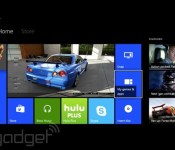
Xbox One’s first big update will address ‘the Live experience,’ expect streaming before E3

Xbox — and Microsoft in general — doesn’t really show up for CES. It’s not hard to understand why: for a big company like Microsoft, there’s no point in competing with the cacophony of voices shouting for attention. “Whenever we want, we can talk about Xbox stuff and get coverage. Why try to talk with 100,000 other things going on?” Xbox chief product officer Marc Whitten told us in an interview this week. Though Xbox isn’t here to show anything off, Whitten’s in town to meet with partners and, as he put it, “It’s just a good time to pop up and see an environmental scan you can get in an immediate dose.” After a long 2013 head down on the Xbox One launch, he’s finally got a second to take the temperature and see the world outside of Microsoft’s Bellevue, Wash. campus.
But we’re not here to ask Whitten about the past. Yes, he’s “really thrilled” with the console’s launch (over 3 million sold by the end of 2013). And yes, he’s very happy with the reaction from consumers. That doesn’t mean work’s over, of course. “There are seams in the product [XB1]. There are still seams in the 360, nothing’s ever done,” Whitten said. As such, first up on the fix docket is what Whitten called, “the Live experience.” Essentially, that’s much of the social features on the latest Xbox console. Whitten takes that stuff personally, having worked on Xbox Live as a service for the last 10 years:
“The feedback we’ve gotten is pretty valid; some of the social stuff is hidden or harder to use than it was on the Xbox 360. So you’re gonna see us come out with an update where, well, we’re going to fix those things. As a person who’s been pretty involved in building Xbox Live for the last decade, I take it pretty seriously when people say it’s harder to get into a party, and the defaults aren’t right, and I don’t like the model. So what I’m trying to do with the team is kind of theme some stuff up. Let’s take an update and really go through a big list of what we’re hearing from customers, what we know is broken with the architecture, areas that we want to improve or complete. I think that’s a theme you’ll really see us push on — that Live experience.”
Based on our conversation with Whitten, it sounds like those Live fixes are coming sooner than later. Promised game streaming functionality, however, may not be coming as quickly. “This is not 100 percent,” Whitten prefaced his statement with. “But my general strategy at E3 is to talk about things that are gonna happen from that E3 to the next E3. So, we are not yet to the next E3,” he added with a smile. So, uh, before June then!

Updates in general, though, will come much faster. While Whitten said we’ll still see the traditional large Dashboard updates, the Xbox One was designed around lessons learned from the 360 before it. One major facet of that design facilitates more regular updates. “The Xbox 360, which I’m still very very proud of, the software architecture was built in 2003. Rethinking [updates] based on everything we learned from 360 was a lot of what went into the Xbox One,” he told us. “You’re still gonna see the big, ‘Hey, here’s the cool stuff we’re doing.’ But you’re also gonna see the box just get better faster than you did in the past.”
First up on that front? “Everything from getting more apps out faster, some of the TV stuff — improving some of that, getting the scale of that internationally where we don’t have some of that. So I think you’re gonna see that come pretty quickly,” Whitten said.
The next big push for Microsoft’s Xbox One starts by March’s Game Developers Conference. As it turns out, the Xbox One gets its first major exclusive game that month in Titanfall as well. And hey, if you ask us, there’s serious incentive for Microsoft to have partying up perfected in time for Respawn Entertainment’s big game.
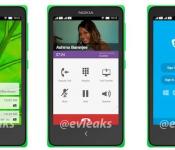
Leak reportedly shows Nokia Normandy’s Android interface

We’ve heard a number of rumors recently about Nokia’s Normandy phone, which will supposedly ship with an Android-based operating system. Shots of the handset, with its lack of a hardware shutter trigger, capacitive buttons and LED flash, appeared back in December, and now mobile tipster @Evleaks has posted what could be the first shots of Nokia’s alternative take on Google’s open-source platform. Three leaked renders of the device shows support for dual SIMs, homescreen notifications, a dialer screen and what appears to be a custom version of Skype’s mobile app.
Nokia’s Normandy project is said to be a low-end Asha equivalent that runs a forked version of Android, meaning it won’t be associated with Google’s apps and services, similar to Amazon’s Kindle Fire tablets. As we know, Nokia’s mobile business is currently awaiting the all-clear for an acquisition by Microsoft, meaning the project might never see the light of day. The leaked shots suggest Nokia has made significant progress with Normandy, but we’ll have to wait and see if the project forms part of its new owner’s future plans.
Filed under: Cellphones, Software, Mobile, Nokia
Source: Evleaks (Twitter)
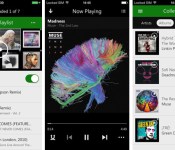
Xbox Music for iOS now plays music offline

Xbox Music landed on iOS with a big splash, but the absence of offline playback hurt its appeal for frequent flyers and anyone else whose internet access isn’t guaranteed. That won’t be a problem now that Microsoft has updated the app with offline support. Tunesters just have to flick a virtual switch to cache playlists for listening in any situation. The move won’t lure subscribers away from rival services that have had offline playback for a while, but it’s hard to object to a little more convenience for Xbox Music loyalists.
Filed under: Cellphones, Internet, Software, Mobile, Microsoft
Via: The Verge
Source: App Store

Kazuo Hirai on unifying Sony through Ultra HD and PlayStation Now (video)

Sony CEO Kazuo Hirai left the theatrics at home during his opening day keynote this morning, instead choosing to focus on the company’s vision of the future and his push to unify its disparate divisions. Since he took the reins last year, he’s been preaching a unified approach, something he calls “One Sony.” That approach manifested itself in a collaborative effort to push 4K content, distribution and devices, and, as of today, a new service called PlayStation Now. That service will allow users to stream PlayStation content to gaming devices, tablets, smartphones and Bravia TVs. We met up with Hirai at Sony’s CES booth where he told us to expect more collaboration in the future and, eventually, PlayStation Now on iOS, Android and beyond. For more of Hirai’s plans for the future of Sony, check out our interview after the break.
Filed under: Cellphones, Cameras, Displays, Gaming, Home Entertainment, Software, HD, Mobile, Sony

PlayStation Now actually works! (hands-on)

You’ll excuse us if we didn’t expect PlayStation Now to work so well. It’s a game streaming service, and the history of game streaming services is littered with dead bodies. When Sony spent an unbelievable $380 million on Gaikai, it seemed impossible that the service could ever live up to that incredible sum. While PlayStation Now may not live up to that massive payout, it does, in fact, work. And it works really well.
We got our hands on PlayStation Now today at a CES 2014 PlayStation event, where we tried God of War: Ascension on a Bravia TV (without a PS3) and The Last of Us on a Vita. Both games played like there was a local PlayStation 3 (including the incredibly long initial load for The Last of Us) and ran without a hitch. There was zero perceptible lag in our (admittedly brief) playtime, and we suspect that the internet Sony’s using is of the very strong variety.
The service is set to launch later this month in closed beta, and later this summer on PlayStation 3, PlayStation 4 and Vita. As for mobile devices and Bravia support, that’s expected by years end. Given the relative earliness of PlayStation Now, the UI we saw was non-final (and looked like little more than placeholder art). The same goes for the list of supported titles via streaming — the service will launch with a variety of “marquee PS3 games,” though nothing’s set in stone thus far. We expect the God of Wars and Gran Turismos of the world will be there on day one, but only time will tell.
Beyond full games, there’ll be rental and demo options available through PlayStation Now. But again, none of this is final, and only one facet of PlayStation Now was available for testing here at CES. What we did see was impressive and fulfilled the promises Sony’s made when it comes to game streaming, but there’s a long way to go before PlayStation Now launches this summer.

Live from the Engadget CES Stage: Mozilla COO Jay Sullivan

It’s true that CES is primarily a hardware show and Mozilla is primarily a software company, but the team behind Firefox no doubt has plenty to discuss — including, most likely, some hardware, too. Join us as we talk to COO Jay Sullivan about the browser wars, online tracking and Firefox OS’s place in the world of smartphones.
Follow all the latest CES 2014 news at our event hub, and check out our full stage schedule here.
Filed under: Cellphones, Software, Mobile

Oculus Rift’s latest prototype features positional tracking, an OLED screen, and kills motion blur (hands-on)

The newest version of the Oculus Rift headset is another major step toward the retail version promised for some point in 2014. It takes the existing HD headset we saw at E3 2013 and swaps an LED screen for OLED. It adds an external camera, and positional markers on the headset, to track your position depth-wise. Perhaps most importantly, it kills motion blur — one of the biggest issues with previous versions of Oculus VR’s incredible Rift headset.
The latest prototype, dubbed “Crystal Cove,” is here at CES 2014, and we’ve just gotten out of an EVE Valkyrie cockpit to tell you all about how much of an improvement this new guy is over the previous model.
Leaning forward in the cockpit of an EVE Valkyrie dogfighter, there’s readable text on a smattering of control panels. The forward thrusters, it turns out, are about to be engaged, hurtling us into space amongst a volley of other spaceships out for blood. Oculus VR director of dev relations Aaron Davies has us pause so that he can toggle one of Crystal Cove’s newest features: “low persistence.” We turn from left to right, unable to read the blurred text in front of us. He flips a switch, and voila: no motion blur. Well, very little. It’s a far cry from the first Kickstarter dev kit we used many moons ago and, despite the importance of positional tracking, makes a tremendous impact on the usability of the Rift.

In the same breath, let’s not discount how amazing it is to move our head forward and have that action replicated one-to-one in-game. This means that the gauges in our cockpit more than just window dressing: that’s the HUD. Another demo, specially made for Crystal Cove by Epic Games, had us sitting in the Unreal Engine 4 demo with the…er…magma lord (?) that previously terrified us at E3. Looking down between where he’s seated and our own position, a little world of creatures in a castle are available for torture should we push the face buttons. Push A, fire rains down and decimates the little guys. It’s a bit like The Seventh Seal, but less existential. Thus far, position tracking is handled by adding a camera to the equation which tracks a handful of sensors on the front of the Rift. CEO Brendan Iribe made sure to note that the camera is not final and may never ship with the final product. It’s just the easiest solution for now. See those little white dots all over the headset? Those are the sensors.

And all of this looked far, far crisper than previous units — that’s due to the new OLED screen inside and a 30 millisecond lag time (down by half from the previous dev kit). As far as when all these new bells and whistles will arrive in developer hands is another question altogether — we’re told by Oculus that the Crystal Cove prototype is just that: a prototype. With around 46,000 dev kits out in the wild already, it’s probably unfair to ask all those folks to re-buy kits. That said, we expect it won’t be long before new dev kits are available, and not long after that for the world of VR to expand dramatically. If 2013 was the year of proof-of-concept for Oculus Rift and modern virtual reality, 2014 seems poised to be the year when it comes into its own. With Crystal Cove, that possibility is greater than ever.

