


Cyclist GPS data could help cities plan safer routes

Strava has been using GPS coordinates to monitor progress for cyclists and runners for quite some time, and now it’s looking to lend a hand to local governments. With its new effort Strava Metro, the fitness-tracking outfit serves up data on 90 million bike routes and 24 million runs (at launch) to help planners examine how the two segments use public roads. Oregon’s Department of Transportation has already signed on as the first customer, using the info for a year — a deal that carried a $20,000 price tag. What’s more, London, Glasgow, Orlando (Florida, US) and Alpine Shire (Victoria, Australia) have also opted in. “Right now, there’s no data. We don’t know where people ride bikes,” Portland State University professor Jennifer Dill told the Wall Street Journal. “Just knowing where the cyclists are is a start.” Urban planners in cities have long had access to metrics around automobile traffic, but tracking patterns for bike and runners hasn’t been available up to this point.
Filed under: Transportation, Wearables, Software
Via: Telegraph
Source: Wall Street Journal
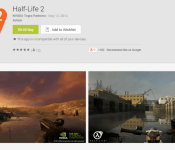
Half Life 2 and Portal come to the NVIDIA Shield via Play Store
We heard that the NVIDIA Shield would be getting Half Life 2 at some point, but we didn’t think it would be this soon. As of today, May 12th, those lucky NVIDIA Shield owners out there can pick up Half Life 2 through the Pay Store for their portable gaming marvel for $9.99.
 In addition to the release of Half Life 2, they also released another fantastic game that everyone loves, Portal. Portal will set you back $9.99 also.
Both these killer titles are in the Play Store for your purchase and download, but they are limited to NVIDIA Shield devices, at least for now. It is possible that they will open up for other Tegra running devices, but we aren’t sure if they will want to pull that trigger. Keeping them to the Shield keeps the games running as built with minimal possibility of issues, rather than fighting issues on multiple devices. If you have a Shield, head into the Play Store via the two links below and grab these guys. Let us know how they play.
//<![CDATA[
ord = window.ord || Math.floor(Math.random()*1E16);
document.write('’);
//]]>
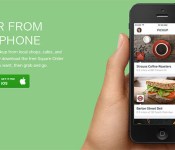
Square’s new app lets you pre-order food and drink before picking it up

Square is one of those apps you may have heard of, but have no idea what it does — because it mostly sells point-of-sale software and readers to businesses. It has just quietly expanded its consumer presence with Square Order, however, which looks like the customer-based app used in conjunction with Square Pickup for merchants. We says “looks like” because the app has quietly slipped into the iOS and Android (Beta) Play stores without any official announcement. Using it seems simple enough: you locate a restaurant, cafe or shop (Whole Foods, for instance) from a list of Square Pickup merchants. Then, you can place a pre-order, pay for it and receive a notification from the app when it’s ready. That’ll put it into competition with apps like PayPal’s wallet and GrubHub, though so far Order is only available in New York and San Francisco (more cities are promised soon). We’ve reached out for more info, but if you’re in one of those ‘burgs, grab it here.
Filed under: Software
Via: TNW
Source: Square
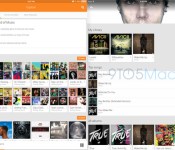
Google Play Music for iPad found lurking inside iPhone app

If you’re a Google Play Music fan and have been limping along with the iPhone version on your iPad, you may already have the big-screen version without knowing it. That’s because the iPad bits are already baked in to the iPhone app, according to 9to5 Mac. In fact, you can even activate it now just by changing a setting called “UIDeviceFamily” from 1 to 2, though your iPad will need to be jailbroken (which is currently impossible on iOS 7.1.x). Google Play Music has been a success since it launched on the iPhone in November — likely helped by a month of free music — so a pending app redesigned for the iPad’s larger screen wouldn’t be a surprise. In fact, when contacted by 9to5, a Google rep thought the app was already out, meaning it might just be awaiting the nod from Apple.
Filed under: Tablets, Software, Apple, Google
Source: 9to5 Mac

Microsoft’s Cortana could soon control your mood lighting

Microsoft’s Cortana may be younger than counterparts such as Google Now and Apple’s Siri, but the virtual assistant already stands out thanks to some unique features. One prime example is Notebook, which the service uses to learn about your habits and keep track of your preferences. Another is the ability to communicate with third-party apps, opening the door up to plenty of new use cases. But we’re still just getting started; if the hackers at Onion.io have their way, Cortana will soon be controlling the lights in your home, among other automation tasks.
Using Onion.io’s backend for devices connected to the Internet of Things, hackers used voice commands to have Cortana turn lamps on and off, and even print out a basic grocery list. Imagine combining this home-automation functionality with Philips Hue bulbs — Cortana could soon be adjusting the lighting on command for dinner parties or home-movie nights. And voice commands could definitely come in handy for adjusting your house’s temperature, too. It will be exciting to see how companies choose to implement the tech, but if you don’t feel like waiting, you can always grab a Bluetooth module and a Netduino and hack something up yourself.
Filed under: Household, Software, Microsoft
Via: Ubergizmo

Samsung may soon launch Tizen phones in Russia and India

Remember Samsung’s Tizen operating system? It’s not a household name, but it did make an appearance on the second wave of Galaxy Gear devices. We’re still waiting for a full-fledged phone running the open-source OS, though, and we may just see one this year. According to sources who spoke with the Wall Street Journal, Samsung will launch a Tizen handset in Russia “in the coming weeks,” and a Tizen device will reach India soon after. While that’s about it in terms of details, one thing is clear: Samsung will look outside the US and Europe to get its fledgling operating system off the ground and into phones.
Filed under: Cellphones, Software, Mobile, Samsung
Source: The Wall Street Journal

Whatever happened to Netscape?

Netscape’s story reads like a proper fairy tale: takeovers, fierce and hostile competition, split-ups, a giant payout and even a dragon! While Netscape may now only be a sweet, sweet memory to those who used it to first discover the web, the browser’s monstrous impact has cemented it as one of the first and most important startups to shape the internet. Netscape’s founders successfully plucked a brilliant idea from academia and pushed it onto the world’s stage at a time when competition didn’t exist, websites were not much more than plain-text blurbs and inline images were still revolutionary. Consider the battle that would ensue between this web pioneer and Microsoft. The “browser wars,” as they came to be known, would ultimately lead to creation of Internet Explorer, Microsoft’s antitrust suit and the formation of the Mozilla Project and Firefox.
Netscape was born the child of University of Illinois graduate Marc Andreessen and Silicon Graphics’ Jim Clark. Andreessen had spent some of his time at university working on the NCSA (National Center for Supercomputing Applications) Mosaic browser and understood full well the potential it offered. With Clark’s help, the two created Mosaic Communications Corporation in April 1994, pulling in many former SGI and NCSA employees. The team then churned out the first point release in October of that year: Mosaic Netscape release 0.9. By the end of December, the company underwent a significant transformation, adopting the name Netscape Communications and launching Netscape Navigator 1.0.

Jim Clark (left) with Marc Andreessen.
The company launched Netscape Navigator into the market without even a glimmer of real competition and the browser went on to become the de facto portal to the web in early 1995. Of course, Microsoft was working feverishly in the background to play catch-up with a browser of its own creation, licensing Mosaic’s tech to build the first iteration of Internet Explorer.
On August 9th of that year, the then roughly 1-year-old Netscape went public with its initial stock offering at $28 per share. By close of day, the company’s valuation skyrocketed to nearly $3 billion. It was around this time that Microsoft was preparing to release Windows 95 and a separate add-on pack: Windows 95 Plus! Pack, which included Internet Explorer 1.0 and TCP/IP, the protocol needed to use the web. At last, Microsoft had arrived with its first effort at a Netscape killer.
The company launched Netscape Navigator into the market without even a glimmer of real competition and the browser went on to become the de facto portal to the web in early 1995.
Netscape and Internet Explorer traded releases in lockstep throughout 1995 and 1996, but by the time Internet Explorer version 3.0 was released, Microsoft had fully caught up and was able to match Netscape feature-for-feature. In an attempt to differentiate from its IE rival and grow its user base, Netscape took a stab at the enterprise crowd and launched the Netscape Communicator 4.0 bundle in late 1996. Communicator added in a Usenet client, web editor, e-mail app and even an address book; in short, it quite handily defined the very early days of sales- and management-driven bloatware. The move, however, failed to gain much traction with the suit-and-tie set.

Netscape’s browser icon through the years.
Netscape continued to develop both Netscape Navigator 3.0 and Communicator 4.0, but the looming threat of Internet Explorer, with version 3 bundled into Windows 95 service release 2, still lingered heavily in the background. The rivalry was compounded even further when Microsoft’s browser team apparently dropped its massive IE logo off at Netscape’s campus the night of Internet Explorer 4′s launch. The Netscape crew understandably took issue with the slight and toppled the giant IE logo over, placing its Mozilla dragon mascot atop it and holding a sign that read “Netscape 72 Microsoft 18.”
In January 1998, Netscape announced its intention to release the source code for Netscape Communicator to the public; a move that gave rise to the Mozilla Organization. Unfortunately for Netscape, this also had the effect of stalling development on its browser platform through much of that year, essentially giving Microsoft the lead it needed. And that summer, Internet Explorer finally overtook Netscape as the most used browser, a mantle Netscape was never able to win back.

Netscape responds to Microsoft’s prank by putting its mascot atop a toppled Internet Explorer logo.
The company, however, was far from being completely wiped out: AOL recognized some value in the struggling company and purchased it in November 1998 for a whopping $4.2 billion. The acquisition did nothing to spur development efforts though, and it wouldn’t be until April of 2000 that preview versions of Netscape 6, based on Mozilla code, saw the light of day. A further two years later, Netscape 7 was released, serving as the last major build version to come from that source code.
AOL recognized some value in the struggling company and purchased it in November 1998 for a whopping $4.2 billion.
Not long after, AOL shuttered the Netscape department and laid off most of the staff in 2003, opting instead to continue development in-house with Mozilla’s Firefox as its code base. The once proud web app was also re-branded as Netscape Browser and AOL eventually outsourced successive releases to Mercurial Communications, a Canadian software developer. Mercurial babysat and pushed out versions 8 through 8.1 of the Netscape Browser between 2005 and 2007 to a public that largely didn’t care any longer. And, in a sad final gasp, AOL cobbled together a dev team to push out Netscape Navigator 9, its first internally built browser effort since version 7. Its release would signal the end of Netscape the browser, as AOL pulled the plug on it in February of 2008.
While Netscape didn’t stand the test of time quite like its chief rival Internet Explorer has, its open-source transition into Mozilla did eventually birth Firefox — a browser success story in and of itself. But Netscape’s precipitous rise and fall in those early internet days wasn’t without lasting effects: Its brief stint at the top and tense rivalry with Microsoft laid much of the groundwork for innovation in the browsing space.
[Image Credit: Associated Press; snafu.de]
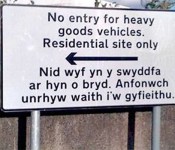
Microsoft says ‘shwmae’ to the Welsh language

If you’ve ever struggled to understand what Cymru am byth means, you’ll have found that few web translators are prepared to help you out. That’s changed now, thanks to a deal between Microsoft and the Welsh Assembly, which teamed up to bring the language to Office, Bing and the Windows and Windows Phone translator apps. The country’s national body passed a law back in 2012 requiring public bodies to treat both English and Welsh equally, but didn’t have the tech necessary to ensure all employees had access to translation gear. Both parties are keen to stress that, despite the official involvement, it’s just as (un)reliable as translators for other languages, but hey, at least one or two kids might avoid our childhood fate of having gau’r drws barked us by an annoyed Grandmother and not knowing what the hell it meant.
Filed under: Internet, Software, Microsoft
Source: Microsoft, Welsh Assembly
Minor updates for Google Now Launcher and Google Camera [Download]

 Looks like a couple little updates have been pushed out earlier today. Two of Google’s specific apps, the Google Now Launcher and the Google Camera have both received very minor bumps. The Google Now launcher has moved to version 1.0.16 with the appropriate lack of “What’s New” in the Play Store listing. We can only assume it offered up some bug fixes and minor tweaks. On a side note, that is fairly important, it is being reported that the update doesn’t seem to break the Xposed GEL Settings module. So that is some good news for root users who use the launcher exclusively.
A similar situation is rolling out for the Google Camera. It is moving to version 2.1.043 from 2.1.042. Again, very minor and probably just some little tweaks and bug fixes.
We always assume that Google is rolling out their update in batches and you might not see it right away. Luckily for you, you can grab the APK for either one down below. Don’t forget, both of these are very specific to Android 4.4+ namely the Nexus line and GPE devices. Of course various ROM’s out there have had success too.
Play Store: Google Camera
Play Store: Google Now Launcher
APK Download: Google Camera @ Gappsearly
APK Download: Google Now Launcher @ Gappsearly
//<![CDATA[
ord = window.ord || Math.floor(Math.random()*1E16);
document.write('’);
//]]>
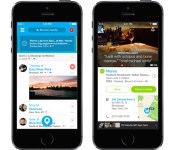
Foursquare goes Oprah: You’re a mayor and you’re a mayor

When Foursquare announced plans to split check-ins off into their own app last week, it didn’t reveal too many details on how the finer points — like Mayorships — would factor in. Well, starting today, those virtual offices are safe until Swarm launches next week. Once the new arm of the location-based outfit rolls out, it will handle those accolades in addition to insights (five weeks in a row at breweries, for example) and allow you to afix stickers to notable check-ins. In what Foursquare is calling Mayorships 2.0, you compete only with your friends to hold office at your favorite coffee shop — not the fella that sits in the corner all day, every day. Of course, this means that venues can have multiple Mayors, which means you’re likely to see fewer faux political-based discounts. Bummer.
Don’t worry, badges will remain in the regular Foursquare app too. They’ll be used to reward explorers for discovering new places and offering insight. You know, now that the namesake option is going to be focused on local search and reviews. The direct Yelp competitor isn’t due to launch until later this summer, so once users leave the for hive, there’s a chance they won’t look back.
Source: Foursquare

