



Virgin Media’s TV Anywhere app now works on the latest Android devices

Virgin Media’s TV Anywhere Android app has been available since November, but its rollout has been hampered by limited device support. After the company opened the app to Nexus 5 owners earlier this year, it’s finally made the streaming service available to most powerful Android smartphones and tablets that money can buy. If you own Samsung Galaxy S5, Sony Xperia Z2 or HTC One (M8), you’ll now be able to stream over 90 channels and remotely control your TiVo box while on the move. There is a minor catch, however: the company notes that while the new devices can download TV Anywhere from the Play Store, they’re not officially supported. In the company’s own words: “We expect them to work, we have not been able to test all of them due to the large number of Android devices available.” The list of supported devices is updated regularly, though, so for now, check out the list below to see if your Android smartphone or tablet makes the grade.
The full list of new devices: Samsung Galaxy S5, Samsung Galaxy Note 8, Sony Xperia Z2, Sony Xperia M2, Sony Xperia Z2 tablet, Sony Xperia M, HTC One (M8), HTC One Mini, HTC One Sensation, HTC One Max, HTC Desire HD, Motorola Moto X, Motorola RAZR I, Motorola Xoom 2, Motorola Xoo ME, Lenovo Ideatab A1000, Lenovo Ideatab S6000, Barnes and Noble Nook HD, Barnes and Noble Nook HD+, Huawei Ascend Y300, LG G2, LG GPad 8.3, Samsung Galaxy Note PRO 12.2, Samsung Galaxy Note 10.1, Samsung Galaxy S Duos 2.
Filed under: Cellphones, Home Entertainment, Internet, Software, Mobile
Source: TV Anywhere (Google Play)
Google cuts off Chrome extensions that don’t come from the Web Store

A while back Google said that it would stop letting Windows users install Chrome extensions that didn’t come directly from the Web Store. The company ended up delaying the plan, but there is no more fighting it. Today users of the stable channel of Chrome on Windows will no longer be able to install extensions from outside the Web Store. That won’t impact too many users thankfully, but it could make it difficult for those that like to run experimental add-ons. If you’ve already sideloaded extensions from outside of the Chrome Web Store, those will be disabled starting today; if you want to re-enable them, you’ll have to make the switch to the dev channel of the browser. The idea is to protect users from malicious extensions that haven’t made it through Google’s screening process. Of course, OS X and Linux users can continue to use all the unapproved extensions they want. Apparently only Windows users need to be protected (perhaps from themselves).
Filed under: Internet, Software, Google
Source: Google

Revamped iPlayer app for Windows Phone adds live TV but drops radio

Windows Phone users typically have to wait longer for apps and updates than their iOS and Android counterparts, but the latest BBC iPlayer rollout tips things back in Microsoft’s favour. As part of its ongoing iPlayer revamp, the Beeb has pushed live an new version of the Windows Phone app, delivering up-to-date channel pages, themed programme collections and clearer categories. On top of that, the app has a new media player that automatically delivers the best quality streams depending on a user’s connection. Windows Phone users will also be able to watch live TV for the first time, but the feature comes at a cost. Radio content will no longer be available after the BBC decided to cut the option in order to offer “the best TV viewing experience in iPlayer.” The good news is that the iPlayer Radio team expects to release a new app with “an optimised listening experience,” meaning users won’t have to go too long without access to The Archers.
Filed under: Cellphones, Internet, Software, Mobile
Via: BBC Internet Blog
Source: BBC iPlayer (Windows Phone Apps)
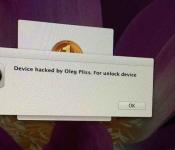
Australian Apple users held to ransom by Find My iPhone hacker

Some Australian Apple device owners today woke up not to the sound of their alarm, but the jingle of a “ransom” notification instead. The Sydney Morning Herald reports that a hacker (or a group of hackers) going by the name “Oleg Pliss” systematically froze iPhone, iPad and Mac users out of their own devices, holding them hostage until payments of between $50 and $100 were received. Threads on Apple’s official support forums detail how the attacker (or attackers) used Apple’s own Find My iPhone feature to remotely lock devices and send messages requiring payment via PayPal. Fortunately, those who had set passcodes were able to regain access, because you can’t add or change a lock on a device that already has one in place, but those without the security measure weren’t so lucky.
Overcoming a lock once it is in place isn’t an easy process, meaning Apple has had to work directly with those affected to fix the issue. While the attack has been limited to Australia for the most part, Apple device owners in New Zealand and the UK have also reported similar issues. It’s believed that the device locks could be down to users recycling the same passwords captured in other internet breaches, although the real cause is not yet known. If you’re worried you could be affected, it’s considered good security practice to use a unique password, enable two-factor authentication and set passcodes on all of your devices.
Filed under: Cellphones, Tablets, Internet, Software, Apple
Via: 9to5mac

Watch Dogs: The Joystiq Review

The advanced technology in Watch Dogs is not just indistinguishable from magic – it IS magic. The game would have you believe you’re the world’s most powerful hacker, bending surveillance cameras, traffic control and all manner of personal electronics to your one-touch whims. But in this paranoid vision of the future, in which every mundane device is grafted to the same computerized skeleton, the right software might as well be an all-powerful wand.
Wouldn’t you like to be the wizard?
Click here for more
Filed under: Gaming, Software, HD, Sony, Microsoft
Source: Joystiq

Schedule for Android 4.4.3 update to Samsung devices is Leaked
 We’ve heard quite a lot about the upcoming Android software build, Android 4.4.3, with a partial bug fix list having been already leaked out. After a alleged dogfooding build was apparently spotted being released to Google employees, we’ve been eagerly waiting for word on when we can expect this new build which is plague quite a few users, mainly Nexus 5 owners. Well, the puzzle pieces are starting to fall into place as an internal document from Samsung which lays out the Android 4.4.3 update to Samsung devices and suggests that they are already integrating Android 4.4.3 into the Galaxy S5 and Galaxy S4 (no Note 3 yet it seems).
 Additionally, a list of devices that have been planned to get the current build of software, Android 4.4.2, was also leaked out and suggests Samsung is still diligently working to update most of its mid-to-high end devices. Most notable on this list, unfortunately, is the Galaxy S3 (3G version) which appears to have no estimated released date due to the software being unstable. Hopefully it does come through at some point as it would be a shame if 2012′s flagship were to be left by the wayside.
It looks like Android 4.4.3 is well on its way to devices already, though it could be a little while longer thanks to manufacturer and carrier integration. What do you think about the schedule in the leaked documents? Let us know your thoughts in the comments.
Source: SamMobile via Phones Review
//<![CDATA[
ord = window.ord || Math.floor(Math.random()*1E16);
document.write('’);
//]]>

PlayStation 4 to get pre-loading of all pre-order games starting with Destiny

Tired of making sandwich after sandwich, idly waiting while the ol’ PlayStation 4 downloads Metal Gear Solid: Ground Zeroes? Though we’d never encourage you to stop making delicious sandwiches, we do sympathize with the situation. Thankfully for you, Sony’s adding pre-loading of all pre-ordered upcoming games to the PlayStation 4 starting this fall with Bungie’s next big game: Destiny. That means you can download the whole shebang ahead of the game’s “official” launch on September 9th, and when midnight strikes, you’re ready to go. Bizarrely, the news comes via PlayStation Network message from Ubisoft; as seen above, Watch Dogs (which launches this Tuesday) won’t have pre-loading. Sorry Charlie! Come September, however, you’re good to go.
Filed under: Gaming, Software, HD, Sony
Source: NeoGAF

Apple wants more money from Samsung, so it’s asking for a retrial

The next chapter of the (seemingly) never ending legal wrangling between Samsung and Apple is here, and because it’s a holiday weekend when everyone has better things to do, Apple is tossing a few new requests into the ring. After recent jury ruling found Samsung in violation of certain patents (and Apple in violation of one itself), Apple is simultaneously requesting a retrial in pursuit of more damages than the $119 million it was already awarded, and asking the US to ban Samsung from selling the infringing products. That could include current or future phones and tablets that Apple says are using its tech for things like slide-to-unlock and word prediction. It’s not clear if there’s any real chance of either request being granted, but FOSS Patents has posted the documents if you’d enjoy Apple’s legal arguments for some weekend reading.
[Image credit: Brent Lewin/Bloomberg]
Filed under: Cellphones, Software, Mobile, Apple, Samsung
Source: FOSS Patents (1), (2)
From foe to friend: my journey with Linux

Nowadays, it’s just a sanctuary for my father to play marathon sessions of Diablo 3. But a little over 15 years ago, the breakfast nook in my parents’ kitchen more closely resembled a coliseum where man (my father) was pitted against machine. Back then, it wasn’t uncommon to hear strings of profanities streaming out of the room while he sat in front of a desktop computer hunched over in defeat — all in an attempt to run Linux.
“What the… ?”
(loud clacking of keys)
BEEP
“I don’t get it…”
(banging on keys)
BEEP
“God damn piece of shit!”
(punching of keys, distinct metallic crash)
“Grrr…”
I’d heard of Linux before, but had never actually seen or used it until the age of 15. Mine was a home filled with Windows and DOS boxes for as long as I can remember. But my father found himself in the position of having to learn about the open-source operating system for work — his company was going to start moving all of its servers to Linux, and he’d have to support them. If the company’s internal home page went down or someone couldn’t access the shared folders, that would be his problem to deal with. And so Linux entered my life.
I’d been told that Linux was only for nerds, but at first glance, I couldn’t fathom how people were confused by the upstart OS. There was something immediately familiar about it. Probably, the fact that it looked almost exactly like Windows 95: There was the desktop interface loaded with shortcuts, a taskbar and even a start menu.
I’d been told that Linux was only for nerds, but at first glance, I couldn’t fathom how people were confused by the upstart OS.
I’m not sure how long it took that very first time — it could’ve been five minutes or five hours — but I watched as Linux slowly installed itself on the hard drive, filling the screen with an ASCII progress bar. When all was said and done, my father had a PC running a boxed and enterprise-friendly version of Linux. But a funny thing happened when he got to the desktop and tried to install additional software from the same CD: The drive we’d just used to install Linux suddenly didn’t exist. The drivers required to run the CD drive didn’t install… or maybe they never existed to begin with. And in that moment, I understood exactly why, even though it’s free, people would rather pay $100 for Windows than fight with Linux.

For the next several days, my father and I would convene in the breakfast nook for a few hours every night to attempt a new solution. Perhaps we could copy the right drivers from the CD to a 1.44MB floppy disk on another computer? No such luck. We then turned to the internet for help, thinking that surely someone, somewhere would know how to get this drive working. But no, we couldn’t even get the computer’s modem to work.
Eventually, my father and I were forced to accept defeat. The Linux discs went back into their cases; the cases went back into the sparsely branded, white cardboard box; and the box went into the back of a cabinet. It stayed there collecting dust for years, until one day it just vanished. We think it was probably tossed in the garbage during a frenzied bout of spring cleaning.
in that moment, I understood exactly why, even though it’s free, people would rather pay $100 for Windows than fight with Linux.
It wasn’t until nearly a decade later that I would cross paths with Linux again. And honestly, I can’t say my second (no sound) or third date (no WiFi) with the open-source OS went any better. But something about Linux keeps me going back for more. Maybe it’s the challenge; the OS puzzle waiting to be solved. Maybe I’m just a masochist. These days, I’m a dedicated Ubuntu user. I do love the price (i.e., free), but it’s the power and the flexibility that have really seduced me; I can easily change the way something looks or works. Still when I look back on those first days with Linux, I wonder how our relationship made it this far.
[Image credits: Alamy; Getty]
Filed under: Software

PlaceAVote wants to replace politicians with internet polls

Congress‘ approval rating sits as low as 10 percent, depending on which poll you trust. So a bunch of engineers and developers came up with a uniquely Silicon Valley solution — replace politicians with software. We’re not talking about some advanced AI, though, so don’t start worrying about Skynet just yet. PlaceAVote is a simply a digital polling platform, which means there will still need to be a human being on the floor casting a vote. The first two candidates who pledge to simply vote whatever way the internet tells them are already on the ballot in California, and 20 more are supposedly on tap for 2016.
If any of those candidates win they’d then have to find a way to get a private key code out to each and every one of their constituents. That key along with a unique identifier, such as social security number would be needed to log into the PlaceAVote system, which makes security one of its biggest priorities. Of course, no system is 100 percent secure and PlaceAVote would certainly face its fair share of challenges from hackers and those looking to commit voter fraud it it enjoys even a modicum of success. The entire premise requires voters have regular access to a computer for this attempt to shoehorn direct democracy into a representative system to work, which will definitely be problematic is poorer districts around the country. And while well intentioned there’s a pretty good case against direct democracy in general; just because something is popular doesn’t mean it’s good (see Modern Family). In many ways having an elected representative is saving us from ourselves.
Filed under: Internet, Software
Via: Motherboard
Source: PlaceAVote
 AIVAnet