


Massachusetts Supreme Court says it can order you to decrypt your computer

Say you get arrested, your computer is seized and state wants to peek at the encrypted data hidden away on your machine’s hard drive. Can it force you to decrypt your computer? Traditionally, the answer has been no: courts have previously ruled that ordering a defendant to decrypt their data was tantamount to self-incrimination — a violation of their 5th amendments rights. The Massachusetts Supreme Court sees things differently, and has recently ordered a defendant to decrypt his machine because the pertinent data’s presence on the computer was a “foregone conclusion.” In other words, if the police already know the data they are looking for is there, it doesn’t count as new testimony and is not protected by the 5th amendment.
The state’s argument seems largely based on the defendant’s own statements. When Leon Gelfgatt was arrested under suspicion of mortgage fraud he told state troopers that everything on his computers was encrypted and that “no one is going to get to it.” He also explained that he was capable of decrypting this data, but refused to. According to the Supreme Court, this made the presence of encrypted data and the existence of a decryption key a “foregone conclusion,” and won’t tell the government anything it didn’t already know. The ruling seems a little bit slippery though — of course the government already knows that there are encrypted documents on the computer, but it doesn’t know what those documents contain, which leaves proponents of digital privacy rights uncomfortable with the supreme court ruling.
While this ruling only applies to the state of Massachusetts, it’s a major strike against privacy advocates. For the rest of the country, the burden of decrypting seized data still falls on the burden of of authorities, but the larger issue is still up for debate in the higher courts. This certainly won’t be the last we hear of it.
[Image credit: Shutterstock]
Filed under: Software
Source: Document Cloud, Ars Technica

The Associated Press welcomes its robot journalist overlords

Robots are cool and all, but they’re just mere toys until they start doing things like reporting the news, right? (Okay, we may be looking at the prospect somewhat selfishly.) Fortunately, that’s already starting to take place — to a degree. In July, the Associated Press will begin using an automated service capable of churning out up to 4,400 business stories. With the help of a company called Automated Insights, these articles will include numerous pieces on quarterly earnings reports, which in theory should free up the humans to do the deeper stuff, such as pieces on why the numbers actually matter and what the executives say during their calls to investors.
This isn’t the first time we’ve heard of services producing automated content for publications. The AP has relied on the tech for piecing together sports stories in the past, while Yahoo uses Automated Insights to put together some of its fantasy sports material. The Guardian has also “hired” an automated Editor-in-Chief to curate the best articles for its monthly print edition in the US — and that’s not even the first time the publication has adopted such services to automate content. So today’s announcement isn’t necessarily groundbreaking tech in the strictest sense, but it’s an indication that more publications will begin relying on automated material more often. This is great news for newspapers and online media trying to cut costs and produce more content, though admittedly many human journalists may worry about being replaced; however, AP Managing Editor Lou Ferrara insists that robots are merely complementing them, giving Homo Sapiens the opportunity to shift their focus to more meaningful writing.
Source: Poynter
Apple puts Aperture out to pasture, moving users to new Photos app

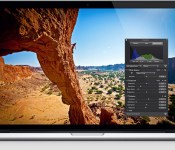
Apple’s pro photo editing suite Aperture is coming to the end of its life. In 2005 Cupertino decided to take on the entrenched powers in that field, including Adobe, but clearly the company has decided there are better uses for its resources. Instead, with the next version of OS X, will be ushered towards a new app called Photos. Apple will even provide a tool for seamlessly moving your existing library to Photos. While it may pack some of the more advanced editing features of Aperture, the new app is actually aimed more at replacing iPhoto (which will also be getting the boot). Users that are unwilling to give up Aperture can rest assured that will provide compatibility updates for OS X Yosemite, but there will be no other changes to the software. For those that would rather move over to the Adobe family, there’s always Lightroom, which is part of the Creative Cloud suite and has proven popular. Of course, that means paying a $10 monthly subscription. It’s less than ideal, but at least Lightroom has a history of frequent updates.
Update: This story originally stated that Apple was building a tool to aid those looking to transition to Lightroom. Instead the tool is for moving users to Photos. Apple is, however, working to provide documentation for those that wish to move to Lightroom.
Source: TechCrunch

The NSA’s 2013 transparency report is more opaque

In an attempt to offer transparency to United States surveillance tactics, the Office of the Director of National Intelligence released a report today offering numbers for National Security Agency actions in 2013. The report notes thousands of orders placed for use of surveillance tactics (FISA requests: 1,899 in total), but fails to mention who or what was being targeted, not to mention exactly how. It recounts thousands of requests to the Foreign Intelligence Surveillance Court — the court that decides which surveillance tactics are considered legal by the US government — and thousands of “targets” (90,601). However, issues arise immediately. The word “target” is defined as such:
“[It] has multiple meanings. For example, ‘target’ could be an individual person, a group, or an organization composed of multiple individuals or a foreign power that possesses or is likely to communicate foreign intelligence information that the U.S. government is authorized to acquire.”
Moreover, numbers are given for business records requests; instance where business records were specifically requested by the US government. While only numbering in the hundreds (178), the word “target” is used once again, which the US defines in an extremely loose way. As such, once more, it’s unclear exactly how many US citizens were affected and how.
There’s also a stat breakdown of national security letter (NSL) requests in 2013. Historically, NSLs were used in financial matters — they’re subpoenas for electronic records, as ordered by the Federal Bureau of Investigation (FBI) — but their use was expanded under the PATRIOT Act of 2001. These are particularly important to surveillance, as they order record holders to turn over otherwise private information, cannot be challenged, and even require the records holder not to tell the individual(s) or entity that their records are being given to the US government.

The report is slightly more specific in respect to NSL requests: 38,832 requests were made for records and 19,212 were approved. The report says those numbers skew far higher because, “the FBI may serve multiple NSLs for an individual for multiple facilities, e.g., multiple e-mail accounts, landline telephone numbers, cellular phone numbers, etc.” In plain English: multiple NSLs might be issued for the same person or entity.
The report is in response to President Barack Obama’s June 2013 directive to the Director of National Intelligence to issue a transparency report. Obama’s directive, of course, is in response to the deluge of NSA leaks last summer led by Edward Snowden.
Amazon AppStore 48-hour sale; Plex, Splashtop HD, Ravensword and 29 more FREE
Looks like Amazon is kicking of a pretty fantastic sale today that is set to last just 48 hours. Generally when we see Android apps on sale in the App Store, it is for a myriad of apps that are ok, but not always highly sought after. This sale on the other hand is quite […]
Google Keep and Maps get Android Wear support; Google Search and YouTube also Update [APK Download]
We have been watching the Play Store pretty intensely since the Google I/O keynote just 2 days ago. Since then we have seen a number of apps up date. Seems the big stories on the web with the updates comes from Google Maps and Google Keep both getting updates that make them Android Wear compatible. […]

Adobe finally brings Photoshop to Windows Phone

Android, iOS and even Windows 8 users have had access to Adobe’s mobile version of Photoshop for quite some time, while Windows Phone owners were excluded from the party. That changed today after Adobe pushed the slick photo-editing app to the Windows Phone Store. As you’d expect, you can crop, straighten, rotate and flip images and apply a range of different filters and “looks,” which may require you to run the in-app purchase gauntlet. Nevertheless, Adobe’s first major Windows Phone app (if you discount Reader) won’t cost you a penny, and you can grab it using the link provided below.
Filed under: Cellphones, Software, Mobile, Microsoft, Nokia
Via: Nokia Conversations
Banking apps may be getting their own virtual assistants soon

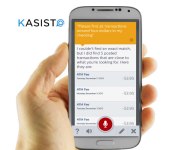
The minds behind Siri’s virtual assistant skills are back at it. This time around, SRI International has created Kasisto to boost personalized interactivity inside apps that usually require an actual human to carry out complex activities. Banking and commerce are a prime examples of this sort of task load, and BBVA (the outfit that now owns Simple) has already partnered up. The context-aware tech offers text, touch, and speech with natural language understanding and reasoning built-in, giving interested suitors the ability to pipe in a virtual assistant in a fraction of the time it would take to start from scratch. Plus, they’d be leveraging a tools from the folks who developed Apple’s helpful voice. “Our innovative approach to intelligent system design, combined with low-cost deployment, will help banks improve customer service and maximize investment in the mobile channel,” notes Kasisto’s CEO and co-founder Zor Gorelov. Since the platform was just announced, there’s no indication as to when that virtual helping hand will appear in everyday financial apps just yet.
Source: SRI International
Android L developer preview live now!

Android L was announced yesterday at Google I/O without a code name and without a version number. What was announced was a developer preview to be released the following day, which is today! The downloads are now available here. The downside is, you must have a developer device meaning you must have a Nexus 5 (hammerhead) or the Nexus 7 WiFi (razor). There is not a developer preview for the Nexus 4 or any other Nexus device.
This is a developer preview, so bugs are expected. Remember, ART is now full time and the only runtime on Android L. Dalvik is no longer an option, and some apps still do not work on ART. If you are okay with a few bugs and are determined to have bleeding edge technology, head on over to http://developer.android.com/preview/setup-sdk.html and download the system image now! Instructions to install the preview are available here.
An in-depth look at Android L will be coming in a few days after I have had some time to test it out on my Nexus 7 for those of you who do not have either Nexus device.
The post Android L developer preview live now! appeared first on AndroidGuys.

Amazon Appstore promo offers 30 free apps including Plex and AccuWeather

Whoever said “nothing in life is free” obviously doesn’t have Amazon’s Appstore installed on their Android device. The software marketplace already offers a different paid app for free each day, but for today and tomorrow only, it’s upped the number of discounted apps to 30. The “Epic Summer App Bundle” features over a $100/£100′s worth of popular apps for free, including the Plex mobile client, AccuWeather Platinum, games such as Sonic the Hedgehog 2, the 3D RPG Ravensword: Shadowlands and Kairosoft’s Dungeon Village, as well as some utility and productivity apps like Splashtop Remote Desktop HD and OfficeSuite Professional 7. The full selection can be found here, and if you have Amazon hardware you know where to head to get downloading. Anyone else with an Android smartphone or tablet can install the Appstore by following these instructions, and it’s going to be worth the small effort if you fancy even a couple of the apps gratis.
Filed under: Cellphones, Tablets, Software, Amazon
Source: Amazon (US), Amazon (UK)

