


Patents tip possible design for Samsung Galaxy Note 4
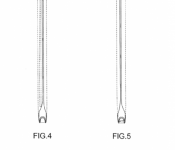
Patents uncovered in August and again surfacing in the new year could spell the possible design for Samsung’s Galaxy Note 4. The drawings associated with the patents show the familiar stylus location in the bottom right of the handset. While it is possible this could be a Galaxy S5 patent, it’s likely the next-gen Note experience.
It’s worth pointing out that the overall design is a more tapered and curvy one than in past generations. What’s more, the drawing show no hard buttons on the face of the phone, leading us to believe an all-touch Galaxy Note 4 could be in order.

Given we’ve got much of 2014 to go before the next round of Galaxy Note debuts this could change quite a bit. But, based on what you see here, what are your thoughts? Do you like the general look of this handset?
Via SamMobile
The post Patents tip possible design for Samsung Galaxy Note 4 appeared first on AndroidGuys.
Samsung announces Galaxy Camera 2
Samsung’s Android-powered Galaxy Camera 2 debuts ahead of CES 2014
Samsung on Thursday introduced its second generation of the Galaxy Camera, the Android-powered digital camera. As you might expect, the hardware and software are pushed forward and feature quite the powerful and smart experience.
Details include Android 4.2 Jelly Bean, a 16.3-megapixel BSI CMOS sensor with 21x optical zoom lens and 4.8-inch HD Super Clear Touch LCD display. on its backside. Under the hood you’ll find a 1.6GHz quad-core processor, 8GB internal storage, microSD card slot, 2GB RAM, and a 2000mAh battery. Connectivity comes in the form of Wi-Fi (802.11 a/b/g/n), Bluetooth 4.0, and NFC.
Like its predecessor the Galaxy Camera 2 is packed with many software touches and enhancements for taking the best photos and recording the best videos. Using the NFC connection, the new Tap & Go feature lets users quickly share photos with connected devices.
With Photo Beam, the picture being viewed on the camera is automatically sent to the paired smartphone, while Mobile Link, allows photographers to select images they wish to transfer to their smartphone at their leisure. For more creative shooting, Remote Viewfinder lets photographers control the camera using the smartphone, providing greater freedom for setting up and snapping shots.
There’s no indication as to what pricing and availability is just yet but with CES on deck next week we could learn more shortly.
Samsung Launches the Galaxy Camera 2, a Powerful Successor to the Galaxy Camera
Featuring an Android platform and a lightweight retro design, the Galaxy Camera 2 allows avid photographers to capture and share even more, with superior quality and speed
SEOUL, Korea – January 02, 2014 – Samsung Electronics Co., Ltd announced the Galaxy Camera 2, a successor to the award winning GALAXY Camera which combines the quality imaging of a high end camera with sharing capabilities and an intuitive design to match the most up-to-date smartphones. The Galaxy Camera 2′s revolutionary technology, which includes an upgraded 1.6GHz Quad Core processor and the Android platform makes it faster and easier than ever for users to shoot, edit and share high quality images with friends and family. With a lightweight, retro design, the Galaxy Camera 2 is the ideal option for photographers who do not want to sacrifice style for technology.
“Consumers love the Galaxy Camera, and this next-generation version was designed to improve on the successful predecessor, with upgraded and new features that will enhance the photography experience,” said Myoung Sup Han, Executive Vice President and Head of the Imaging Business Team at Samsung Electronics. “The result is a more powerful and portable device which continues to embrace the public’s passion for the social features of smartphones, yet also provides superior image control and quality. We are dedicated to making it easier for more people to achieve great results and with the Galaxy Camera 2′s host of creative features, anyone can capture stand out images.”
Fast and Superior Performance
The Galaxy Camera 2 lets users enjoy the full benefits of the Android platform. Intuitive to use and faster than ever before, users can navigate the Galaxy Camera 2 functions with ease-of use and focus on capturing the perfect shot rather than having to filter through complex settings. With an enhanced battery life (2000mAh), avid photographers can enjoy the photography experience for longer period of time and have the ability to take even more beautiful pictures.
A high performance camera, the Galaxy Camera 2 produces images of exceptional quality, unrivalled by smartphone photography. Its 16M BSI CMOS Sensor produces vivid images which are both rich in color and sharp in detail, allowing memories to be captured and reproduced in perfect clarity. With a huge 21x Optical Zoom, photographers can get closer than ever to their subjects. Featuring an upgraded 1.6 GHz Quad-Core processor, supported by a massive 2.0 GB of RAM, the Galaxy Camera 2 operates at ultra high speed so that the array of intuitive features can be accessed without delay. This internal memory is supplemented with the pre-loaded Dropbox app, an exclusive offering which provides 50GB of free cloud storage for up to two years, so that passionate photographers need never worry about running out of memory ever again.
Simple Sharing and Easy Use
Sharing is made simple with advanced Wi-Fi and NFC capabilities that accompany the Galaxy Camera 2. The all-new innovative ‘Tag & Go’ feature makes it easy to connect the Galaxy Camera 2 to NFC-enabled smartphones and devices. All it takes is a simple tap of the smartphone and camera and devices will be automatically paired and transter images swiftly using a host of clever functions. With Photo Beam, the picture being viewed on the camera is automatically sent to the paired smartphone, while Mobile Link, allows photographers to select images they wish to transfer to their smartphone at their leisure. For more creative shooting, Remote Viewfinder lets photographers control the camera using the smartphone, providing greater freedom for setting up and snapping shots.
The Galaxy Camera 2′s 121.2mm (4.8-inch) HD Super Clear Touch LCD provides users with a beautiful way to view and edit images. Shots are displayed in intense color and detail, while its large size makes it easy to navigate the many apps and features available on the camera. With a lightweight design, the Galaxy Camera 2 is a highly portable option making it the perfect choice for both day to-day, as well as special occasion photography.
Creative Capture
With Smart Mode, users can choose from 28 different pre-set modes all designed to address different shooting scenarios, which will allow a professional touch or creative twist to any image. For those unsure which mode they want to select, the Smart Mode Suggest feature provides a helping hand in securing those winning shots. It analyzes the scene at hand; recognizing lighting conditions, scenery, objects, and then instantly recommends the optimal Smart Mode to ensure that the perfect shot is always captured. New Smart Mode Selfie Alarm guarantees that self-portraits receive the attention they deserve. It takes five consecutive, high resolution images so that users can select their best angle and share immediately on their favorite social media site.
Videos can also be given a unique twist with features such as Multi Motion Video, which allows users to set the speed of capture and create speed up or slowed down movies. Ranging from eight times slower than normal speed up to eight times faster, this feature adds visual flair to footage which can be enjoyed time and time again. The Galaxy Camera 2 also makes it easy for photographers to use their favorite applications, such as Paper Artist and Xtremera, to personalize their shots straight from the camera so that images can be edited and shared without delay.
The post Samsung announces Galaxy Camera 2 appeared first on AndroidGuys.
Galaxy Note 3 Lite specs found on Samsung website
Preliminary hardware details are seemingly confirmed by Samsung’s website
Details for the Samsung Galaxy Note 3 Lite have been found in the back halls of Samsung’s website, seemingly confirming the soon-to-be-announced handset. Should the listing prove accurate, and we think it should, the SM-N750 should run Android 4.3 Jelly Bean (or later) and feature a 720p display.
Previous rumors indicate the smartphone will feature an 8-megapixel rear camera and LCD display; the standard model offers a 13-megapixels and Super AMOLED display combo. It is also expected that the Galaxy Note 3 Lite will not offer LTE connectivity.
As many of you know, CES takes place next week and Samsung is reportedly set to introduce a number of new devices in this new year. Once rumored for Mobile World Congress, perhaps this, and a few other products are en route to Las Vegas as we speak.
Samsung user agent profile (UAProf)
The post Galaxy Note 3 Lite specs found on Samsung website appeared first on AndroidGuys.
Samsung’s Foldable Tablet Design Patent Images Surface

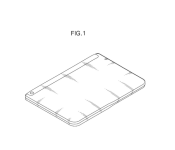
Back at CES 2013, we got a little taste on where Samsung wants to take foldable, or flexible technology. Having the ability to fold your tablet into the size of your phone, is something everyone can wrap their brains around. Yesterday, we posted about Samsung submitting patent designs for the Galaxy S5 and Note 4. Now we get design concepts for a foldable tablet.
Now it doesn’t look like the tablet will fold down to a smaller size, but rather open and close like a book. That is still very cool, and I am curious to see is Samsung unveils anything new in foldable or flexible technology at this year’s CES. We will keep you posted about these designs.


Source: Android Headlines
Samsung unveils Galaxy Camera 2 and NX30 with NFC photo sharing (hands-on)

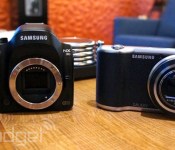
Samsung isn’t waiting until CES starts to spill the beans on its camera lineup. The company has just revealed the Galaxy Camera 2 and NX30, both of which center around an NFC-based “Tag & Go” sharing feature; you can now tap your phone against either shooter to begin transferring photos. They also offer more control through upgraded Remote Viewfinder mobile apps that show the same settings you’d find on the cameras themselves.
The unique upgrades to each model vary widely. The Android-powered Galaxy Camera 2 still has the 16-megapixel sensor, 21x zoom lens and 4.8-inch LCD of its predecessor, but it touts much-needed improvements to battery capacity (up to 2,000mAh) and weight (down to 9.2 ounces). Samsung has also stuffed in a newer 1.6GHz quad-core processor with 2GB of RAM, and an update to Android 4.3 introduces both 120fps slow-motion video as well as separate autoexposure and autofocus controls.
The NX30, meanwhile, builds on the NX20′s formula with upgrades to image quality and the display. The new mirrorless cam sports both a more light-sensitive 20.3-megapixel sensor and a fast hybrid autofocusing system that takes just 80ms to find its subject. Take a look at the back and you’ll find a brighter, Super AMOLED-based touchscreen that can now tilt, not just swivel; on the side, there’s a new 3.5mm microphone input. Glass aficionados may also appreciate two 16-50mm lenses launching alongside the NX30, including a quiet f2-2.8 lens and a video-friendly, f3.5-5.6 power zoom unit. Samsung isn’t yet ready to divulge launch details for either the NX30 or the Galaxy Camera 2, but you can check out our hands-on galleries of all the new devices while you’re waiting.
Edgar Alvarez contributed to this report.
Galaxy S5 and Galaxy Note 4 Design Patent Images Hint at their Designs

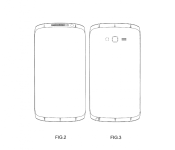
The Galaxy S5 and Galaxy Note 4 are the two flagship devices that will be on the top of many tech enthusiasts list for 2014. There have been numerous rumors that Samsung is finally going to step away from their traditional plastic shells, and switch over to aluminum cases. Now it seems that Samsung has submitted some design patents in December, and the images on this post might be what the new phones will look like.


To me, the design reminds me of the HTC One S, but a lot bigger of course. Super thin, and has a sexy curve design to it. Nothing has been confirmed yet, on if these designs will be used, but it is nice to see what we might expect for the Galaxy S5 and Galaxy Note 4. Let us know what you think of the images.
Source: SamMobile
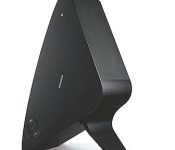
Samsung reveals new wireless streaming speaker, home theater system, portable stereo and two TV soundbars

Clearly Sonos, Samsung’s been peeking at your Play:1 playbook. After introducing the Shape wireless streaming audio system and the M7 speaker mere months ago, the Korean company is now ready to reveal a new, smaller member of the family, the M5, at CES. This new model has only three drivers (down from the five inside the larger M7), but still packs the same wireless audio tech as its elder — meaning it’s controlled by the Shape mobile app, connects to your local network through a Shape hub wired to your router and automagically fits into your existing system, whether it’s a multi-room or multi-channel setup. Additionally, Samsung’s cooked up a connect box that hooks up with old school analog speakers and loops them into the Shape system so they can be wirelessly controlled too.
Plus, Samsung’s crafted a pair of Shape-compatible soundbars, the HW-H750 and the HW-H600. The H750 soundbar pumps out 320W of sound and is built to sit beneath the largest of TV’s (curved or otherwise), while the H600 sound stand is designed so that smaller 32-55 inch TV’s sit directly on top of it while it pumps out multi-directional 4.2 channel audio.

Alongside those offerings, Samsung will be showing off a new HT-H7730WM home entertainment system at CES as well. The system comes with six speakers, one subwoofer, a Blu-ray player capable of upscaling to UHD (4K) resolution and an amplifier packing both analog vacuum tubes and digital amps. Additionally, despite having 6.1 speakers, the system delivers up to 9.1 channels of sound using the new DTS Neo: Fusion II codec.

Lastly, Samsung’s latest GIGA system will make its debut in the Nevada desert, the MX-HS8500. With 2,500W of power and twin 15-inch subs at its disposal, it’s got enough thump to wake the neighbors, but it’s not meant for home use as it’s been built to travel. That’s right, this GIGA’s got wheels and a retractable handle, so you can more easily take it with you to your next tailgate party. Plus, it still has the same visual flair as previous GIGA systems, meaning it has fifteen different lighting effects settings to please partygoers’ eyeballs. And, the HS8500 utilizes Samsung’s Bluetooth Hi-Fi wireless audio streaming tech to stream sound from the company’s compatible TVs. Of course, audio gear must be heard to in order to be fully appreciated, so rest assured we’ll be listening to all of Sammy’s new audio offerings at CES next week. Stay tuned.
Filed under: Home Entertainment, HD, Samsung
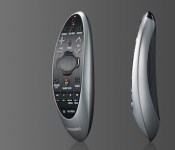
Samsung’s new TV remote for 2014 is 80 percent smaller, has touch, voice and gesture control

Samsung couldn’t wait for CES to start leaking information about its new HDTVs, starting with the remote. After rolling out larger and larger contraptions over the years with more buttons (on both sides, even), this year’s “Smart Control” model is 80 percent smaller than the 2013 version. It has a touchpad in the middle which, combined with a new button layout and gesture control — similar to LG’s Magic Remote, among others — promises to make controlling apps and content even easier.
Filed under: Home Entertainment, HD, Samsung
Source: Samsung Tomorrow
Samsung Galaxy F rumored to debut with Galaxy S5
The new premium line of smartphone may show up at same time as the flagship device
Samsung may introduce the rumored Galaxy F smartphone at the same time as the Galaxy S5, says Korea’s ETNews. Reportedly, the new line will be a premium series of Android handset that features metal or aluminum materials.
A Galaxy F has been tossed around the rumor mill a time or two in the past however we’ve not heard of a launch date. Samsung allegedly has multiple smartphones and devices salted for the first half of the year; it’s not much of a stretch to consider that both could debut in spring. While CES could make for the prime arena to introduce new stuff, we might look for an Unpacked event around Mobile World Congress.
Take it for what you will but Digitimes reports that none of Samsung’s typical manufacturing partners have started building a metal smartphone case yet.
ETNews (translate)
The post Samsung Galaxy F rumored to debut with Galaxy S5 appeared first on AndroidGuys.

The year in reviews: 2013’s best and worst gadgets scored and scrutinized

Fun fact: Engadget reviewed 176 products in 2013, and that’s not even counting the umpteen times we got hands-on with stuff at tradeshows and press events.
In general, we try to review just the top-tier gadgets, but even then, some of it ends up being forgettable. (Can you name-check everything we tested from memory? We can’t.) So, as the year draws to a close, we’re taking a look back at the last 12 months of reviews, and this time, we’re including only the products you’d have no trouble remembering. Across every category, we’ve noted the flagships everyone coveted — along with the duds that could’ve been so much better. Oh, and you might notice that we included some numbered scores throughout. That’s right; Engadget is bringing back numerical ratings, and they’ll follow the same format as the critic score gdgt has already been using for years. Which is to say, each rating takes into account various criteria for a given product category — things like battery life and portability. Wanna see how your favorite gadgets did? Meet us after the break for a walk down memory lane.
E-Readers
Amazon Kindle Paperwhite (2013)

Engadget Score: 93
The “all-new” Paperwhite doesn’t really offer anything all that different from last year’s edition, but an improved frontlight and some software tweaks have made an already great reading experience even better. Unless Goodreads is a must-have app for you, it’s a tempting, but largely unnecessary upgrade if you already own last year’s version.
Kobo Aura HD

Engadget Score: 83
The Aura HD is packed with features specifically aimed at the power reader, including best-in-class specs like a 6.8-inch display with blisteringly sharp text and a robust 4GB of internal storage space. Unfortunately, its niche status is further cemented by a high price and a hard-to-hold form factor that escapes easily from those with sweaty hands.
Barnes & Noble Nook GlowLight

Engadget Score: 73
Barnes & Noble giveth and taketh away with the Nook GlowLight. Sure, it’s the best Nook so far, with a better display, improved frontlight and a lighter form factor. But, all those improvements come at the cost of features like the microSD slot, physical page turn buttons and the contoured back, which all served to distinguish the line from its competition.
Gaming
Sony PlayStation 4

Engadget Score: 83
It doesn’t look like a PC, but underneath the PlayStation 4′s sleek black exterior is a powerhouse that rivals gaming PCs, with a user-friendly interface, a great controller and the ability to share your gameplay at the touch of a button. The next generation of consoles might just be getting started, but it’s one hell of a start with the PS4 at the head of the pack.
Microsoft Xbox One

Engadget Score: 81
The Xbox One may not be the prettiest belle at the next-generation ball, but with the wonders of Kinect voice control, robust media features and the ease of switching between games and apps at the drop of a hat, it certainly is vying to be the center of attention. It just needs a few more exclusives to get consumers to look past that $500 price tag.
OUYA console

Engadget Score: 66
The initial backer editions of the OUYA shipped with a flawed controller and access to a limited games selection. But even after the retail release, the OUYA’s still a system best left to hackers and developers, as it’s likely to leave most gamers disappointed by its average smartphone-level internals and rehashed games library.
NVIDIA Shield

Engadget Score: 83
The NVIDIA Shield wants to be the Swiss Army knife of hand-held game consoles, and it largely succeeds as a product — but not as a handheld. Its size and weight mean you won’t be carrying it around much, but the larger screen, great battery life and the ability to stream PC games to the Shield mean you’ll still get a lot of use out of it.
Home Entertainment
Google Chromecast

Engadget Score: 84
The Chromecast might not be as fully featured as competitors like Roku or Apple TV, but you know what? It doesn’t matter. This palm-sized dongle is easy to set up and turns any modern set into a smart TV, all for the low, low price of $35. Its app selection is still experiencing some growing pains, but even now, you’re still getting more than your money’s worth.
Roku 3

Engadget Score: 89
The newest Roku doesn’t have analog AV support like its predecessors, but it does offer incredible ease of use and a wide selection of channels, all for a nice price of $99. Even users of older Roku boxes should look into the Roku 3, whose upgraded CPU and improved UI help future-proof against new, more demanding apps.
Laptops and Hybrids
Microsoft Surface Pro 2

Engadget Score: 77
The Surface Pro 2 retains its predecessor’s durable body, but it’s equipped with a Haswell processor, boasts faster performance and has longer battery life. Microsoft has yet to find the perfect balance for a hybrid device, though — its weight and thickness make it a better notebook than a tablet, so you may want to look elsewhere for an everyday slate.
Apple MacBook Pro with Retina display

Engadget Score: 90
With a starting price that’s $400 less than the 2012 model, the new MacBook Pro with Retina display is a much better deal. In addition to its speedier SSD and better graphics, its epic battery life and thinner, lighter body might make you reconsider if you’ve been in the market for the slightly wispier MacBook Air.
Google Chromebook Pixel

Engadget Score: 79
Google infused the Chromebook Pixel with sophisticated looks and high-end specs, including a 2,560 x 1,700 touchscreen display and LTE connectivity. Even so, its $1,299 price tag might not be worth it unless you’re always connected to the web — hard to do with its poor battery life — and plan on storing huge files in the cloud.
Smartphones
MOTOROLA MOTO X

Engadget Score: 88
The Moto X doesn’t have the specs to compete with heavyweights like the Galaxy S 4 and the HTC One, especially at the same price. But, with user-friendly enhancements to the UI and the magic of customization with Moto Maker — now available for all major carriers — this truly is a phone for the people.
Apple iPhone 5s

Engadget Score: 92
Apple continues to improve on the iPhone line with the 5s, and while the phone maintains the same body as its predecessor, it packs in enough upgrades to appeal to hardcore and casual users of iOS alike. However, even with future-proofing measures like 64-bit support and the M7 coprocessor on board, only the most forward-looking Android power users will find incentive to switch.
HTC One

Engadget Score: 92
The HTC One is a top-shelf smartphone, boasting a unibody aluminum shell, a gorgeous display and a fast Snapdragon 600 processor that runs buttery smooth. The Sense 5 UI didn’t thrill us, but a solid battery and excellent call quality, among other things, made this one of the best phones to buy this year.
Samsung Galaxy S 4

Engadget Score: 88
With a familiar chassis and some impractical features, Samsung’s newest flagship isn’t exactly turning heads. Market-topping specs and minimal learning curve make this worth considering if you’re due for an upgrade from an older Samsung device, but anyone looking for something fresh would be better served by the more polished HTC One.
LG G2

Engadget Score: 87
With its bright 5.2-inch screen and phenomenal battery life, the G2 is a great phone for taking photos, watching videos or just general everyday, all-day usage. That is, if you can get used to its other standout feature — all three of its buttons are on the back, better to make room for the gorgeous screen, but not so friendly to those who like to hold their handset in a death grip.
LG Nexus 5

Engadget Score: 86
Not only is the Nexus 5 gifted with a great 1080p display and a fast quad-core processor, but it also heralds the release of a leaner and meaner iteration of Android, 4.4 KitKat. Take all that and offer it to consumers at an outstanding off-contract price of $349, and the Nexus 5 not only succeeds, but also puts rival handsets on notice to deliver more bang for your buck.
Samsung Galaxy Note 3

Engadget Score: 87
Those with small hands still need not apply, but for the third iteration of the Galaxy Note, Samsung has packed in a robust processor, a solid battery and even more useful S Pen features. The display has also gotten bigger and better, though those who want to watch videos on this thing shouldn’t depend on the built-in speakers.
BlackBerry Z30

Engadget Score: 62
The Z30 was supposed to be the phone that would make BlackBerry relevant again. And while the comfortable hold and large screen will more than please the BlackBerry faithful, an average battery, poor call quality and crash-prone software mean few, if any, will be making the switch from Android or iOS anytime soon.
LG G Flex

Engadget Score: 83
The G Flex’s top-to-bottom curve means it’s very comfortable next to your head, but not so much in your pocket. That curve comes with a chassis designed to be pretty durable, with a flexible body and screen, and a self-healing back that resists scratches. Does it work? Somewhat. Is it worth the $900 price tag? Not really.
Tablets
Google Nexus 7

Engadget Score: 90
The price may be (slightly) higher on our returning favorite tablet, but the Nexus 7 is still an obscene value. That this year’s model got a noticeable boost everywhere it counts and sells for significantly less than a comparable iPad mini is nothing short of impressive — even though Apple’s tablets still have more apps designed for bigger screens.
Amazon Kindle Fire HDX

Engadget Score: 85
The Kindle Fire HDX may be the most compelling case yet for Amazon’s tablet ecosystem. Advanced users might scoff at the device’s somewhat limited capabilities, but the display’s gorgeous color accuracy could make Bezos’ Prime directive an easy sell for just about everyone else.
Apple iPad mini

Engadget Score: 92
The iPad mini is an inexpensive way to join Apple’s tablet family, but it remains more costly than its similarly sized competition. Besides the striking Retina display, what makes the minuscule iPad so attractive this year is it’s essentially a shrunken-down version of its powerful bigger sibling. Very few sacrifices were made to accommodate the smaller stature — something the competition can’t quite claim.
Apple iPad Air

Engadget Score: 92
Tablets went mainstream thanks to the original iPad, but thanks to economies of scale and Moore’s Law, the competition’s become rather fierce — maybe unexpectedly, from Cupertino itself. The iPad Air is the best Apple tablet we’ve reviewed, but it could be hard to justify when the iPad mini now offers nearly the same experience — Retina display, similar styling, A7 64-bit processor — for less.
Microsoft Surface 2

Engadget Score: 78
If the Surface 2 existed in a world where only hardware mattered, its brawny battery and rock-solid construction might put it at the head of the tablet pack. In reality, though, Microsoft’s slate is hamstrung by the shortcomings of its OS, Windows RT, and its inability to run traditional desktop apps.
Galaxy Tab 3 10.1

Engadget Score: 65
We’re not entirely sure what Samsung’s game is with the Galaxy Tab 3 10.1. It hasn’t changed much in terms of specs from the GTab 2, packs a subpar display and severely lacks in features and power compared to the company’s line of Galaxy smartphones. Most damning? The $300 asking price.
Wearables
Samsung Galaxy Gear

Engadget Score: 65
It’s hard to justify paying $300 for the Galaxy Gear when it feels like an incomplete product and is only compatible with a handful of Samsung devices. Still, it stands out as one of the most feature-rich smartwatches we’ve tried, and as the company issues software patches and the app catalog grows, it could become better in time.
Google Glass

Engadget Score: Not Yet Scored
We’ve yet to see a consumer-facing Google Glass, but suffice to say the current version’s more of a research project — definitely not worth its $1,500 price tag for most folks. Mountain View still has to polish its features, address privacy concerns and entice developers before it hits the market. Until then, current Explorers will just have to deal with lots of confused stares when they wear it outside.
Sony SmartWatch 2

Engadget Score: 71
Unlike the Galaxy Gear, you can tell time on Sony’s SmartWatch 2 without having to interact with the screen, and it even costs $100 less. Unfortunately, few will be able to stand its buggy software and limited app selection. But, hey, at least it’s compatible with most handsets running Android 4.0 or higher.
Pebble

Engadget Score: 80
Pebble doesn’t have as many features as other smartwatches: It can only read texts, skip music tracks and tell time. Unlike its competitors, though, it costs a more reasonable $150 and offers both great battery life and an e-ink display that’s easy to read in daylight. As an added bonus, it also works with both Android and iOS devices.
Mariella Moon, Timothy J. Seppala, Kris Naudus and Dana Wollman contributed to this feature.
Filed under: Cellphones, Gaming, Laptops, Tablets, Wearables, HD, Mobile, Apple, Samsung, Sony, Microsoft, HTC, Google, Amazon, LG, NVIDIA

