


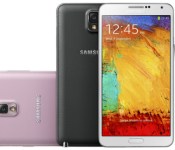
Galaxy Note 4 TouchWiz APKs leak in form of a list

Samsung Galaxy Note 4 is one of the most anticipated devices this year. There are many people out there who just can’t wait to get their hands on Samsung’s new phablet, I know a bunch of them who belong in this category. We’ve seen some leaks when it comes to this device, but that is nowhere near over it seems.
This time we have Note 4′s leaked APK list, courtesy of @evleaks. Alongside the list in form of an image, the leaker wrote the following: “Some interesting Samsung Galaxy Note 4 APKs”. If we take a closer look we can find some interesting stuff here. SStudio_WQHD_K suggests the device will have a 2K screen, this was to be expected though. SHealth3_5 confirms S Health will be once again a part of TouchWiz, with some new features probably. The list also mentions a fingerprint service and a few APKs which suggest all kinds apps/features to make your inner photographer happy.

Check out the list for yourself and see if anything appeals to you. Unfortunately this list also suggest another heavy version of TouchWiz, we’re still hoping that won’t be the case, but… Anyhow, are you one of those people who’re waiting for this device to launch? That will probably happen at this year’s IFA in Berlin this September.
Source: @evleaks
The post Galaxy Note 4 TouchWiz APKs leak in form of a list appeared first on AndroidGuys.

The top 15 smartphones you can buy right now

OK, so it usually doesn’t cost as much as a car, but a smartphone is still an important lifestyle purchase. And it will probably be at your side 24/7 (if you’re anything like us). There’s always a bit of hemming and hawing, for sure, but we’ve distilled the options down to a short list of the top handsets, with top picks for each OS. Head down to the gallery below for a quick stroll through our selections or check out our full buyer’s guide for the lowdown on the best smartphones, tablets, laptops and wearables that your hard-earned money can buy.
Filed under: Cellphones, Mobile, Apple, Samsung, Microsoft, HTC, Nokia, Google, LG, Blackberry

Samsung ATIV Book 9 2014 Edition review: big screen, even bigger price

So many Ultrabooks in our laptop buyer’s guide: Not one with a 15-inch screen. Which is strange, because it seemed for a while that bigger-screen ultraportables were going to become a thing; HP, Sony and ASUS all tried their hand at super-light 15-inch machines. Two years later, though, Samsung is one of the only companies that’s still at it. The company recently came out with the ATIV Book 9 2014 Edition, an update to the 15-inch Series 9 laptop from 2012. Like the original, it’s insanely thin and light for a machine with this screen size, except now, it graduates to a full HD touchscreen, longer battery life and updated processors. Most notable of all, it features an improved audio setup with a built-in digital-to-analog converter allowing you to play back lossless, or “studio-quality” audio formats. The thing is, even for a flagship it’s pretty expensive: At $1,500, it has one of the highest starting prices we’ve seen, and there are plenty of similarly specced machines that cost less. That raises an interesting question, then: Who should buy this?
Hardware
With the exception of that sweet audio setup, the ATIV Book 9 2014 Edition is basically a blown-up version of the 13-inch ATIV Book 9 Plus, which we reviewed last fall. Like its little brother, the new Book 9 is made of smooth aluminum done up in a “Mineral Ash Black” shade that actually looks blue in certain light. It’s elegant in much the same way the MacBook Air is, except that dark color means it shows fingerprints more easily. I suggest you buy a microfiber cloth — and be prepared to wipe down the lid and palm rest every once in a while to keep the machine looking fresh.
Lift the lid and you’ll see the interior is as minimal as the outside, with expansive metal surfaces and very few embellishments — just the power key sitting above the keyboard, and some thin metal trim surrounding the trackpad. What’s nice is that Samsung has scrubbed the Book 9′s palm rest of any branding — with the ATIV Book 9 Plus, Sammy actually painted on logos for its SideSync and HomeSync software. Needless to say, then, I’m glad Samsung came to its senses and kept things simple here.

Those persistent grease stains aside, this really is an impressive design. At this point, building extra-thin Ultrabooks is actually Samsung’s “thing.” Granted, this has gotten more challenging, what with rival PC makers finally turning out super-skinny machines of their own. In fact, thanks to its new touchscreen, the ATIV Book 9 is thicker and heavier than it used to be. That said, it’s still super light for a 15-inch laptop, weighing in at just 3.92 pounds and 0.63 inch thick. Remember, too, that there aren’t many 15-inch Ultrabooks nowadays, and most aren’t this thin or light. After that, your next lightest options are machines like the Dell XPS 15 and the 15-inch MacBook Pro with Retina display, which measure 0.7 inch thick and weigh 4.44 and 4.46 pounds, respectively. And after that? You’re looking at mainstream notebooks that weigh five-plus pounds. Hardly an ultraportable anymore.
Besides, there’s actually a benefit to the 15-inch Book 9 being slightly thicker than it used to be: Samsung had a little more room when figuring out which ports to include. The machine now features full-sized HDMI output, a step up from the micro-HDMI socket on the last-gen model. As before, there are three USB connections (two of them 3.0), a mini-VGA port, a headphone/mic jack, a lock slot and an SD card reader. There’s also an RJ-45 Ethernet port, but it’s not a proper full-sized socket, so you’ll need a dongle (not included) to get a wired connection.
Keyboard and trackpad

One thing you should know about Samsung laptops: They tend to have fairly flat keyboards. The new ATIV Book 9 does too, but Sammy at least made some subtle changes that make the typing experience more comfortable. For starters, the keycaps now have a slight contour, making them more finger-friendly. They’re also coated in some sort of soft finish — not rubbery, exactly, but soft. Whatever it is, the keys are pleasant to touch. Other than that, the keyboard is still on the shallow side, especially compared to rival machines from Apple, Dell and Lenovo (Dell and Lenovo are particularly big on cushy keyboards). That said, the Book 9 is still easy to type on, especially since the wider footprint means most of the keys are generously sized. It’s just not my favorite keyboard, but hey, they can’t all be.
The same can be said of the trackpad. The ATIV Book 9 has one spacious pad, and to Samsung’s credit, it’s much more precise than the last-gen model was when it first came out. Once in a while, I’ll struggle with single-finger navigation, but for the most part, tracking is precise, even when I’m selecting small items on the desktop. Ditto for two-finger scrolling and pinch-to-zoom — both feel remarkably controlled most of the time.
Display

If you’re considering the ATIV Book 9, odds are you like the idea of having a little extra screen real estate. And more screen real estate you shall have: The panel here measures 15.6 inches diagonally. That’s a slight bump over the 15-inch panel on the last-gen model, and it’s a big leap over standard 13-inch Ultrabooks. For what it’s worth, it’s a fairly high-quality panel, too: The colors are vibrant, and between the 300-nit brightness level and the low-reflective panel, I encountered relatively little screen glare.
The problem is, though the screen is indeed higher-res than its predecessor (1,920 x 1,080 vs. 1,600 x 900), it’s still relatively low-res compared to most other Ultrabooks. At this point, 1080p is standard for flagship Ultrabooks, even those with 13-inch screens, and many go up to either 2,560 x 1,440 or 3,200 x 1,800. (Samsung says super-high-res screens in this size range are still hard to come by — fair enough.) What this means is that even mid-range 13-inch systems have a higher pixel density and, in many cases, are noticeably sharper. So, while you do indeed get more screen real estate here, you otherwise can get as good a screen or better on any number of cheaper machines.
Sound

And now, the reason you might consider this over a cheaper system: the stupendous audio quality. You can’t tell by looking at it — the two speakers on the bottom edge are small and discreet — but the ATIV Book 9 houses an audio encoder/decoder made by Wolfson, a respected name among audiophiles. In particular, this is the Wolfson WM5102, a digital-to-analog converter (DAC) tailored for phones, tablets and other portable devices — you know, like this one. That means while this offers best-in-class sound quality for a notebook (more on that in a minute), it would be unfair to compare this with a standalone DAC; all the processing here is handled by a single piece of silicon, as opposed to a bunch of discrete chips. That processing, by the way, includes support for tracks with up to 24-bit resolution, and sampling rates as high as 192kHz — basically, the highest-quality files you can buy in stores like HDtracks.
I suspect those of you who care about music enough to purchase a machine like this already have preferred apps for playing back lossless audio formats. Just in case, though, Samsung’s own S Player+ app will do the job, with support for FLAC and ALAC, Apple’s lossless audio codec. As you might expect, you’ll need a wired connection to make full use of the built-in DAC, so be prepared to plug in either a headset or an external speaker into the headphone jack.
Armed with a pair of AiAiAi TMA-1 headphones, I put on an assortment of albums, all in FLAC format with a sample rate of 192kHz. Whether I was listening to Tchaikovsky’s “Manfred Symphony,” as performed by the London Symphony Orchestra, or duets between Ella and Louis, the music had a refreshing clarity to it. There was no distortion, definitely no tinniness. Everything sounded so… unimpeded. Unimpeded, and balanced, too; no one instrument ever overpowers another. Janis Joplin’s hoarse vocals shine through, but so do the piano, the guitar and the drums. I won’t go so far as to say it’s like listening to music in your car, or in your living room — the setup here isn’t nearly as powerful — but it’s definitely the purest sound I’ve ever gotten out of a laptop.
Performance and battery life
| PCMark7 | 3DMark06 | 3DMark11 | ATTO (top disk speeds) | |
|---|---|---|---|---|
| Samsung ATIV Book 9 2014 Edition (1.6GHz Core i5-4200U, Intel HD 4400) | 4,835 | 5,947 |
E1,752 / P948 / X297 |
551 MB/s (reads); 141 MB/s (writes) |
| Microsoft Surface Pro 3 (1.9GHz Core i5-4300U, Intel HD 4400) | 5,024 | 5,053 |
E1,313 / P984 |
555 MB/s (reads); 252 MB/s (writes) |
| Lenovo ThinkPad X1 Carbon (2014, 1.6GHz Core i5-4200U, Intel HD 4400) | 4,773 | 5,881 |
E1,727 / P930 / X284 |
555 MB/s (reads); 137 MB/s (writes) |
| Lenovo IdeaPad Yoga 2 Pro (1.6GHz Core i5-4200U, Intel HD 4400) | 4,676 | 5,688 |
E1,713 / P914 / X281 |
546 MB/s (reads); 139 MB/s (writes) |
| Samsung ATIV Book 9 Plus (1.6GHz Core i5-4200U, Intel HD 4400) | 4,973 | 5,611 |
E1,675 / P867 / X277 |
547 MB/s (reads); 508 MB/s (writes) |
| Acer Aspire S7-392 (1.6GHz Intel Core i5-4200U, Intel HD 4400) | 5,108 | 5,158 |
E1,724 / P952 / X298 |
975 MB/s (reads); 1.1 GB/s (writes) |
Blink and you’ll miss it: The ATIV Book 9 boots into the desktop in just five seconds, about half the time I was expecting. That was my first clue that Samsung’s newest Ultrabook is fast and indeed, it slightly beats some other machines in benchmark tests, including a few that run on the same dual-core Core i5-4200U processor. The thing is, even with 8GB of RAM, it doesn’t significantly outperform machines we tested with the same CPU and four gigs of memory. And while the Samsung-made SSD delivers solid read speeds of 551 MB/s, its peak write speeds tapped out at around 141 MB/s — on the slow side for a machine of this caliber. What I’m saying is, the performance is generally solid, but it’s also more or less in line with other Ultrabooks we’ve seen, even those that are cheaper and/or make do with half the memory.
Regardless of whether the ATIV Book 9 is overpriced compared to its peers, there’s no question it gets the job done. And let’s be clear, by “job,” I’m not including any sort of intensive gaming; if that’s what you’re into, may I suggest a gaming laptop, or even a workhorse like the Dell XPS 15? In everyday use, though, the Book 9 shines. I was able to do all my usual Engadget-editor work on it, with HipChat open on the desktop and lots and lots of Chrome browser tabs open. Movie playback is smooth too, and I have no doubt you can get away with batch photo-editing as well. Basically, anything other Ultrabooks can do, this one can do too. You’ll just pay a higher price for it.
|
Battery life |
|
|---|---|
| Samsung ATIV Book 9 (2014 Edition) | 9:48* |
| MacBook Air (13-inch, 2013) | 12:51 |
| MacBook Pro with Retina display (13-inch, 2013) | 11:18 |
| Sony VAIO Duo 13 | 9:40 |
| Samsung ATIV Book 9 Plus | 8:44 |
| HP Spectre 13 | 8:30 |
| Sony VAIO Pro 13 | 8:24 |
| Acer Aspire S7-392 | 7:33 |
| Samsung Series 9 (15-inch, 2012) | 7:29 |
| Microsoft Surface Pro 3 | 7:08 |
| Sony VAIO Pro 11 | 6:41 |
| Lenovo Yoga 2 Pro | 6:32 |
| Lenovo ThinkPad X1 Carbon (2014) | 6:18 |
| Samsung ATIV Book 9 Lite | 4:33 |
|
*Engadget recently modified its battery life test in such a way that the new version has a small impact on battery life. With the new test, the ATIV Book 9 lasted 9:34; the old test put it at 10:01. The number listed in the table is the average of those times. |
According to Samsung, the ATIV Book 9′s 62Wh battery can last up to 8.8 hours on a charge. Turns out, that’s a fairly conservative estimate: In our battery rundown test, we got an average of nine hours and 48 minutes. Now, just to be clear, Engadget recently tweaked its laptop battery test, so that we’re using a higher-res movie than we used to. That’s obviously going to have a bit of an impact on battery life. Thankfully, though, the effect is fairly slight: Even with a 1080p movie, the Book 9 managed nine hours and 34 minutes of runtime. With the old test, it just cracked 10 hours.
Either way, that’s a big improvement over Samsung’s last-gen 15-inch Ultrabook, which died out after around seven and a half hours. The Book 9′s runtime is also a clear step over most ultraportables (save the MacBook Air). Then again, there are many 13-inch models that come within about an hour of the ATIV Book 9. I have to wonder if the battery life gains here are big enough to justify the extra weight and higher price.
Software
The ATIV Book 9 Plus ships with Windows 8.1, including a recent update that made the OS easier to use on mouse-and-keyboard machines like this one. Thankfully, it’s a pretty clean experience; Samsung didn’t install much bloatware alongside the usual built-in Windows apps. Boot up the machine for the first time and you’ll find trial versions of Adobe Photoshop 11 as well as Norton security software. There’s also a shortcut for Samsung’s own SideSync software, which lets you transfer files between your PC and mobile device. The problem is, it only works on Samsung-made devices, like the Galaxy S5 or Galaxy Tab S, so if you happen to own an iPad or Moto X, you may as well delete that Live Tile; it’s going to be useless to you.
Configuration options and the competition

The 2014 Edition starts at $1,500, with the same specs my unit had: a Core i5 processor, 8GB of RAM, integrated graphics and a 128GB solid-state drive. For $1,900, you can get it with a Core i7 CPU and a 256GB drive. It’s a bit of a shame you can’t configure the thing precisely to your liking, but that’s Samsung for you: The company always offers a few fixed configurations, and has a habit of reserving 256GB drives for the Core i7 machines.
The thing is, there’s nothing else on the market quite like it. Though there are other 15-inch laptops — even reasonably thin and light ones — none are quite as thin and light as this. The closest contenders are the Dell XPS 15 and 15-inch MacBook Pro with Retina display, which I mentioned earlier. In addition to being relatively compact, they’re both offered with discrete GPUs, which make them well-suited to folks who need some real graphics horsepower on the go. Though these machines are indeed thin and light, they’re still quite a bit heavier, so it might be smarter to think of them as shrunken-down workhorses, not Ultrabooks like the ATIV Book 9.
If you do want an Ultrabook, most of your options have 13-inch screens. As it turns out, I’ve accumulated lots of favorites, but I’ll try my best to explain why each is worth considering. For starters, there’s the Acer Aspire S7-392, a near-perfect laptop that’s exceptionally thin, light and fast with a vibrant, low-glare screen. The only thing you’ll want to keep in mind is that because it’s so skinny, the battery is smaller than in other systems. Then there’s the Lenovo Yoga 2 Pro, whose 3,200 x 1,800 screen folds back into tablet mode, making it the most versatile design we’ve seen. The keyboard is comfortable too; just beware of the short battery life. The Dell XPS 12 offers a similar, if slightly less flexible, form factor, with a screen that flips back in its hinge. Here, too, you can expect good performance, a comfortable keyboard and a sharp screen. Finally, there’s Samsung’s own 13-inch ATIV Book 9 Plus, which has mostly the same design and specs as the Book 9 2014 Edition, save for weaker audio and a battery that lasts around nine hours instead of 10. It’s fast, and well-designed, with pretty good battery life; just be prepared for a high price tag.
Whichever you choose, each of these rival Ultrabooks costs less than the 15-inch ATIV Book 9. In many cases, they offer the same screen resolution, with some going as high as 2,560 x 1,440 or 3,200 x 1,800. Either way, the display will appear sharper: These machines offer the same pixel count or higher on a smaller screen. Additionally, the performance isn’t any faster on the 15-inch model. True, the battery life is slightly longer, but for some, the 13-inch models might come close enough. All told, the biggest difference is the audio quality: The sound is indisputably better on the ATIV Book 9 2014 Edition, though even then, you need a wired setup to make the most of it. That begs the question: Why bother with the 15-incher unless you really want the extra screen real estate?
Wrap-up

The ATIV Book 9 Edition is a good Ultrabook in its own right: It’s well-designed and thin and light for its size, with solid performance, long battery life and a comfortable keyboard-trackpad combo. It’s also a clear improvement over its predecessor, and so it deserves an even better score. That said, it’s awfully expensive for what it is: $1,500 is just the starting price here, and for the money, you get the same performance you’d expect on a machine that costs hundreds of dollars less. The battery life is only modestly longer than what smaller models are capable of, and the screen is decidedly less pixel-dense, to boot. All in all, the only things really distinguishing this from the competition are its unusually big screen and its unusually strong audio quality. If neither of those things is crucial, you’re better off sizing down and spending less on a 13-inch system.
Edgar Alvarez and Daniel Orren contributed to this review.
Samsung’s Level ‘premium’ portable audio line makes its US debut

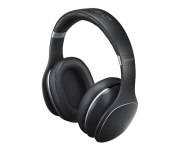
We were privy to Samsung’s premium portable audio plans a few days before the rumblings of an Apple/Beats affair surfaced. The Level series of portable audio gadgets goes on sale tomorrow (July 17th) with appropriately-named options for over-ear, on-ear, in-ear and Bluetooth speaker listening — covering the same bases as Dr. Dre’s outfit. Level Over, the set of over-ear cans, is the priciest of the lot, asking $350 for its active noise cancellation, on-board controls, wireless connectivity and stitched leather-esque accents. There’s also a Level App that’s designed to tune the set to the environment or content you’re consuming. As evidenced by their monikers, the Level On and Level In are the on-ear and in-ear entries, priced at $180 and $150 respectively. For those who prefer a wireless speaker, the $170 Level Box packs one-touch NFC or regular ol’ Bluetooth pairing for its 15 hours of service. Unfortunately, we’re waiting to judge the group with our own ears, but you can rest assured we’ll offer up detailed observations when we do. The entire line goes on sale at Gilt.com tomorrow, with Amazon, Samsung.com and Best Buy’s Samsung Experience Shops stocking them all before the end of next week.
Filed under: Portable Audio/Video, Samsung
Source: Samsung

Samsung intros new Level brand of premium audio products

Samsung on Wednesday rolled out a new, premium “Level” brand of mobile audio accessories. Arriving at various retailers over the next few weeks, customers can look for over-ear, on-ear, and in-ear audio solutions as well as a standalone Bluetooth speaker.
- Level Over ($349.99) – an over-ear headphone designed for an immersive sound experience. Level Over delivers powerful, clear, sharp sound, ergonomically designed comfort and wireless Bluetooth technology. Includes Active Noise Cancellation, employing four mics on the inside and outside of the headphones to cancel outside sounds. In addition, Level Over includes technology that prevents resonance between the vibration plate and the frame, avoiding unnecessary booming and helping to provide the original sound. Users can control volume, navigate tracks, pause or stop music, answer or end a call all using the Smart Control Technology on the side of the headphones.
- Level On ($179.99) – an on-ear, wired headphone that packs a powerful, clear and pure sound in a compact design. Soft polyurethane cushioning provides comfort with a foldable ergonomic design makes this the perfect headphone for the on-the-go mobile user.
- Level In ($149.99) – an in-ear, wired headphone that packs a powerful three-way speaker system that controls treble, mid-range and deep bass, providing clear sound separation and rich, natural sound quality.
- Level Box ($169.99) – a premium, compact Bluetooth speaker that streams high quality audio from any Samsung Galaxy phone – or any other Bluetooth compatible device – directly to the speaker for crystal-clear sound. The sleek, distinctive design is optimized to provide noise reduction and echo cancellation, and a built in rechargeable battery offers up to 15 hours of continuous playback on a single charge. One touch Near-Field Communications (NFC) or the dedicated Bluetooth pairing button provides effortless synching. Control buttons make it easy to adjust volume or play/pause music, and a high-quality HD built in microphone makes it a great device for phone or conference calls.
Gilt.com is offering its members exclusive, first access to the portfolio, tomorrow, Thursday, July 17 at noon ET at www.gilt.com/level. What’s more, there will also be an exclusive bundle of the Level On and Level Box for $299.99. The Gilt sale will last for 72 hours.
The entire portfolio will also be available on Amazon.com (July 20), Samsung.com (July 21) and select Samsung Experience Shops at Best Buy stores (July 27).
The post Samsung intros new Level brand of premium audio products appeared first on AndroidGuys.

Samsung may turn to Under Armour to rival Apple’s relationship with Nike

In a bid to expand wearable sales, Samsung is reportedly entertaining the idea of teaming up with US sports apparel maker Under Armour. According to Yonhap News, Lee Jae Yong, the son of chairman Lee Kun Hee and heir apparent of Samsung Electronics, met with Under Armour CEO Kelvin Plank earlier this month, reportedly to discuss ways to counter the burgeoning collaboration between Apple and Nike.
While Samsung has already released second-generation Gear smartwatches and is rumored to be developing its own version of Google Glass, a tie-up with a sports clothing maker would give the Korean smartphone maker greater access to the health and fitness industry, which it’s doubled down on in recent hardware and software launches. Under Armour, of course, already develops its own performance trackers and Nike has a long history of Nike+ fitness accessories. However, Nike did recently cull its FuelBand team and shift its focus to fitness software. Neither company has confirmed the talks, but if true, it appears Samsung wants to ensure it’s not left behind by its biggest rival.
[Image credit: University of Delaware, Flickr]
Filed under: Wearables, Mobile, Samsung
Source: Yonhap News
TechCrunch: Samsung eyeing home automation startup SmartThings

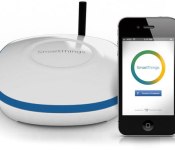
We know that Samsung isn’t one to let any potential market segment pass it by, and according to TechCrunch, it’s considering an acquisition that would put it in play in the suddenly expanding home automation business. The target? SmartThings, which would follow a recent theme of former Kickstarter projects being acquired by behemoths, and pump up Samsung’s Smart Home efforts to match Google/Nest and Apple/Homekit. In case you’ve forgotten, SmartThings is the company that figures it can connect everything in your house to the internet through its Hub device and make them controllable from pretty much any mobile app — if you’re ready to handle that kind of responsibility. TC’s sources put the proposed price at $200 million but caution that the deal may not be done yet, and we don’t know where the just-announced Thread industry partnership would fit in with this. SmartThings’ PR declined to comment on the rumor, but we’ll go ahead and pencil in “Galaxy Lightbulbs/Door Knobs/Thermostats” for Samsung’s next big unveiling just in case.
Filed under: Household, Samsung
Source: TechCrunch

AT&T offering Samsung Galaxy Tab 4 8.0

AT&T on Tuesday confirmed the immediate availability of the Samsung Galaxy Tab 4 8.0. Priced at $269.99 with a two-year service agreement, the 8-inch tablet runs Android 4.4 KitKat and features 16GB internal storage, a 3-megapixel rear camera, and a 4450mAh battery.
Customers who prefer to not sign a contract can also buy the tablet on a Next plan at $18.50 per month over 20 months; total price is $370.00 when it’s all done.
Note that the Samsung Galaxy Tab 4 8.0 is available online today however retail stores will begin selling on July 25.
For a limited time, customers can save $50 by purchasing the Galaxy Tab 4 8.0 and any Samsung Galaxy smartphone on respective two-year service agreements.
The post AT&T offering Samsung Galaxy Tab 4 8.0 appeared first on AndroidGuys.

Add a battery-saving, e-ink display to your phone for $79

One of the drawbacks inherent with our variety of smart devices is short battery life, but the folks behind the InkCase Plus think they have the solution for perhaps the most-used gadget in your arsenal: your phone. The InkCase Plus hits Kickstarter today, and like its name suggests, it’s a folio case for your phone that packs an always-on e-ink display. If this sounds kinda familiar, that’s because the company launched something similar last year for the iPhone 5 and Samsung Galaxy S II. Now, however, it’s available for the Galaxy S5 (or whatever other phone models get at least 500 votes from the pledging community), packs Bluetooth low-energy connectivity and it can act as a modular second screen, with access to apps and notifications. The campaign page promises 18 hours of reading time thanks to the energy-miserly nature of e-paper, and that you can transfer the likes of boarding passes and shopping lists to it too. Sounds pretty handy, yeah?
This type of kit hasn’t set the world on fire before, though — nor have phones with the tech baked in from the factory — and because of its proprietary SDK, developers don’t really have an incentive to make compatible apps unless the InkCase takes off like, say, the Pebble smartwatches did. But if you’re still interested and have a spare $79, the Kickstarter page is but a click away.
Filed under: Cellphones, Displays, Mobile, Samsung
Source: Kickstarter

Nest, Samsung and others team up for better home automation

A group of tech companies including Samsung, Google’s Nest Labs and chipmaker ARM are teaming up to create a unified system to run all of your connected home gadgets. Thread uses low-power mesh networks to run all of your devices, promising greater reliability and cloud access for every piece of hardware in your house. The name might be new, but an early version of the protocol is already used to drive Nest’s thermostats and smoke detectors. The group also believes that a simple software update would enable plenty of other existing smart home products to join in the fun. Of course, this isn’t the only group trying to marshal the disparate forces that are trying to make in-roads into our homes. For instance, Qualcomm and Apple all have rival platforms in various stages of development — so perhaps the next generation of forum debates arguments will be about which connected washing machine is “better” than the rest.
Filed under: Wireless, Samsung, Google
Via: Yahoo
Source: Thread

